
This article was automatically translated from the original Turkish version.
+1 More
Year of Establishment | 2012 | ||||||||
|---|---|---|---|---|---|---|---|---|---|
Place of Establishment | Sakarya University | ||||||||
Founder | Sami Güçlü (with a group of 12 students) | ||||||||
Primary Objective | To enable students to engage in quality reading, develop their ability to express themselves through writing and speech, and foster their social and cultural development. | ||||||||
Authors Covered | Mustafa Kutlu, Cengiz Aytmatov, Tarık Buğra, Cengiz Dağcı, Yahya Kemal Beyatlı, Sezai Karakoç, Ahmet Hamdi Tanpınar, Samiha Ayverdi, Necip Fazıl Kısakürek, Mehmet Akif Ersoy, Cemil Meriç, Nurettin Topçu | ||||||||
Authors Covered | Mustafa Kutlu Cengiz Aytmatov Tarık Buğra Cengiz Dağcı Yahya Kemal Beyatlı Sezai Karakoç Ahmet Hamdi Tanpınar Samiha Ayverdi Necip Fazıl Kısakürek Mehmet Akif Ersoy Cemil Meriç Nurettin Topçu | ||||||||
Nature | A civil reading activity | ||||||||
Implementation Method | Under the guidance of responsible teachers, books are read over a period of three to four months, a one-page evaluation essay is written for each book, a unique topic is selected after reading, a 10 to 12 minute presentation text is prepared, and these texts are presented on panels. | ||||||||
Collaborating Institution | Ministry of National Education, Ministry of Culture and Tourism, Ministry of Youth and Sports, TÜRKSOY, Embassy of Kyrgyzstan, Presidency of Turks Abroad and Related Communities (YTB), TİKA, universities and local institutions. | ||||||||
Anadolu Mektebi is a volunteer-based civil reading initiative grounded in the principle of reading, evaluating, and disseminating through panels the works of authors who have contributed to Turkish thought, art, and literature. Launched in 2012 under the leadership of Professor Dr. Sami Güçlü, the program aims to enable students to engage in high-quality reading, develop the ability to express themselves through writing and speech, and grow into well-rounded individuals shaped by national and universal values.
Anadolu Mektebi Author Readings is a civil reading initiative centered on the reading of all works by authors who have contributed to the development of Turkish culture and civilization, as well as selected scholarly writings about them. These authors possess local, national, spiritual, and universal values. The program, initiated and sustained on the principle of voluntarism, operates without a physical building, classroom, exams, report cards, diplomas, or graduation requirements, placing emphasis on quality rather than quantity.
The objective of the activity is to encourage students to engage in meaningful reading, develop their ability to express themselves through writing by composing evaluative essays on each work they read, and foster their social and cultural development. The program aims to cultivate students as diligent, truthful, loyal, self-confident, resolute individuals who set priorities correctly, adhere to principles, remain consistent, and value their families. Furthermore, it seeks to transmit the accumulated knowledge to society through panels and open sessions, enabling readers to develop a profound awareness and universal perspective that allows them to continue their intellectual, cultural, and artistic journeys independently.
Anadolu Mektebi was launched in 2012 by Professor Dr. Sami Güçlü, who left active politics and returned to academia at Sakarya University, with a group of twelve students. Initially, this group read selected works by Mustafa Kutlu, Tarık Buğra, Cengiz Aytmatov, Necip Fazıl, Nurettin Topçu, and Sezai Karakoç. In 2016, Mehmet Akif Ersoy was added as the seventh author. In the same year, following a proposal by Orhan Erdem, Assistant Minister of National Education and Deputy Chair of the Anadolu Mektebi Board of Directors, high school students from selected provinces were integrated into the reading groups.
In 2016, high school and university students in Aksaray, Ankara, Kastamonu, Isparta, and Burdur participated in regional programs, panels, theater performances, concerts, and poetry recitals under the theme “Understanding Akif, Living Asım,” honoring Mehmet Akif Ersoy. Panels were also conducted by students in other provinces where the project was active.
Following the protocol signed with the Ministry of National Education in 2016, the geographic scope of the initiative expanded, reaching 30 provinces within seven years. At the beginning of 2017, newly joined groups began with Mustafa Kutlu readings. These readings were completed through regional programs held in Konya from 26 to 28 April 2018 and in Çorum from 10 to 12 October 2018, after which the program transitioned to Tarık Buğra readings. In 2018, marking the 100th anniversary of Tarık Buğra’s birth, commemorative events were held in his hometown of Akşehir as well as in Konya, Ankara, Aksaray, Amasya, Nevşehir, Niğde, Kahramanmaraş, Gaziantep, Kayseri, Trabzon, Rize, Düzce, Isparta, Van, Bursa, Kocaeli, Yozgat, and Balıkesir. A total of 87 separate panels were held, with 364 panelists participating; the author’s wife, Hatice Bilen Buğra, was also brought together with the students. Regional programs were organized in Nevşehir, Niğde, and Aksaray from 18 to 20 October 2018, and other provinces that completed their readings held their own local events.
Beginning with the 2017–2018 academic year, Cengiz Aytmatov readings were conducted with the participation of both Turkish students in more than 25 provinces and foreign students studying in Türkiye. Starting in March 2018, a fourth group of authors—Ahmet Hamdi Tanpınar, Cengiz Dağcı, Yahya Kemal Beyatlı, and Samiha Ayverdi—was added to the reading list and their works began to be studied.
In commemoration of the 90th anniversary of Cengiz Aytmatov’s birth, programs featuring panels, theater performances, and concerts were planned for 24–26 April in Bolu and 25–27 April in Kastamonu, with contributions from the Ministry of National Education, the Ministry of Culture and Tourism, the Ministry of Youth and Sports, TÜRKSOY, the Embassy of Kyrgyzstan, Yurtdışı Türkler ve Akraba Topluluklar Başkanlığı, and TİKA.
In February 2019, Anadolu Mektebi renewed its protocol with the Ministry of National Education. Since then, the program has continued its activities in collaboration with the Ministry, growing through the voluntary participation of high school and university students across provinces.
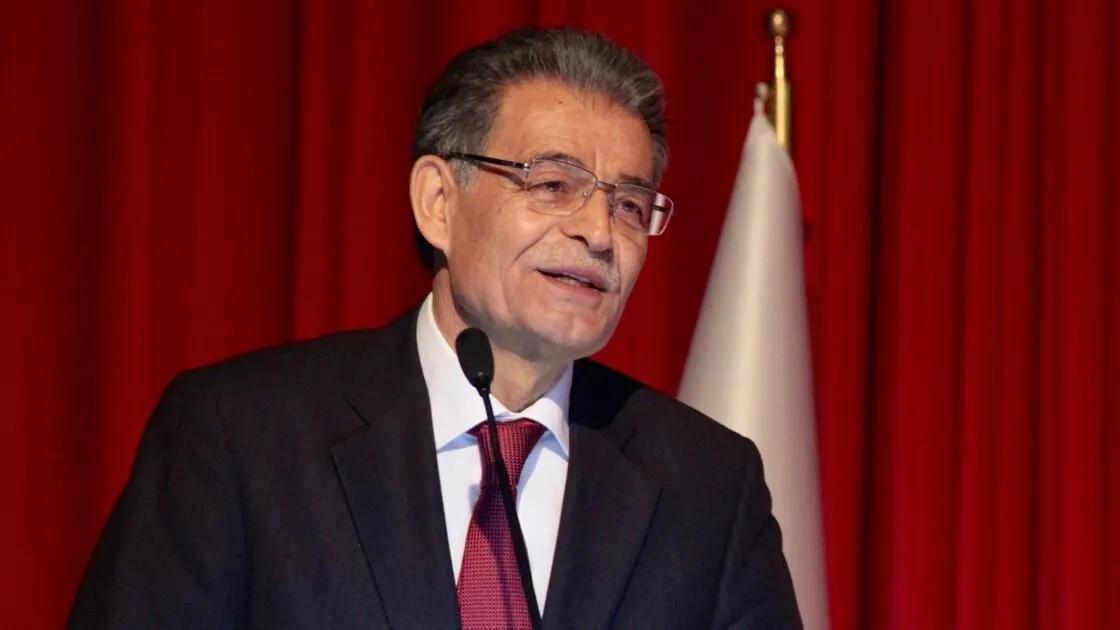
Prof. Dr. Sami Güçlü (AA)
To foster generations who understand themselves, their nation, and their value system through the light of authors who have contributed significantly to Turkish culture and civilization, especially in the last century, guided by a sense of historical strength and responsibility. In this context, the program aims to cultivate virtuous, principled, inquisitive, questioning individuals who strive to build a bright future for themselves and their country, grounded in an effort- and human-centered worldview and imbued with a spirit of national and universal responsibility, equipped with multidimensional, high-level skills and competencies.
To carry out an initiative based on the reading, evaluation, and interpretation of all works by authors who have made significant contributions to thought, art, and culture. This process, which continues through the expression of reading outcomes in writing and speech and their dissemination to society via panels and open sessions, aims to equip readers with a profound awareness and universal perspective that enables them to continue their intellectual, cultural, and artistic journeys independently.
The fundamental principles underlying Anadolu Mektebi’s activities are as follows:
Anadolu Mektebi sustains its comprehensive activities with the support and contributions of the Ministry of National Education, the Ministry of Culture and Tourism, the Ministry of Youth and Sports, universities, and local institutions. Large-scale programs such as those for the 90th anniversary of Cengiz Aytmatov’s birth are organized with the participation of TÜRKSOY, the Embassy of Kyrgyzstan, Yurtdışı Türkler ve Akraba Topluluklar Başkanlığı (YTB), and TİKA. In panel programs coordinated by the central office, students have the opportunity to meet and converse with authors, poets, and academics.
In addition to reading activities, theater performances, poetry recitals, film screenings, and concerts are organized to enrich students’ cultural experiences. Where possible, particularly in regional programs, texts prepared and presented by students are published in book form to ensure their permanence.
As a result of its international activities and contributions, Anadolu Mektebi was awarded the “Service to Turkish and Islamic Culture in Albania” Prize by Burdur Mehmet Akif Ersoy University during the II. International Mehmet Akif Ersoy Science and Art Awards Ceremony held in Albania.
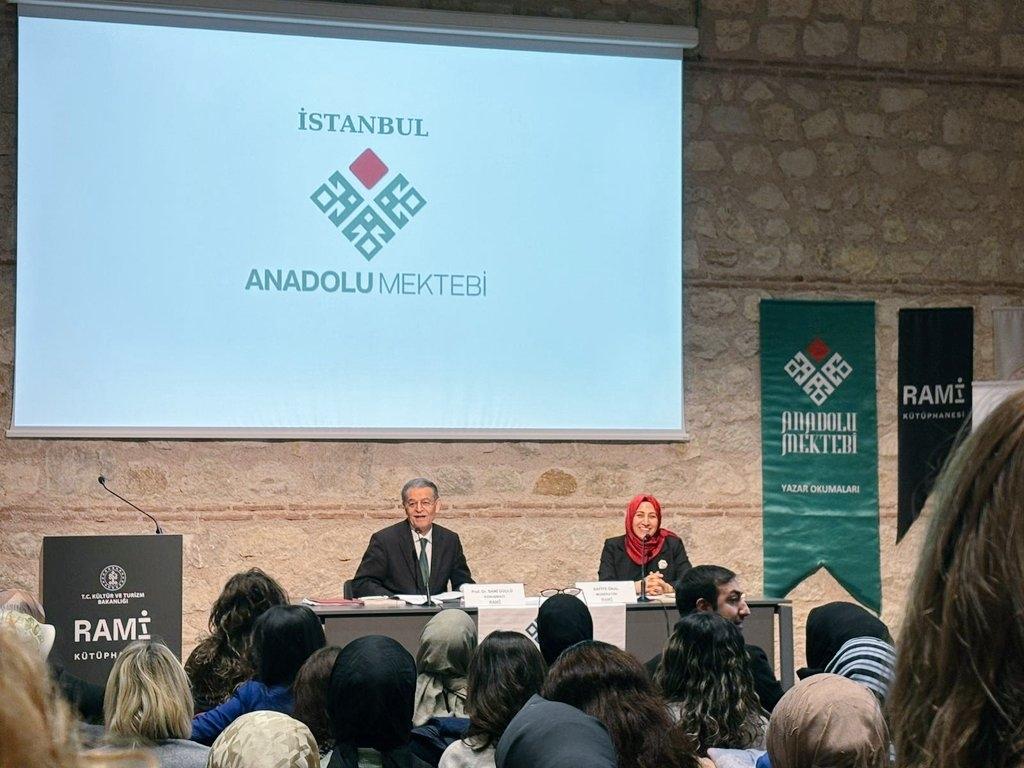
Prof. Dr. Sami Güçlü-Rami Kütüphanesi (MEB)
Anadolu Mektebi’s activities begin when the provincial coordinator introduces the program to school principals and teachers. Following this introduction, responsible teachers are appointed to lead the program, and they form reading groups from willing and enthusiastic students. The selected works of each author are distributed by Provincial Directorates of National Education to the reading groups in schools. Students receive the books on loan without adhering to a fixed order and return them to their responsible teacher upon completing the reading process. A reading period of approximately three to four months is allocated for each author, and readings must be completed within this timeframe.
For each book read, students prepare a one-page evaluation essay that includes the date and place of reading, as well as the impressions, emotions, and thoughts the book evoked. Responsible teachers and members of the reading group meet at intervals ranging from fifteen days to one month to hold evaluation sessions.
When students have completed approximately half of the books on the reading list, they meet with their responsible teacher to select an original presentation topic based entirely on their own feelings, thoughts, and readings. A 10- to 12-minute presentation script is prepared on this topic. These scripts are presented at panels organized at the school, district, and provincial levels, thereby enhancing students’ public speaking and self-expression skills.
While the program supports students’ enthusiasm and talent for reading and writing, their academic performance in school is also closely monitored. Students who join the program in the ninth grade of secondary school focus more intensively on their academic studies during the 11th and 12th grades, which serve as preparation for university. Students may continue participating in reading activities during their university years if they wish.
The authors whose works are read within Anadolu Mektebi are selected from among those who embody local, national, spiritual, and universal human values, live their lives according to these values, and transmit them to society. To support students’ intellectual and cultural development, the complete works of the following authors, along with selected scholarly writings about them, are studied:
Alcan, Musa. "Mezun olunamayan tek mektep Anadolu Mektebi." Anadolu Ajansı. Accessed July 2, 2026.https://www.aa.com.tr/tr/turkiye/mezun-olunamayan-tek-mektep-anadolu-mektebi/1406408.
Anadolu Mektebi. "Anadolu Mektebi Yazar Okumaları." Anadolu Mektebi. Accessed July 2, 2026.https://www.anadolumektebi.org/tr/icerik/anadolu-mektebi/15397661181910
İstanbul İl Millî Eğitim Müdürlüğü. "Anadolu Mektebi Yazar Okumaları Programı." Accessed July 2, 2026.https://istanbul.meb.gov.tr/www/anadolu-mektebi-yazar-okumalari-programi/icerik/5900
Year of Establishment | 2012 | ||||||||
|---|---|---|---|---|---|---|---|---|---|
Place of Establishment | Sakarya University | ||||||||
Founder | Sami Güçlü (with a group of 12 students) | ||||||||
Primary Objective | To enable students to engage in quality reading, develop their ability to express themselves through writing and speech, and foster their social and cultural development. | ||||||||
Authors Covered | Mustafa Kutlu, Cengiz Aytmatov, Tarık Buğra, Cengiz Dağcı, Yahya Kemal Beyatlı, Sezai Karakoç, Ahmet Hamdi Tanpınar, Samiha Ayverdi, Necip Fazıl Kısakürek, Mehmet Akif Ersoy, Cemil Meriç, Nurettin Topçu | ||||||||
Authors Covered | Mustafa Kutlu Cengiz Aytmatov Tarık Buğra Cengiz Dağcı Yahya Kemal Beyatlı Sezai Karakoç Ahmet Hamdi Tanpınar Samiha Ayverdi Necip Fazıl Kısakürek Mehmet Akif Ersoy Cemil Meriç Nurettin Topçu | ||||||||
Nature | A civil reading activity | ||||||||
Implementation Method | Under the guidance of responsible teachers, books are read over a period of three to four months, a one-page evaluation essay is written for each book, a unique topic is selected after reading, a 10 to 12 minute presentation text is prepared, and these texts are presented on panels. | ||||||||
Collaborating Institution | Ministry of National Education, Ministry of Culture and Tourism, Ministry of Youth and Sports, TÜRKSOY, Embassy of Kyrgyzstan, Presidency of Turks Abroad and Related Communities (YTB), TİKA, universities and local institutions. | ||||||||
Definition and Objective
Historical Development
Vision, Mission, and Core Principles
Vision
Mission
Core Principles
Institutional Collaborations and Socio-Cultural Activities
Implementation Principles and Reading Methodology
Authors Included in the Program