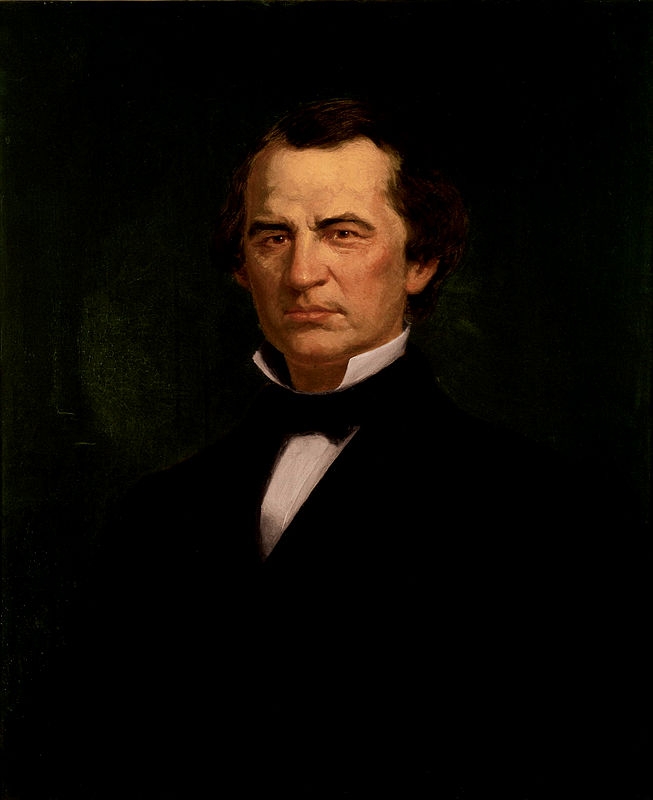

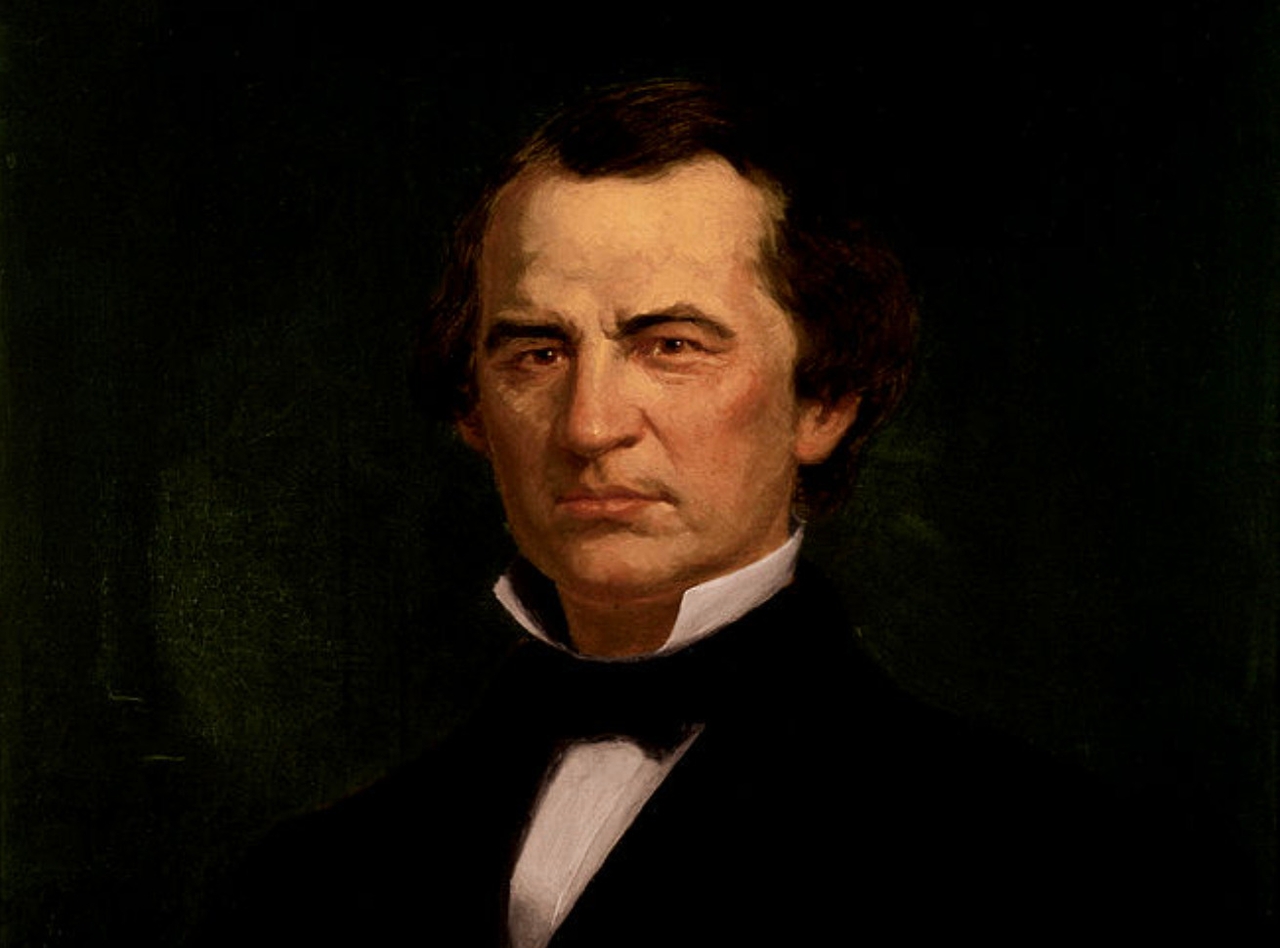

Andrew Johnson was born on December 29, 1808, in Raleigh, North Carolina, into a poor family. After his father Jacob Johnson died in 1812, the family fell into even harder circumstances. At the age of thirteen, he was apprenticed to tailor James Selby; however, he escaped from this apprenticeship in 1824. For several years he worked as a traveling tailor in South Carolina and Tennessee. In 1826 he settled in Greeneville, Tennessee, where he opened a tailoring shop and married Eliza McCardle in 1827. His wife, Eliza Johnson, played a significant role in helping Johnson develop his reading and writing skills.
He entered local political life in 1828 when he was elected to the Greeneville city council. He served as mayor from 1834 to 1838. After holding various positions in the Tennessee state legislature, he served in the House of Representatives from 1843 to 1853. In Congress he was a strong advocate for the “homestead” law, which aimed to provide land to poor white settlers. He served as governor of Tennessee from 1853 to 1857 and was then elected to the United States Senate in 1857. Although Johnson adopted Southern views on slavery and states’ rights, he opposed secession from the Union. When Tennessee joined the Confederacy in 1861, he was the only Southern senator to remain in office. Because of this stance, he was regarded as a traitor in the South and a loyal patriot in the North.
In 1862, Andrew Johnson was appointed military governor of Tennessee by Abraham Lincoln. During this tenure, he sought to reestablish civil government in the state and, in line with his goal of rapidly ending the war, he emancipated his own slaves in 1863. In 1864, he was selected as the vice presidential candidate of the National Union Party, formed to secure Lincoln’s reelection, and was elected to that office.
After Lincoln was assassinated in 1865, Johnson assumed the presidency. During his administration, he proclaimed a general amnesty to swiftly restore Southern states to the Union and permitted the establishment of new civil governments. However, he remained silent as these governments enacted laws known as “Black Codes,” which restricted the rights of newly freed African Americans. Johnson’s moderate conciliatory policies led to serious conflicts with Radical Republicans in Congress. This period witnessed intense struggles over the balance of power between the legislative and executive branches. Johnson vetoed the Freedmen’s Bureau and Civil Rights Acts in 1866, but Congress overrode both vetoes. He also opposed the Fourteenth Amendment adopted that year and urged Southern states to reject it.
Johnson’s conflicts with Congress reached their peak in 1867. That year, Congress passed the Reconstruction Acts, which placed former Confederate states under military rule, and the Tenure of Office Act, which prohibited the president from removing high-ranking officials without Senate approval. Johnson deemed the law unconstitutional and dismissed Secretary of War Edwin Stanton. This action prompted the House of Representatives to initiate impeachment proceedings against Johnson on February 24, 1868, on charges of “high crimes and misdemeanors.” After a trial in the Senate, Johnson was acquitted on all three charges by a single vote and remained in office.
After his presidential term ended in 1869, Johnson returned to Tennessee. He lost his bid for the Senate in 1869 and for the House of Representatives in 1872. In 1875 he became the first former president to return to Congress after being elected by the Tennessee state legislature to the Senate. However, shortly after assuming this office, he died on July 31, 1875, from a stroke. He was buried in Greeneville, Tennessee. His grave was wrapped in the American flag and accompanied by a copy of the Constitution.

Military Governor to President
Impeachment and Final Years