

This article was automatically translated from the original Turkish version.
Location | Türkiye Ankara | ||||||||
|---|---|---|---|---|---|---|---|---|---|
Health Risk | Fiber matting (stomach blockage) | ||||||||
Main Producer | People's Republic of China (90% of world production) | ||||||||
Economic Value | Angora wool (heat retention capacity twice that of sheep wool) | ||||||||
Main Varieties | English, French, Giant, Satin (total 11+ breeds) | ||||||||
Wool Yield (Annual) | Average 642 grams (business-based range of 575–821 g) | ||||||||
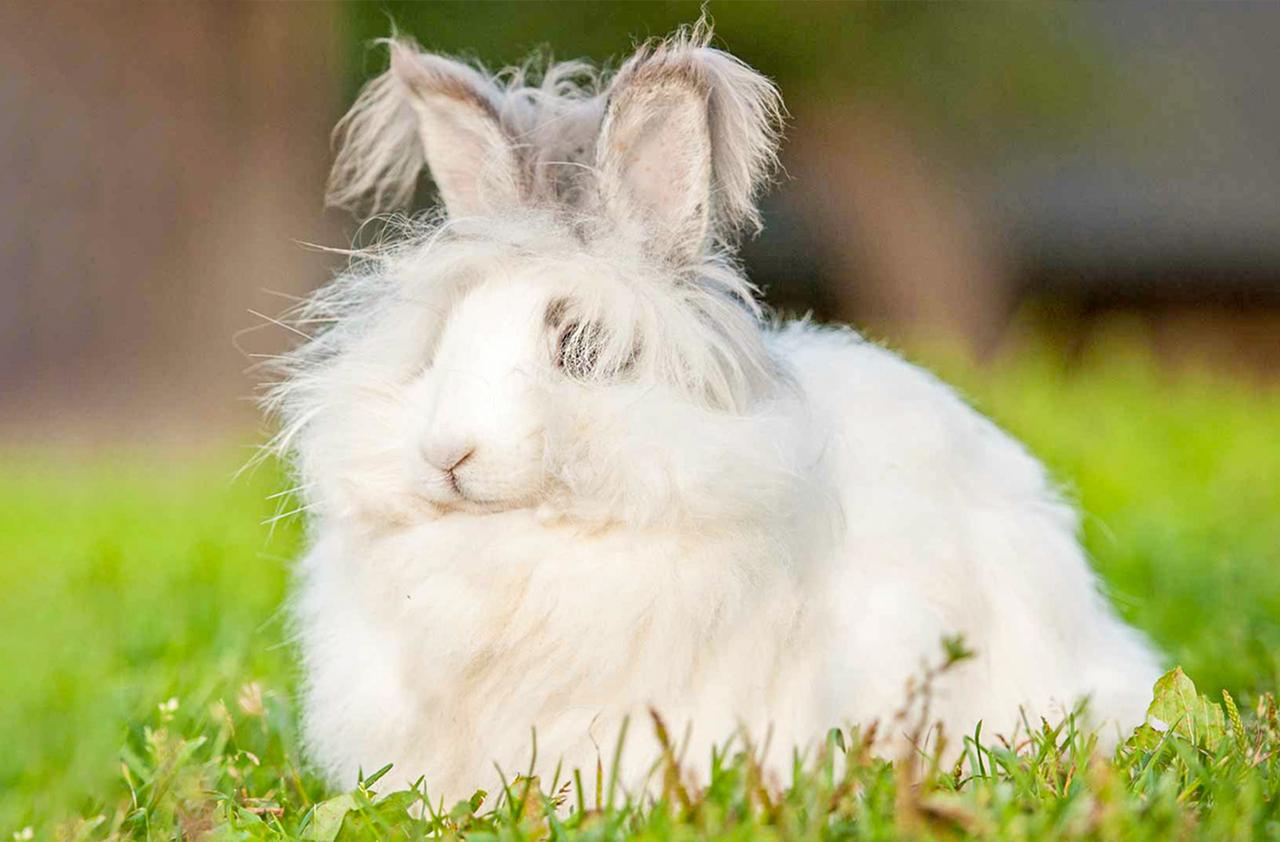
Ankara (Angora) rabbit is one of the oldest domestic rabbit breeds, originally originating in Anatolia and raised for its long, soft, and lustrous fur known worldwide as Angora wool. The wool, which has high raw material value in the textile industry, is twice as efficient as sheep’s wool in terms of heat retention. This animal, a purebred variety native to the region like the Ankara goat and Ankara cat, has spread from the city of Ankara throughout the world throughout history.【1】.
The origin of the Ankara rabbit is widely accepted to be Ankara, within the modern borders of Türkiye (historically known as Angora).【2】 These animals were transported to Europe via the Galatians, Phrygians, and later English sailors. Rabbits brought to France in 1723 became a popular pet among the French upper classes during the 1700s and subsequently spread across the continent for wool production.【3】 The breed began to be recognized in the United States in the early 1900s and today has officially recognized varieties by the American Rabbit Breeders Association (ARBA), including English, French, Giant, and Satin. Other non-recognized varieties include German, Chinese, Finnish, Swiss, and Russian types.【4】.
Ankara rabbits are raised primarily for the production of Angora wool, a strategic product for the textile industry. A single harvest from a Giant Ankara rabbit can yield between 340 and 510 grams of wool. Scientific studies conducted in Türkiye have determined that the average annual wool yield per animal in commercial operations is 642 grams. Wool growth rate reaches its peak during the first three weeks after shearing, measuring approximately 15.4 mm per week. This rate gradually declines in subsequent weeks, reaching 10.7 mm by the 13th to 15th week. Wool quality begins to decline once it reaches 12 to 13 cm in length, making an ideal harvest length around 6 cm.【5】.
Ankara Tavşanı (Yeni Ankara)
Feed costs constitute the largest portion of breeding expenses, ranging from 26.89% to 44.07% of total costs.【6】 These animals require approximately three kilograms of feed to produce one kilogram of meat and are capable of converting high-cellulose plant materials into usable products. The most critical health issue for Ankara rabbits is hairball formation (gastric obstruction). This condition, caused by the rabbit ingesting its own fur, can block the digestive system and lead to death. To reduce this risk, it is recommended to shear wool every 90 to 120 days, fast the animal once a week with only dry hay and water, and administer pineapple juice or papaya tablets.
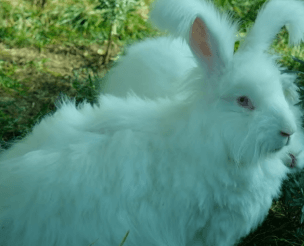
Ankara Tavşanı (Ankara Ticaret Borsası)
Approximately 90% of global Angora wool production is dominated by the People’s Republic of China. Global annual production is estimated at 8,000 to 12,000 tons.【7】 Wool prices are determined on international markets; first-quality wool trades at $30 to $40 per kilogram, while spun yarn products range from $15 to $26 per kilogram. Türkiye imports the majority of its raw material needs for the textile industry; historical records indicate that approximately 38,419 kilograms of wool were imported at a cost of $98,030 in foreign exchange.【8】.
Although originating in Anatolia, the Ankara rabbit became extinct in Türkiye after the 1700s. In recent years, efforts have been renewed to breed the species to preserve its genetic heritage. Production initiatives began in 2022 with two pairs of rabbits imported from the Netherlands under Elmadağ Municipality’s “Colorful Village Project”; by January 2026, the rabbit population had reached 130 individuals.【9】 Institutions such as Ankara Metropolitan Municipality and Ankara Chamber of Commerce continue their efforts under the “Five Whites” project to protect this breed, restore it to Ankara’s ancient cultural heritage, and transform it into an economic asset.
Ankara Tavşanı of Commerce. "Ankara Rabbit." No. 128. Accessed February 24, 2026. https://ankaranin5beyazi.com/ankaratavsani
Ankara Ticaret Borsası. "Ankara Tavşanı ve Angora Yünü." Accessed February 24, 2026. https://www.ankaratb.org.tr/lib_upload/64_Ankara%20tav%C5%9Fan%C4%B1%20ve%20Angora%20Y%C3%BCn%C3%BC_07_05_2009.pdf
Artukoğlu, M. Metin, Şule Işın, Funda Gençler, and Çetin Koçak. "Türkiye'de Ankara Tavşanı Yetiştiriciliğinin Genel Özellikleri, Sorunları ve Çözüm Önerileri." *Ege Üniversitesi Ziraat Fakültesi Dergisi* 44, no. 2 (2007): 49-64. Accessed February 24, 2026. https://dergipark.org.tr/tr/download/article-file/59259
Demirören Haber Ajansı (DHA). "Türkiye'de Nesli Tükenen Ankara Tavşanı Yeniden Yetiştiriliyor." January 29, 2026. Accessed February 24, 2026. https://www.dha.com.tr/foto-galeri/turkiyede-nesli-tukenen-ankara-tavsani-yeniden-yetistiriliyor-2807785/5
Erciyes Üniversitesi Faculty of Veterinary Medicine. "Ankara Tavşanı." Accessed February 24, 2026. https://veteriner.erciyes.edu.tr/EditorUpload/Files/ankara-tavsani-ciftcilerin-egitimi-ogrenci-egitimi.pdf
Mareşal Fevzi Çakmak Ortaokulu. "Angora Tavşanı." May 10, 2025. Accessed February 24, 2026. https://mfcakmakoo.meb.k12.tr/icerikler/angoratavsani_16294273.html
[1]
Erciyes Üniversitesi Veteriner Fakültesi. "Ankara Tavşanı." Erişim 24 Şubat 2026. https://veteriner.erciyes.edu.tr/EditorUpload/Files/ankara-tavsani-ciftcilerin-egitimi-ogrenci-egitimi.pdf
[2]
Mareşal Fevzi Çakmak Ortaokulu, "Angora Tavşanı," 10 Mayıs 2025, erişim 24 Şubat 2026. https://mfcakmakoo.meb.k12.tr/icerikler/angoratavsani_16294273.html
[3]
Demirören Haber Ajansı (DHA), "Türkiye'de Nesli Tükenen Ankara Tavşanı Yeniden Yetiştiriliyor," 29 Ocak 2026, erişim 24 Şubat 2026, https://www.dha.com.tr/foto-galeri/turkiyede-nesli-tukenen-ankara-tavsani-yeniden-yetistiriliyor-2807785/5
[4]
Mareşal Fevzi Çakmak Ortaokulu, "Angora Tavşanı," 10 Mayıs 2025, erişim 24 Şubat 2026. https://mfcakmakoo.meb.k12.tr/icerikler/angoratavsani_16294273.html
[5]
Erciyes Üniversitesi Veteriner Fakültesi. "Ankara Tavşanı." Erişim 24 Şubat 2026. https://veteriner.erciyes.edu.tr/EditorUpload/Files/ankara-tavsani-ciftcilerin-egitimi-ogrenci-egitimi.pdf
[6]
M. Metin Atukoğlu, Şule Işın, Funda Gençler Çetin Koçak, "Türkiye'de Ankara Tavşanı Yetiştiriciliğinin Genel Özellikleri, Sorunları ve Çözüm Önerileri," Ege Üniv. Ziraat Fak. Derg. 44, no. 2 (2007) Erişim 24 Şubat 2026, https://dergipark.org.tr/tr/download/article-file/59259
[7]
Demirören Haber Ajansı (DHA), "Türkiye'de Nesli Tükenen Ankara Tavşanı Yeniden Yetiştiriliyor," 29 Ocak 2026, erişim 24 Şubat 2026, https://www.dha.com.tr/foto-galeri/turkiyede-nesli-tukenen-ankara-tavsani-yeniden-yetistiriliyor-2807785/5
[8]
Ankara Ticaret Borsası. "Ankara Tavşanı ve Angora Yünü." Erişim 24 Şubat 2026. https://www.ankaratb.org.tr/lib_upload/64_Ankara%20tav%C5%9Fan%C4%B1%20ve%20Angora%20Y%C3%BCn%C3%BC_07_05_2009.pdf
[9]
Demirören Haber Ajansı (DHA), "Türkiye'de Nesli Tükenen Ankara Tavşanı Yeniden Yetiştiriliyor," 29 Ocak 2026, erişim 24 Şubat 2026, https://www.dha.com.tr/foto-galeri/turkiyede-nesli-tukenen-ankara-tavsani-yeniden-yetistiriliyor-2807785/5

Location | Türkiye Ankara | ||||||||
|---|---|---|---|---|---|---|---|---|---|
Health Risk | Fiber matting (stomach blockage) | ||||||||
Main Producer | People's Republic of China (90% of world production) | ||||||||
Economic Value | Angora wool (heat retention capacity twice that of sheep wool) | ||||||||
Main Varieties | English, French, Giant, Satin (total 11+ breeds) | ||||||||
Wool Yield (Annual) | Average 642 grams (business-based range of 575–821 g) | ||||||||
No Discussion Added Yet
Start discussion for "Ankara (Angora) Rabbit" article
History and Distribution
Physical Characteristics and Productivity
Breeding and Health
Economic Value and Global Trade
Current Status in Türkiye