

This article was automatically translated from the original Turkish version.
Condition(s) | Moon's Distance from Earth (Apogee) | ||||||||
|---|---|---|---|---|---|---|---|---|---|
Also Known as | Fire Ring | ||||||||
Example(s) | January 15 2023 October 14 2020 June 21 2010 | ||||||||
View from Türkiye | Usually Partial Eclipse | ||||||||
Observation Area | Narrow Observation Belt | ||||||||
Light | No Total Eclipse | ||||||||
Appearance | Bright Ring | ||||||||
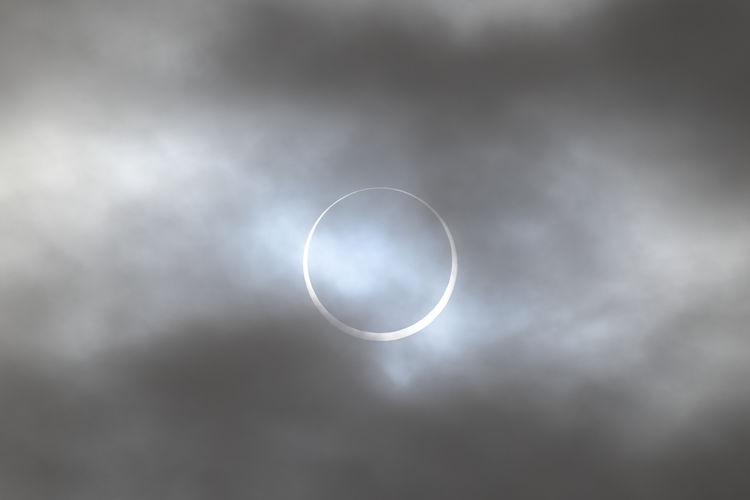
Annular Solar Eclipse is a type of solar eclipse that occurs when the Moon passes between the Sun and Earth but does not completely cover the Sun, resulting in a bright ring-like appearance around the Sun’s disk. The type of eclipse depends on the apparent angular diameters of the Moon and the Sun as seen from Earth; when the Moon’s apparent diameter is smaller than the Sun’s, an annular eclipse occurs; when it is larger, a total eclipse occurs; and when the alignment is imperfect, a partial solar eclipse is observed. During annular solar eclipses, a bright ring forms around the Sun’s disk, known as the “ring of fire.”

Annular Solar Eclipse (Flickr)
Solar eclipses occur when the Moon and the Sun align along the same line or very nearly so as viewed from Earth. For an annular eclipse to occur, the Moon must be at a relatively distant position from Earth at the time of the eclipse, making its apparent diameter smaller than that of the Sun.
Since the Moon orbits Earth in an elliptical path, its distance from Earth varies periodically. When the Moon is at apogee, its apparent angular diameter is reduced; under these conditions, although the Moon covers the center of the Sun’s disk, it cannot obscure its edges, resulting in an annular solar eclipse.
The plane of the Moon’s orbit intersects the plane of Earth’s orbit around the Sun at two points. An eclipse occurs when the Moon and the Sun are near or at these nodal points. Because these geometric conditions do not occur every month, solar eclipses are not observed at regular intervals.
Solar eclipses are classified into three main types based on the degree of alignment between the apparent directions of the Moon and the Sun as seen from Earth and their angular diameters at the time of the eclipse: total, annular, and partial. When the Moon’s apparent diameter is smaller than the Sun’s, an annular eclipse occurs; when it is larger, a total eclipse occurs. When the alignment is imperfect, a partial eclipse is observed.
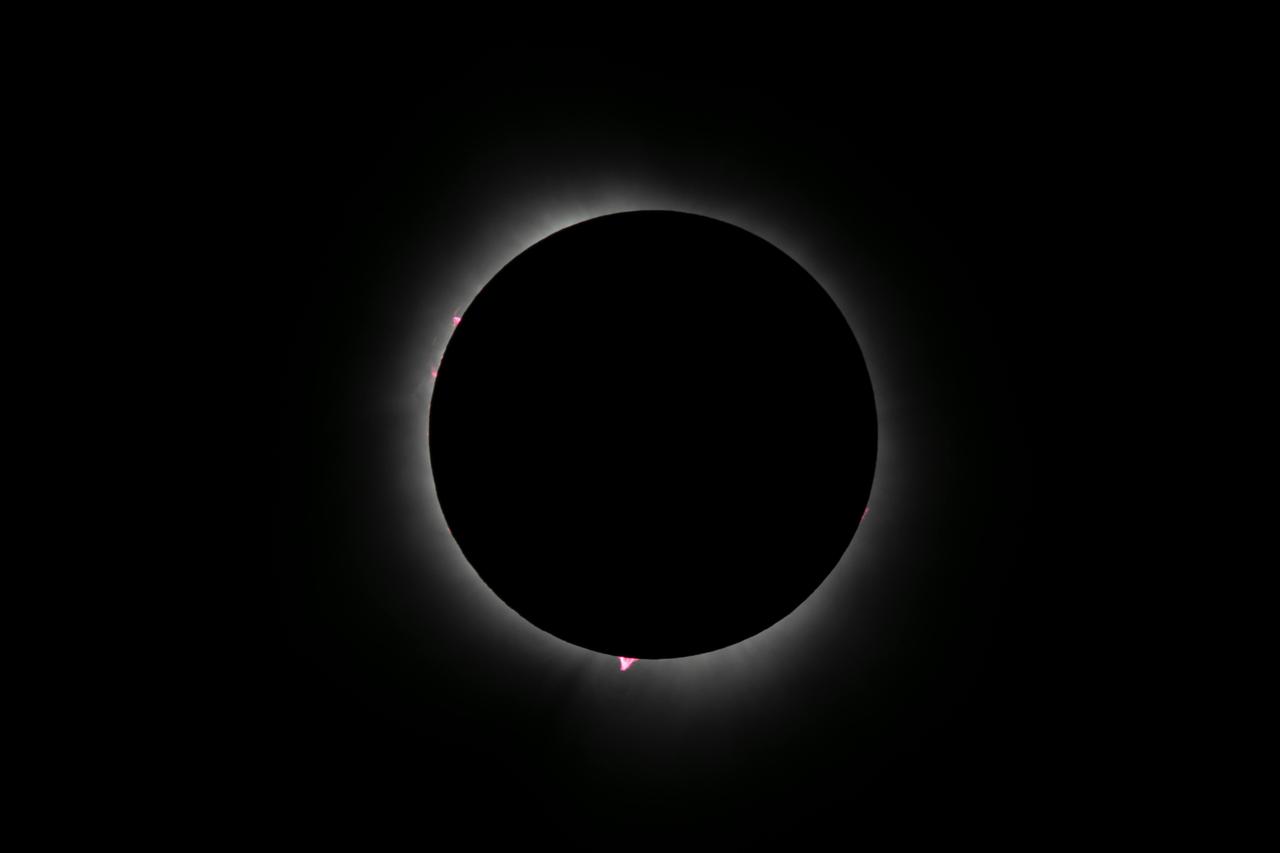
Annular Solar Eclipse (Pexels)
The region on Earth’s surface from which an annular eclipse can be observed is limited to a narrow path called the annular observation belt. This belt encompasses areas where the projections of the Moon and the Sun nearly coincide. Outside this belt, the eclipse is observed as a partial solar eclipse.
During annular eclipses, the Moon covers the center of the Sun’s disk; however, because its apparent diameter is smaller, the Sun’s edges remain visible as a bright ring. Consequently, the Sun’s light is not completely blocked, and the full darkness characteristic of total solar eclipses does not occur.
Türkiye is geographically located outside the narrow annular observation belt for most annular solar eclipses. Therefore, annular solar eclipses are typically observed from Türkiye as partial solar eclipses.
June 21, 2020: The annular solar eclipse on this date occurred outside Türkiye’s annular observation belt, and the event was observed across the country as a partial solar eclipse. It was reported that approximately 16 percent of the Sun’s disk was covered by the Moon during this eclipse.【1】
January 15, 2010: During another annular solar eclipse on this date, Türkiye was again outside the annular observation belt. Observations from Türkiye indicated that, on average, about 12 percent of the Sun’s disk was obscured by the Moon.【2】
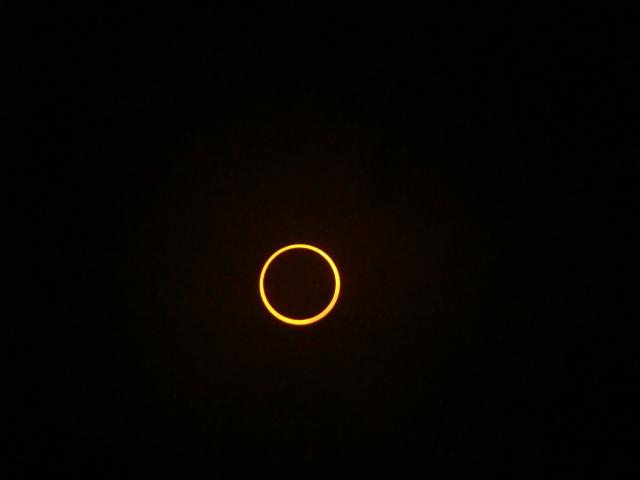
Total Annular Solar Eclipse (Flickr)
Observations of solar eclipses in Türkiye are not limited to the modern astronomical era; they are also documented in historical sources. From the Ottoman period onward, solar eclipses were recorded through astronomical texts, calendars, and observational logs. These records provide information on the dates of eclipses and the regions where they were observed.
Although historical eclipse records lack detailed observational data, they serve as valuable auxiliary evidence for determining the chronology of eclipses and dating historical events.
Annular solar eclipses are classified as a distinct type within the broader category of solar eclipses. An annular solar eclipse is defined by the incomplete coverage of the Sun by the Moon, resulting in a bright ring around the Sun’s disk; this feature distinguishes it from total and partial solar eclipses.
Institutional observations of annular solar eclipses aim to study the temporary changes in solar radiation and their effects on Earth’s environment. In this context, research is conducted to measure the reduction in solar radiation reaching Earth during the eclipse. Contemporary scientific studies compare data collected before, during, and after the eclipse, under the assumption that the changes in radiation may cause short-term physical alterations in upper atmospheric layers such as the ionosphere.
October 14, 2023: The annular solar eclipse on this date resulted from an alignment in which the Moon did not fully cover the Sun and was observed as an annular eclipse along a narrow path across the United States. The eclipse began at 09:13 Pacific Time and was visible from Oregon through Nevada, Utah, New Mexico, and Texas. In other regions outside this path, the eclipse was observed as partial.
Accessed November 26, 2025.
Akoğlu, Alp. “Halkalı Güneş Tutulmaları.” *Bilim ve Teknik Dergisi*, (January 2010): 98–99. Accessed February 1, 2026. https://e-dergi.tubitak.gov.tr/edergi/yazi.pdf?dergiKodu=4&cilt=43&sayi=651&sayfa=98&yaziid=28774
Anadolu Ajansı. "Halkalı Güneş Tutulması, ABD’nin Nevada Eyaletinde Görüntülendi." Accessed February 1, 2026.
Ankara UniversityKreiken Rasathanesi. "21 Haziran Halkalı Güneş Tutulması." *Ankara Üniversitesi.* Accessed February 1, 2026. https://rasathane.ankara.edu.tr/21-haziran-parcali-gunes-tutulmasi/
Badruddeen. "Annular Solar Eclipse Maldives January 15 2010 ~ Full Ring." *Flickr*. Accessed February 1, 2026. https://www.flickr.com/photos/mackro/4276306884
Fitzpatrick, Beth. "Annular Solar Eclipse." Pexels. Accessed February 1, 2026. https://www.pexels.com/photo/annular-solar-eclipse-21337316/
Günergun, Feza. “Türkiye’de Güneş Tutulması Gözlemleri Üzerine Tarihsel Notlar.” *Dört Öge* 1, no. 1 (2012): 17–45. Accessed February 1, 2026. https://dergipark.org.tr/tr/download/article-file/567344
NASA Goddard Space Flight Center. “Hinode Observes 2011 Annular Solar Eclipse.” Flickr. Accessed February 1, 2026. https://www.flickr.com/photos/gsfc/5333202438
National Environmental Satellite, Data, and Information Service. “Annular Solar Eclipse.” NOAA. Accessed February 1, 2026. https://www.nesdis.noaa.gov/events/annular-solar-eclipse
[1]
Ankara University Kreiken Observatory, “June 21 Annular Solar Eclipse,” Ankara University, Accessed February 1, 2026, https://rasathane.ankara.edu.tr/21-haziran-parcali-gunes-tutulmasi/
[2]
Alp Akoğlu, “Annular Solar Eclipse,” Bilim ve Teknik Dergisi, Accessed February 1, 2026, https://e-dergi.tubitak.gov.tr/edergi/yazi.pdf?dergiKodu=4&cilt=43&sayi=651&sayfa=98&yaziid=28774

Condition(s) | Moon's Distance from Earth (Apogee) | ||||||||
|---|---|---|---|---|---|---|---|---|---|
Also Known as | Fire Ring | ||||||||
Example(s) | January 15 2023 October 14 2020 June 21 2010 | ||||||||
View from Türkiye | Usually Partial Eclipse | ||||||||
Observation Area | Narrow Observation Belt | ||||||||
Light | No Total Eclipse | ||||||||
Appearance | Bright Ring | ||||||||
No Discussion Added Yet
Start discussion for "Annular Solar Eclipse" article
Conditions for Formation
Position Among Solar Eclipse Types
Observation Characteristics
Visibility from Türkiye
Historical Observations and Records
Scientific and Institutional Research
Recent Observations