

+2 More

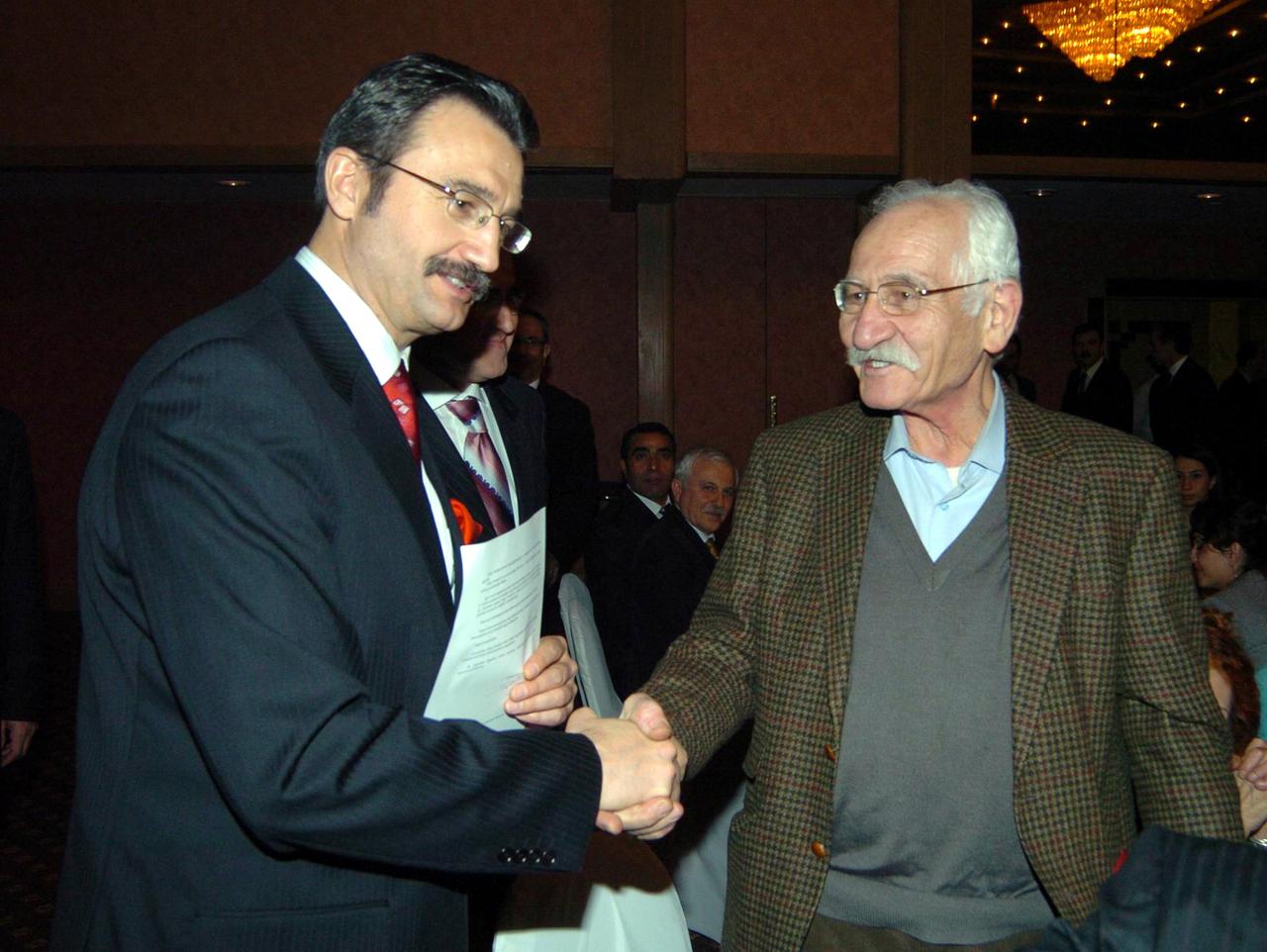
(Anadolu Agency)
Arif Erkin Güzelbeyoğlu
Name(s) | Arif Erkin Güzelbeyoğlu | ||||||||
|---|---|---|---|---|---|---|---|---|---|
Doğum tarihi | 1935-09-11 | ||||||||
Ölüm tarihi | 2025-10-16 | ||||||||
Profession(s) | Theater and Cinema Artist Architect Actor | ||||||||
Important Works | White Angel Magnificent Century Second Spring Foreign Son-in-Law | ||||||||
Award(s) | Adana Altın Koza Film Festival - Best Music | ||||||||
Arif Erkan (Erkin) Güzelbeyoğlu (11 September 1935 – 16 October 2025) was a distinguished actor who mastered the fields of theatre, cinema and television in Türkiye, and also gained recognition as an artist for his musical productions. His professional career encompassed stage performances, roles in cinema and television series, and musical activities.
Güzelbeyoğlu was born on 11 September 1935 in Gaziantep. His father was a literature teacher and a graduate of Darülfünun. While completing his secondary education at Gaziantep High School, he made his first contact with the stage; after participating in a high school theatre competition, he took on the lead role in Molière’s The Imaginary Invalid in 1950, stepping into amateur theatre. During the same period, his interest in music became evident; the earliest traces of his later vocal and choral experiences date back to these years. He moved to Istanbul to attend Istanbul Technical University’s Faculty of Architecture.
His student years were marked by intense amateur theatre activity; the technical productions within the university merged with the artistic traditions of the Galatasaray High School circle to form a regular stage practice. During this time, he worked on plays by Ahmet Kutsi Tecer and performed in works such as Ayyar Hamza and Ionesco’s The Lesson. He institutionalized his musical interests by undertaking vocal training at the State Opera Studio/Opera School and participated in programmes as a choir member and soloist at Istanbul Radio. Due to the intensity of his involvement in theatre, he completed his five-year undergraduate programme in eight years.
Following his experiences in scattered university-based groups, he played an active role in the Genç Oyuncular (Young Actors) collective, established on 9 August 1957. Within the group, he not only acted but also turned toward stage music; its repertoire included experimental works ranging from Ionesco adaptations to traditional forms. Non-verbal, rhythm- and movement-based plays such as Kervan reflected the artistic explorations of this era. The collective adopted an approach that emphasized direct audience engagement and rejected the concept of the “fourth wall”; the Erdek Festivals, held from 1958 onward, became a practical example of this philosophy by integrating spectators into the performance.
After approximately six years, the Genç Oyuncular disbanded due to members’ military service, professional obligations and livelihood needs. This period marked the simultaneous maturation of Güzelbeyoğlu’s dual identity as both actor and composer. His transition to professionalism began at the Gülriz Sururi–Engin Cezzar Theatre, where he appeared in Refik Erduran’s musical Direklerarası and composed its music. He later performed at the Ulvi Uraz Theatre. He was among the founders of the Dostlar Tiyatrosu in 1969 and appeared in all of the company’s productions until 1974–1975, while also composing music for all of its plays during this period.
The institutional counterpart to his university-era amateur experience was the Genç Oyuncular collective, established on 9 August 1957. Within this structure, he pursued not only acting but also stage music production; its repertoire combined Ionesco adaptations (The Lesson, The Chairs) with traditional forms. Experimental plays such as the non-verbal, rhythm-driven Kervan reflected the artistic inquiries of this period. The collective embraced an approach that prioritized direct audience interaction and disregarded the “fourth wall”; the Erdek Festivals, held from 1958 onward, served as a practical model for integrating spectators into the performance.
When the Genç Oyuncular disbanded after about six years due to members’ military service, professional commitments and financial needs, this phase was recorded as the period during which Güzelbeyoğlu’s identities as both actor and composer matured simultaneously on stage. His professional transition after military service began at the Gülriz Sururi–Engin Cezzar Theatre, where he performed in Refik Erduran’s musical Direklerarası and composed its music. He later appeared in productions at the Ulvi Uraz Theatre. He was a founding member of the Dostlar Tiyatrosu in 1969 and performed in all of its productions until 1974–1975, while also composing music for all of its plays during this time.
By the end of these years, his increasing responsibilities in municipal roles led him to withdraw from regular stage appearances; his final performance was in Alpagut Olayı. Even after stepping away from the stage, he continued working intermittently on theatre music. Throughout his stage practice, a consistent approach was followed in repertoire selection, emphasizing “research” and “adaptation”; modern texts were explored alongside local and traditional forms. In collective productions, a preference was adopted for addressing political themes through social satire and critique of everyday life, avoiding direct, sloganistic expression.
In cinema, he first appeared in the 1970s as a composer. He composed the music for Yılmaz Güney’s film Umut (1970). In 1979, he created a score for Kanal using a small orchestra. While continuing to produce music for various film projects during this period, his acting work remained primarily focused on the stage.
His breakthrough to a broad television audience began at the end of the 1990s and early 2000s with popular series.
In İkinci Bahar (1998–2001), he portrayed Zülfikar Ağa; in Yazlıkçılar (1993–1998), he played Cavit; and in Yeditepe İstanbul’da (2001–2002), he portrayed Hüseyin. His visibility increased in the 2000s through his role as Memik Dede in the series Yabancı Damat (2004–2007). He later appeared as Cabbar Ağa in Canım Ailem (2009–2010), in episodic roles in Bizimkiler (1989–1991), and in productions such as Kalpsiz Adam (2008) and Tatlı Bela Fadime (2007).
In the 2010s, he regularly appeared in historical and drama projects. He portrayed Piri Mehmet Paşa in the 2011–2013 seasons of Muhteşem Yüzyıl and was a regular cast member in the series Hayat Devam Ediyor (2011–2012). In 2013, he appeared as a guest actor in Hayat Sana Güzel; in 2013–2014, he appeared in Doksanlar; and in 2014–2015, he portrayed Rıfat in Güzel Köylü. In 2017, he appeared in consecutive film projects: as “Dede” in Aile Arasında, as “Köyün Dedesi” in Vezir Parmağı, and as “Mevlüt” in Bütün Saadetler Mümkündür. That same year, he participated in the projects Cici Babam and Geçmişteki Sır. He portrayed “Hasan” in the 2009 film Gecenin Kanatları and “Baba” in the 2002 film Sır Çocukları.
In the 2020s, his screen appearances were limited but consistent. He appeared in one season of Aşk Yalanı Sever and portrayed “Dede” in the film Güven Bana (2022). Throughout all his television and cinema work, his production path remained continuous, supported by his musical practice since the 1950s and the discipline he developed on stage in the 1960s. He continued to appear in intermittent roles in television and cinema until his death on 16 October 2025.
From his university years onward, he turned toward composition alongside his acting on stage; he composed the music for Refik Erduran’s musical Direklerarası at the Gülriz Sururi–Engin Cezzar Theatre. He later composed the music for Haldun Taner’s plays Zilli Zarife and Vatan Kurtaran Şaban, and wrote music for all productions of the Dostlar Tiyatrosu during its first five years after its founding in 1969, establishing this as the central axis of his stage-based creative output.
His first significant work in cinema was the score he composed for Yılmaz Güney’s film Umut (1970); he constructed the entire composition using only a single bass clarinet, and the film won the Best Music Award at the Adana Altın Koza Film Festival. In 1979, he composed a score for Kanal using a small orchestra. During the 1980s, he continued producing cinema music, composing for Değirmen (1986) and Dikenli Yol (1986). He also contributed music to various television productions; recordings confirm his involvement in the scores for programmes such as Karakolda Ayna Var, Gramafon Avrat, Bir Milyara Çocuk and Bizimkiler, particularly in documentary and portrait-style content.
This trajectory demonstrated a seamless flow between his stage compositions and his work in cinema and television. His early vocal training and radio experience provided a foundational basis for his theatrical compositions; from the late 1960s onward, the scores he prepared for stage and screen evolved into diverse forms adapted for television productions in the 1980s.
In 1969, he won the Best Music Award at the Adana Altın Koza Film Festival for his score in Umut. He composed the music for the 1979 film Kanal, which was awarded the Golden Orange; this work sustained his visibility in the field of cinema music. His scores for Değirmen (1986) and Dikenli Yol (1986) in the 1980s demonstrated the continuity of his cinema music production.
Güzelbeyoğlu passed away on the morning of 16 October 2025 at the age of 90. His close circle first announced the news; according to media reports, his son Mehmet Güzelbeyoğlu confirmed the death. On the same day, various media outlets published brief biographical summaries highlighting his major roles and musical works, with particular emphasis on his portrayals as Memik Dede in Yabancı Damat, Zülfikar Ağa in İkinci Bahar, and Piri Mehmet Paşa in Muhteşem Yüzyıl. Condolence messages from local government representatives were made publicly available.
Beyazperde. "Arif Erkin Güzelbeyoğlu Filmografi." Accessed October 16, 2025. https://www.beyazperde.com/sanatcilar/sanatci-519698/filmografi/.
Ekonomim. "Oyuncu Arif Erkin Güzelbeyoğlu Hayatını Kaybetti." Accessed October 16, 2025. https://www.ekonomim.com/gundem/oyuncu-arif-erkin-guzelbeyoglu-hayatini-kaybetti-haberi-849228.
GZT. “Arif Erkin Kimdir? Nereli, Kaç Yaşındaydı? Usta Oyuncu Arif Erkin Güzelbeyoğlu Hayatını Kaybetti.” *GZT - Jurnalist.* Accessed October 16, 2025. https://www.gzt.com/foto-galeri/jurnalist/arif-erkin-kimdir-nereli-kac-yasindaydi-usta-oyuncu-arif-erkin-guzelbeyoglu-hayatini-kaybetti-2047883/1.
Hürriyet. “Usta Oyuncu Arif Erkin Güzelbeyoğlu Hayatını Kaybetti.” Accessed October 16, 2025. https://www.hurriyet.com.tr/kelebek/hayat/usta-oyuncu-arif-erkin-guzelbeyoglu-hayatini-kaybetti-42985465.
IMDb. "Awards for Arif Erkin Güzelbeyoğlu." IMDb. Accessed October 16, 2025. https://www.imdb.com/name/nm0259490/awards/?ref_=nmbio_ov_at_pop_4.
IMDb. "Biography of Arif Erkin Güzelbeyoğlu." IMDb. Accessed October 16, 2025. https://www.imdb.com/name/nm0259490/bio/?ref_=nm_ov_ql_1.
NTV. "Usta Oyuncu Arif Erkin Güzelbeyoğlu Hayatını Kaybetti." NTV. Accessed October 16, 2025. https://www.ntv.com.tr/n-life/kultur-ve-sanat/usta-oyuncuarif-erkin-guzelbeyoglu-hayatini-kaybetti,dmiuqmYrgk2kUuyJKeYBoQ.
Objektif Dergisi. "M. Erhan Durukan: Arif Erkin Güzelbeyoğlu." Accessed October 16, 2025. https://objektifdergisi.com/sanat/m-erhan-durukan-arif-erkin-guzelbeyoglu.
TRT Haber. “Usta Oyuncu Arif Erkin Güzelbeyoğlu Hayatını Kaybetti.” Accessed October 16, 2025. https://www.trthaber.com/haber/kultur-sanat/usta-oyuncu-arif-erkin-guzelbeyoglu-hayatini-kaybetti-922967.html.
Ulutepe, Lale; Sevilay Saral; Ömer F. Kurhan; Celal Mordeniz. “Arif Erkin ile Söyleşi.” *Art-izan.* November 10, 1995. Accessed October 16, 2025. https://www.art-izan.org/artizan-arsivi/arif-erkin-ile-soylesi/.
Yülek, Güzide. “Çiğ Köfte Yapmak Benim İçin Terapi.” *Cumartesi Postası (Posta)*, October 20, 2012. Archived April 22, 2021. Accessed October 16, 2025. https://web.archive.org/web/20210422113853/https://www.posta.com.tr/cig-kofte-yapmak-benim-icin-terapi-144236.

(Anadolu Agency)
Arif Erkin Güzelbeyoğlu
Name(s) | Arif Erkin Güzelbeyoğlu | ||||||||
|---|---|---|---|---|---|---|---|---|---|
Doğum tarihi | 1935-09-11 | ||||||||
Ölüm tarihi | 2025-10-16 | ||||||||
Profession(s) | Theater and Cinema Artist Architect Actor | ||||||||
Important Works | White Angel Magnificent Century Second Spring Foreign Son-in-Law | ||||||||
Award(s) | Adana Altın Koza Film Festival - Best Music | ||||||||
No Discussion Added Yet
Start discussion for "Arif Erkin Güzelbeyoğlu" article
Childhood, Education and Entry into the Arts
Theatre and Stage Work
Cinema and Television Career
Musical Works and Compositions
Awards and Nominations
Death