


This article was automatically translated from the original Turkish version.
+2 More
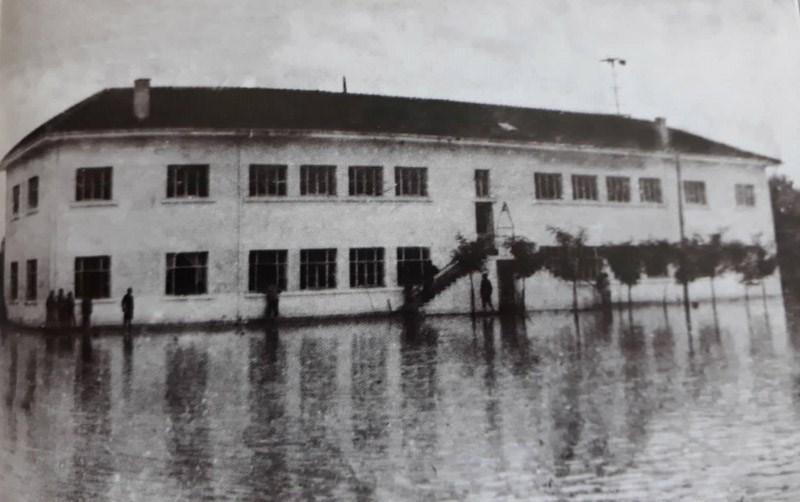
Arifiye Village Institute (T.C. Arifiye Subgovernorship)
Architect(s) | Recai Akçay (first place in competition) | ||||||||
|---|---|---|---|---|---|---|---|---|---|
Location | Sakarya (originally part of Kocaeli) Arifiye | ||||||||
Current Status | The campus has been divided; the Main Building is used as the Arifiye District Governorate | ||||||||
Original Activities | Fishing, Health Unit, Music (Aşık Veysel) | ||||||||
Student Resources | Kocaeli, Bolu, Bilecik, Bursa, Istanbul | ||||||||
Founding Director | Süleyman Edip Balkır | ||||||||
Closure Date | 1954 (conversion to Primary School) | ||||||||
Founding Date | 17 April 1940 (official), 1937 (Teacher Training Course) | ||||||||
Arifiye Village Institute is one of the 21 Village Institutes established by Law No. 3803 dated 17 April 1940 to promote rural development, raise the educational and cultural level of village populations, and train teachers suited to rural needs. Located in the town of Arifiye, then part of Kocaeli Province (now Sakarya), along the Istanbul-Ankara railway line, the institute operated as one of the key educational and cultural centers in the Marmara Region. The institution holds a significant place in Turkish educational history due to its original architectural design, its pedagogical approach based on the principle of "learning through work," and its region-specific educational activities such as fishing.

Arifiye Village Institute (Government of Arifiye, Republic of Türkiye)
The foundations of the institute were laid before the adoption of the Village Institutes Law, during a period known as the "Proto-Village Institute Phase," which began in 1937. In this context, the Arifiye Teacher Training Course was opened in Arifiye in 1937 to train literate sergeants who had completed their military service as teachers. With the enforcement of the law in 1940, this course was formally transformed into a Village Institute. The founding director of the institute was the educator Süleyman Edip Balkır.
During its establishment phase, students were admitted from the provinces of Kocaeli, Bolu, Bilecik, Bursa, and Istanbul. According to 1940 records, the institute enrolled a total of 153 students, 19 female and 134 male. The land on which the institute was built was initially described as marshy and unsuitable for agriculture. The founding director, Süleyman Edip Balkır, and the first students transformed this area into a productive educational campus through intensive labor and reclamation efforts.
Arifiye Village Institute is one of the most important representatives of modernist architecture in rural Türkiye during the Republican era. For the campus design, a national architectural competition organized by the Ministry of National Education in 1940 awarded first prize to the project of Senior Architect Recai Akçay.
The institute campus was divided into distinct areas, including the "Teacher Training Course Area" and the area where the competition design was implemented. The "imece" method, in which students and teachers actively participated in construction, was adopted. Students produced their own bricks in kilns and personally built the buildings. Architecturally, the structures feature a simple, functional, and symmetrical design, typically one or two stories high, combining local materials such as brick and wood with modern techniques.
Buildings constructed on the campus include classrooms, dormitories, teacher residences, workshops (ateliers), a bathhouse, a clinic, and agricultural structures. Particularly notable is the building begun in 1937 and known as the Central Building, which stands as one of the institute’s most iconic structures. Today, this building serves as the Arifiye Subdistrict Governorship and is the only registered cultural asset remaining on the campus.
The educational system at the institute was based on the principles of "learning through work" and "learning by doing," developed by İsmail Hakkı Tonguç, then General Director of Primary Education. The curriculum was organized into three main categories: cultural subjects, agricultural subjects, and technical subjects. In this system, theoretical knowledge was directly applied in practice: students attended academic classes for half the day and worked in workshops, agriculture, and construction during the other half.
Arifiye Village Institute developed unique characteristics by integrating the advantages of its geographical location into its educational program:
In 1954, under Law No. 6234, the Village Institutes were closed and merged with Primary Teacher Schools. As a result, the institution became the Arifiye Primary Teacher School. In subsequent years, in line with changes in the education system and policies, it operated under various statuses including Teacher High School, Education Institute, Anatolian Teacher High School, and Science High School.
Over time, the integrity of the campus was compromised, with portions of the land transferred to other public institutions or opened for construction. The majority of the original institute buildings—including the dining hall, workshops, and bathhouse—were demolished or left abandoned and eventually disappeared. Today, only a limited number of structures remain on the campus that retain their original character. The most important of these is the Central Building, which has been restored and now functions as the Arifiye Subdistrict Governorship. Additionally, some educational materials and artifacts from the institute period are preserved in the inventory of the Sakarya Education Museum.
Sakarya Üniversitesi. "Arifiye Köy Enstitüsü." Sakarya Şehir Hafızası. Accessed February 7, 2026. https://sehirhafizasi.sakarya.edu.tr/arifiye-koy-enstitusu/.
T.C.Arifiye Kaymakamlığı Governorship. "Tarihçe." Accessed February 7, 2026. https://www.arifiye.gov.tr/tarihce.
Türkiye Yazarlar Birliği. "Arifiye Köy Enstitüsü (2)." Accessed February 7, 2026. https://www.tyb.org.tr/arifiye-koy-enstitusu-2-4078yy.htm.
Çolak, Filiz. “Arifiye Köy Enstitüsü.” Master's thesis, Uludağ Üniversitesi, 2011. Accessed February 7, 2026. https://acikerisim.uludag.edu.tr/server/api/core/bitstreams/230a2d42-339c-4d3c-b8e4-e4ceb5a16c45/content.

Arifiye Village Institute (T.C. Arifiye Subgovernorship)
Architect(s) | Recai Akçay (first place in competition) | ||||||||
|---|---|---|---|---|---|---|---|---|---|
Location | Sakarya (originally part of Kocaeli) Arifiye | ||||||||
Current Status | The campus has been divided; the Main Building is used as the Arifiye District Governorate | ||||||||
Original Activities | Fishing, Health Unit, Music (Aşık Veysel) | ||||||||
Student Resources | Kocaeli, Bolu, Bilecik, Bursa, Istanbul | ||||||||
Founding Director | Süleyman Edip Balkır | ||||||||
Closure Date | 1954 (conversion to Primary School) | ||||||||
Founding Date | 17 April 1940 (official), 1937 (Teacher Training Course) | ||||||||
No Discussion Added Yet
Start discussion for "Arifiye Village Institute" article
History and Establishment Process
Architectural Structure and Campus Layout
Educational Model and Unique Activities
Transformation Process and Current Status