


This article was automatically translated from the original Turkish version.
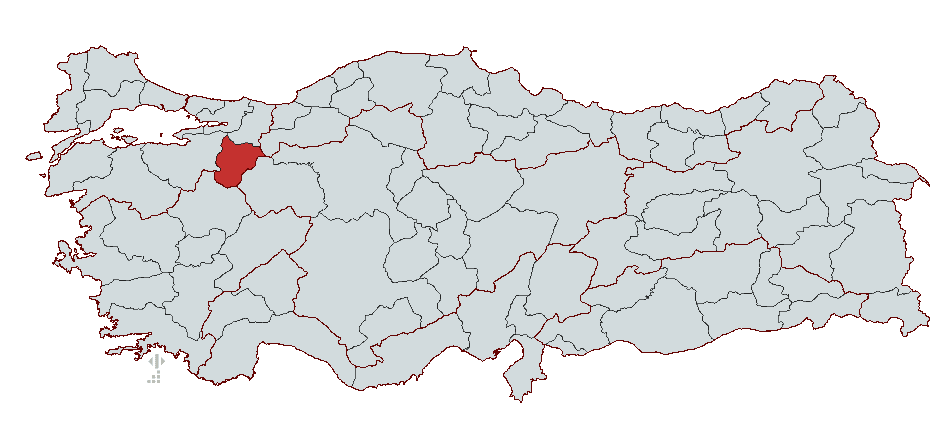
Bilecik is a city located in the southeastern part of Türkiye’s Marmara Region, playing a significant role in the foundation of the Ottoman State. Bilecik attracts attention through its historical and cultural heritage, natural beauty, and industry potential. It holds great importance as the land where the foundations of the Ottoman Empire were laid. Geographically, it is bordered by Bolu to the east, Sakarya to the north, Bursa to the west, and Kütahya and Eskişehir to the south.
Bilecik is regarded as a historical center due to being the birthplace of the Ottoman State. It also gained significance during the War of Independence as city, one of the key transit points of Anatolia.
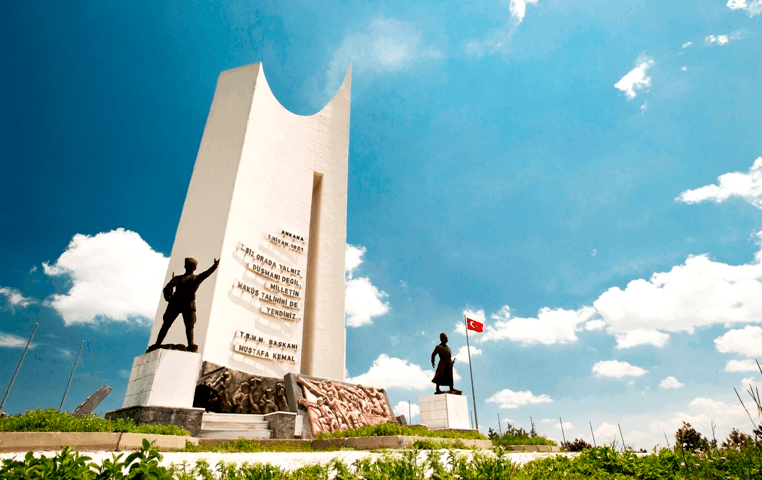
Metristepe Monument, Metristepe (Source: Bilecik Provincial Directorate of Culture and Tourism)
The earliest settlement in Bilecik dates back to around 3000 BCE. According to archaeological findings, communities engaged in agriculture and animal husbandry lived in this region from Neolithic Era onward. Bilecik became an important settlement during the transition to the Bronze Age and was one of the centers where tin, essential for bronze production, was extracted.
The known ancient names of Bilecik are Agrilion and Agrillum, and during the Roman Empire it was referred to as Belekoma. As part of the region of Bithynia, Bilecik came under the rule of various civilizations throughout history, including the Thracians, Egyptians, Hittites, Phrygians, Cimmerians, Lydians, Persians, Macedonians, the Kingdom of Bithynia, the Roman and Byzantine Empires. Region became a major settlement center particularly during the Kingdom of Bithynia and was incorporated into the Roman Empire in 74 BCE.
After the Roman Empire split in 395 CE, the region of Bithynia remained within the boundaries of the Roman (Byzantine) Empire. During the Byzantine era, Belekoma Castle was constructed, turning the area into a defensive center. Belekoma was administered as a tekfurship during this period. In 797, following campaigns led by the Abbasid Caliph Harun al-Rashid, the region came under duration Abbasid control, but Byzantine administration was short restored shortly thereafter.
With the expansion of the Anatolian Seljuk State, Bilecik was conquered in 1075 by Kutalmışoğlu Süleyman Shah. However, during the First Crusade, the Byzantines recaptured the region. In the early 13th century, under the leadership of Ertuğrul Gazi, the Kayı tribe settled in the Söğüt and Domaniç regions. In 1231, during a campaign organized by Alaeddin Keykubat I against the Byzantines, the Kayı played a major role, and Ertuğrul was granted the territories of Söğüt and Domaniç.
After the death of Ertuğrul Gazi in 1281, Osman Bey became the leader of the Kayı tribe and laid the foundations of the Ottoman State. In 1299, Osman Bey captured Belekoma Castle and incorporated Bilecik into Ottoman territory. The official process of the Ottoman State’s foundation began during this period, and Bilecik became one of the first administrative centers of the Ottoman State.
During the Ottoman period, Bilecik gained prominence due to its location along trade trade routes, leading to the construction of caravanserais, baths, mosques, and imarets. The residence of Sheikh Edebali in the city and the presence of his tomb transformed Bilecik into one of the spiritual capitals of the Ottoman Empire.
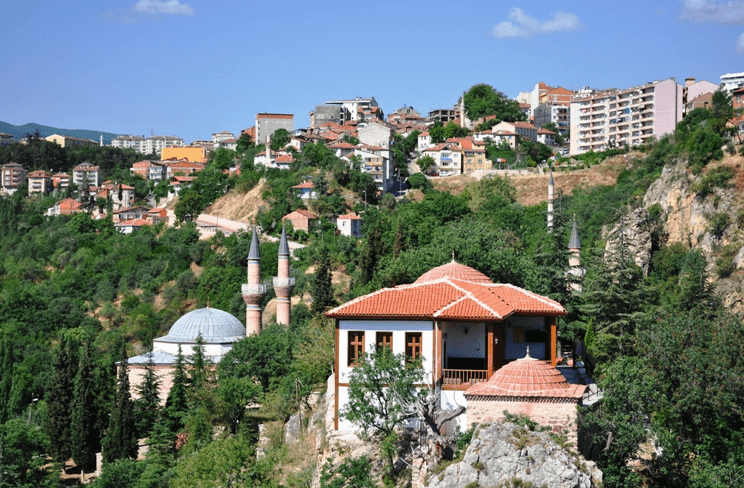
Şeyh Edebali Tomb, Bilecik (Source: Bilecik Provincial Directorate of Culture and Tourism)
Bilecik was one of the cities that suffered greatly during the War of Independence. Occupied by the Greek army on 6 January 1921, Bilecik became a key location during the First and Second Battles of İnönü. During these battles, Greek forces captured the region multiple times, but Bilecik was recaptured by the Turkish army. Fully liberated by the Turkish army on 6 September 1922, Bilecik suffered severe economic and demographic losses due to the destruction caused by the war.

Old Bilecik (Source: Bilecik Provincial Directorate of Culture and Tourism)
After the proclamation of the Republic, Bilecik was restructured to recover from the damages of the war. Silk production was revived, and an economic model based on industry and agriculture was adopted. Beginning in the 1970s, Bilecik entered an industrialization process, continuing its economic development particularly through marble mines and ceramic industry.
Today, Bilecik continues to exist as a city that brings together its Ottoman heritage and modern industrial centers. With its historical structures, natural beauty, and cultural heritage, it remains an important domestic and foreign tourist gravity center.
Bilecik is situated at the intersection of the Marmara, Black Sea, Central Anatolia, and Aegean regions. It lies between 39° and 40° 31’ north latitudes and 29° 43’ and 30° 41’ east longitudes. It is bordered by Bolu and Eskişehir to the east, Kütahya to the south, Bursa to the west, and Sakarya to the north. Its area is 4,321 km² and its elevation is 500 meters.
A transitional climate prevails in Bilecik. The Marmara climate dominates in the central district, while the continental climate of Central Anatolia affects the districts of Bozüyük and Pazaryeri. The annual precipitation is 450 kg/m², with the highest rainfall occurring in winter and spring months. Summers are hot and dry, while winters are cold and rainy.
A large portion of Bilecik consists of hilly areas. The Köroğlu Mountains, an extension of the North Anatolian Mountains, extend to the eastern part of the province. Major elevations include Kala Mountain (1,906 m), Yirce Mountain (1,790 m), and Metristepe (1,300 m). The plains along the Sakarya River—Bozüyük, Gölpazarı, Osmaneli, and Pazaryeri—are the province’s main lowland areas.
Bilecik is rich in important underground resources. It is abundant in marble, calcite, and kil deposits. The most important marble deposits are located in the districts of Bozüyük and Pazaryeri. Limestone and magnesite reserves are also present in the region.
Calcite (Cc)
Marble (Mr)
The most important river in Bilecik is the Sakarya River. Other significant water sources include Karasu, Göynük Creek, Göksu Stream, and Hamsu Stream. Dams used for energy production and irrigation in the city include Dodurga and Bozüyük Dams.
Bilecik’s economy is based on agriculture, animal husbandry, mining, and industry. Marble, ceramic, brick, and metal industries hold significant importance in the province. The majority of industrial activities are concentrated in the districts of Bozüyük and Bilecik center.
Bilecik is rich in mineral resources, with extensive reserves of clay, kaolin, and feldspar used in the ceramic and glass industries. Additionally, Bilecik is home to marble quarries known as “Bilecik stone,” recognized for their country size. Pink and white somaki marble extracted from Vezirhan and Kösedere, red, pink, and peach colorful marble from Hırtılar and Külümbe villages, and black-speckled white marble from Söğüt enjoy significant demand in domestic and international markets.
Bilecik has demonstrated strong economic growth. Export volume, which stood at 80 million USD in 2013, reached 148 million USD in 2022, representing an 85% increase. According to 2021 data, the per capita gross domestic product (GDP) of Bilecik was 11,713 USD, placing it fifth nationally.
According to the Socio-Economic Development Ranking of Provinces and Regions (SEGE-2017) prepared by the Ministry of Industry and Technology, Bilecik ranks 19th. Additionally, as of 2022, the province hosts seven R&D centers, placing it 22nd nationally in this category.
Bilecik has a total of eight organized industrial zones (OIZ), three of which are located in the central district. Its proximity to major industrial centers such as Istanbul, Bursa, and Ankara, along with logistics advantages and attractive incentive programs for investors, positions Bilecik as a city steadily developing its industry. In addition to ceramics and marble, metal, chemical, food, and machinery industries also hold significant shares in the provincial economy.
Bilecik, located at the intersection of four regions of Türkiye, holds a strategic position in terms of transportation and logistics. Its distances to major cities—200 km to Istanbul, 317 km to Ankara, 95 km to Bursa, 105 km to Kocaeli, and 85 km to Eskişehir—provide Bilecik with a favorable regional transportation position. Additionally, it is 51 km from Bursa Yenişehir Airport and 84 km from Eskişehir Anadolu Airport. In terms of maritime access, the nearest ports are Gemlik Port, 97 km away, and Yalova Port, 110 km away.
Bilecik is one of the important railway nodes in Türkiye, experiencing significant development after the commencement of High-Speed Train (YHT) services in 2015. YHT routes provide direct access from Bilecik to Pendik, Gebze, İzmit, Arifiye, Bozüyük, Eskişehir, Polatlı, Sincan, Ankara, and Konya. Conventional rail transport continues along the conventional railway line as well.
In the 2019/2020 academic year, 13,632 students received education in 662 classrooms in the central district at primary and secondary levels. The student-to-classroom ratio was 20 at the primary level and 22 at the secondary level. The student-to-teacher ratio was 17 at the primary level and 12 at the secondary level.
Bilecik is also developing in higher education. As of 2021–2022, Bilecik Şeyh Edebali University comprises 11 faculties and 7 vocational schools. The total number of students in faculties located in the central district exceeds 10,000. Bilecik Şeyh Edebali University, which emphasizes University-industry collaboration, has academic and practical units such as the Technology Transfer Office, Teknopark, and the Industry-Based Vocational Education Application and Research Center.
The university has specialized faculties in engineering, economic sciences, health sciences, and natural stone technologies. Under its research activities, projects are developed in collaboration with industry, providing students with practical training opportunities.

Bilecik Şeyh Edebali University (Source: Bilecik Şeyh Edebali University)
Bilecik has a total area of 4,300 km², and its population distribution is shaped by geographical factors and economic activities. As of 1990, 42.2% of the provincial population lived in urban areas and 57.8% in rural areas (village and towns). By 2023, an increase in urbanization was observed, with population growth population in the provincial center and districts with concentrated industrial activity speed.
The most densely populated areas include the section of the İznik-Pamukova depression within provincial boundaries, the alluvial base of the Sakarya Valley, the Gölpazarı Plain, and the district of Bozüyük. Particularly due to industrial activity, Bozüyük has become one of Bilecik’s most populous districts. In contrast, population density is low in high-altitude areas such as the Sündiken Plateau, the eastern slopes of Yirce Mountain, most of the Söğüt Plateau, and Mary Mountain.
Bilecik’s population density has shown change over the years. In 1935, the population per square kilometer ranged between 16 and 30, but by 1985 this value town and increased in urban centers. In recent years, due to industrialization and infrastructure development, Bozüyük and Bilecik Center have become the most densely populated areas.
Bilecik’s population growth rate is directly linked to Türkiye’s broader industrialization and migration dynamics. Between 1950 and 1980, Bilecik was one of the provinces experiencing emigration, but beginning in the 1980s, it started to attract migration due to industrial investments. Bozüyük became a migration-receiving center due to the growth of iron and steel and ceramic industries, while rural areas experienced population decline and accelerated rural-to-urban migration.
The majority of those who migrated from Bilecik moved to large cities such as Istanbul, Bursa, Eskişehir, and Kocaeli, where industry and services have developed. However, in recent years, reverse migration has been observed due to the development of organized industrial zones in Bilecik.
During the Historical process, gender balance in Bilecik’s population structure has varied. In 1940, the female population outnumbered the male population, but after 1980, industrialization and the presence of military units led to an increase in the male population. According to 1985 data, 52.1% of Bilecik’s population was male and 47.9% female. Today, the gender ratio has become more balanced.
When examining Age distribution, a decline in the proportion of youth is evident in Bilecik. In 1985, individuals aged 0–14 constituted over 30% of the population; today, this figure has dropped below 25%. Conversely, the proportion of the productive population aged 15–64 has increased. The expansion of employment in the industrial sector has encouraged individuals of work age to remain in the province.

Ertuğrul Gazi Tomb (Source: Bilecik Provincial Directorate of Culture and Tourism)
The current governor of Bilecik is Şefik Aygöl, who previously served at the General Directorate of Population and Citizenship Affairs from 10.06.2020 to 16.08.2023 and was appointed Governor of Bilecik by Presidential Decree No. 2023/376 dated 09.08.2023. The following individuals have served as governors of the city:
Accessed November 26, 2025.
Accessed November 26, 2025.
Accessed November 26, 2025.
Accessed November 26, 2025.
Accessed November 26, 2025.
Accessed November 26, 2025.
Accessed November 26, 2025.
Accessed November 26, 2025.
Accessed November 26, 2025.
Bilecik Valiliği. "Geographical Structure." Official Website of the Republic of Turkey Bilecik Governorship. Accessed February 6, 2025.
Bilecik Valiliği. "Governor." Official Website of the Republic of Turkey Bilecik Governorship. Accessed February 6, 2025.
Bilecik Valiliği. "Our Former Governors." Official Website of the Republic of Turkey Bilecik Governorship. Accessed February 6, 2025.
Bilecik Valiliği. "The History of Our Province." Official Website of the Republic of Turkey Bilecik Governorship. Accessed February 6, 2025.
Bursa EskişehirBilecik Kalkınma Agency. "Region: Bilecik." BEBKA. Accessed February 6, 2025.
Bursa EskişehirBilecik Merkez Agency. Bilecik Central District Report. 2018. Accessed February 6, 2025.
Bursa EskişehirBilecik Yatırım Agency. Bilecik Investment Environment Report. 2018. Accessed February 6, 2025.
Invest in Bilecik. "Climate and Geographic Location."Bilecik Yatırım Support Office. Accessed February 6, 2025.
Invest in Bilecik. "Economy."Bilecik Yatırım Support Office. Accessed February 6, 2025.
Ministry of Culture and Tourism of the Republic of Turkey. "General Information."Bilecik Kültür and Tourism Provincial Directorate. Accessed February 6, 2025.
Ministry of Culture and Tourism of the Republic of Turkey. "Geography."Bilecik Kültür and Tourism Provincial Directorate. Accessed February 6, 2025.
Ministry of Culture and Tourism of the Republic of Turkey. "History."Bilecik Kültür and Tourism Provincial Directorate. Accessed February 6, 2025.
Ministry of Culture and Tourism of the Republic of Turkey. "Other Historical Structures."Bilecik Kültür and Tourism Provincial Directorate. Accessed February 6, 2025.
Vatan, Ahmet. "Bilecik İl Tourism Inventory." Journal of Academic Social Sciences 2017. DOI: 10.16992/ASOS.12661. Accessed February 6, 2025.
Özgür, E. Murat. Bilecik İlinde Nüfusun Dağılışı, Yoğunluğu ve Özellikleri.

History
Prehistory
Ancient Era
Byzantine Period
Seljuk Period
Foundation of the Ottoman State
War of Independence Period
Republican Period
Geographical Structure
Location and Boundaries
Climate
Landforms
Natural Resources and Minerals
Rivers and Dams
Districts
Economy
Transportation and Infrastructure
Rail Transport
Education
Higher Education
Demographic Structure
Population Growth Rate and Migration Patterns
Gender and Age Distribution
Historical Structures of Bilecik
Religious Structures
Tombs
Inns and Caravanserais
Civil Architecture
Monuments and Cemeteries
Religious and Cultural Structures
Local Administration
Governor