

 Recently Added:
This article was automatically translated from the original Turkish version.
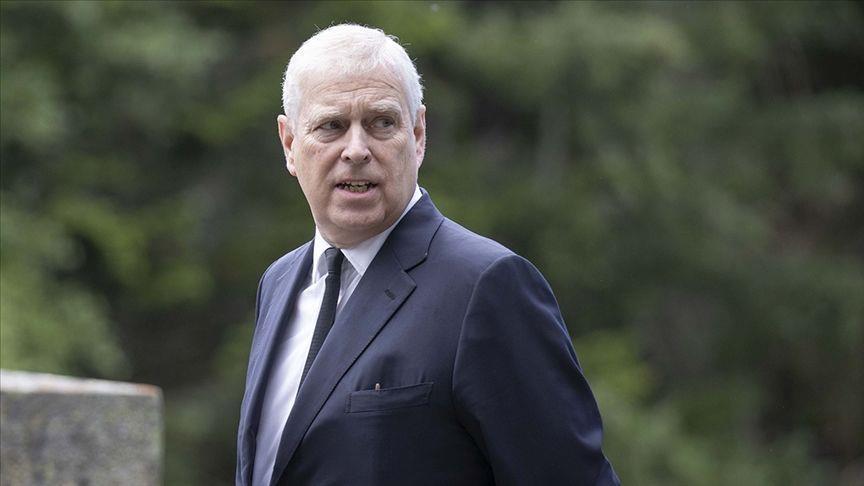
Prince Andrew, a former member of the British royal family, has been at the center of one of the most significant legal and institutional crises in the British monarchy. Born in 1960 as the third child of Queen Elizabeth II, he served for many years as an active representative of the royal family, undertaking diplomatic and commercial roles. His activities as a special envoy for the United Kingdom’s international trade and investment relations demonstrated the breadth of his access to state-level information and networks.
Andrew’s name became a major focus of public attention from 2019 onward due to his association with American financier Jeffrey Epstein. Investigations into Epstein’s network of sexual abuse against underage girls brought Andrew’s past associations under scrutiny. This process reignited debate over the relationship between the legal responsibilities of royal family members and their constitutional status.
The concept of “misuse of public office” in English law refers to the improper use of authority by someone holding public office, either in violation of the law or contrary to the public interest. This offense may be applied in cases involving the unauthorized disclosure of state secrets or the instrumentalization of official position for personal relationships. The allegations against Andrew have been assessed within this legal framework.
In 2025, the release of new documents linked to Epstein prompted a renewed examination of Andrew’s past official activities. These documents contained allegations that during his commercial representation duties between 2010 and 2011, Andrew shared sensitive investment and diplomatic assessments regarding several countries with third parties. The claims involve the flow of information concerning economic contacts in countries such as Vietnam, China, Singapore and Afghanistan.
These developments accelerated the process of permanently terminating Andrew’s suspended royal duties. Military titles and official representative powers previously revoked by the royal family signaled an increased institutional distance. Andrew’s housing arrangements funded by public money were also reevaluated, and a change of residence became a topic of discussion.
During this period, British public opinion intensely debated the boundaries between the legal accountability of royal family members and the symbolic inviolability of the monarchy. Some members of Parliament suggested that Andrew’s position in the line of succession should be reconsidered.
On 19 February 2026, Andrew was taken into police custody at his residence in Norfolk. The operation, conducted in the early morning by civilian officers, was carried out without incident. On the same day, searches were carried out at properties in Norfolk and Berkshire.
Andrew was released after an 11 to 12 hour questioning period. His release did not imply that the charges had been dropped; authorities confirmed that the investigation remains active. Under the English legal system, this procedure is used when sufficient suspicion exists but further investigation is required to build a case.
The investigation focuses on whether Andrew disclosed information obtained during his official duties to third parties. If proven, such actions could lead to serious penalties under the offense of misuse of public office.
The offense of misuse of public office is defined under English common law and requires three key elements: the existence of a public office, intentional breach of its duties, and potential harm to the public interest. Andrew’s past role as a commercial representative has been classified as falling within the scope of public office.
The legal review encompasses the handling of official correspondence, diplomatic reports and classified security documents. As part of the investigation, digital data analysis, electronic communication records and technical examinations of contacts with third parties have been conducted.
The nature of the investigation extends beyond individual accountability to encompass issues of national security and diplomatic confidentiality. This elevates the case beyond a conventional ethical debate into a matter of institutional and legal significance.
Prince Andrew’s military status has undergone significant changes in light of the prolonged scandal and legal developments. Following the severing of his active duties in 2022, most of his former military titles were revoked, including his honorary naval rank. This change, initiated by the Ministry of Defence, aimed to fully remove Andrew from symbolic military roles associated with his royal status. The decision reflects his complete separation from official royal duties and is part of broader efforts to preserve the British armed forces’ public credibility.
As the scandal deepened, the complete severance of Andrew’s military ties has been interpreted as part of the political will to maintain distance between the royal family and state institutions. Public opinion and political actors have consistently argued that the former prince should not hold any military status or symbiotic military role. The ongoing legal proceedings and Andrew’s formal inclusion in the investigation have triggered wider societal debates about military attitudes and the role of royal family members in British society.
Andrew’s arrest has been viewed by the UK government as a development with potential constitutional implications. The possibility of his removal from the line of succession is not merely a domestic legal matter but also a process requiring coordination with Commonwealth countries.
This situation has brought to the forefront the need to rebalance the monarchy’s symbolic continuity with the principle of democratic accountability. Members of Parliament have expressed the view that the constitutional status of the royal family requires redefinition.
Political debates have centered on the royal family’s relationship with public funding, its position within state protocol and its legal accountability framework.
The public release of images from Andrew’s arrest has created a symbolic turning point in perceptions of the royal family’s role in modern society. The tension between the monarchy’s historical aura of inviolability and the principle of the rule of law has become visibly apparent.
At the societal level, the incident has been framed within the context of accountability, transparency and institutional responsibility. The public legitimacy of the royal family is being reevaluated against the standards of ethical conduct and legal equality.
These developments have intensified conceptual assessments of how the constitutional monarchy functions in the 21st century.
Al Jazeera. “UK ex-Prince Andrew released after arrest over alleged misconduct in office.” Al Jazeera, February 19, 2026. Accessed February 23, 2026. https://www.aljazeera.com/news/2026/2/19/ex-price-andrew-arrested-on-suspicion-of-misconduct-in-public-office
Anadolu Ajansı. “İngiltere hükümeti eski Prens Andrew’u kraliyet tahtı varisliği sırasından çıkarmayı değerlendiriyor.” Accessed February 23, 2026. https://www.aa.com.tr/tr/dunya/ingiltere-hukumeti-eski-prens-andrewu-kraliyet-tahti-varisligi-sirasindan-cikarmayi-degerlendiriyor/3836279
BBC News. “Andrew is Prince William's problem too - and it makes his future job harder.” Accessed February 23, 2026.
BBC News. “Met officers working for Andrew told to guard Epstein's home, emails show.” Accessed February 23, 2026. https://www.bbc.com/news/articles/cz9qkjvg033o
Daily Mail. "ANDREW LOWNIE: I've spent years campaigning for greater Royal transparency. Without a new spirit of openness, the monarchy won't survive"
Daily Mail. Accessed February 23, 2026. https://www.dailymail.co.uk/news/royals/article-15583181/ANDREW-LOWNIE-Royal-transparency-openness-monarchy-wont-survive.html
Deutsche Welle Türkçe. “Epstein Skandalı: Eski Prens Andrew Serbest Bırakıldı.” Accessed February 23, 2026. https://www.dw.com/tr/epstein-skandal%C4%B1-eski-prens-andrew-serbest-b%C4%B1rak%C4%B1ld%C4%B1/a-76032931
Sky News. “Andrew latest: 'Look at the money trail' - Royal biographer on what could come next for ex-duke and Sarah Ferguson over Epstein links.” Accessed February 23, 2026. https://news.sky.com/story/andrew-latest-search-of-mountbatten-windsors-former-home-continues-as-government-plans-to-remove-ex-prince-from-royal-line-of-succession-13501106
T24. "Photo of Former Prince Andrew Linked to Epstein Hung at the Louvre Museum." Accessed February 23, 2026. https://t24.com.tr/dunya/epsteinle-baglantili-eski-prens-andrewun-gozalti-fotografi-louvre-muzesine-asildi,1301844

The former member of the British royal family, Prince Andrew, was taken into custody on 19 February 2026 at his residence in Norfolk on suspicion of abuse of public office. It was reported that the investigation was conducted under allegations of official information sharing linked to documents associated with Jeffrey Epstein. After approximately 11 hours of questioning, Andrew was released, and it was revealed that the British government was reconsidering his position in the line of succession to the throne.
No Discussion Added Yet
Start discussion for "Arrest of Prince Andrew" article
February 23, 2026
Pre-Arrest Process
February 23, 2026
Arrest Operation on 19 February 2026
February 23, 2026
Technical and Legal Dimensions
February 23, 2026
Military Dimension
February 23, 2026
Political Dimension
February 23, 2026
Conceptual and Social Dimensions