
+2 More

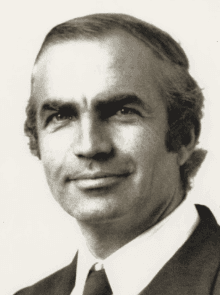
Asım Orhan Barut was a scientist who conducted international-level research in theoretical and mathematical physics. Barut began his education in Türkiye and continued his higher education and most of his academic career abroad. His scientific research focused particularly on particle physics and group theory, producing numerous publications and works. He also valued scientific collaboration with Türkiye, participating in various academic projects and contributing to the establishment of scientific institutions.
Asım Orhan Barut was born in 1926 in Malatya. He completed his primary and secondary education at Malatya High School. In 1940, he was among the most successful students of Malatya High School. In 1943, he was admitted to Istanbul Technical University as a second-year student with a boarding scholarship. In the spring of 1944, he won a state scholarship and traveled to Switzerland. He received his education at the Eidgenössische Technische Hochschule Zürich (ETH Zurich), earning his bachelor’s degree in 1948 and his doctorate in 1952.
Barut began his academic career as a researcher at ETH Zurich and later moved to the United States. He worked as a researcher and faculty member at various universities in the United States and Canada, including the University of Chicago, the University of Montreal, and Syracuse University. In 1962, he joined the University of Colorado as a professor of theoretical physics.
Barut made significant contributions to fundamental problems in theoretical physics, particularly in mathematical physics and particle physics. He is known for his work on dynamic group theory.
In 1977, he co-authored the book Noncompact Groups with R. Raczka, which was published in English and later translated into Polish and Russian. His 1964 publication Electrodynamics, Classical Fields and Particles is also among the influential works in the field.
Barut authored more than 100 scientific publications, most of which were published in Physical Review.
During the 1970s and especially the 1980s, Barut strengthened scientific collaboration with Türkiye. In 1990, he founded the International Research Center for Physics and Applied Mathematics at Trakya University, aiming to establish Edirne as an international center for physics. He also organized international conferences and summer schools.
In recognition of his outstanding international contributions to mathematical physics and particle physics, Asım Orhan Barut was awarded the TÜBİTAK Science Award in 1982.
A bust in his honor is displayed at the Department of Physics, Faculty of Science, Trakya University, and his personal book collection has been made available for use by students and researchers.
His article titled “The 100th Anniversary of Erwin Schrödinger and the Current State of Quantum Mechanics,” published in the November 1988 issue (No. 20) of Çağdaş Fizik magazine, became one of the first popular articles in Türkiye on wave mechanics.
In this article, he discussed the developmental stages of wave mechanics and some insights drawn from the history of science. He examined the criticisms of scientists such as Schrödinger, Einstein, and de Broglie regarding the probabilistic interpretation of quantum theory.
Asım Orhan Barut continued his academic work until the final years of his life. He died in 1994 at the age of 68 in Colorado. On the 30th anniversary of his death, on 6 December 2024, a commemorative ceremony was held at the Faculty of Science, Trakya University. Academics, students, and family members shared memories during the event.
Bilkent Üniversitesi Library and Electronic Archive. "Asım Orhan Barut Belgeleri." *Bilkent University Academic Archive*. Accessed May 15, 2025. https://repository.bilkent.edu.tr/items/2bf8a842-eb40-4b30-ae32-a80e51ac37ff.
Malatya Gazeteciler Cemiyeti. “Malatya’nın Fizik Dehası Asım Orhan Barut.” Accessed May 15, 2025. https://www.malatyagazetecilercemiyeti.org/d/6641/malatya-nin-fizik-dehasi-asim-orhan-barut.
Sarkaç. “Asım Barut’a Göre Schrödinger’in Dalga Mekaniği.” Date Published: August 13, 2019. Accessed May 15, 2025. https://sarkac.org/2019/08/asim-baruta-gore-schrodingerin-dalga-mekanigi.
Trakya Üniversitesi Physics Department. "Prof. Dr. Asım Orhan Barut’s 30th Anniversary Memorial Ceremony." Accessed May 15, 2025. https://fizik.trakya.edu.tr/news/prof–dr–asim-orhan-barut–un-30–olum-yili-anma-toreni.

Birth and Education
Academic Career
Scientific Contributions
Relationships with Türkiye
Awards and Honors
Contributions to the History of Science and Wave Mechanics
Later Years and Death