


This article was automatically translated from the original Turkish version.
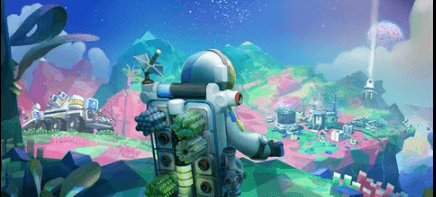
Astroneer is an open-world exploration and survival game developed by System Era Softworks, with its initial complete release in 2019. Game offers players the ability to explore distant planets gather resources build their own base and embark on a spacefaring adventure.

Game Logo
Astroneer takes place during the "Age of Exploration" in the 25th century. Humanity is making a major leap to discover and colonize new planets. The company the player works for EXO Dynamics is at the forefront of this exploration effort. EXO Dynamics dispatches Astroneers to unknown planets to carry out tasks such as resource collection base construction and development of new technologies.
EXO Dynamics appears to be a mega corporation with advanced space technology that assigns Astroneers to explore new worlds. However there is little information none regarding the company’s true purpose. This leaves players questioning whether EXO Dynamics truly works for the benefit of humanity or if it has some other agenda.
Interplanetary Exploration Logs and mysterious structures found throughout the game world provide players with clues that other civilizations once inhabited these planets.
Geometric stones and massive monumental structures discovered on the planets indicate that another civilization existed here before humans. Most of these structures are called Gateway Chambers and Gateway Engines and appear to be connected to a larger teleportation network. Although the exact nature of this system is never fully explained some players believe it was built by a previously advanced alien civilization. However the game provides no definitive information about the identity of this civilization or why it vanished.
The Gateway Engines located at the cores of the planets are among the greatest mysteries in the game. It is possible to reach and activate these structures on every planet which then transports players into a system known as the Galactic Network. Once all planetary cores are activated a building called the Gateway Portal opens. This portal leads to the final planet the Unidentified Satellite. Here players find a mysterious sphere the Gateway Catalyst which when activated grants the player a form of light energy known as Ascension.
This event suggests that the player has been recalled by EXO Dynamics for a greater purpose or transported by an unknown entity to a different plane of existence.
The game does not provide a clear explanation of what EXO Dynamics truly seeks. However some theories suggest the company is researching the technology of previous civilizations or attempting to harness these ancient structures to obtain new energy sources. EXO Dynamics may be sending Astroneers to discover lost technologies and structures. Yet whether the company acts ethically remains uncertain. It is unknown how EXO Dynamics uses the discoveries made by the player.

A Gateway Engine

Table of Resources in Astroneer
Astroneer features a total of five planets and two natural moons. Each planet offers unique resources and provides players with a distinct experience.

Image of the Game’s Solar System
Atrox the most distant planet in the Sun system is known for its harsh conditions. Its toxic atmosphere and hazardous plant cover make survival difficult. Wind and solar energy potential are low making energy production even more challenging. However the atmosphere contains rare gases making it an attractive target for gas collection. The surface is covered with dangerous flora and rugged terrain requiring players to remain extremely cautious during exploration. The hardness of the Soil structure and toxic gases further complicate excavation and resource gathering.

Atrox Planet
Calidor a desert-like planet is known for its vast sand plains and mountainous regions. Its high solar energy potential makes solar panels highly efficient for power generation. However wind energy production is low so wind turbines are not very effective here. The surface contains abundant resin and compound resources while valuable ores lie deeper underground. Calidor’s hot and dry climate requires players to be cautious during exploration. Additionally its thin atmosphere limits gas collection operations.

Calidor Planet
Sylva is a balanced and welcoming planet where players begin their Astroneer adventure. With moderate solar and wind energy potential Sylva provides stable environment for power generation. Its surface is covered with forests mountains and plains making it ideal for exploration and base building. The soft soil structure facilitates excavation and accelerates resource access. Sylva’s atmosphere supports not only basic gases but also diverse flora and biomes offering players a wide range of exploration opportunities.

Sylva Planet
Desolo a moon of Sylva stands out due to its small size and low gravity. It has no atmosphere so no gas resources are available but its surface contains abundant valuable resources. Solar energy production is high meaning solar panels can be effectively active to meet energy needs. Wind energy potential is low. The surface covered in craters and plains offers interesting landscapes during exploration. The soil structure is hard which can make excavation slightly more difficult.

Desolo Planet
Vesania stands out with its dense vegetation and colorful biomes offering a rich environment for exploration. With moderate solar and wind energy potential it provides versatility in power generation. Its surface is covered with forests mountains and valleys providing players with diverse options for both exploration and base building. The complexity of the soil structure can make excavation slightly more difficult but these challenges are rewarded with valuable resources. Vesania’s atmosphere allows for the collection of various gases giving players access to multiple resource types.

Vesania Planet
Novus the moon of Vesania is known for its small size and low gravity. Its high wind energy potential makes wind turbines highly efficient for power generation. Solar energy production is moderate. The surface covered in craters and mountainous regions presents players with various challenges and opportunities during exploration. Its atmosphere contains hydrogen and methane gases offering advantages for gas collection. The soil structure is moderately hard making excavation relatively easy.

Novus Planet
Glacio is a cold planet covered in ice and glaciers that draws attention with its valuable resources despite harsh environment conditions. Its high wind energy potential enables efficient power generation through wind turbines. However solar energy production is low making solar panels ineffective here. The surface covered in icy mountains and valleys presents a hazardous environment requiring caution during exploration. The hardness of the soil structure can make excavation difficult requiring more advanced equipment. Its thin atmosphere limits gas collection operations.

Glacio Planet
Big Boss Battle. "First Impressions: Astroneer." Accessed February 17, 2025. https://bigbossbattle.com/first-impressions-astroneer/.
Gamer Headquarters. "Impressions: Astroneer." Accessed February 17, 2025. https://articles.gamerheadquarters.com/impressions86astroneer.html.
Player.One. "Astroneer Review: The Comfiest Time You'll Have in Space." Accessed February 17, 2025. https://www.player.one/astroneer-review-comfiest-time-youll-have-space-128342.
Steam. "ASTRONEER." Accessed February 17, 2025. https://store.steampowered.com/app/361420/ASTRONEER/.
YouTube. "ASTRONEER – Official Launch Trailer." Accessed February 17, 2025. https://www.youtube.com/watch?v=OdggOnrCXMo.

No Discussion Added Yet
Start discussion for "Astroneer (Video Game)" article
Story
The Age of Exploration and EXO Dynamics
Ancient Civilizations and Alien Structures
Gateway Engines and the Gateway Portal
What Is EXO Dynamics’ True Purpose?
What to Do When Starting the Game?
Explore Your Immediate Environment
Gather Basic Resources
Begin Building Your Base
Research and Technology Development
Resources
Natural Resources
Processed Resources
Atmospheric Resources
Compound Resources
Planets
Atrox
Calidor
Sylva
Desolo
Vesania
Novus
Glacio