


This article was automatically translated from the original Turkish version.
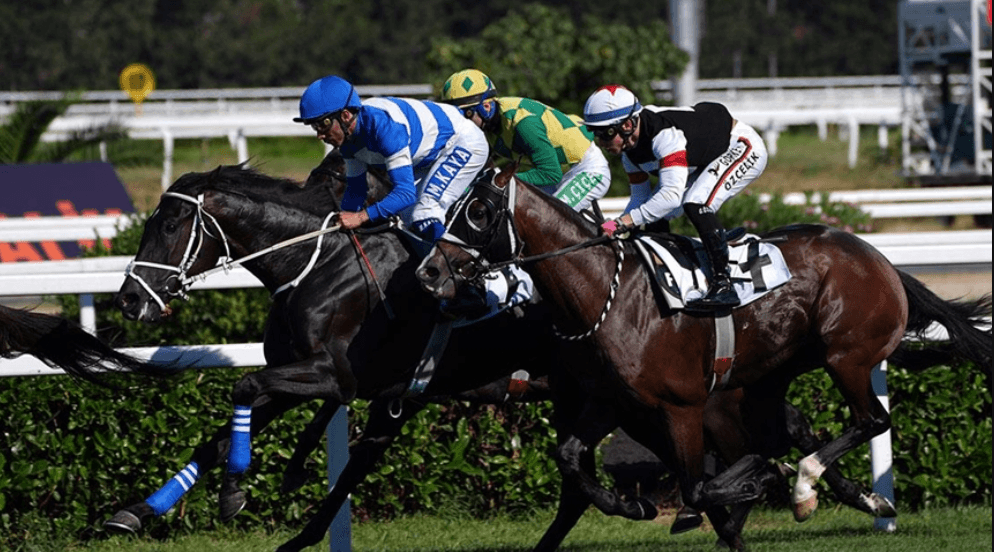
At Yarışı (AA)
Horse racing is one of the performance-oriented core disciplines of equestrian sports, involving two or more horses competing over a specified distance to measure their speed and endurance, either with riders (jockeys) or drivers. This activity, whose primary objective is to identify the fastest horse on a given course, has changed very little in format since ancient times and is regarded as one of the world’s oldest sports. Originating as a practice centered on transportation and survival following the domestication of horses by humans, it gradually evolved into a regulated, organized sport industry. Today, this sector, which has a global economic value of billions of dollars, encompasses a wide range of activities including horse breeding, veterinary services, training programs, and pari-mutuel betting systems. Horse races, shaped by local cultural and geographical conditions across different regions, now form a vast organizational network governed by international bodies under principles of animal welfare and fair competition.

Horse racing (Flickr)
The origins of horse racing extend back to the 4500s BCE, to the period when nomadic tribes in Central Asia first domesticated horses and organized races among themselves. Archaeological evidence confirms that horse racing took place in ancient civilizations such as Babylon, Syria, Arabia, and Egypt. In ancient Greece and Rome, these races evolved into large public spectacles, particularly chariot races, which became among the most popular events of the era. In 648 BCE, both chariot racing and jockeyed horse racing were officially incorporated into the Ancient Greek Olympic Games.
In the Roman Empire, horse and chariot races were held in massive circuses and hippodromes (e.g., Circus Maximus), with drivers divided into four main factions represented by colors: red, white, blue, and green. By the mid-fifth century BCE, spring carnivals in Rome concluded with races in which fifteen to twenty riderless horses, brought from the Berber coast of North Africa, were released onto the long, straight Via del Corso.
In Turkey’s Central Anatolia region, the 2,000-year-old Lukuyanus Monument in Beyşehir, Konya, dating to the Pisidian period, holds great significance for illustrating ancient racing rules. This stone tablet, erected on the site of an ancient hippodrome in honor of the young Roman jockey Lukuyanus, inscribes gentlemanly rules that differ from modern sports ethics: for instance, a winning horse was barred from future races, and the owner could not enter another horse in subsequent events. This discovery is recognized as one of the earliest known written examples of racing regulations.
The development of modern horse racing into its current format occurred largely in Great Britain. The process accelerated in the 12th century when English knights returning from the Crusades brought Arabian horses from the Middle East to Europe. Crossbreeding these horses with native English mares laid the foundation for the Thoroughbred breed, renowned for its superior speed and stamina.
Between 1660 and 1685, King Charles II of England established Newmarket as the center of racing and initiated prize races such as the Newmarket Town Plate. In 1711, Queen Anne founded Ascot Racecourse, transforming racing from private contests into public spectacles accessible to broad audiences. In 1750, leading figures in racing gathered in Newmarket to establish the Jockey Club (Jockey Club) to regulate the sport, set rules, and ensure integrity.
The Thoroughbred breed traces its origins to three foundational stallions imported to England in the 17th and 18th centuries: Darley Arabian, Byerley Turk, and Godolphin Arabian. All modern purebred Thoroughbreds descend from these three sires. To register the pedigrees of racehorses, the Jockey Club appointed its accountant James Weatherby, whose work culminated in the publication of the "General Stud Book" in 1791. From 1793 onward, only horses listed in this book were permitted to compete professionally.
Horse racing is divided into various disciplines worldwide based on track surface, horse breed, distance, and presence of obstacles.
A racing type conducted on a flat or oval track without any obstacles. These races, which test pure speed, are the most common format globally. Race distances range from 400 meters (440 yards) to 4 kilometers (2.5 miles). Short-distance races are termed "sprints," while longer-distance races are classified as "routes" or "staying" races. Grass (turf) tracks are prevalent in Europe, whereas dirt tracks are more common in North America and Asia. In recent years, synthetic tracks such as Polytrack and Tapeta have also become widespread.

Flat racing (Flickr)
A discipline in which horses race over obstacles placed on the track. Its origins trace back to the southern regions of Ireland (between Buttevant and Doneraile) in the mid-18th century. It is divided into two main categories: "hurdling," featuring lower obstacles, and "steeplechase," involving ditches and taller fences. Obstacle heights typically range from 1.1 to 1.4 meters. Older horses, often retired from flat racing, are typically directed toward these events.

Jump racing (Flickr)
Horses pull a lightweight, two-wheeled cart called a "sulky" or "bike," with a driver seated inside. Evolved from chariot racing, this discipline places the driver in the cart rather than on the horse’s back. In these races, horses are prohibited from galloping; they must race only in "trot" (diagonal legs moving together) or "pace" (same-side legs moving together). If a horse breaks into a gallop, the driver must slow it and return it to the correct gait, or the horse will be disqualified. Races are started using motorized starting gates.

Harness racing (Flickr)
Long-distance races conducted over natural terrain, emphasizing stamina over speed. Shorter races range from 16 to 32 kilometers, while international standard races cover 80 to 160 kilometers per day; some multi-day events extend up to 400 kilometers. Veterinary checkpoints ("vet gates") along the route monitor the horses’ pulse and respiration; any horse failing inspection is eliminated. The 1,000-kilometer "Mongol Derby" held in Mongolia has been recognized by Guinness World Records as the world’s longest endurance race.

Endurance racing (Flickr)
Short-distance sprints (440 yards / approximately 400 meters) originating in the 1600s in the United States from races along narrow village roads. These races are run on a straight track with no turns, and horses sprint at maximum speed from start to finish. The "American Quarter Horse," known for its powerful hindquarters, is used in this discipline, with races sometimes completed in as little as 22 seconds.

Quarter Horse racing (Flickr)
In horse racing, the genetic and physiological makeup of breeds determines performance. Horses are exceptional athletes. While a resting human’s heart rate ranges from 60 to 100 beats per minute, a purebred racehorse’s resting heart rate is only about 40 beats per minute.
In flat racing, races are categorized according to the horse’s quality, age, and past performance.
The racing industry comprises a large team including jockeys, trainers, grooms, stable staff, and veterinarians.
Jockeys are professional riders who guide racehorses and operate under significant physical pressure. To enable Thoroughbreds to reach high speeds, jockeys must be lightweight and short, requiring strict dieting. Before each race, they undergo a weight check ("weigh out"). In British racing culture, the "American seat"—characterized by extremely short stirrups and a crouched posture above the horse’s back—is now a global standard for riding style.
The saddles used are much lighter, smaller, and thinner than traditional riding saddles. Additionally, jockeys are required to wear helmets and protective vests to prevent head injuries. Racing pants reduce leg friction, flexible boots allow for the short stirrup stance, and racing goggles protect against flying dust or mud. Jockeys’ jackets, with their distinctive colors and patterns ("silks"), represent the horse’s owner. Some horses wear "blinkers"—masks covering the sides of their eyes—to enhance focus and prevent spooking. Also present are "Outriders," mounted security personnel who accompany young horses in the paddock before the race and, after the race, chase down and stop horses whose jockeys have fallen or who have become frightened.
Training for Thoroughbred foals typically begins at 18 months, with their first races occurring at age two. Horses are exercised by exercise riders using walking, trotting, and cantering in both directions to develop their muscular and skeletal systems. Later, they are trained in acceleration, exiting starting gates, and racing in groups. Horses retired from racing (Off The Track Thoroughbreds - OTTB) may be retrained for other equestrian disciplines such as jumping or dressage. Technological advances introduced photo-finish cameras in 1947 and electronic starting stalls in 1965, facilitating fairer race outcomes.
Horse racing is conducted globally under varying regulations and organizations:
Regular racing in the United States began in 1665 with the opening of the first track, "Newmarket," on Long Island, New York. The Saratoga Race Course, operational since 1863, is one of the country’s oldest continuously operating sports complexes. The Chicago region became a major racing center in the 1930s with six tracks (Washington Park, Hawthorne, Arlington, etc.), introducing the first fully automated totalizator and historic million-dollar races such as the Arlington Million. In the U.S., a three-year-old Thoroughbred that wins all three major races—the Kentucky Derby (1.25 miles), Preakness Stakes (1.186 miles), and Belmont Stakes (1.5 miles)—is awarded the title of "Triple Crown". Winning all three in quick succession is extremely difficult; Secretariat’s extraordinary victories in 1973 and American Pharoah’s in 2015 are legendary achievements. In Canada, Woodbine Racetrack is the center of racing culture, home to the King’s Plate and the legendary stallion Northern Dancer.
The United Kingdom is the birthplace of horse racing and, with an economic value of £3.7 billion, is the second most popular sport after football. The British "Triple Crown" series for three-year-olds includes the 2000 Guineas (open to colts and fillies), The Derby (Epsom Derby), and the St Leger Stakes. The 1000 Guineas and Epsom Oaks, restricted to fillies, complete the "Classics." Flat racing is equally popular in the UK as National Hunt racing, with the Cheltenham Festival and Grand National being the most renowned events. In France, the Prix de l'Arc de Triomphe (at Longchamp), Prix du Jockey Club, and Prix de Diane are among Europe’s premier races. Additionally, the Velka Pardubicka in the Czech Republic, Sluzewiec in Poland, the undefeated legend Kincsem in Hungary, and Federico Tesio in Italy have enriched continental racing heritage.
Australia is a country where horse racing is deeply embedded in its culture. The racing tradition began in 1810 at Sydney’s Hyde Park and was formalized with the founding of the Australian Jockey Club (AJC) in 1842. Australia hosts the world’s most famous handicap race, the Melbourne Cup—the "race that stops a nation"—and the world’s richest turf sprint, The Everest, with a prize of $15 million. Legendary Australian Thoroughbreds include Phar Lap, Makybe Diva, Winx, and Black Caviar, who retired undefeated after 25 wins. New Zealand is known for producing high-endurance Thoroughbreds such as Cardigan Bay and derives a significant portion of its economy from horse exports.
Japan stands out under the Japan Racing Association (JRA) with massive prize money for races such as the Japan Cup, Arima Kinen, and Tenno Sho, as well as "Ban'ei," a unique sled-pulling race. Hong Kong, through the Royal Hong Kong Jockey Club, hosts high-attendance races at Happy Valley and Sha Tin, contributing significantly to tax revenues. On mainland China, horse racing has been banned since 1949 due to gambling restrictions, though limited events have occurred under minority rights or short-term festivals (e.g., in Wuhan). The tracks in Macau and Singapore closed in 2024. In the United Arab Emirates, where gambling is prohibited, no betting is allowed, but massive prize races such as the Dubai World Cup ($12 million) are held. Saudi Arabia hosts the Saudi Cup, the world’s richest race with a $20 million prize. Other Asian countries such as India, Pakistan, Thailand, and the Philippines continue to operate established clubs dating back to the colonial era.
South Africa, with a tradition dating to 1797, hosts the continent’s largest event, the Durban July Handicap. The Champ de Mars in Mauritius (established in 1812), the oldest hippodrome in the Southern Hemisphere, continues the racing festival tradition with classics such as the Maiden Cup. In Argentina, racing known as "turf" is popular, associated with legendary jockeys like Irineo Leguisamo and the Uruguayan-born champion Invasor, who reached the pinnacle of international racing.

99th Gazi Race (AA)
Records indicate that long-distance cross-country-style horse races were held in the Ottoman Empire as early as the 16th century. The Constantinople Hippodrome in Istanbul, dating to the Roman Empire, remains part of the cultural heritage. The first modern horse races were held in İzmir in 1856.
Following the founding of the Republic of Türkiye in 1923, horse breeding of both Arabian and Thoroughbred horses accelerated under directives from Mustafa Kemal Atatürk. In 1950, with approval from the Prime Minister and President, the Türkiye Jockey Club (TJK) was established. Founding members included prominent breeders of the era: Fevzi Lütfi Karaosmanoğlu, Saim Önhon, Halim Sait Gürkan, Nijat Evliyazade, and Sait Akson. In 1953, the club, authorized by the Ministry of Agriculture, began officially organizing races.
Horse racing is not only a sport but also a major social event where communities gather, and dress codes, hats, and rituals take center stage. Attendance at Royal Ascot in the UK is governed by strict dress codes: elaborate hats for women and formal suits for men. At the Kentucky Derby in the U.S., wearing ornate hats and drinking mint juleps are integral rituals. The "winner's circle," where the winning horse, jockey, and owner pose for the press after the race, symbolizes prestige. The tradition of draping garlands of flowers around the winner’s neck earned the Kentucky Derby the nickname "Run for the Roses." Many trainers and jockeys adhere closely to superstitions, such as wearing specific colored clothing or avoiding certain words before a race.
The primary financial engine sustaining the industry is betting; over $100 billion is wagered annually across 53 countries. The dominant betting system is Pari-mutuel (Mutual Betting), in which all bets are pooled together. After deductions for taxes, operating expenses, and the house take, the remaining amount is distributed among winners according to their share of the pool. Thus, bettors compete against each other rather than against the system. In countries like the UK and Australia, legal bookmakers offering fixed-odds betting are also popular. With technological advances, online betting systems known as "Advanced Deposit Wagering" (ADW) have become the backbone of the racing world.
In recent years, horse racing has faced intense scrutiny and investigation over animal welfare and mortality rates. The fate of horses labeled as "wastage"—those raised but never raced or retired early due to injury—has raised concerns, particularly regarding their eventual slaughter. During training and racing, serious musculoskeletal injuries such as bone fractures and muscle or ligament tears can occur. In the U.S., an average of 1.5 deaths per 1,000 starts have been reported; this high rate has been debated as potentially linked to the use of painkillers or anti-bleeding medications permitted before races. Exercise-Induced Pulmonary Hemorrhage (EIPH) and gastric ulcers caused by high-grain diets are common ailments affecting a large proportion of active racehorses (up to 86% in one study). Medications such as Salix (Lasix), used to control these conditions, are alleged to enhance performance.
Additionally, the use of whips, tongue ties (devices that restrict tongue movement), and spurs on jockeys’ boots—causing local tissue damage, stress, and pain—has been criticized by animal rights organizations such as the RSPCA.
As a result of these debates, significant reforms have been implemented to improve equine health. In the United States in 2020, the federally supported HISA (Horseracing Integrity and Safety Authority) was established to consolidate anti-doping protocols, medication controls, and track safety standards at a national level. The adoption of advanced imaging technologies such as thermal cameras and MRI in veterinary medicine, the construction of synthetic tracks that reduce injury risk compared to dirt surfaces, and initiatives to rehome retired racehorses are all steps taken to ensure the sustainability of horse racing.
To coordinate global operations, combat doping, and standardize rules, the International Federation of Horseracing Authorities (IFHA) was established in 1961. Through this federation, each country’s National Jockey Club (e.g., British Horseracing Authority, Racing NSW, TJK) collaborates to reach joint decisions and shape race calendars according to principles of integrity. Although organizations like IFHA exist, there is no single official "World Championship" for horse racing; instead, prestigious championship series are held across continents.

At Yarışı (AA)
Historical Development and Antiquity
Birth of Modern Racing
Disciplines and Types of Horse Racing
1. Flat Racing
2. Jump Racing (National Hunt)
3. Harness Racing
4. Endurance Racing
5. Quarter Horse Racing
Horse Breeds and Physiological Characteristics
Race Classifications and Conditions
Equipment, Jockeys, and Training Process
Jockeys and Equipment
Training Process
Horse Racing Worldwide
North America (USA and Canada)
Europe (United Kingdom, France, and Others)
Oceania (Australia and New Zealand)
Asia and the Middle East
Africa and South America
Türkiye
Culture, Traditions, and Betting Systems
Betting and Economics
Animal Welfare, Injuries, and Regulations
Institutions and International Organizations