

This article was automatically translated from the original Turkish version.
+1 More
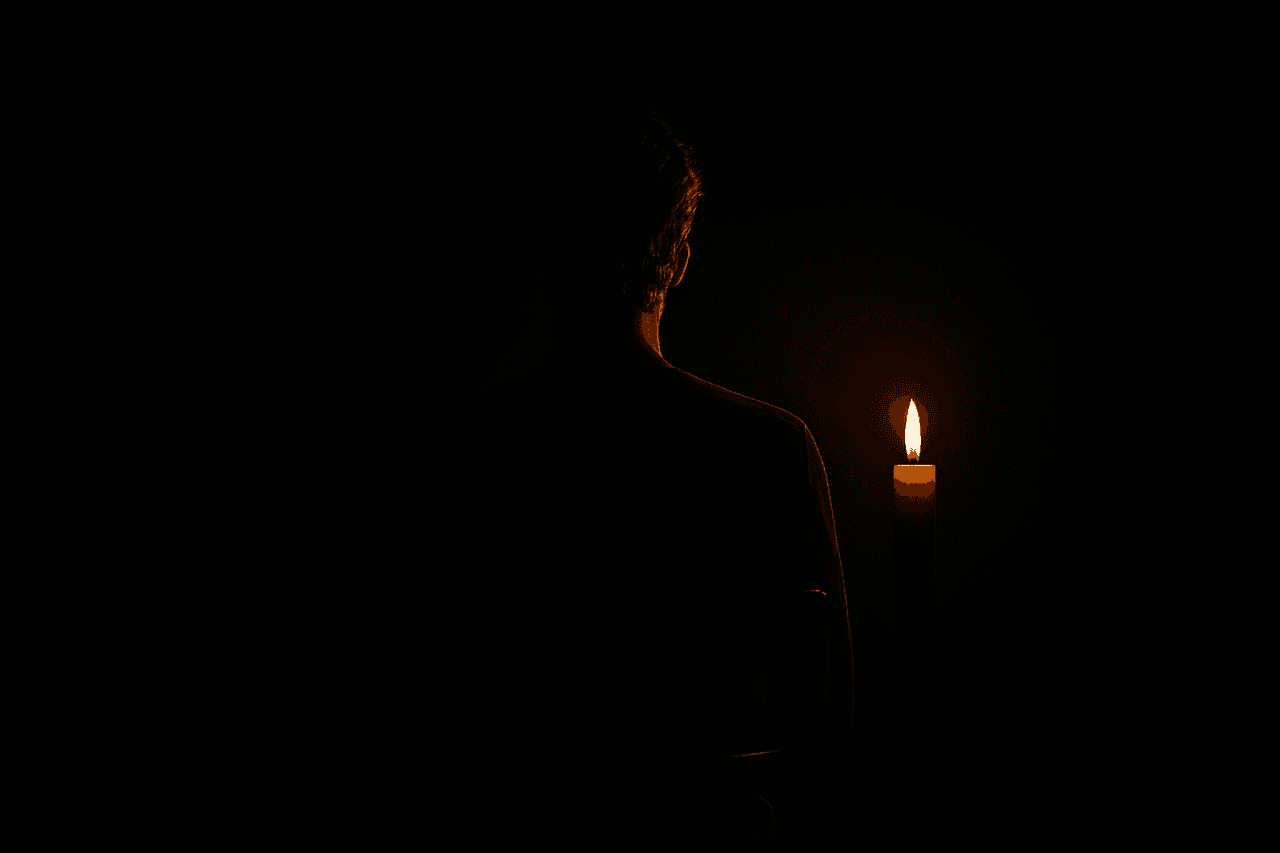
The autokinetic effect experiment is based on an optical illusion and produces the illusion that a stationary point of light is slowly moving due to the natural micro-movements of the eye muscles in a completely dark environment. Muzafer Sherif (1935) investigated this phenomenon in the laboratory at Columbia University and observed that individual judgments under isolated conditions showed a wide distribution (2–20 inches) and high uncertainty, but when judgments were made in groups, participants’ estimates rapidly converged toward a shared norm (for example 3–5 inches), and this norm remained persistent even after individuals were left alone again.

Autokinetic Effect Experiment (Generated by Artificial Intelligence)
The autokinetic effect is an optical illusion in which a stationary point of light appears to move when viewed in a dark room, caused by the natural micro-movements of the eye muscles. This phenomenon arises from the inherent ambiguity of visual perception; the subtle movements of the eye muscles lead to the perception of a static stimulus as “moving.” Long known to astronomers, this phenomenon was first transferred to a laboratory setting by Muzafer Sherif in 1935 for the purpose of studying norm formation.
In his doctoral thesis titled A Study of Some Social Factors in Perception (1935), Muzafer Sherif used the autokinetic effect as a laboratory model of social perception. Sherif built his research on “social factors in perception”. The central aim of the thesis was to demonstrate how social interaction shapes individual perception's.
Sherif conducted his experiments in a dark room at Columbia University’s psychology laboratory. Nineteen university students participated under individual conditions and forty under group conditions. The point of light was displayed for two seconds per trial, and participants were asked to estimate the distance of the light’s movement. While individual estimates showed a wide range (2–20 inches), group judgments exhibited rapid convergence toward a shared norm (3–5 inches), and this norm persisted even when individuals were later tested alone.
In the first chapter of his thesis, titled “Problem,” Sherif posed the question: “How do individuals form judgments in the face of an ambiguous stimulus? When two people share the same stimulus, do their perceptions remain random, or do they show a systematic convergence?” The findings concluded that group interaction shapes perception.
Autokinetic Effect Experiment (Generated by Artificial Intelligence)
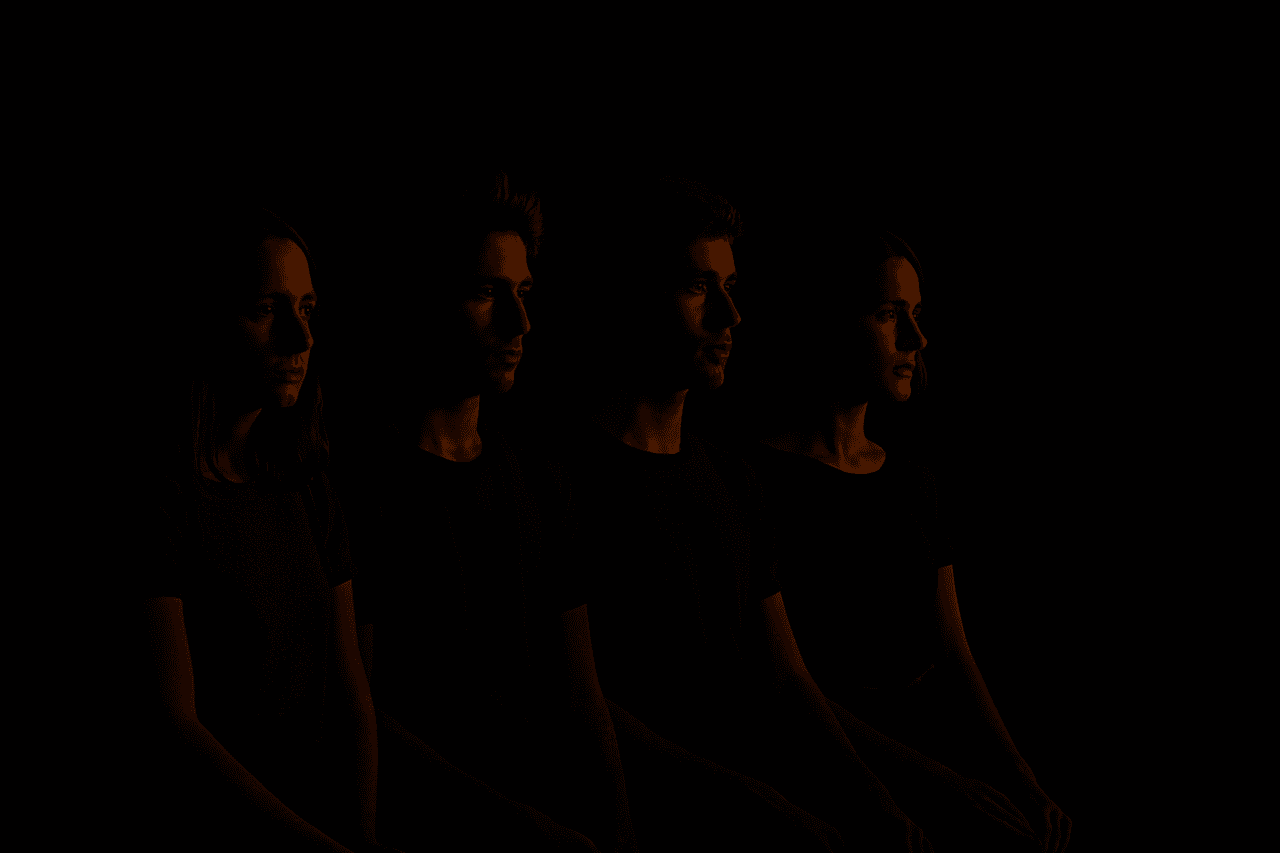
Sherif’s study explains the process of social norm formation. The emerging shared estimate reduces individual uncertainty and creates a socially constructed “reality.” Once established, even if the group dissolves, individuals continue to adhere to the norm.
Sherif demonstrated using the autokinetic effect how norms form and how individuals adapt to them. The group norm permanently alters individual perception.
The experiment consisted of two main conditions:
The persistence of the norm was observed even when participants were tested alone days later, with most still making estimates close to the group norm.
Autokinetic Effect Experiment (Generated by Artificial Intelligence)
The autokinetic effect provides the first laboratory evidence of in social psychology the formation of norms. Sherif’s study demonstrates how individual perception is reshaped within a social context. This phenomenon confirms that in situations of high uncertainty, individuals use others’ judgments as a source of information.
Sherif’s 1935 thesis marked a turning point in social psychology and, together with Asch’s 1951 line experiment, laid the foundation for conformity research.
Chen, X., Liu, J., Luo, Y. J., and Feng, C. "Brain Systems Underlying Fundamental Motivations of Human Social Conformity." *Neuroscience bulletin* 39, no. 2 (2023): 328–342. Accessed October 31, 2025. https://pmc.ncbi.nlm.nih.gov/articles/PMC9905476/#Sec8.
Cornell University. "Autokinetic effect and Social Norms." INFO 2040: Networks, Crowds, and Markets. Cornell University. November 20, 2015. Accessed October 31, 2025. https://blogs.cornell.edu/info2040/2015/11/20/autokinetic-effect-and-social-norms/
Forsyth, Donelson R. "Autokinetic Effect." In *International Encyclopedia of the Social Sciences*, edited by William A. Darity, 2nd ed., vol. 1. Accessed October 31, 2025. https://scholarship.richmond.edu/cgi/viewcontent.cgi?article=1165&context=jepson-faculty-publications
Sherif, Muzafer. "Conformity-deviation, norms, and group relations." In *Conformity and Deviation*, edited by Irwin A. Berg and Bernard M. Bass, pp. 159-198. New York: Harper & Row, 1961. Accessed October 31, 2025. https://brocku.ca/MeadProject/Sherif/Sherif_1961d.html
Sherif, Muzafer. *A Study of Some Social Factors in Perception*. Archives of Psychology, no. 187. New York: Archives of Psychology, 1935. Accessed October 31, 2025. https://web.mit.edu/curhan/www/docs/Articles/15341_Readings/Influence_Compliance/Sherif_A_Study_of_Some_Social_Factors_(1935)_Arch%20Psych.pdf

No Discussion Added Yet
Start discussion for "Autokinetic Effect Experiment" article
Autokinetic Effect: Definition and History
Sherif’s Study
Social Norm Formation and Persistence
Significance