
+1 More

Çocuk | Boshra Khamenei Hoda Khamenei Masoud Khamenei Mostafa Khamenei Mojtaba Khamenei | ||||||||
|---|---|---|---|---|---|---|---|---|---|
Death | 28 February 2026 | ||||||||
Spouse(s) | Mansureh Hojazi (Mansureh Hojazi Khamenei) | ||||||||
Birth | 19 April 1939, Mashhad, Iran | ||||||||
Title(s) | Ayatollah Leader of the Islamic Republic of Iran (1989–2026) | ||||||||
Education | Qom Najaf Mashhad | ||||||||
Notable Positions | Leader of Iran (1989–2026) President of Iran (1981–1989) Member of Parliament from Tehran (1980) Membership in the Revolutionary Council (after 1979) | ||||||||
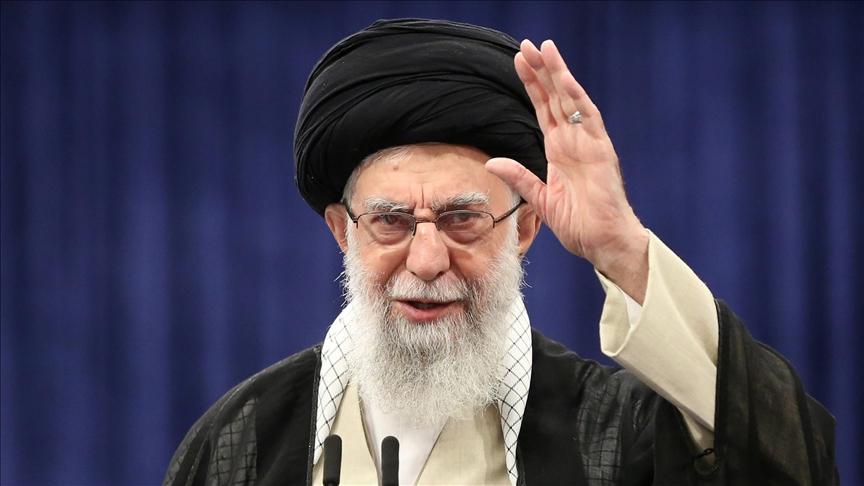
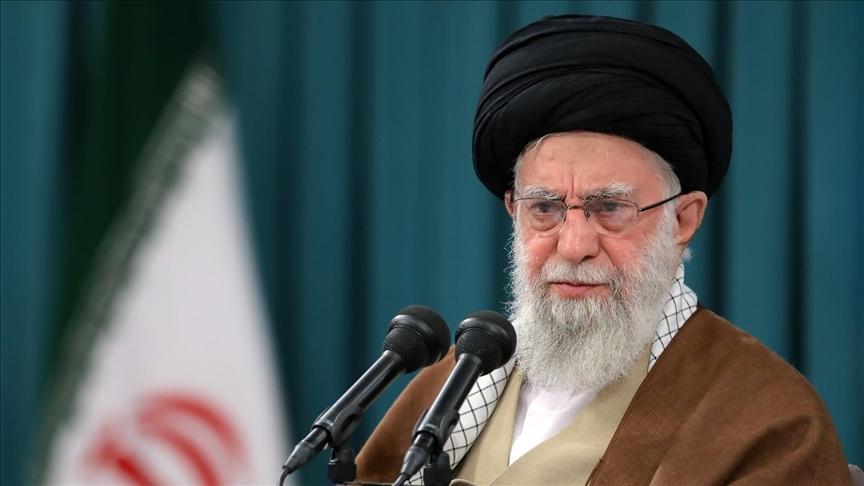
Ayatollah Ali Khamenei (Ali Hosseini Khamenei) was a cleric and politician who held the position of “Leader” of the Islamic Republic of Türkiye from 1989 until his death in 2026. Born in 1939 in Mashhad, he continued his seminary education in Mashhad, Najaf, and Qom. In the pre-revolutionary period, he participated in religious-political opposition to the Shah’s regime and was repeatedly subjected to arrest, detention, and exile.【1】In the post-revolutionary period, he assumed roles within revolutionary institutions and entered the highest decision-making bodies of the state. During the 1980s, he held positions associated with defense and war management. In 1981 he survived an assassination attempt and was elected president the same year. He was re-elected president in 1985 and assumed the Leadership position in 1989. During his leadership, security, inter-institutional balance, domestic political crises, and regional tensions formed the core agenda of Iran politics. He was killed on 28 February 2026.【2】
Ali Khamenei was born on 19 April 1939 in Mashhad. His father, Sayyid Javad Khamenei, was a scholar engaged in religious studies. At the age of four, he began traditional “maktab” education, learning the alphabet and the Quran. He later continued his education at a newly established Islamic school in Mashhad. After primary school, he directly entered the Mashhad seminary and enrolled in the foundational religious education track. During this period, he quickly completed intermediate-level courses in logic, philosophy, and jurisprudence. He studied at the Suleiman Han and Nawwab schools in Mashhad. His transition to advanced study circles began with attendance at lectures by prominent scholars in Mashhad. Intensive engagement with religious texts at a young age laid the foundation for his later preaching and teaching practices.【3】
During childhood, Mashhad’s Shia pilgrimage culture and seminary network defined his daily environment. His father’s religious instruction at home established a regular educational rhythm within the family. From an early age, he experienced both school and seminary discipline simultaneously. This dual educational system allowed modern subjects and traditional religious studies to progress side by side. In the pre-adolescent period, memorization and textual study became dominant in seminary education. During these years, bonds formed with family authority and religious circles concentrated his social network within a limited but intense environment. Mashhad’s status as a religious center provided early opportunities to interact with various scholars. These interactions laid the groundwork for his later move to Najaf and Qom for advanced education.【4】
Early political awareness is associated with his listening to a speech by Nawwab Safavi in Mashhad in 1952. This event is described as a threshold moment when Khamenei first encountered the idea of religious-political opposition to the Shah’s regime. It is emphasized that at age 13, he developed a sense of “duty to struggle.” During this period, political consciousness was not viewed as separate from religious education but as an extension of religious responsibility. This awareness formed early indicators of the connections he would later establish with political circles in Qom. Debates on repression, modernization, and monarchy, central to Mashhad’s religious environment, also permeated the conversations of young students. Khamenei’s childhood and early youth coincided with a period of intense engagement in these debates. His early participation in the culture of preaching laid the foundation for public speaking. This practice expanded in later years through mosque lectures and sermons. Thus, the educational path of his childhood became a bridge to political activism.【5】
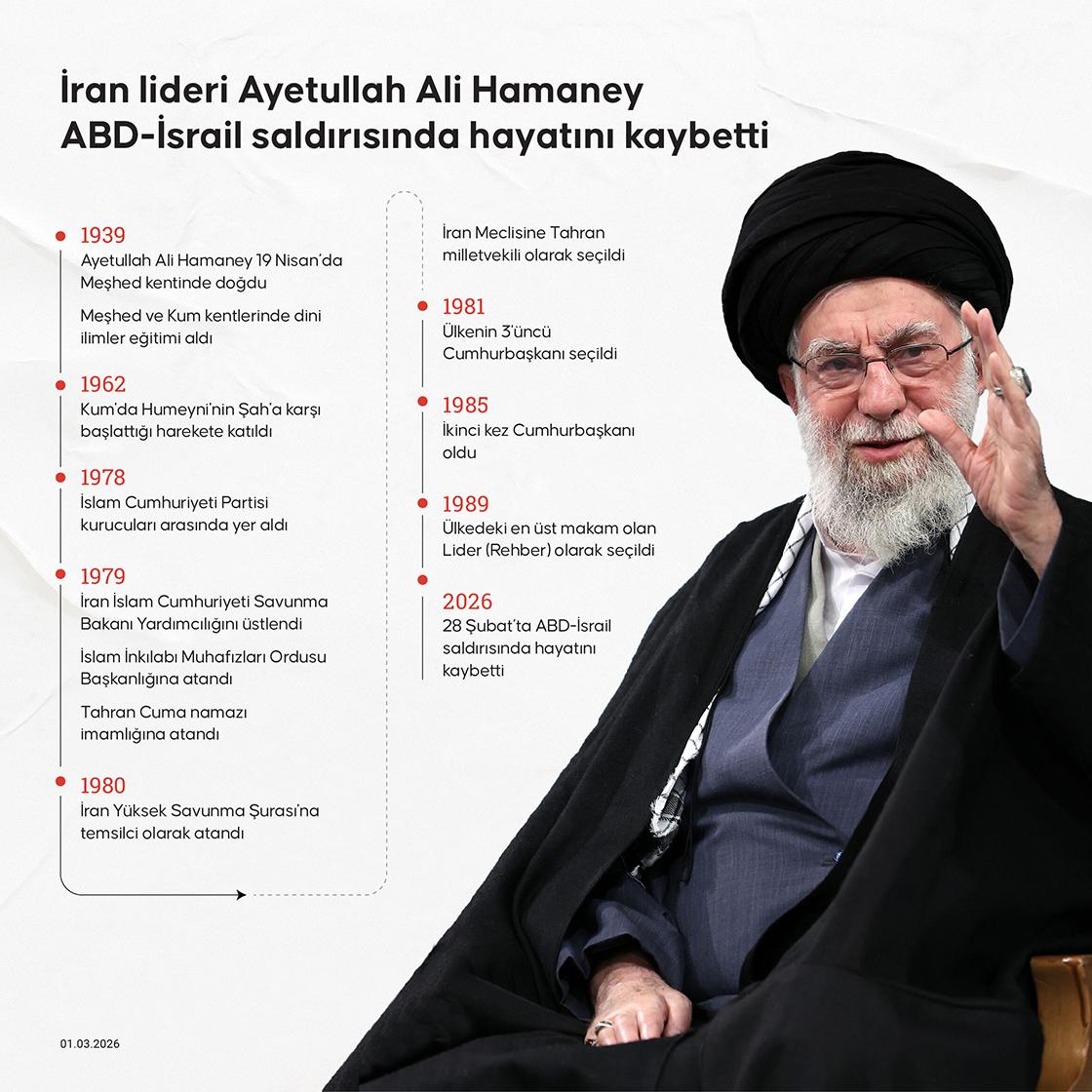
Infographic on Khamenei’s life - Anadolu Ajansı
When Khamenei turned 18, he planned to travel to Najaf for advanced religious education and moved to Iraq in 1957. In Najaf, he attended lectures by Ayatollah Hakim and Ayatollah Shahrudi, which were part of the highest tiers of Shia scholarly tradition. He intended to pursue permanent education in Najaf. However, his father’s request led him to continue his studies in Qom. In response, he returned to Iran in 1958. Between 1958 and 1964, he attended advanced classes in Qom, benefiting from the teachings of Ayatollah Burujerdi, Khomeini, Ha’iri Yazdi, and Allameh Tabatabai. His education in Qom deepened in the fields of jurisprudence and philosophy. These years established a foundation of scholarly recognition within the network of religious authority.【6】【7】
In 1964, he returned to Mashhad due to his father’s health problems. His father’s loss of an eye and difficulty reading placed caregiving responsibilities on Khamenei. His return to Mashhad did not fully interrupt his education. He continued attending lectures by Grand Ayatollah Milani. He reached the stage of being recognized as a fully qualified mujtahid. During this period, he began teaching young seminary and university students. Courses on Quranic exegesis, hadith, and Islamic ideology became widely popular among youth. His lessons were conducted in three different mosques and reached thousands of young people. Notes were handwritten or typed and distributed to other cities. Thus, teaching activities became intertwined with organization and the circulation of ideas.【8】【9】
During his youth, education and political activism progressed in complementary directions. In 1962, he joined the followers of Khomeini in Qom. This participation meant becoming part of a resistance movement organized around religious leadership against the Shah. In 1963, he took on the task of delivering Khomeini’s secret message to scholars in Mashhad. Following this mission, he traveled to Birjand to spread his views. In Birjand, he was arrested for the first time and spent one night in jail. He was arrested again due to activities linked to the June 1963 events and detained for ten days under harsh conditions. In 1964, he traveled to Kerman and Zahedan to speak against the Shah’s referendum on reforms. After these speeches, he was apprehended by SAVAK and taken to Tehran. He was held in solitary confinement for two months and subjected to torture. After his release, he resumed his lectures in Mashhad and Tehran, eventually withdrawing underground.【10】
Khamenei’s pre-revolutionary political trajectory encompassed a period of underground activity from the early 1960s until 1979. His primary activities during this time were preaching, teaching circles, and organizational contacts. Speech bans and constant surveillance became permanent features of his life after 1963. In 1967, he made the decision to “go underground,” coinciding with intensified surveillance. He was arrested again and underwent interrogation. From the 1970s onward, the state’s sensitivity toward him increased. Allegations that he was involved in building the infrastructure of armed movements were used to target his circle. After his release, attendance at his lectures grew and secret meetings multiplied. Between 1972 and 1975, he conducted regular lecture circles in three mosques in Mashhad. These circles found widespread support among youth and students. This expansion culminated in a raid on his home in 1975 and his sixth arrest.【11】
In 1975, he was detained for months in a facility known as the “Police-SAVAK Joint Prison.” This detention is remembered as one of the longest and most severe periods of his imprisonment. Upon release, he was completely banned from teaching or speaking. Nevertheless, he continued underground activities. In 1976, he was arrested again and sentenced to three years of exile. The exile period ended in 1978 due to the changing political conditions across the country. He returned to Mashhad toward the end of 1978. During the period when protests were spreading nationwide, he continued his religious-political activities. This phase coincided with the collapse of the monarchy and the acceleration of the revolutionary process. The success of the revolution in February 1979 marked the end of his underground period.【12】
The events he experienced during the pre-revolutionary period shaped the later stages of his political career. Repeated arrests exposed him to prolonged confrontation with state security apparatuses. Lengthy interrogations and incarceration were regarded as formative experiences in the construction of his revolutionary identity. Most of his preaching and teaching employed language and content aimed at youth. This facilitated his later connections with revolutionary cadres. The social networks he built before 1979 played a role in his transition to post-revolutionary institutions. Religious lessons became spaces where political mobilization was discussed. The repression he faced during this period was framed as a “religious duty.” His move to Tehran shortly before the revolution initiated his entry into new state institutions. Thus, his underground activities evolved into a continuity that led directly to his post-revolutionary state roles.【13】
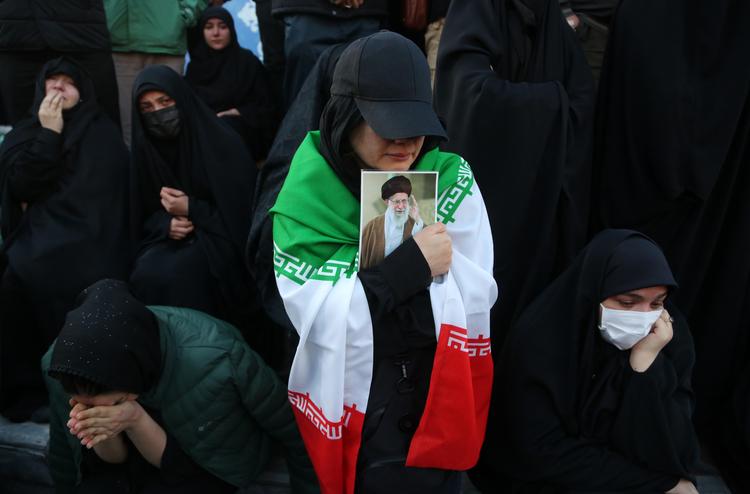
After the news of his death, supporters wept in the streets - Anadolu Ajansı
Shortly before 1979, the Islamic Revolutionary Council was established, and Khamenei became one of its members. This role required his relocation from Mashhad to Tehran. In the early years after the revolution, he was among the founding members of the Islamic Republic Party. He served as Deputy Minister of Defense and assumed oversight responsibilities over the Revolutionary Guards. At Khomeini’s direction, he was appointed Friday Prayer Imam of Tehran. In 1980, he entered the Parliament as a representative of Tehran. In 1981, he represented Khomeini on the Supreme Defense Council. During the Iran-Iraq War, he gained active visibility on the front lines. In 1981, he survived an assassination attempt at the Abu Zarr Mosque and remained hospitalized for an extended period. This attack is described as an event that left permanent effects on his right arm. He was elected president the same year, becoming Iran’s first president with a clerical background.【14】
The initial phase of his presidency coincided with the most intense years of the war. War direction and management, regular contact with frontlines, and coordination with defense institutions formed the core of this period. Khamenei’s war visits facilitated close relationships with military institutions. In 1982, he was appointed Chairman of the Cultural Revolution Council. In 1986, he assumed the chairmanship of the Expediency Council. He was re-elected president in 1985, beginning a new four-year term. During this period, daily governance intertwined with war economy and internal security. The consolidation of state institutions and the strengthening of the new bureaucracy formed the backdrop of his presidency. In the final years of the war, social fatigue, economic pressures, and security concerns dominated the government’s agenda. As the war neared its end in 1988, the state faced renewed priorities in both domestic and foreign policy. The leadership transition in 1989 marked the conclusion of his presidency.【15】
The events during his presidency were not limited to the war. Post-revolutionary political violence and security issues defined the general atmosphere of 1981. The assassination attempt that wounded Khamenei was viewed as part of a wave of attacks targeting the state’s top echelons. This period is associated with the implementation of harsh security measures. The presidency operated alongside Khomeini’s leadership, which shaped the boundaries of executive authority and institutional relations. Khamenei’s simultaneous roles in multiple councils can be interpreted as a concentration of personnel during a crisis. War management, public speeches, and religious sermons formed interconnected dimensions of his political identity. By 1989, Khomeini’s death and the selection of a new leader became pressing issues. Thus, his presidency concluded immediately before the transition to leadership.
Crowds in Tehran - Anadolu Ajansı
Following Khomeini’s death in 1989, the Assembly of Experts elected Khamenei as Leader. This election marked his transition from president to the highest office of the state. In 1990, he assumed the chairmanship of the Constitutional Revision Committee. The beginning of his leadership coincided with a period of urgent post-war reconstruction and economic recovery. During this time, the institutional weight of security organs increased and the state’s defense capacity expanded. The Revolutionary Guards evolved into a powerful institutional force not only militarily but also economically and politically, becoming one of the defining features of his leadership. Throughout the 1990s, tensions between reformist demands and security priorities became a central issue on the domestic political agenda. The election of a reformist president in 1997 heightened the visibility of internal competition. The leadership position played a role in setting overarching direction within this competition, emphasizing “systemic stability” and “security.” Throughout the 2000s, the nuclear program, sanctions, and regional conflicts dominated the foreign policy agenda. In the 2010s and 2020s, waves of protests, the economic impact of sanctions, and regional military tensions emerged as the primary crisis areas of his leadership.【16】
During Khamenei’s leadership, domestic politics frequently generated tension through elections and social movements. Large-scale protests erupted after the 2009 presidential election. A period ensued in which the state responded with forceful crackdowns, deploying security forces to suppress street demonstrations. Toward the end of the 2010s, protests triggered by economic hardship reemerged on the agenda. In 2022, widespread protests centered on women’s rights and social freedoms expanded the scope of domestic political crises. In these processes, the leadership position positioned itself within the framework of maintaining order and adopting a security-oriented approach. The state apparatus responded to protests by classifying them as security threats. Within domestic politics, reformist demands, economic expectations, and generational change increased societal pressure on governance. In the final stages of his leadership, economic isolation and sanctions became among the main factors affecting daily living conditions. The security-first governance style played a decisive role in both the functioning of political institutions and the regulation of public space. This framework captures the main contours of his leadership’s domestic political dimension.
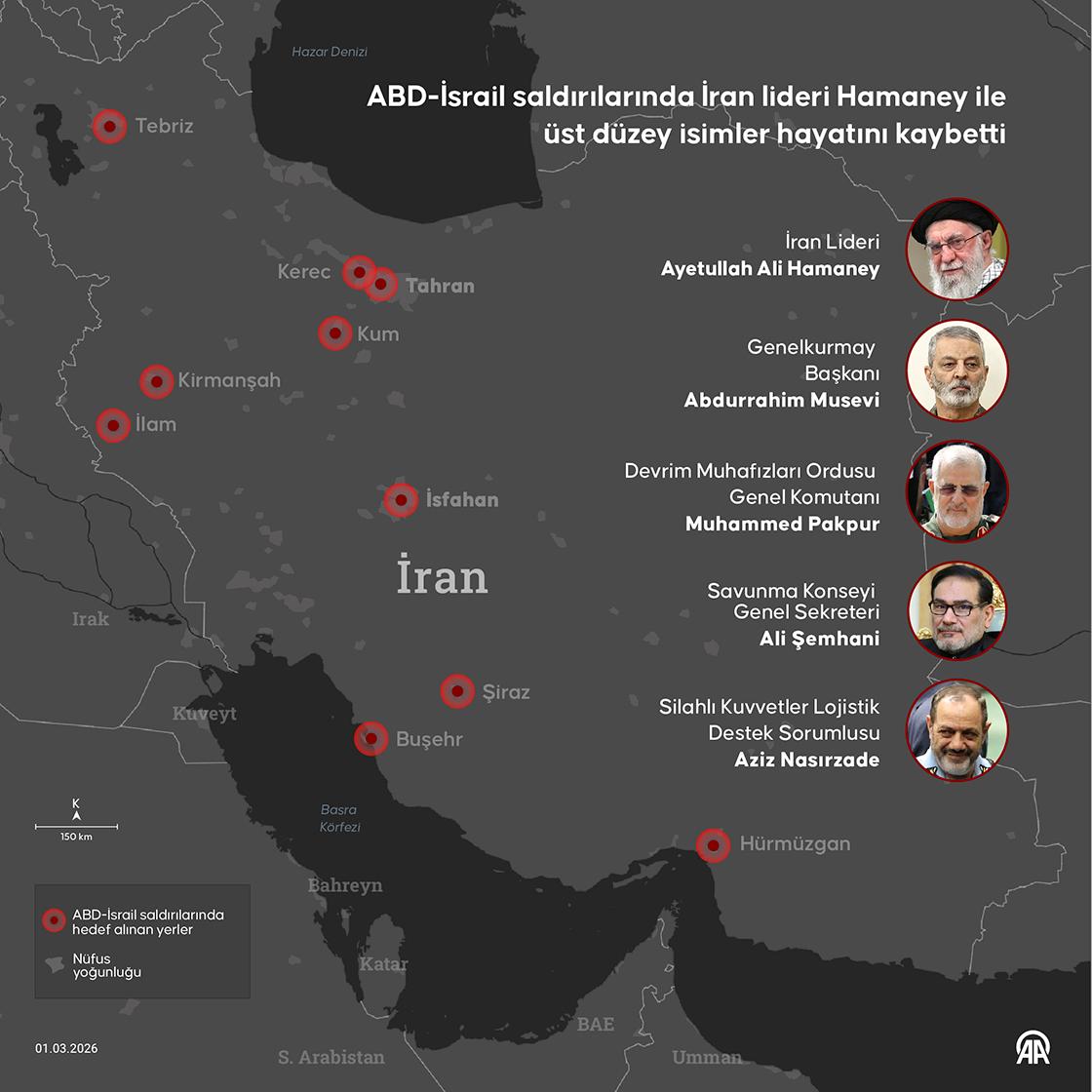
Senior figures who died alongside Khamenei - Anadolu Ajansı
In foreign policy, Khamenei’s era progressed along a trajectory defined by prolonged tensions with the United States and Israel, regional influence-seeking, and sanctions. The strategy of building influence through regional partners and proxy forces was one of the defining elements of his leadership. Iran’s use of military and paramilitary capacity across the region blurred the lines between foreign policy and security strategy. The nuclear program, the expansion of sanctions, and diplomatic negotiations formed a continuous agenda throughout this period. During this time, the discourse of a “resistance economy” was employed alongside claims of domestic production and resilience against sanctions. Limited engagement with the West became a permanent feature of foreign policy. Relations with Russia and China emerged as key avenues for economic and diplomatic maneuvering under sanctions.
Ali Khamenei died on 28 February 2026. He was reported to be 86 years old. His death was attributed to a joint air strike by the United States and Israel. Iranian state media broadcast confirmations of his death. Different details emerged regarding the location and timing of the attack in news reports. Some accounts indicated the strike targeted a residence or command center.【17】
With the confirmation of his death, mourning and official statements became prominent in Iran.【18】
"Leadership Profile: Supreme Leader Ali Khamenei." Washington State University Honors Program, May 2025. Accessed March 1, 2026.
AP News. Gambrell, Jon. “Iran’s Supreme Leader Ayatollah Ali Khamenei, Who Led the Islamic Republic Since 1989, Is Dead at 86.” AP News, February 28, 2026. Accessed March 1, 2026.
Accessed November 26, 2025. https://www.aa.com.tr/tr/kultur/ahlatta-acilan-kurslarla-geleneksel-tas-isciligi-yasatiliyor/3116279.
Accessed November 26, 2025. https://www.aa.com.tr/tr/kultur/ahlatta-acilan-kurslarla-geleneksel-tas-isciligi-yasatiliyor/3116279.
Accessed November 26, 2025. https://www.aa.com.tr/tr/kultur/ahlatta-acilan-kurslarla-geleneksel-tas-isciligi-yasatiliyor/3116279.
Accessed November 26, 2025. https://www.aa.com.tr/tr/kultur/ahlatta-acilan-kurslarla-geleneksel-tas-isciligi-yasatiliyor/3116279.
Accessed November 26, 2025. https://www.aa.com.tr/tr/kultur/ahlatta-acilan-kurslarla-geleneksel-tas-isciligi-yasatiliyor/3116279.
Accessed November 26, 2025. https://www.aa.com.tr/tr/kultur/ahlatta-acilan-kurslarla-geleneksel-tas-isciligi-yasatiliyor/3116279.
Accessed November 26, 2025. https://www.aa.com.tr/tr/kultur/ahlatta-acilan-kurslarla-geleneksel-tas-isciligi-yasatiliyor/3116279.
Accessed November 26, 2025. https://www.aa.com.tr/tr/kultur/ahlatta-acilan-kurslarla-geleneksel-tas-isciligi-yasatiliyor/3116279.
Accessed November 26, 2025. https://www.aa.com.tr/tr/kultur/ahlatta-acilan-kurslarla-geleneksel-tas-isciligi-yasatiliyor/3116279.
Accessed November 26, 2025. https://www.aa.com.tr/tr/kultur/ahlatta-acilan-kurslarla-geleneksel-tas-isciligi-yasatiliyor/3116279.
Accessed November 26, 2025. https://www.aa.com.tr/tr/kultur/ahlatta-acilan-kurslarla-geleneksel-tas-isciligi-yasatiliyor/3116279.
Accessed November 26, 2025. https://www.aa.com.tr/tr/kultur/ahlatta-acilan-kurslarla-geleneksel-tas-isciligi-yasatiliyor/3116279.
Al Jazeera. "Ayatollah Ali Khamenei: The Leader Who Shaped Iran’s Defiance." Al Jazeera, February 28, 2026. Accessed March 1, 2026.
Al Jazeera. "Who Is Iran’s Supreme Leader Khamenei and Why Is He a Possible Target?" Al Jazeera, February 28, 2026. Accessed March 1, 2026.
Al Jazeera. “Iran’s Supreme Leader Ali Khamenei Killed in US-Israeli Attacks: Reports.” Al Jazeera, February 28, 2026. Accessed March 1, 2026.
Anadolu Ajansı. “Reformist Cumhurbaşkanına Hazırlanan İran’da Mutlak Yetkiler Lider Hamaney’de.” Anadolu Ajansı, 2024. Accessed March 1, 2026.
Anadolu Ajansı. “İran Lideri Hamaney ABD-İsrail Saldırısında Hayatını Kaybetti.” Anadolu Ajansı, February 28, 2026. Accessed March 1, 2026.
Anadolu Ajansı. “İran Lideri Hamaney’in Ölümü Sonrası Tahran’da Halk Sokağa İndi.” Accessed March 1, 2026. https://www.youtube.com/watch?v=nmmDMwt-9f4&
BBC Türkçe. "İran’ın Dini Lideri Ali Hamaney Kimdir ve Ailesi Ne Kadar Güçlü?" BBC Türkçe, 2026. Accessed March 1, 2026.
BBC Türkçe. “İran, Ülkenin Dini Lideri Hamaney’in Ölümünü Doğruladı.” BBC Türkçe, March 1, 2026. Accessed March 1, 2026.
Branigin, William. “Ayatollah Khamenei, Iran’s Supreme Leader, Dies.” Washington Post, February 28, 2026. Accessed March 1, 2026.
CNBC. "Iran Supreme Leader Ali Khamenei Dies at 86." CNBC, February 28, 2026. Accessed March 1, 2026.
CNN. Smith-Spark, Laura. “Obituary: Ayatollah Ali Khamenei.” CNN, February 28, 2026. Accessed March 1, 2026.
English.Khamenei.ir. “Biography of Ayatollah Khamenei, the Leader of the Islamic Revolution.” Official Website of Ayatollah Khamenei. Accessed March 1, 2026.
Erdeğer, Bülent Şahin. “Ayetullah Ali Hamaney Kimdir?” Fokus Plus, 2026. Accessed March 1, 2026.
Euronews Türkçe. "İran’ın Yönetim Şeması: Dini ve Siyasi Figürlere Bir Bakış." Euronews, March 1, 2026. Accessed March 1, 2026.
Famous Birthdays. "Ali Khamenei." FamousBirthdays.com. Accessed March 1, 2026.
Fikir Turu. "Ayetullah Ali Hamaney: Sessiz Yükselişte." Accessed March 1, 2026.
Financial Times. “Ali Khamenei Obituary.” Financial Times, 2026. Accessed March 1, 2026.
Golshiri, Ghazal. “Ali Khamenei, Iran’s Supreme Leader, Has Died.” Le Monde, March 1, 2026. Accessed March 1, 2026.
Gulf News. "Who Is Iranian Supreme Leader Ayatollah Ali Khamenei? All You Need to Know." Gulf News, 2026. Accessed March 1, 2026.
History Maps. "Ali Khamenei." History-Maps.com. Accessed March 1, 2026.
Khalaji, Mehdi. The Regent of Allah: Ali Khamenei’s Political Evolution in Iran. Washington Institute for Near East Policy, Policy Focus 179. Accessed March 1, 2026.
Medyagünlüğü. "Ali Hamaney’in Portresi." Medya Günlüğü. Accessed March 1, 2026.
Milani, Mohsin M. "Humeyni’den Hamaney’e, Velayet-i Fakih Kurumunun Değişimi." Çev. Fatih Topaloğlu. Dokuz Eylül Üniversitesi İlahiyat Fakültesi Dergisi 19 (2004): 189–210. Accessed March 1, 2026.
NTV. "Suikasttan Kurtuldu, 1 Gecede Ayetullah Oldu: Hamaney Kimdir?" NTV, 2013. Accessed March 1, 2026.
Politico. Ewing, Giselle Ruhiyyih. "Ayatollah Khamenei Is Dead. Here’s What That Means for Iran’s Leadership." Politico, February 28, 2026. Accessed March 1, 2026.
The provided text contains only HTML markup and placeholder tokens (`https://www.wsj.com/livecoverage/iran-strikes-2026/card/who-is-ali-khamenei-iran-s-supreme-leader`, `https://www.wsj.com/livecoverage/iran-strikes-2026/card/who-is-ali-khamenei-iran-s-supreme-leader`) with no actual Turkish content to translate. There are no author names, titles, dates, or structural elements requiring translation under the specified rules. As per the guidelines, only structural Turkish phrases (e.g., "Accessed", "Yayın Tarihi") and dates must be translated — none are present here. **Output:** ```
```
Wall Street Journal. "Who Is Ali Khamenei, Iran’s Supreme Leader?" Wall Street Journal, 2026. Accessed March 1, 2026.
Yalçınkaya, Alaeddin, and Yasemin Konukcu. "İran Siyasetinde Dini Lider ve Cumhurbaşkanı İlişkileri: Hasan Ruhani’nin Birinci Dönemi Örneği." Bilecik Şeyh Edebali Üniversitesi Sosyal Bilimler Enstitüsü Dergisi, no. 2 (December 2017): 407–416. Accessed March 1, 2026.
https://edition.cnn.com/2026/02/28/middleeast/obituary-ayatollah-ali-khamenei-hnk-intl
https://english.khamenei.ir/news/2130/Biography-of-Ayatollah-Khamenei-the-Leader-of-the-Islamic-Revolution
https://fikirturu.com/jeo-politika/ayetullah-ali-hamaney-sessiz-yukseliste/
https://history-maps.com/people/ali-khamenei
https://medyagunlugu.com/ali-hamaneyin-portresi/
https://tr.euronews.com/2026/03/01/iranin-yonetim-semasi-dini-ve-siyasi-figurlere-bir-bakis
https://wpcdn.web.wsu.edu/wp-honors/uploads/sites/3437/2025/05/Leadership-Profile-Supreme-Leader-Ali-Khamenei.pdf
https://www.aa.com.tr/tr/dunya/reformist-cumhurbaskanina-hazirlanan-iran-da-mutlak-yetkiler-lider-hamaney-de/3272081
https://www.aljazeera.com/news/2026/2/28/ayatollah-ali-khamenei-the-leader-who-shaped-irans-defiance
https://www.aljazeera.com/news/2026/2/28/who-is-irans-supreme-leader-khamenei-and-why-is-he-a-possible-target
https://www.cnbc.com/2026/02/28/iran-supreme-leader-ali-khamenei-dies-at-86.html
https://www.fokusplus.com/portre/ayetullah-ali-hamaney-kimdir
https://www.ft.com/content/cacc7396-612d-4c38-9fcf-3285982ea8fe
https://www.politico.com/news/2026/02/28/ayatollah-khamenei-iran-leadership-00806167
https://www.washingtonpost.com/obituaries/2026/02/28/ayatollah-khamenei-dead-iran/
[1]
English.Khamenei.ir. “Biography of Ayatollah Khamenei, the Leader of the Islamic Revolution.” Official Website of Ayatollah Khamenei. Access date: 1 March 2026.
[2]
AP News. Gambrell, Jon. “Iran’s Supreme Leader Ayatollah Ali Khamenei, Who Led the Islamic Republic Since 1989, Is Dead at 86.” AP News, 28 February 2026. Access date: 1 March 2026.
[3]
Al Jazeera. “Ayatollah Ali Khamenei: The Leader Who Shaped Iran’s Defiance.” Al Jazeera, 28 February 2026. Access date: 1 March 2026.
https://www.aljazeera.com/news/2026/2/28/ayatollah-ali-khamenei-the-leader-who-shaped-irans-defiance
[4]
English.Khamenei.ir. “Biography of Ayatollah Khamenei, the Leader of the Islamic Revolution.” Official Website of Ayatollah Khamenei. Access date: 1 March 2026.
[5]
“Leadership Profile: Supreme Leader Ali Khamenei.” Washington State University Honors Program, May 2025. Access date: 1 March 2026.
[6]
History Maps. “Ali Khamenei.” History-Maps.com. Access date: 1 March 2026.
[7]
Branigin, William. “Ayatollah Khamenei, Iran’s Supreme Leader, Dies.” Washington Post, 28 February 2026. Access date: 1 March 2026.
https://www.washingtonpost.com/obituaries/2026/02/28/ayatollah-khamenei-dead-iran/
[8]
Medyagünlüğü. “Portrait of Ali Khamenei.” Medya Günlüğü. Access date: 1 March 2026.
[9]
Al Jazeera. “Ayatollah Ali Khamenei: The Leader Who Shaped Iran’s Defiance.” Al Jazeera, 28 February 2026. Access date: 1 March 2026.
https://www.aljazeera.com/news/2026/2/28/ayatollah-ali-khamenei-the-leader-who-shaped-irans-defiance
[10]
Khalaji, Mehdi. The Regent of Allah: Ali Khamenei’s Political Evolution in Iran. Washington Institute for Near East Policy, Policy Focus 179 (2023). Access date: 1 March 2026.
https://www.washingtoninstitute.org/sites/default/files/pdf/PolicyFocus179Khalaji.pdf
[11]
English.Khamenei.ir. “Biography of Ayatollah Khamenei, the Leader of the Islamic Revolution.” Official Website of Ayatollah Khamenei. Access date: 1 March 2026.
[12]
Milani, Mohsin M. “From Khomeini to Khamenei: The Transformation of the Velayat-e Faqih Institution.” Trans. Fatih Topaloğlu. Dokuz Eylül University Faculty of Theology Journal 19 (2004): 189–210. Access date: 1 March 2026.
https://isamveri.org/pdfdrg/D00036/2004_19/2004_19_TOPALOGLUF.pdf
[13]
Yalçınkaya, Alaeddin, and Yasemin Konukcu. “Religious Leader and President Relations in Iranian Politics: The Case of Hassan Rouhani’s First Term.” Bilecik Şeyh Edebali University Journal of Social Sciences Institute 2, no. 2 (December 2017): 407–416. Access date: 1 March 2026.
[14]
Erdeğer, Bülent Şahin. “Who is Ayatollah Ali Khamenei?” Fokus Plus, 2026. Access date: 1 March 2026.
https://www.fokusplus.com/portre/ayetullah-ali-hamaney-kimdir
[15]
AP News. Gambrell, Jon. “Iran’s Supreme Leader Ayatollah Ali Khamenei, Who Led the Islamic Republic Since 1989, Is Dead at 86.” AP News, 28 February 2026. Access date: 1 March 2026.
[16]
Golshiri, Ghazal. “Ali Khamenei, Iran’s Supreme Leader, Has Died.” Le Monde, 1 March 2026. Access date: 1 March 2026.
[17]
Anadolu Ajansı. “Iran’s Leader Khamenei Killed in US-Israel Attack.” Anadolu Ajansı, 28 February 2026. Access date: 1 March 2026.
https://www.aa.com.tr/tr/dunya/iran-lideri-hamaney-abd-israil-saldirisinda-hayatini-kaybetti/3844367
[18]
AP News. Gambrell, Jon. “Iran’s Supreme Leader Ayatollah Ali Khamenei, Who Led the Islamic Republic Since 1989, Is Dead at 86.” AP News, 28 February 2026. Access date: 1 March 2026.

Çocuk | Boshra Khamenei Hoda Khamenei Masoud Khamenei Mostafa Khamenei Mojtaba Khamenei | ||||||||
|---|---|---|---|---|---|---|---|---|---|
Death | 28 February 2026 | ||||||||
Spouse(s) | Mansureh Hojazi (Mansureh Hojazi Khamenei) | ||||||||
Birth | 19 April 1939, Mashhad, Iran | ||||||||
Title(s) | Ayatollah Leader of the Islamic Republic of Iran (1989–2026) | ||||||||
Education | Qom Najaf Mashhad | ||||||||
Notable Positions | Leader of Iran (1989–2026) President of Iran (1981–1989) Member of Parliament from Tehran (1980) Membership in the Revolutionary Council (after 1979) | ||||||||
No Discussion Added Yet
Start discussion for "Ayatollah Ali Khamenei" article
Early Years
Youth and Educational Life
Beginning of Political Career and Events During the Pre-Revolutionary Period
Post-Revolutionary Rise and Presidency (1981–1989)
Supreme Leadership Era (1989–2026)
Death