


This article was automatically translated from the original Turkish version.
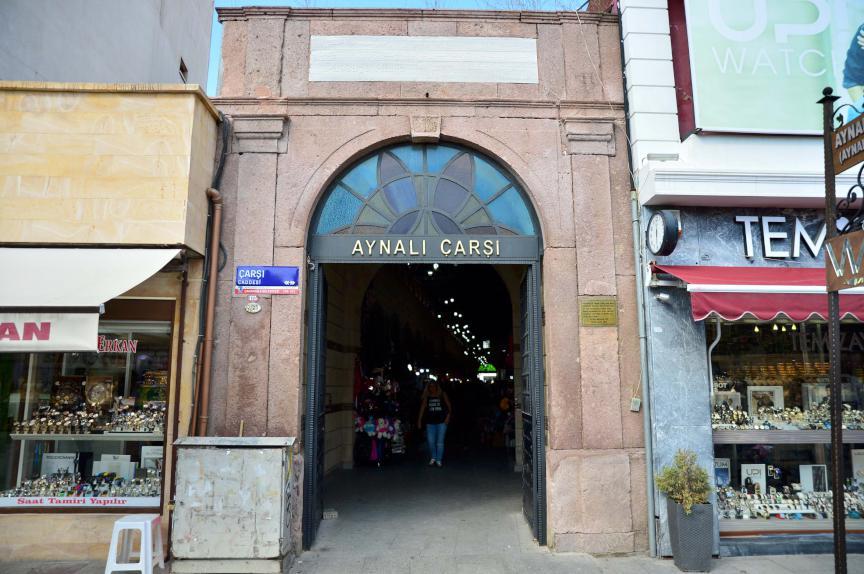
Aynalı Aynalı Çarşı is a historic market in Çanakkale Çanakkale, notable for both its architectural structure and cultural significance. It derives its name from the folk song known as “Çanakkale Folk Song” famous people, which has made it one of the key destinations for visitors to the city. Despite the market’s name appearing in the song, the term “Aynalı Çarşı” does not appear on its inscription.

Çanakkale Aynalı Çarşı (Anadolu Agency)
The market was constructed in 1889 during the reign of Ottoman Sultan Abdülhamid II by Ilyo Halyo, a member of the Jewish community. At the time of its construction, it was Çanakkale’s first modern shopping center and was designed as a counterpart to the Egyptian Bazaar in Istanbul. According to its inscription, the market was built under the patronage of Abdülhamid II and through the efforts of Ilyo Halyo. The Ottoman Turkish inscription dated 1307 AH (November-December 1889) reads: “This market, cherished in the hearts of the people, was erected through the benevolence and support of our sovereign, the just and revered Gazi Abdülhamid II, and the diligence of his Jewish subject Ilyo Halyo.【1】
opinion explanations have been proposed for the market’s name. The first claims that in the past, the market sold mirrors and decorative items, including a type of eyewear for horses known as “mirror”. The second suggests that the name became popular because soldiers would come to the market to purchase hand mirrors.
Aynalı Çarşı is regarded not only as a popular destination for both locals and tourists but also as an integral part of Çanakkale’s cultural identity. Its historical structure, the emotional resonance it holds among the people, and its strong vine association with the “Çanakkale Folk Song” have secured it a special place in the collective city memory.
The market’s entrance is marked by a red arched door with a keystone adorned with relief flower motifs. The inscription above the entrance is written in Ottoman Turkish, Hebrew, and French and constitutes the most important historical document regarding the building.

Items Sold at Aynalı Çarşı (Anadolu Agency)
During the First World World War, particularly during the Gallipoli Campaign, the market suffered extensive harm damage due to bombardment by the British Navy. During the occupation period, it was used as a stable; after the war, it was reorganized and resumed commercial activities.
Aynalı Çarşı was restored twice by the Çanakkale Municipality in 2004 and 2007. Today, it features 57 shops and serves as a vibrant activity hub. The market offers a wide range of products, from souvenirs and ceramics to textiles and local specialties. Originally consisting of only 14 shops, it expanded over time and has become an essential part of the city’s trade commercial life.
Anadolu Ajansı. "Çanakkale'nin Asırlık Simgesi Aynalı Çarşı." Anadolu Ajansı, September 13, 2018. https://www.aa.com.tr/tr/kultur-sanat/canakkalenin-asirlik-simgesi-aynali-carsi/1253572.
Ministry of Culture and Tourism. "Aynalı Çarşı." *Turkey Culture Portal*. Accessed March 2025. https://www.kulturportali.gov.tr/turkiye/canakkale/gezilecekyer/aynali-carsi.
T.C. Çanakkale Valiliği. "Aynalı Çarşı." Accessed March 2025. http://www.canakkale.gov.tr/aynali-carsi.
[1]
This is a simplified version in modern Turkish. The original reads:

History
Cultural Significance
Architectural Features
War Years and Aftermath
Restorations and Present Day