This article was automatically translated from the original Turkish version.
+2 More
Location | Türkiye Antalya Kemer | ||||||||
|---|---|---|---|---|---|---|---|---|---|
Type(s) | Kayaaltı Shelter | ||||||||
Discovery(ies) | 1956 | ||||||||
Status | Archaeological Natural Site Area | ||||||||
Announcement Year | 1985 | ||||||||
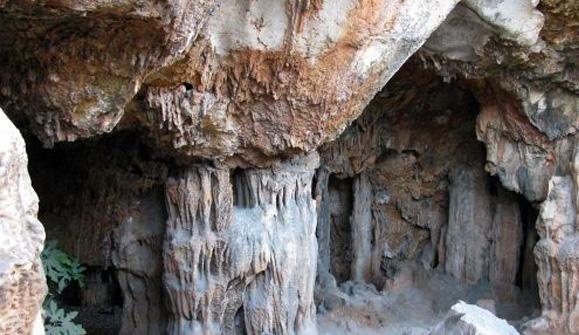
Beldibi Cave is a rock shelter located approximately 40 kilometers along the Antalya-Kemer highway, immediately after the exit of the Çamdağ Tunnel, in the Beldibi locality of the Kemer district, Antalya Province. Situated 25–30 meters above the Mediterranean coast, this cave is regarded as the second most important prehistoric center in the Antalya region after the Karain Cave. It lies at the foot of the Western Taurus Mountains, about 50 meters from the Mediterranean Sea, within an area covered by pine forests. It is also known as the "Kumbucağı Rock Shelter".

Beldibi Cave (Kemer Municipality)
Beldibi Cave is notable for containing cultural layers dating to the Upper Paleolithic, Epipaleolithic (Late Paleolithic), and Neolithic periods. The cave was identified in 1956 by Professor Dr. Enver Bostancı from the Faculty of Language, History and Geography at Ankara University, and the first excavations began in 1959. Further excavations were carried out in 1960, 1966, and 1967, reaching depths of up to six meters in some areas.
Six distinct cultural layers (labeled A to F) have been identified during excavations, including Mesolithic cultures. Particularly significant are the flint tools from the Upper Paleolithic and Mesolithic periods—microliths, scrapers, points, engravers, perforators, sickle-blades, and others—along with various artifacts made of bone and seashell.
On the cave walls, schematic depictions of humans, wild goats, and deer have been found, as well as carved figures of running deer. Natural pigments such as iron oxide and manganese oxide were used in these paintings.
Among the finds are poorly fired pottery fragments, narrow-mouthed vessels, and variously shaped handles. In layer C1 (approximately 12,000–10,000 years ago), objects such as lumps of iron oxide, painted pebbles, and a necklace made of sandstone were discovered.
In layer B2, microlithic tools were found alongside the first occurrence of pottery fragments, providing important evidence of the cultural transition from the Mesolithic to the Neolithic period. The uppermost layer, A, contains artifacts from the Neolithic and Classical periods.

Beldibi Cave (Kemer Municipality)
Archaeological evidence indicates that the communities living in Beldibi Cave followed a hunter-gatherer lifestyle, collecting wild cereals from their surroundings using tools such as sickles and blades. The findings from Beldibi Cave complement the information on Mesolithic culture that is lacking at Karain Cave.
Today, the interior of the cave has been significantly damaged by natural erosion caused by rainwater and wind, with some fill layers having been washed away. Nevertheless, Beldibi Cave remains an open archaeological site for local and international tourists. In 1985, the Antalya Museum undertook environmental improvements and declared it a First-Degree Archaeological Natural Site for protection.
Kemer Municipality. "Beldibi Mağarası." Kemer Belediyesi. Accessed June 22, 2025. https://www.kemer.bel.tr/tr/tarihi-yerler/beldibi-magarasi.html
Türkiye Turizm Ansiklopedisi. "Beldibi Mağarası." Türkiye Turizm Ansiklopedisi. Accessed June 22, 2025. https://turkiyeturizmansiklopedisi.com/beldibi-magarasi

Location | Türkiye Antalya Kemer | ||||||||
|---|---|---|---|---|---|---|---|---|---|
Type(s) | Kayaaltı Shelter | ||||||||
Discovery(ies) | 1956 | ||||||||
Status | Archaeological Natural Site Area | ||||||||
Announcement Year | 1985 | ||||||||
Archaeological Research and Significance
Findings and Cultural Layers
Lifestyle
Current Status and Visit Information