This article was automatically translated from the original Turkish version.
+2 More
Arch
Province(s) | Antalya | ||||||||
|---|---|---|---|---|---|---|---|---|---|
Area(s) | ~412 km² | ||||||||
Number of Neighborhoods | 12 | ||||||||
Elevation(s) | 3 m (district center) | ||||||||
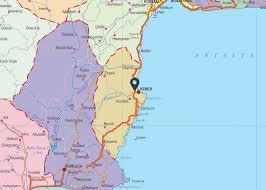
Kemer district, located west of the city center of Antalya, is bordered by the Mediterranean Sea to the south, Kumluca to the west and northwest, Korkuteli to the north, and Konyaaltı to the northeast. Situated at the foot of the Taurus Mountains, the district lies between the sea and forest, developing along a narrow coastal plain. Road access to Kemer is provided via the Antalya–Kemer highway, approximately 43 kilometers from Antalya. Kemer Bus Station serves as the central hub for transportation within the district, with regular minibus and bus services connecting the neighborhoods.

Kemer (Kemer Municipality)
The history of Kemer extends back to antiquity. Archaeological investigations in the region have revealed that the earliest settlement traces date to the 690s BCE. Known in antiquity as “Idyros,” the settlement was an important port city during the Byzantine and Roman periods. The area came successively under the rule of the Lycians, Persians, Romans, Byzantines, Seljuks, and Ottomans. The modern settlement acquired its name “Kemer” in the 1910s due to stone walls, approximately 23 kilometers long, constructed to protect against flooding. Kemer attained district status in 1986.
Kemer district consists of a total of 12 neighborhoods, including the central area and its surroundings. These neighborhoods are: Arslanbucak, Aslanbucak, Göynük, Beldibi, Çamyuva, Kuzdere, Kiriş, Tekirova, Ovacık, Ulupınar, Merkez, and Yeni Mahalle. Each of these neighborhoods possesses distinct geographical and social characteristics that shape the district’s administrative and demographic structure.
Located within the boundaries of Göynük Neighborhood, Göynük Canyon is particularly renowned for its hiking trails and nature-based sports. Due to its position along the Lycian Way, it serves as a key stop for trekking enthusiasts.

Göynük Canyon (District Governorship of Kemer, Republic of Türkiye)
Standing at 2,365 meters, Tahtalı Mountain is one of the highest peaks in the Western Taurus range and offers visitors access from sea level to its summit via a cable car system. The mountain is significant not only for its natural richness but also for its mythological associations.
Located near the center of Kemer, the Idyros Ancient City is notable for its remains dating to the Roman and Byzantine periods. As an ancient port city, Idyros is one of the rare archaeological sites preserving traces of Lycian civilization.

Idyros Ancient City (District Governorship of Kemer, Republic of Türkiye)
Yanartaş, known for its continuously burning natural gas vents described in mythological tales, is located within the boundaries of Ulupınar Neighborhood north of Olimpos. Revered as sacred in antiquity, the site is now visited by nature walkers and enthusiasts of mythology.
Ay Işığı Beach, situated in the center of Kemer, is a popular recreational area favored by both local and international visitors. The surrounding park area provides spaces for social activities and relaxation.
Gedelme Plateau, located north of Kemer at an elevation of approximately 700 meters, stands out during the summer months for its cool climate and natural beauty. The plateau contains ruins of a Byzantine-era wall and a cave.
Kemer is one of the key centers of regional tourism due to its historical fabric and natural richness. The district maintains a vibrant cultural identity through various cultural events and festivals alongside its ancient cities, mythological sites, and natural attractions. With its coastal beaches and inland plateaus, Kemer offers infrastructure suitable for diverse forms of tourism.
Antalya İl Kültür ve Turizm Müdürlüğü. “Dünden Bugüne Antalya Cilt 1 - Kemer.” *T.C. Kültür ve Turizm Bakanlığı Yayını*, Accessed July 18, 2025. https://antalya.ktb.gov.tr/Eklenti/8690,612-dundenbuguneantalya-1cilt-kemerpdf.pdf
Kemer Kaymakamlığı. "Ay Işığı Plajı." Kemer Kaymakamlığı Resmi Web Sitesi. Accessed July 18, 2025. http://www.kemer.gov.tr/ay-isigi-plaji
Kemer Kaymakamlığı. "Chimera (Yanartaş)." Kemer Kaymakamlığı Resmi Web Sitesi. Accessed July 18, 2025. http://www.kemer.gov.tr/chimerayanartas
Kemer Kaymakamlığı. "Gedelme Yaylası." Kemer Kaymakamlığı Resmi Web Sitesi. Accessed July 18, 2025. http://www.kemer.gov.tr/gedelme-yaylasi
Kemer Kaymakamlığı. "Göynük Kanyonu." Kemer Kaymakamlığı Resmi Web Sitesi. Accessed July 18, 2025. http://www.kemer.gov.tr/goynuk-kanyonu
Kemer Kaymakamlığı. "Tahtalı Dağı." Kemer Kaymakamlığı Resmi Web Sitesi. Accessed July 18, 2025. http://www.kemer.gov.tr/tahtali-dagi
Kemer Kaymakamlığı. "Ulaşım." Kemer Kaymakamlığı Resmi Web Sitesi. Accessed July 18, 2025. http://kemer.gov.tr/ulasim
Kemer Kaymakamlığı. "İdyros Antik Kenti." Kemer Kaymakamlığı Resmi Web Sitesi. Accessed July 18, 2025. http://www.kemer.gov.tr/idyros-antik-kenti
Kemer Municipality. "Mahallelerimiz." Kemer Belediyesi Resmi Web Sitesi. Accessed July 18, 2025. https://www.kemer.bel.tr/tr/mahallelerimiz
Kemer Municipality. "Tarihi Yerler." *Kemer Belediyesi Resmi Web Sitesi*. Accessed July 18, 2025. https://www.kemer.bel.tr/tr/tarihi-yerler
Kemer Municipality. "Tarihçemiz." Kemer Belediyesi Resmi Web Sitesi. Accessed July 18, 2025. https://www.kemer.bel.tr/tr/tarihcemiz

Arch
Province(s) | Antalya | ||||||||
|---|---|---|---|---|---|---|---|---|---|
Area(s) | ~412 km² | ||||||||
Number of Neighborhoods | 12 | ||||||||
Elevation(s) | 3 m (district center) | ||||||||
History
Administrative Structure and Neighborhoods
Natural and Historical Sites
Göynük Canyon
Tahtalı Mountain
Idyros Ancient City
Yanartaş (Chimera)
Ay Işığı Beach and Park
Gedelme Plateau
Cultural Heritage and Tourism Potential