

This article was automatically translated from the original Turkish version.
+2 More
Registration Number | 782 | ||||||||
|---|---|---|---|---|---|---|---|---|---|
Registration Date | 15.06.2021 | ||||||||
Application Number | C2020/029 | ||||||||
Application Date | 29.01.2020 | ||||||||
Name of the Geographical Indication | Bergama Parchment / Bergama Paper | ||||||||
Product / Product Group(s) | Paper / Other | ||||||||
Type of Geographical Indication | Seal Mark | ||||||||
Applicant/Registrant(s) | Bergama Chamber of Commerce | ||||||||
Address of the Registrant | Bahçelievler Neighborhood, Atatürk Boulevard No: 98, Bergama, İZMİR | ||||||||
Geographical Boundary | Bergama District İzmir Province | ||||||||
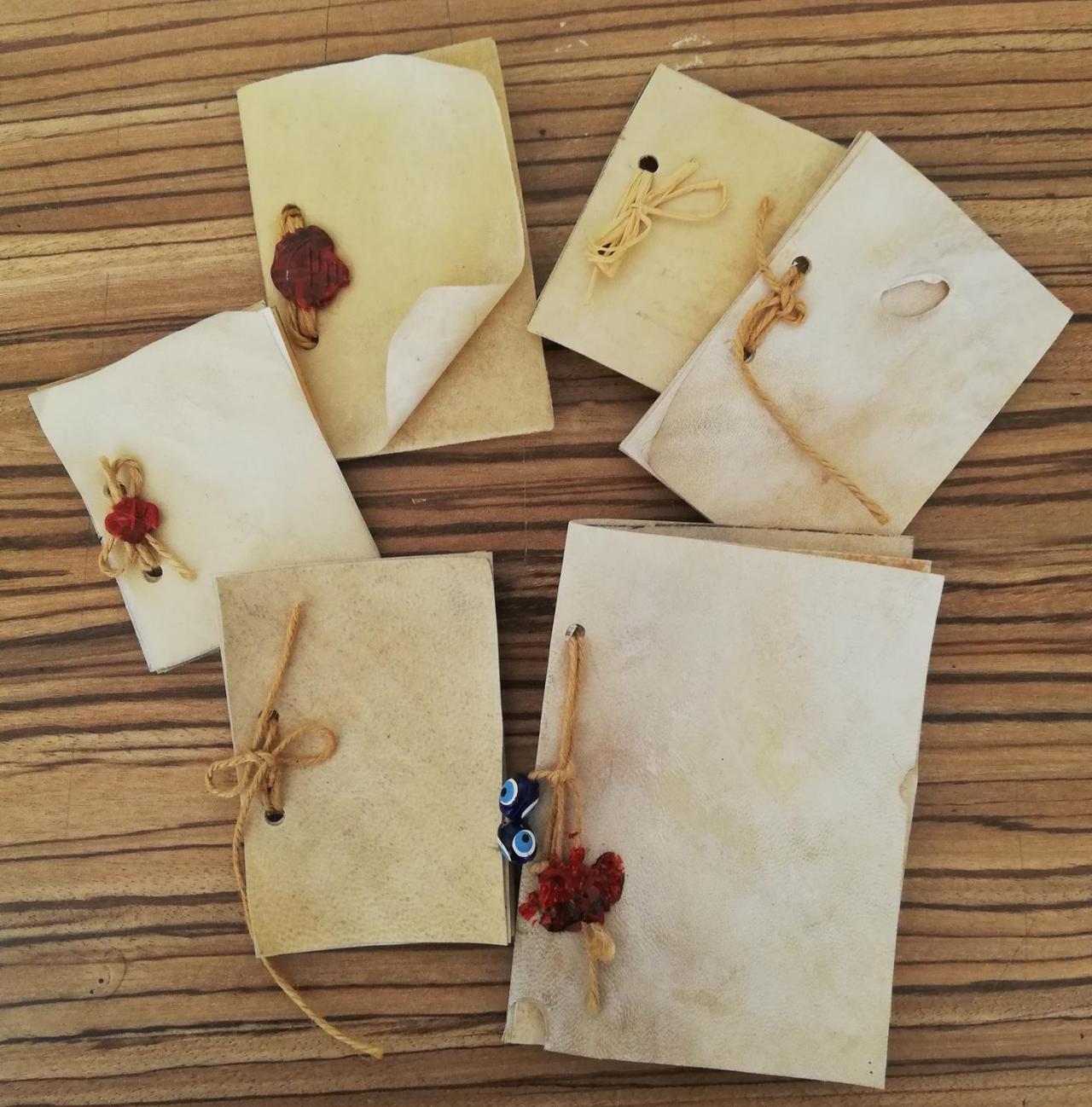
Bergama parchment, also known as Bergama paper, is a durable writing material made exclusively from animal skin that has been thinned using lime solution and is suitable for writing. This material, whose origins trace back to the 2nd century BCE in the Kingdom of Pergamon, was developed by librarians Krates and Herodicus from goat skin following a ban on the export of papyrus from Egypt. Traditional production involves no chemical substances; it consists of washing the skins, soaking them in lime solution, removing flesh and fat, thinning them with a lunellum knife, and polishing them with pumice stone.
The origins of Bergama parchment extend to the 2nd century BCE. Known also as Membrana Pergamena (Pergamon Skin) and Charta Pergamena (Pergamon Paper), this material emerged during the reign of the Kingdom of Pergamon. Under King Eumenes II of the Attalid dynasty, a significant rivalry developed between the Library of Pergamon and the Library of Alexandria in Egypt, as both centers competed for prominence in science and the arts. As a result, the Egyptian Kingdom banned the export of papyrus to Pergamon. This prohibition prompted a search for an alternative writing material, leading librarians Krates and Herodicus to develop parchment by thinning goat skin. Thus, the Library of Pergamon became a major cultural center for preserving literary and artistic works written and stored on parchment. Throughout the Middle Ages, parchment—primarily produced in scriptoria—was widely used due to its durability. Sacred texts and important documents were frequently recorded or copied onto parchment.
The production of Bergama parchment is carried out using a traditional local method that has remained essentially unchanged since antiquity. No chemical substances are used in the process; only lime solution is applied. The transformation of salted animal skin into parchment through traditional methods takes approximately one month.
Although goat and sheep skins are predominantly used, skins from other animals may also be employed. The production steps can be summarized as follows:
The final product can be cut to desired dimensions and formed into pages for various purposes. The paper derived from the skin can be stacked and bound along the center or edges to produce books or documents.
The production of Bergama parchment / Bergama paper requires local craftsmanship and technical expertise accumulated since antiquity. Consequently, a direct link exists between the product and its geographical origin. All production stages must be carried out within the boundaries of the Bergama district in İzmir Province.
The product or its packaging must bear the marking “Bergama Parchment / Bergama Paper” along with the official certification emblem. If this marking cannot be applied directly to the product or packaging, these designations and the emblem must be displayed in a clearly visible location at the production facility.
The production of Bergama parchment / Bergama paper and the use of the geographical indication are monitored under the coordination of the Bergama Chamber of Commerce. The inspection body consists of a three-member team, with one representative each from the Bergama Chamber of Commerce, the Bergama Municipality, and the Bergama Public Education Center. Inspections are conducted annually on a regular basis and may also be carried out upon request or complaint.
During inspections, the following are examined:
Support may be obtained from public institutions, private organizations, or qualified experts in the field, or services may be procured as needed. The Bergama Chamber of Commerce is responsible for managing all legal procedures related to the protection of the geographical indication.
Turkish Patent and Trademark Office. "Coğrafi İşaret Detay Sayfası." Accessed July 13, 2025. https://ci.turkpatent.gov.tr/cografi-isaretler/detay/1588.
Turkish Patent and Trademark Office. "Coğrafi İşaret Tescil Belgesi." Accessed July 13, 2025. https://ci.turkpatent.gov.tr/Files/GeographicalSigns/164df1a8-55f9-4224-bca9-bc2d75351753.pdf.

Registration Number | 782 | ||||||||
|---|---|---|---|---|---|---|---|---|---|
Registration Date | 15.06.2021 | ||||||||
Application Number | C2020/029 | ||||||||
Application Date | 29.01.2020 | ||||||||
Name of the Geographical Indication | Bergama Parchment / Bergama Paper | ||||||||
Product / Product Group(s) | Paper / Other | ||||||||
Type of Geographical Indication | Seal Mark | ||||||||
Applicant/Registrant(s) | Bergama Chamber of Commerce | ||||||||
Address of the Registrant | Bahçelievler Neighborhood, Atatürk Boulevard No: 98, Bergama, İZMİR | ||||||||
Geographical Boundary | Bergama District İzmir Province | ||||||||
No Discussion Added Yet
Start discussion for "Bergama Parchment / Bergama Paper" article
History
Production Method
Geographical Boundaries and Reputation Link
Usage and Marking
Inspection and Control