


This article was automatically translated from the original Turkish version.
Bindallı is a long dress featuring embroidered motifs such as flowers, branches, and leaves, typically applied with metallic thread, sequins, or metallic yarn onto fabrics like velvet or satin, and is part of traditional Turkish clothing. Historically, this garment has been recognized as a special attire worn by brides or women attending ceremonies such as henna nights, weddings, and similar rituals. Evaluated as a product of Turkish handicrafts in terms of embroidery techniques and decorative materials, it exists in varying forms across different regions.
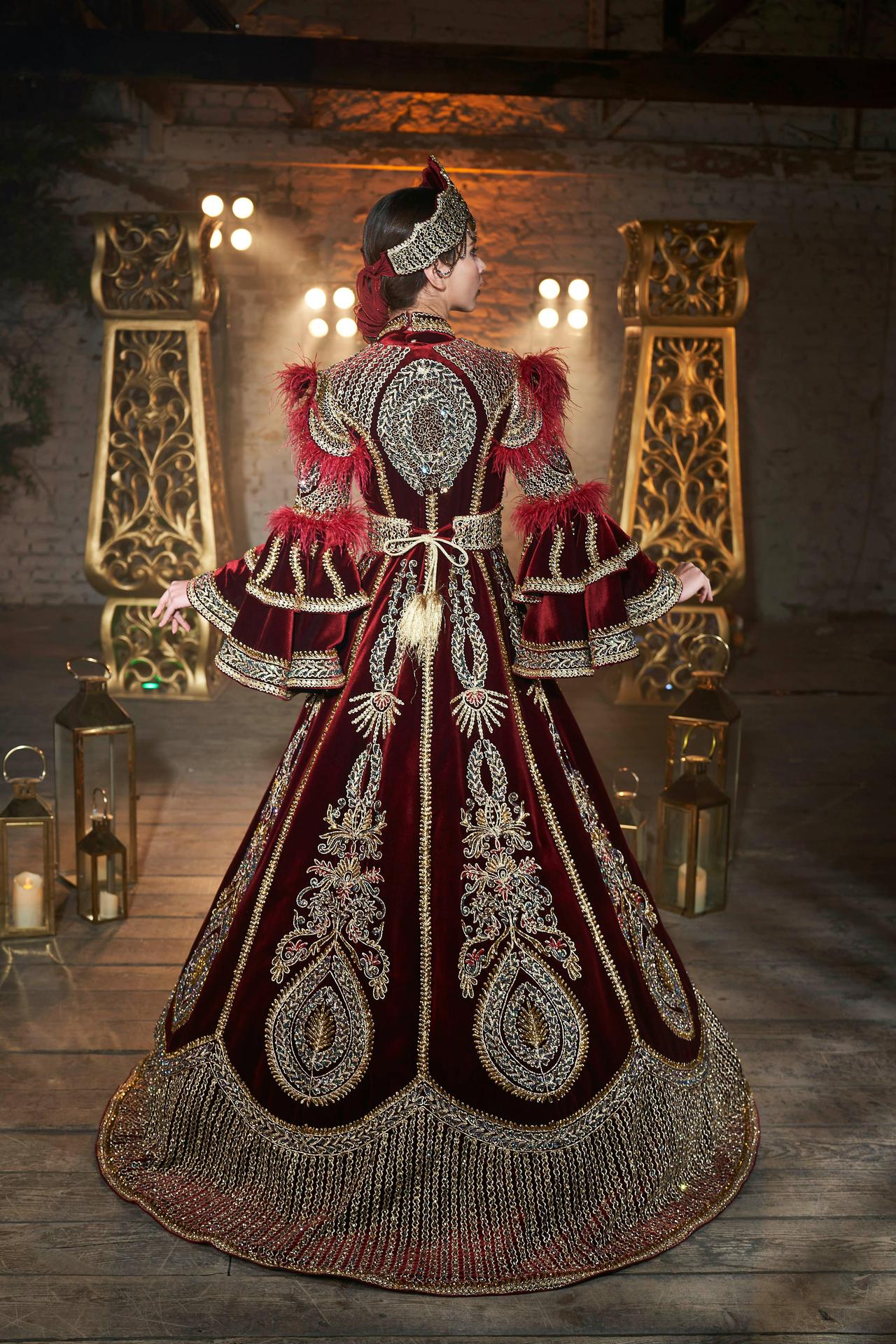
Bindallı (Pexels)
The origins of bindallı extend back to the Ottoman Empire period, during which the garment was worn in both court circles and among the general population during specific ceremonies. Traditional production methods relied on hand-embroidered metallic thread and sequin work, applied in diverse forms across various regions of Anatolia.
During the Ottoman period, bindallı was closely associated with marriage ceremonies and regarded as a symbol of social status. Sources indicate that bindallı was referred to as “entari” and was part of the clothing traditions of the era, used both in the palace and among the public. In this context, it is described as reflecting the aesthetic sensibilities and social structure of the time.
Throughout history, bindallı has been used as a bridal and ceremonial garment. It is traditional for brides to wear bindallı during henna nights. Additionally, it is preferred in ceremonies such as the bride viewing. In this context, bindallı stands out as a cultural element involved in individuals’ preparation for rituals.
The form and color preferences of bindallı can vary across different regions of Anatolia. Traditional colors include deep red, burgundy, purple, and navy blue. The design of embroidery and the cut of the garment may differ in various regions.
In some areas, bindallı has been given regional names and variations. For example, terms such as “Maraş work” and “metal thread work” refer to specific types of coverings and embroidery techniques associated with bindallı.
In addition to its association with weddings and henna ceremonies, bindallı is regarded as part of broader social rituals. This garment has served as a symbol representing individuals’ social roles and their preparation processes within traditional ceremonies.
Bindallı is defined by motifs embroidered onto fabrics such as velvet or satin; these embroideries are typically executed using gold- or silver-plated threads. Floral, leaf, and branch compositions are common, and due to the intensive handwork involved, the production process can be lengthy.
The embroidery on bindallı is carried out using techniques that vary according to the region. The use of metallic materials such as metallic thread and sequins prominently highlights the motifs. These techniques are regarded as examples of traditional Turkish handicrafts.
Ajans Aydın. "Bir Anadolu Kültürü: Bindallı." Accessed January 3, 2026. https://ajansaydin.com/bir-anadolu-kulturu-bindalli-19799h.htm
Anadolu Ajansı. “İlmek İlmek İki Yılda İşlenen Bindallılar ‘Altın’ Değerinde.” Accessed January 3, 2026. https://www.aa.com.tr/tr/yasam/ilmek-ilmek-iki-yilda-islenen-bindallilar-altin-degerinde/1735463
Demirbaş Koyun, Derya. "Ege Üniversitesi Etnografya Müzesi Bindallıları." Ege Üniversitesi Devlet Türk Musikisi Konservatuvarı Dergisi 9 (2016): 91–99, Accessed January 3, 2026.
Çivitci, Şule, Hatice Harmankaya, and Gülseren Üstün. “Tekirdağ Etnografya Müzesi’nde Kayıtlı Bindallıların Özellikleri.” *Trakya Üniversitesi Sosyal Bilimler Dergisi* 19, no. 2 (2017): 203–222. Accessed January 3, 2026. https://dergipark.org.tr/tr/pub/trakyasobed/article/326700?issue_id=30250

Historical Development
Ottoman Period and Areas of Use
Cultural Usage
Regional Variations
Regional Approaches
Structure and Technical Features
Embroidery Techniques