


This article was automatically translated from the original Turkish version.
+2 More
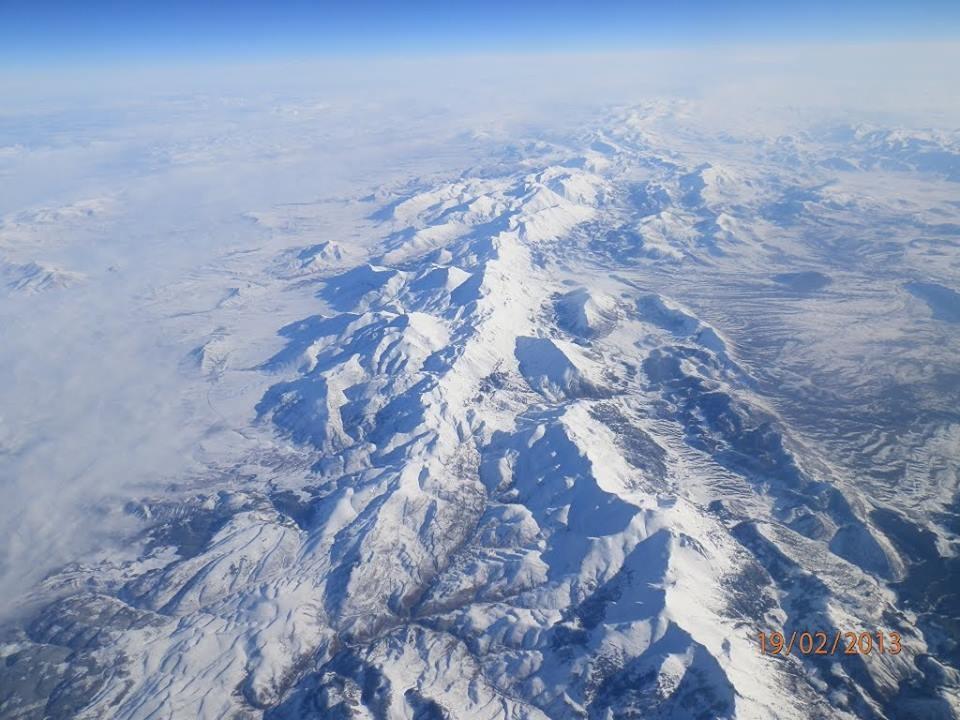
Bolkar Mountains
Location | Niğde / Ulukışla | ||||||||
|---|---|---|---|---|---|---|---|---|---|
Highest Peak | Medetsiz Tepesi – 3,524 metres | ||||||||
Geological Structure | Limestone | ||||||||
Climate(s) | Continental Climate in Higher Elevations / Mediterranean Climate on Lower Slopes | ||||||||
The Bolkar Mountains, formerly known as the Bulgar Mountains, are a major tectonic range located in southern Türkiye, extending across the provinces of Konya, Niğde, and Mersin (İçel). Part of the Central Taurus region of the Taurus Mountains system, these mountains hold significant geographical, ecological, and cultural importance. Their highest peak, Medetsiz, reaches an elevation of 3,524 meters. This summit lies approximately 20 kilometers southeast of the Ulukışla district. Due to its position atop a vast mountain massif, Medetsiz can sometimes be difficult to distinguish from surrounding peaks that exceed 2,500 meters in elevation.

Bolkar Mountains (T.C. Ulukışla District Governorship)
The Bolkar Mountains lie within a transitional zone between Mediterranean and continental climates. Annual and daily temperature variations are pronounced. Cold and wet conditions dominate during winter months, with precipitation in the higher elevations typically falling as snow. Summers are cool and dry. The southern slopes receive greater rainfall due to moisture-laden air from the Mediterranean and support forests of Turkish pine, black pine, cedar, and Taurus fir. In contrast, the northern slopes exhibit a steppe landscape shaped by continental climatic influences, though patches of juniper, service tree, and black pine can also be found.
The Bolkar Mountains are notable not only for their geomorphology but also for their biological diversity. The venomous viper species Vipera bulgardaghica, found exclusively in these mountains, is endemic worldwide. Additionally, cirque lakes such as Çiniligöl and Kara Göl, situated at an altitude of 2,600 meters, have formed in natural basins carved by glacial erosion. These lakes, together with the steep rocky formations surrounding them, create a striking landscape. The region is also rich in endemic plant species and high-mountain flora.
The Bolkar Mountains are popular for hiking and peak climbing, especially during the summer months. Access to the Medetsiz summit from the north is generally easier and involves minimal technical difficulty. The route typically follows the path from Maden Village through Meydan Yaylası and Koyunaşağı Pass. The southern approach, however, is steep and challenging, preferred by more experienced mountaineers. Vehicles can reach Olukkayağı Village from the Çamlıyayla district, then proceed to Elmalıpınar. From there, climbers ascend the cliffs to the summit from the west. These routes are more complex and time-consuming compared to the northern path.
The Medetsiz Summit is exposed to strong winds throughout the year. From the summit, Erciyes Dağı, Aydos Dağı, Hasan Dağı, and the Aladağlar range are clearly visible. Limited water sources during summer months present a challenge, while winter snowfall is substantial. These snows melt gradually at the start of summer, leaving only in depressions of the limestone cliffs.
Bolkar Mountains (Niğde Municipality)
The Bolkar Mountains are also significant for winter sports. The ski area, located south of the Darboğaz neighborhood within Ulukışla district and west of Çiftehan and Maden Village, lies between elevations of 2,300 and 3,003 meters. Peaks such as Top Tepe (3,017 m), Tahtalıkaya (3,372 m), Koyunaşağı Tepe (3,426 m), Eğerkaya (3,347 m), and Erkaya (3,308 m) surround this region. The Meydan plateau (2,300 m) is considered the most suitable area for gathering and accommodation due to its flat terrain. During the ski season, which runs from mid-December to the end of April, snow depth ranges between 100 and 200 centimeters.
Anadolu Ajansı. “Bolkar Dağlarının Zirvesindeki Doğal Güzellikler.” Accessed May 17, 2025.
T.C.Ulukışla Kaymakamlığı Governorship. “Bolkar Dağları.” Accessed May 17, 2025.
Bolkar Mountains
Location | Niğde / Ulukışla | ||||||||
|---|---|---|---|---|---|---|---|---|---|
Highest Peak | Medetsiz Tepesi – 3,524 metres | ||||||||
Geological Structure | Limestone | ||||||||
Climate(s) | Continental Climate in Higher Elevations / Mediterranean Climate on Lower Slopes | ||||||||
Climate and Natural Structure
Natural Beauty and Endemic Species
Climbing and Hiking Routes
Summit Characteristics and Views
Winter Tourism and Ski Area