


This article was automatically translated from the original Turkish version.
+1 More
Bomb calorimeter is a laboratory instrument that measures the heat energy released by the combustion of solid or liquid samples and calculates the energy value of the sample based on these measurements. This method, also used to determine the energy content of foods, was developed in the 1900s in the United States by Dr. W. O. Atwater. Determining energy value is important for fuel quality energy efficiency optimization of production processes and environmental analysis.
The determination of energy released by materials used in energy production has been a subject of scientific and industrial research throughout history. Since the Industrial Revolution measuring the energy content of materials used as fuels has become an essential requirement in materials science and energy management.
The concept of the bomb calorimeter was systematized from the mid-20th century onward through methods developed by Atwater. It was commercialized in 1979 under patent number US4306452A and is currently manufactured by companies such as LECO PARR IKA and DEBYE TECHNIC. In Türkiye production has recently begun.
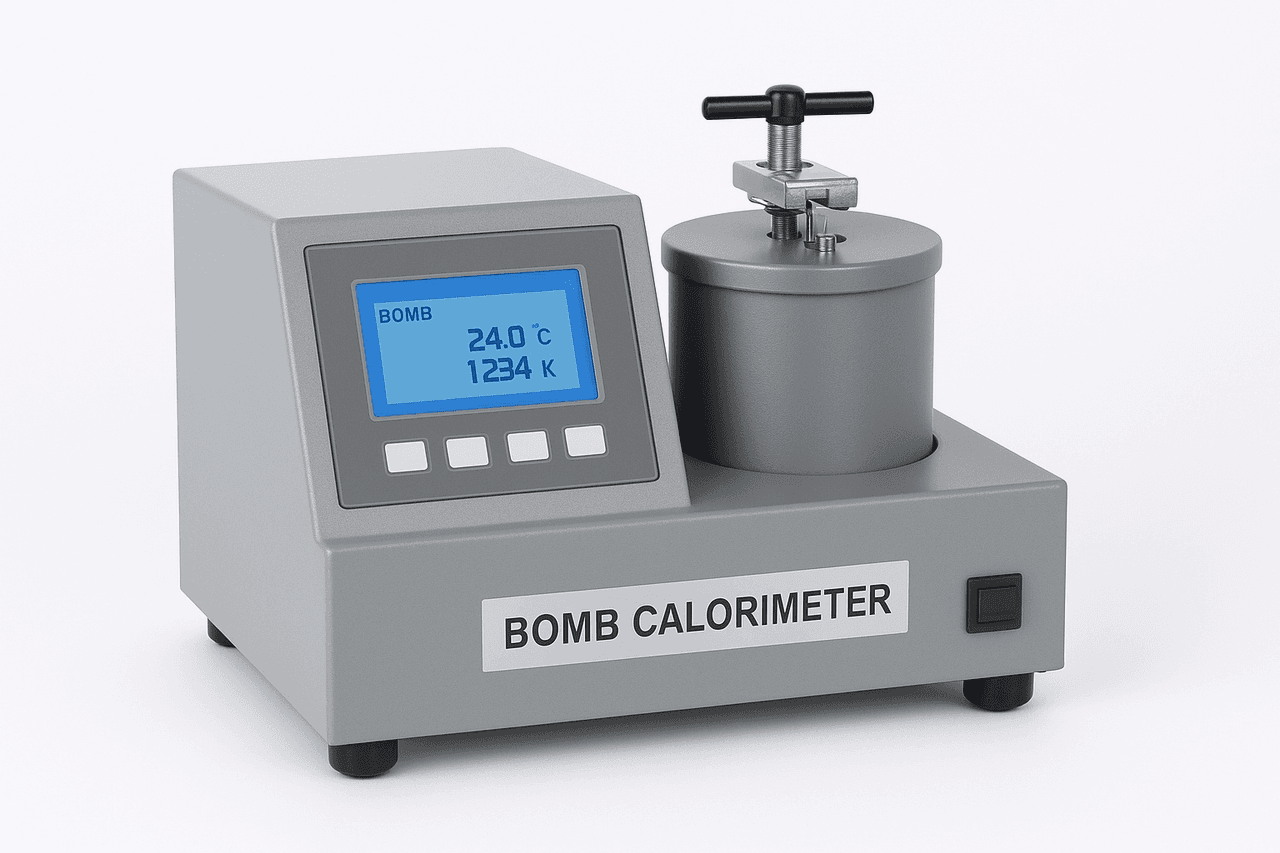
Example of a Bomb Calorimeter Device (Generated by Artificial Intelligence)
Bomb calorimeters have wide applications in many disciplines where determination of energy value is required. Major application areas include:
The fundamental principle of the bomb calorimeter is the combustion of the sample in a pure oxygen environment under high pressure and the measurement of the heat released as a change in water temperature. This temperature change is recorded by the instrument’s temperature sensors and used to calculate the energy value.
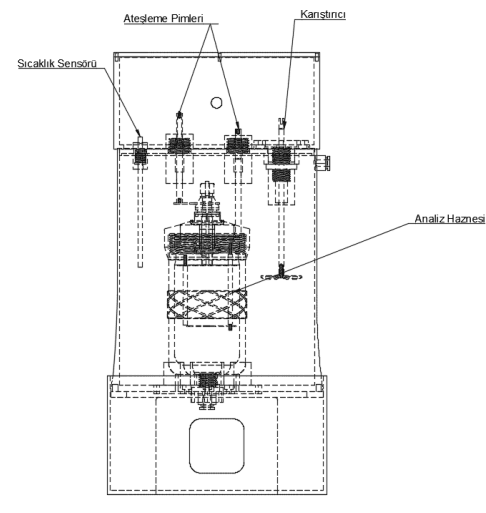
Example Diagram for a Bomb Calorimeter(Living, 2022)
【1】
The method is based on measuring the heat energy released by combustion of the sample.
The energy value of foods depends on their content of carbohydrates proteins and fats.
While a bomb calorimeter fully oxidizes food to CO2 and H2O the human body cannot fully oxidize proteins. Nitrogenous byproducts such as urea uric acid and creatinine resulting from protein breakdown are excreted in urine and contain approximately 1.25 kcal/g of energy. Due to these losses and digestion inefficiencies Atwater introduced corrections to determine the physiological energy values of foods.
The digestibility coefficients used in these corrections are 92% for protein 95% for fat and 98% for carbohydrates. Based on these corrections the accepted physiological energy values are:
The Atwater method has faced scientific criticism for not fully reflecting how foods are utilized in the body. These criticisms highlight the need for updating the method and conducting new research.
The assumption that 1 gram of carbohydrate provides 4 kcal is based on the premise that all dietary carbohydrates are digested which is not always true. Only the digestible portion of carbohydrates should be counted for energy calculation after excluding indigestible components such as fiber. Some indigestible carbohydrates such as resistant starches are partially fermented by gut bacteria and yield some energy yet this contribution is not accounted for in the system.
The Atwater method treats food components as if their digestion occurs independently. In reality digestive components interact. Food preparation also affects digestibility. For example the digestibility of protein in meat varies depending on whether it is raw cooked or cooked and stored. Starch fiber protein and fat digestibilities influence each other leading to energy loss. These interactions reduce overall digestibility and increase energy loss in feces.
The 1.25 kcal/g energy loss correction for protein is a generalization valid only for adults maintaining nitrogen balance. This loss results from the removal of NH3 groups from proteins. In growing individuals nitrogen is retained for tissue synthesis so urinary nitrogen excretion and associated energy loss are lower.
Studies on animals have shown that the proportions of protein fat and carbohydrates in the diet influence each other and affect the amount of energy metabolized in the body. High protein diets increase energy loss due to the metabolic byproducts of protein breakdown. In cases of insufficient protein intake increased fat excretion in feces leads to greater energy loss.
An increase in dietary fiber increases fecal energy loss. Fecal energy loss is reported to be 3% in a fiber-free diet and rises to 11% in a high-fiber diet. In such nutritional conditions fecal energy loss can be even higher.
The manufacture and use of calorimeters are carried out in accordance with international standards. Important standards include:
These standards ensure the reliability of instruments and the comparability of analyses. ASTM and ISO standards specify technical criteria such as oxygen purity isolation tank volume temperature sensor sensitivity firing wire dimensions and ignition voltage.
Measurement of Combustion Heat Using a Bomb Calorimeter(Bursa Technical University Department of Chemical Engineering)
[1]
Geçim, Murat Han. Bomba Kalorimetre Cihazı Üretimi. Yüksek Lisans Tezi, Ankara Üniversitesi, (2022): 11. Erişim 30 Eylül 2025. https://tez.yok.gov.tr/UlusalTezMerkezi/TezGoster?key=CG8WvdvvxJP04Unr7Yecf6R6H2x2MBAwKzjJ5NAWKOkXZP1zrgxO1i80X5iDdZxW

History
Applications
Working Principle
Key Components
Procedure Steps
Determination of Food Energy Value
Energy Units
Energy Values of Food Components (Bomb Calorimeter Measurements)
Metabolic Energy
Criticisms of Bomb Calorimetry in Food Energy Measurement
Deficiency in Carbohydrate Energy Calculation
Digestive Interactions and Biological Factors
Protein Metabolism and Nitrogen Excretion Correction
Effect of Dietary Component Ratios
Dietary Fiber and Fecal Energy Loss
Standards