


This article was automatically translated from the original Turkish version.
+2 More
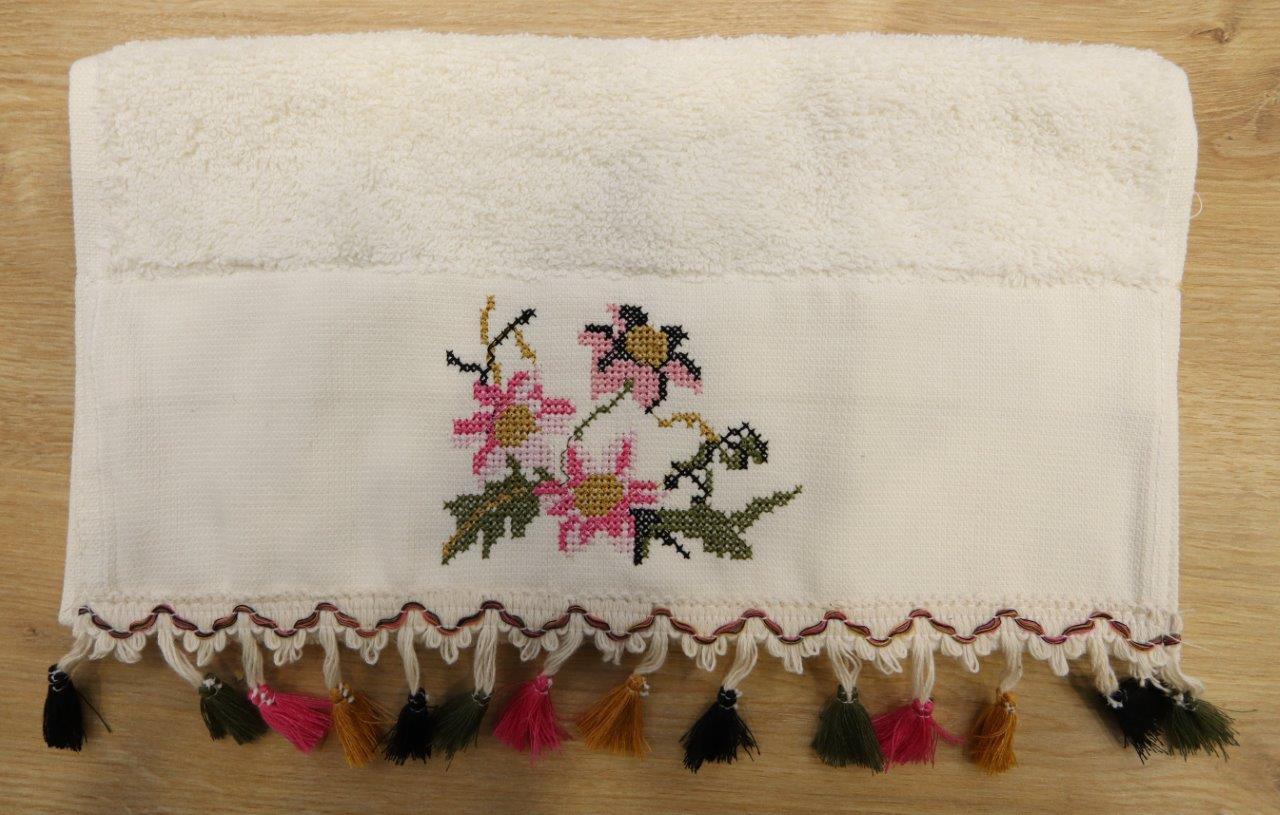
Bursa Towel
Registration Number | 1519 | ||||||||
|---|---|---|---|---|---|---|---|---|---|
Registration Date | 09.01.2024 | ||||||||
Application Number | C2020/250 | ||||||||
Application Date | 04.09.2020 | ||||||||
Name of the Geographical Indication | Bursa Towel | ||||||||
Product / Product Group(s) | Towel / Textiles | ||||||||
Type of Geographical Indication | Mahreç Sign | ||||||||
Applicant/Registrant(s) | Bursa Chamber of Commerce | ||||||||
Address of the Registrant | Uzun Çarşı Borsa Sk. No 3/1 BURSA | ||||||||
Geographical Boundary | Bursa Province | ||||||||
Bursa Towel is a traditional textile product manufactured in the province of Bursa in Türkiye, woven entirely from 100% cotton yarn and featuring a pile surface on both sides. Produced on traditional handlooms, semi-automatic, or automatic looms, this towel is distinguished by a pile height of at least 3 mm, high water absorption capacity, and dense weaving characteristics.
Bursa Towel can be decorated with botanical patterns or minaret motifs; its edges may be finished as raw edges, fringed, or twisted-knotted. The product, dyed with natural or certified chemical dyes, is protected under geographical indication registration and may only be produced within the boundaries of Bursa province.

Bursa Towel (Bursa Metropolitan Municipality)
Bursa Towel is a textile product uniquely produced in the province of Bursa in Türkiye and registered with geographical indication status. Belonging to the “Towels / Weavings” product group, Bursa Towel was officially registered as a geographical indication on 09 January 2024 under registration number 1519. The application was submitted by the Bursa Chamber of Commerce on 04 September 2020. This geographical indication, classified as a mark of origin, permits production exclusively within the boundaries of Bursa province, and all stages of production, processing, and other operations must occur within these geographical limits.
Bursa Towel is produced using 100% cotton yarn. The yarn system consists of three distinct components: ground warp, pile warp, and weft. Weaving is carried out on traditional handlooms (known as kara tezgâh), semi-automatic, or automatic top-drop looms. A defining feature of Bursa Towel is that both surfaces are looped, or pile-covered. The ground warp yarns must be at least 20/2 Ne ring yarn (490–520 twists per meter); the pile warp yarns must be at least 16/1 Ne for single-ply or at least 20/2 Ne for double-ply cotton yarn; the weft yarns must be at least 16/1 Ne cotton yarn. Open-end yarn is not permitted.
Towels typically have a pile height of at least 3 mm and are produced as fully twisted pile. Full twisting is required to prevent yarn separation from the towel structure and to avoid deformation during use. Towels must have a minimum weight of 400 g/m² and a minimum weft and warp density of 18 threads per cm. The water absorption capacity of Bursa Towel, measured on a 10×10 cm sample, must not exceed 10 seconds.
Bursa Towel may be produced with finished edges by sewing the short sides, or with fringed, twisted-knotted, or tied edges. A finished edge is formed naturally when the weft yarn passes continuously over the shuttle. Twisted-knotted fringes are created by crossing and knotting the warp yarns. There are no restrictions on patterns; towels may be plain or feature botanical designs or minaret motifs.
Natural dyes and/or internationally certified chemical dyes may be used to dye Bursa Towel. Dyeing may be applied either before weaving or after the towel is woven. A fixation process, known as “fikse,” is performed to ensure the dye pigments remain permanently bonded to the fabric. This process utilizes mechanical movement and heat.
Bursa Towel is produced entirely from cotton yarn, using weaving machines classified as traditional handlooms (kara tezgâh), semi-automatic, or fully automatic looms.
The production process occurs in several stages:
Bursa Towel has a long-standing tradition in the province of Bursa and is an integral part of its weaving heritage. As such, it is protected under geographical indication status, and every stage of its production must occur within the boundaries of Bursa province.
The production and compliance of Bursa Towel with its registered specifications are monitored by a three-member control body coordinated by the Bursa Chamber of Commerce. The monitoring panel includes one expert each from the Textile Engineering Department of Uludağ University Bursa, the Bursa Branch of the Chamber of Textile Engineers, and the Bursa Chamber of Commerce. Inspections are conducted regularly twice a year and may also be carried out at any time upon request or complaint. The inspection covers the suitability of yarn and dye materials, adherence to production methods, pile height, presence of pile on both surfaces, looped pile structure, towel weight, weft and warp density, water absorption capacity, and the correct use of the Bursa Towel name, logo, and geographical indication emblem. The monitoring panel may obtain services from public or private institutions or experts. The registering institution manages the legal procedures for protecting these rights.
The Bursa Towel logo and geographical indication emblem must appear on the product packaging. In cases where these cannot be placed on the packaging, they must be positioned in a clearly visible location within the production facility.
Bursa Ticaret of Commerce and Industry. "Bursa Havlusu." Accessed May 28, 2025. https://www.gotobursa.com.tr/tr/icerik/bursa-havlusu-197/.
Turk Patent and Trademark Office. "Bursa Havlusu Coğrafi İşaret Detayları." Accessed May 28, 2025. https://ci.turkpatent.gov.tr/cografi-isaretler/detay/2522.
Turkish Patent and Trademark Office. "Bursa Havlusu Tescil Belgesi." Accessed May 28, 2025. https://ci.turkpatent.gov.tr/Files/GeographicalSigns/9c646a07-9843-47b2-95cc-0d4ea35387c8.pdf.

Bursa Towel
Registration Number | 1519 | ||||||||
|---|---|---|---|---|---|---|---|---|---|
Registration Date | 09.01.2024 | ||||||||
Application Number | C2020/250 | ||||||||
Application Date | 04.09.2020 | ||||||||
Name of the Geographical Indication | Bursa Towel | ||||||||
Product / Product Group(s) | Towel / Textiles | ||||||||
Type of Geographical Indication | Mahreç Sign | ||||||||
Applicant/Registrant(s) | Bursa Chamber of Commerce | ||||||||
Address of the Registrant | Uzun Çarşı Borsa Sk. No 3/1 BURSA | ||||||||
Geographical Boundary | Bursa Province | ||||||||
General Characteristics
Raw Materials and Weaving Method
Shape and Structural Features
Dyeing and Coloring Process
Production Process
Geographical Link
Monitoring and Control Mechanism
Usage and Packaging