

badge icon

This article was automatically translated from the original Turkish version.
Article

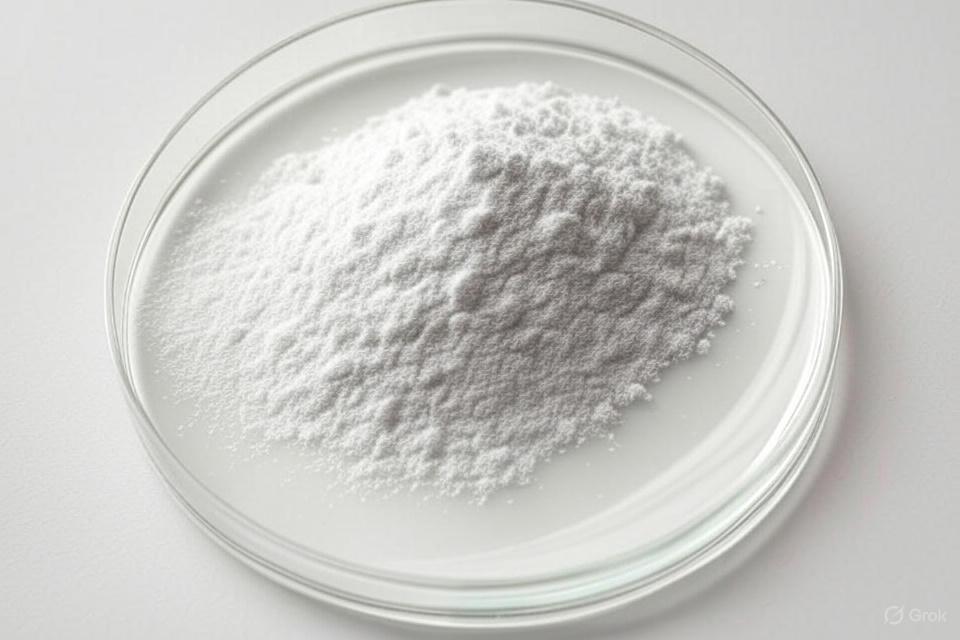
Calcium Carbonate (CaCO₃) (Salt)

image.jpg

Kalsiyum Karbonat

Chemical Formula
CaCO₃
Appearance
White powder or crystalline solid
Molecular Weight
100.09 g/mol
pH Value
Approximately 9.5 (Slightly basic in water)
Structure
Ionic (Trigonal rhombic or hexagonal crystal lattice – calcite and aragonite)
Ionic Structure
Consists of Ca²⁺ and CO₃²⁻ ions
Salt Type
Basic salt
Formation
Ca(OH)₂ + CO₂ → CaCO₃ + H₂O
Melting Point
Thermal decomposition at approximately 825°C (to CaO and CO₂)
Density
2.71 g/cm³ (calcite form)
Solubility
0.013 g/L (25°C) – Slightly soluble in water
Areas of Use
Construction industryagriculturefood industrypharmaceuticalsindustry

Calcium carbonate (CaCO₃) is a crystalline, white ionic compound composed of calcium (Ca²⁺) and carbonate (CO₃²⁻) ions. In everyday life, it is known as limestone, marble, or chalk and holds great importance both naturally and industrially. Chemically, it is a stable salt with a basic character.

CaCO₃ occurs naturally in various forms such as limestone, marble, chalk, and mussel shells. Industrial production is typically carried out by precipitation methods. Countries such as China, the United States, Türkiye, and India are among the largest producers.

History

Calcium carbonate is one of the minerals used since the earliest periods of human history. Its first known use appears as a white pigment in cave paintings dating back to around 10,000 BCE. In ancient Egypt, it formed the primary component of lime mortar used in mummification and pyramid construction.

In ancient Greek and Roman times, limestone was widely used as a building material. The Romans developed systematic methods for lime production, and this technology spread throughout the empire. During the Middle Ages, it continued to serve as a primary material in the construction of cathedrals and castles.

In the 18th century, Antoine Lavoisier and other French chemists began studying the chemical composition of lime and limestone. In 1808, Humphry Davy isolated the element calcium and clarified the chemical composition of calcium carbonate.

During the 19th century, with the Industrial Revolution, calcium carbonate production scaled up significantly. It found widespread use in steel production, the glass industry, and the paper industry. During this period, large lime production facilities were established in Belgium, Germany, and England.

At the beginning of the 20th century, calcium carbonate began to be used in the pharmaceutical industry as a calcium supplement. It also became widely adopted as a food additive. In Türkiye, this substance, traditionally known as kireç, has been used both as a building material and for agricultural purposes.

In the modern era, calcium carbonate has gained an extensive range of applications, from the plastics industry to the cosmetics sector. In the 21st century, new applications have emerged through nanotechnology.

Production Process

Industrial calcium carbonate production is primarily carried out by three different methods: extraction from natural sources, precipitation, and conversion processes. Each of these methods offers distinct advantages depending on product quality and intended use.

Production from Natural Sources

Calcium carbonate occurs naturally in the form of limestone, marble, and chalk. Production from these minerals involves mining and grinding operations. In the initial stage, raw material extracted from limestone quarries undergoes crushing and grinding. Subsequently, classification and purification processes are applied. In the final stage, the product is adjusted to the desired particle size, subjected to quality control tests, and packaged.

In Türkiye, the Western Mediterranean region possesses high-quality limestone deposits. Facilities in this region also produce micronized calcium carbonate.

Precipitation Method

Synthetic calcium carbonate is produced by the precipitation method. This process uses lime (CaO) and carbon dioxide (CO₂). In the first stage, lime is slaked with water to form calcium hydroxide [Ca(OH)₂]. Carbon dioxide gas is then bubbled through this solution, resulting in the precipitation of calcium carbonate. The reaction proceeds as follows:

<span class="katex"><span class="katex-html" aria-hidden="true"><span class="base"><span class="strut" style="height:1em;vertical-align:-0.25em;"></span><span class="mord mathnormal" style="margin-right:0.07153em;">C</span><span class="mord mathnormal">a</span><span class="mopen">(</span><span class="mord mathnormal" style="margin-right:0.02778em;">O</span><span class="mord mathnormal" style="margin-right:0.08125em;">H</span><span class="mclose"><span class="mclose">)</span><span class="msupsub"><span class="vlist-t vlist-t2"><span class="vlist-r"><span class="vlist" style="height:0.3011em;"><span style="top:-2.55em;margin-left:0em;margin-right:0.05em;"><span class="pstrut" style="height:2.7em;"></span><span class="sizing reset-size6 size3 mtight"><span class="mord mtight"><span class="mord mtight">2</span></span></span></span></span><span class="vlist-s">​</span></span><span class="vlist-r"><span class="vlist" style="height:0.15em;"><span></span></span></span></span></span></span><span class="mspace" style="margin-right:0.2222em;"></span><span class="mbin">+</span><span class="mspace" style="margin-right:0.2222em;"></span></span><span class="base"><span class="strut" style="height:0.8333em;vertical-align:-0.15em;"></span><span class="mord mathnormal" style="margin-right:0.07153em;">C</span><span class="mord"><span class="mord mathnormal" style="margin-right:0.02778em;">O</span><span class="msupsub"><span class="vlist-t vlist-t2"><span class="vlist-r"><span class="vlist" style="height:0.3011em;"><span style="top:-2.55em;margin-left:-0.0278em;margin-right:0.05em;"><span class="pstrut" style="height:2.7em;"></span><span class="sizing reset-size6 size3 mtight"><span class="mord mtight"><span class="mord mtight">2</span></span></span></span></span><span class="vlist-s">​</span></span><span class="vlist-r"><span class="vlist" style="height:0.15em;"><span></span></span></span></span></span></span><span class="mspace" style="margin-right:0.2778em;"></span><span class="mrel">→</span><span class="mspace" style="margin-right:0.2778em;"></span></span><span class="base"><span class="strut" style="height:0.8333em;vertical-align:-0.15em;"></span><span class="mord mathnormal" style="margin-right:0.07153em;">C</span><span class="mord mathnormal">a</span><span class="mord mathnormal" style="margin-right:0.07153em;">C</span><span class="mord"><span class="mord mathnormal" style="margin-right:0.02778em;">O</span><span class="msupsub"><span class="vlist-t vlist-t2"><span class="vlist-r"><span class="vlist" style="height:0.3011em;"><span style="top:-2.55em;margin-left:-0.0278em;margin-right:0.05em;"><span class="pstrut" style="height:2.7em;"></span><span class="sizing reset-size6 size3 mtight"><span class="mord mtight"><span class="mord mtight">3</span></span></span></span></span><span class="vlist-s">​</span></span><span class="vlist-r"><span class="vlist" style="height:0.15em;"><span></span></span></span></span></span></span><span class="mspace" style="margin-right:0.2222em;"></span><span class="mbin">+</span><span class="mspace" style="margin-right:0.2222em;"></span></span><span class="base"><span class="strut" style="height:0.8333em;vertical-align:-0.15em;"></span><span class="mord"><span class="mord mathnormal" style="margin-right:0.08125em;">H</span><span class="msupsub"><span class="vlist-t vlist-t2"><span class="vlist-r"><span class="vlist" style="height:0.3011em;"><span style="top:-2.55em;margin-left:-0.0813em;margin-right:0.05em;"><span class="pstrut" style="height:2.7em;"></span><span class="sizing reset-size6 size3 mtight"><span class="mord mtight"><span class="mord mtight">2</span></span></span></span></span><span class="vlist-s">​</span></span><span class="vlist-r"><span class="vlist" style="height:0.15em;"><span></span></span></span></span></span></span><span class="mord mathnormal" style="margin-right:0.02778em;">O</span></span></span></span>

The precipitated calcium carbonate crystals are separated by filtration, washed, and dried. Calcium carbonate produced by this method has high purity and is preferred for specialized applications.

Modified Production Processes

In some modern facilities, improved versions of traditional production methods are employed. These processes integrate automated control systems and environmentally friendly technologies to enhance energy efficiency. Additionally, specialized procedures are applied to produce calcium carbonate at the nanoscale.

Quality Control and Purification

The produced calcium carbonate must undergo various purification processes to meet the standards of different industrial sectors. During this process, parameters such as purity, particle size distribution, whiteness, and moisture content are controlled. The final product is classified into different quality grades according to its intended use.

Modern production facilities have capacities ranging from 500 to 5000 tons per day. Environmental impacts during production are continuously minimized through advancing technologies.

Physical and Chemical Properties

Calcium carbonate (CaCO₃) is stable at room temperature and has a hexagonal or orthorhombic crystalline structure. Its molecular weight is 100.09 g/mol. It does not melt; instead, it decomposes at approximately 825 °C into calcium oxide and carbon dioxide. Its density at 20 °C is 2.71 g/cm³. It has very low solubility in water, with approximately 0.015 grams dissolving in one liter at 20 °C. Solubility decreases with increasing temperature. It has a Mohs hardness of 3.

Chemically, calcium carbonate is a basic compound and reacts with strong acids. When reacting with acids, it releases carbon dioxide gas. The reaction proceeds as follows:

<span class="katex"><span class="katex-html" aria-hidden="true"><span class="base"><span class="strut" style="height:1em;vertical-align:-0.25em;"></span><span class="mord mathnormal" style="margin-right:0.07153em;">C</span><span class="mord mathnormal">a</span><span class="mord mathnormal" style="margin-right:0.07153em;">C</span><span class="mord"><span class="mord mathnormal" style="margin-right:0.02778em;">O</span><span class="msupsub"><span class="vlist-t vlist-t2"><span class="vlist-r"><span class="vlist" style="height:0.3011em;"><span style="top:-2.55em;margin-left:-0.0278em;margin-right:0.05em;"><span class="pstrut" style="height:2.7em;"></span><span class="sizing reset-size6 size3 mtight"><span class="mord mtight"><span class="mord mtight">3</span></span></span></span></span><span class="vlist-s">​</span></span><span class="vlist-r"><span class="vlist" style="height:0.15em;"><span></span></span></span></span></span></span><span class="mopen">(</span><span class="mord mathnormal">ka</span><span class="mord mathnormal">t</span><span class="mord latin_fallback">ı</span><span class="mclose">)</span><span class="mspace" style="margin-right:0.2222em;"></span><span class="mbin">+</span><span class="mspace" style="margin-right:0.2222em;"></span></span><span class="base"><span class="strut" style="height:1em;vertical-align:-0.25em;"></span><span class="mord">2</span><span class="mord mathnormal" style="margin-right:0.08125em;">H</span><span class="mord mathnormal" style="margin-right:0.01968em;">Cl</span><span class="mopen">(</span><span class="mord mathnormal">a</span><span class="mord mathnormal">s</span><span class="mord mathnormal">i</span><span class="mord mathnormal">t</span><span class="mclose">)</span><span class="mspace" style="margin-right:0.2778em;"></span><span class="mrel">→</span><span class="mspace" style="margin-right:0.2778em;"></span></span><span class="base"><span class="strut" style="height:1em;vertical-align:-0.25em;"></span><span class="mord mathnormal" style="margin-right:0.07153em;">C</span><span class="mord mathnormal">a</span><span class="mord mathnormal" style="margin-right:0.07153em;">C</span><span class="mord"><span class="mord mathnormal" style="margin-right:0.01968em;">l</span><span class="msupsub"><span class="vlist-t vlist-t2"><span class="vlist-r"><span class="vlist" style="height:0.3011em;"><span style="top:-2.55em;margin-left:-0.0197em;margin-right:0.05em;"><span class="pstrut" style="height:2.7em;"></span><span class="sizing reset-size6 size3 mtight"><span class="mord mtight"><span class="mord mtight">2</span></span></span></span></span><span class="vlist-s">​</span></span><span class="vlist-r"><span class="vlist" style="height:0.15em;"><span></span></span></span></span></span></span><span class="mopen">(</span><span class="mord mathnormal">t</span><span class="mord mathnormal">u</span><span class="mord mathnormal" style="margin-right:0.04398em;">z</span><span class="mclose">)</span><span class="mspace" style="margin-right:0.2222em;"></span><span class="mbin">+</span><span class="mspace" style="margin-right:0.2222em;"></span></span><span class="base"><span class="strut" style="height:0.8333em;vertical-align:-0.15em;"></span><span class="mord"><span class="mord mathnormal" style="margin-right:0.08125em;">H</span><span class="msupsub"><span class="vlist-t vlist-t2"><span class="vlist-r"><span class="vlist" style="height:0.3011em;"><span style="top:-2.55em;margin-left:-0.0813em;margin-right:0.05em;"><span class="pstrut" style="height:2.7em;"></span><span class="sizing reset-size6 size3 mtight"><span class="mord mtight"><span class="mord mtight">2</span></span></span></span></span><span class="vlist-s">​</span></span><span class="vlist-r"><span class="vlist" style="height:0.15em;"><span></span></span></span></span></span></span><span class="mord mathnormal" style="margin-right:0.02778em;">O</span><span class="mspace" style="margin-right:0.2222em;"></span><span class="mbin">+</span><span class="mspace" style="margin-right:0.2222em;"></span></span><span class="base"><span class="strut" style="height:1em;vertical-align:-0.25em;"></span><span class="mord mathnormal" style="margin-right:0.07153em;">C</span><span class="mord"><span class="mord mathnormal" style="margin-right:0.02778em;">O</span><span class="msupsub"><span class="vlist-t vlist-t2"><span class="vlist-r"><span class="vlist" style="height:0.3011em;"><span style="top:-2.55em;margin-left:-0.0278em;margin-right:0.05em;"><span class="pstrut" style="height:2.7em;"></span><span class="sizing reset-size6 size3 mtight"><span class="mord mtight"><span class="mord mtight">2</span></span></span></span></span><span class="vlist-s">​</span></span><span class="vlist-r"><span class="vlist" style="height:0.15em;"><span></span></span></span></span></span></span><span class="mopen">(</span><span class="mord mathnormal" style="margin-right:0.03588em;">g</span><span class="mord mathnormal">a</span><span class="mord mathnormal" style="margin-right:0.04398em;">z</span><span class="mclose">)</span></span></span></span>

Upon heating, it decomposes into calcium oxide and carbon dioxide:

<span class="katex"><span class="katex-html" aria-hidden="true"><span class="base"><span class="strut" style="height:1em;vertical-align:-0.25em;"></span><span class="mord mathnormal" style="margin-right:0.07153em;">C</span><span class="mord mathnormal">a</span><span class="mord mathnormal" style="margin-right:0.07153em;">C</span><span class="mord"><span class="mord mathnormal" style="margin-right:0.02778em;">O</span><span class="msupsub"><span class="vlist-t vlist-t2"><span class="vlist-r"><span class="vlist" style="height:0.3011em;"><span style="top:-2.55em;margin-left:-0.0278em;margin-right:0.05em;"><span class="pstrut" style="height:2.7em;"></span><span class="sizing reset-size6 size3 mtight"><span class="mord mtight"><span class="mord mtight">3</span></span></span></span></span><span class="vlist-s">​</span></span><span class="vlist-r"><span class="vlist" style="height:0.15em;"><span></span></span></span></span></span></span><span class="mopen">(</span><span class="mord mathnormal">ka</span><span class="mord mathnormal">t</span><span class="mord latin_fallback">ı</span><span class="mclose">)</span><span class="mspace" style="margin-right:0.2778em;"></span><span class="mrel">→</span><span class="mspace" style="margin-right:0.2778em;"></span></span><span class="base"><span class="strut" style="height:1em;vertical-align:-0.25em;"></span><span class="mord mathnormal" style="margin-right:0.07153em;">C</span><span class="mord mathnormal">a</span><span class="mord mathnormal" style="margin-right:0.02778em;">O</span><span class="mopen">(</span><span class="mord mathnormal">ka</span><span class="mord mathnormal">t</span><span class="mord latin_fallback">ı</span><span class="mclose">)</span><span class="mspace" style="margin-right:0.2222em;"></span><span class="mbin">+</span><span class="mspace" style="margin-right:0.2222em;"></span></span><span class="base"><span class="strut" style="height:1em;vertical-align:-0.25em;"></span><span class="mord mathnormal" style="margin-right:0.07153em;">C</span><span class="mord"><span class="mord mathnormal" style="margin-right:0.02778em;">O</span><span class="msupsub"><span class="vlist-t vlist-t2"><span class="vlist-r"><span class="vlist" style="height:0.3011em;"><span style="top:-2.55em;margin-left:-0.0278em;margin-right:0.05em;"><span class="pstrut" style="height:2.7em;"></span><span class="sizing reset-size6 size3 mtight"><span class="mord mtight"><span class="mord mtight">2</span></span></span></span></span><span class="vlist-s">​</span></span><span class="vlist-r"><span class="vlist" style="height:0.15em;"><span></span></span></span></span></span></span><span class="mopen">(</span><span class="mord mathnormal" style="margin-right:0.03588em;">g</span><span class="mord mathnormal">a</span><span class="mord mathnormal" style="margin-right:0.04398em;">z</span><span class="mclose">)</span></span></span></span>

This decomposition reaction is the fundamental process behind cement and lime production. It is also soluble in acidic solutions and can form calcium salts. Chemically stable, it does not react under normal conditions and does not degrade under atmospheric conditions. These properties have made calcium carbonate a fundamental mineral raw material for a wide range of industrial applications.

Applications

  • Construction and Building: Used as a primary raw material in cement production. Widely used in lime production, mortar formulation, and as a building material. Also functions as a filler in paints, plasters, and adhesives.
  • Paper and Plastic Industries: Used as a filler and coating agent in paper production. Acts as a reinforcing and filler material in the plastics industry. An important additive in PVC production.
  • Food and Pharmaceuticals: Used in the food industry as a calcium source, for enriching flour, and as an additive. In the pharmaceutical industry, it serves as a filler in tablet production and as a calcium supplement.
  • Chemistry and Industry: Used as a flux in glass production and as a slag former in steel manufacturing. Functions as a pigment and filler in the paint industry and as a reinforcing agent in the rubber industry.
  • Environment and Agriculture: Used as a liming agent to regulate soil acidity. Employed as a pH regulator in wastewater treatment and for neutralizing acidic gases in air pollution control.

Biological Role and Effects

Calcium carbonate is one of the fundamental components of bone and tooth structure in living organisms. It plays a vital role in human calcium metabolism. Mollusks, marine crustaceans, and corals naturally produce calcium carbonate to form protective shells. Plants utilize calcium carbonate for structural support in cell walls.

In human health, calcium carbonate is essential for maintaining bone health and preventing osteoporosis. It also influences the regulation of muscle and nerve functions. Deficiency can lead to bone loss and muscle cramps.

Calcium carbonate is an environmentally friendly mineral. It is biologically harmless and readily degrades in natural environments. It does not produce toxic effects in soil or water sources. When used, it leaves no harmful residues and serves as a sustainable raw material source.

Author Information

Avatar
Authorİsmail OrçanDecember 2, 2025 at 8:51 AM

Discussions

No Discussion Added Yet

Start discussion for "Calcium Carbonate (CaCO₃) (Salt)" article

View Discussions

Contents

  • History

  • Production Process

    • Production from Natural Sources

    • Precipitation Method

    • Modified Production Processes

    • Quality Control and Purification

  • Physical and Chemical Properties

  • Applications

  • Biological Role and Effects

Ask to Küre