

This article was automatically translated from the original Turkish version.
+2 More
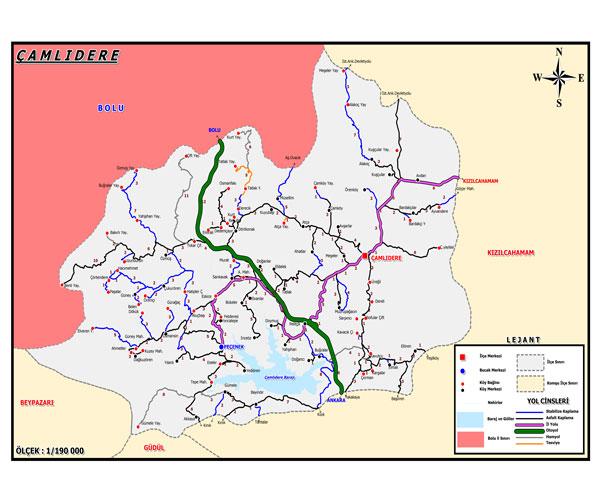
Çamlıdere is a settlement known for its historical heritage, natural beauty, unique museums, and local culture, subordinate to Ankara Province. Although its founding date is not precisely known, traces from the Seljuk and Byzantine periods are present within its boundaries. It is traditionally believed that the settlement’s former name, “Kuzveren,” changed to “Şeyhler” following the arrival of Şeyh Ali Semerkandi. Originally a village under Beypazarı, it gained independent district status in 1953.【1】 Thanks to its extensive forested areas, highland meadows, thermal water potential, fossil forests, and rich museum infrastructure, Çamlıdere is a significant destination for nature, faith, and cultural tourism.
Although written records regarding the district’s past are limited, archaeological remains from the Seljuk and Byzantine periods exist in the region. Villages such as Peçenek, Ozmuş, Yahşihan, and Dağkuzören derive their names from Seljuk tribes. Additionally, a mosque dating from the Seljuk era is located in the village of Peçenek. Under the Ottoman administrative structure, Çamlıdere was a village subordinate to Beypazarı. In 1314 AH it became a subdistrict and in 1916 was attached to Kızılcahamam. It attained district status through Law No. 6191 issued on 2 December 1953.【2】
Çamlıdere possesses an infrastructure conducive to outdoor sports, thanks to its rich vegetation and water resources. Within its boundaries lie Aluçdağı and Çamkoru National Parks, as well as numerous highland meadows including Kirazlı, Kapaklı, Tepebaş, Yağlıcaaluç, Alakoç, Benli, Bakırlı, Buğralar, and Yediören. There are seventeen distinct hiking trails suitable for all seasons. Additionally, freshwater fishing is practiced at Bayındır Dam, where species such as the European chub, pearl mullet, carp, and common carp are found.【3】
According to data from the Turkish Statistical Institute (TÜİK), the population of Çamlıdere district in Ankara Province has varied over the years. Based on the Address-Based Population Registration System (ADNKS) results published by TÜİK, the district’s total population as of 2024 was recorded as 10,475, of whom 5,626 were male and 4,849 were female.【4】
In the district’s extensive forested areas, wildlife such as bear, wild boar, fox, badger, squirrel, and deer coexist with approximately 200 bird species, including the golden eagle and the red kite.【5】 In addition, the region contains fossil forests dating from 17 to 55 million years ago, which serve as the basis for geopark tourism, as well as deposits of Çamlıdere agate.【6】
Çamlıdere is a cultural tourism route that preserves faith-based traditions and local memory. In the district center lies the tomb of Şeyh Ali Semerkandi, a descendant of Ömerül Faruk, the spiritual son of Prophet Muhammad. Each July, the “Çamlıdere Aluç Dağı Festival” features oil wrestling, Sinsin performances, and various celebrations.【7】 The district also has thermal hot spring sources that support thermal tourism investments.【8】
The social life and artisan culture of 15th-century Çamlıdere are depicted for visitors through beeswax sculptures in museum exhibits.【9】 Within the Külliye, the Museum of Sacred Relics displays an ewer attributed to Şeyh Ali Semerkandi, swords belonging to the Semerkandi Foundation, and, according to tradition, a broken iron plate he threw to determine the location of the district.【10】
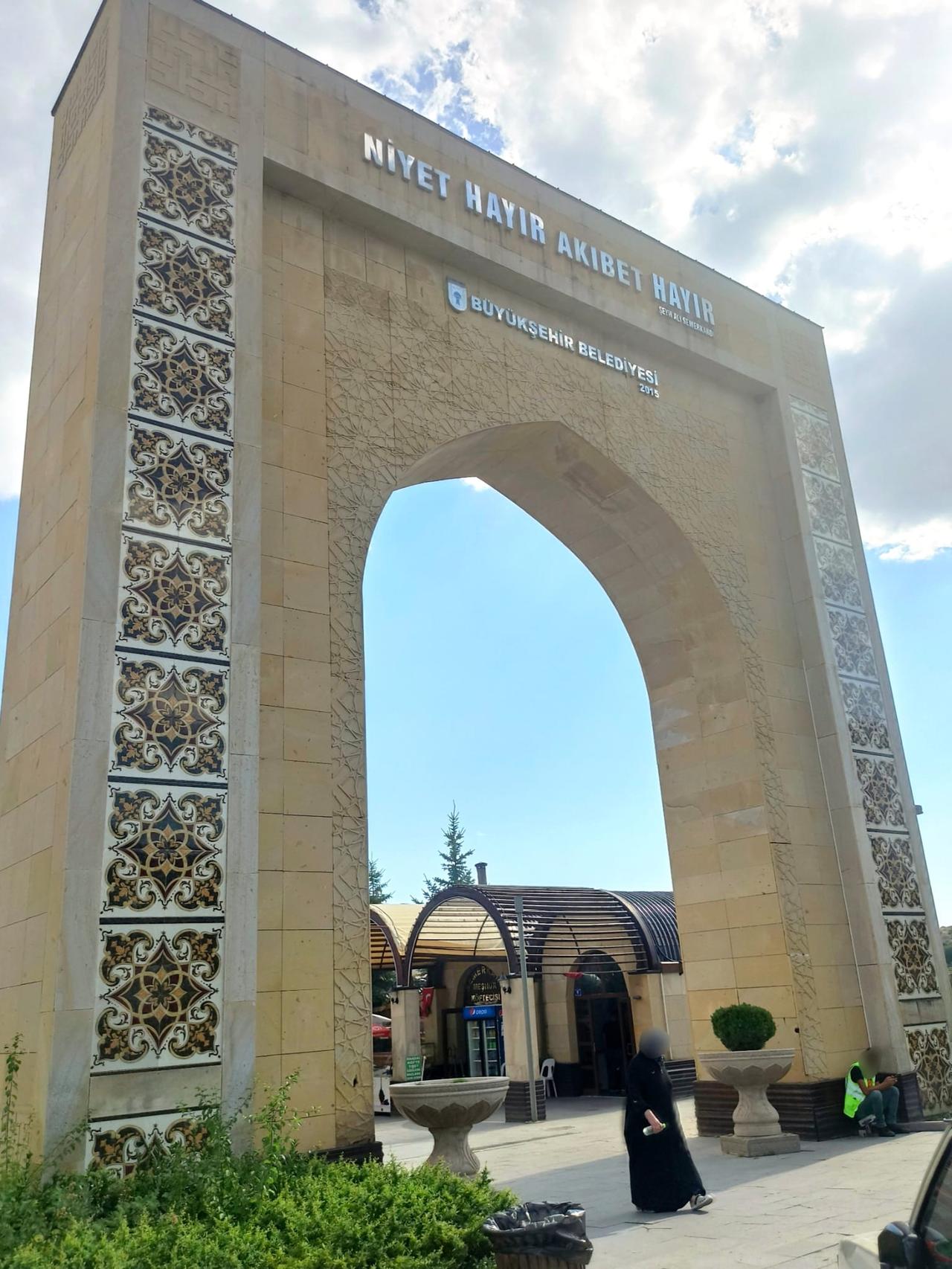
Şeyh Ali Semerkandi Hazretleri Külliyesi - Yazarın Çekimi
Çamlıdere hosts a number of thematic museums, each holding the distinction of being the first of its kind in Türkiye and the world:
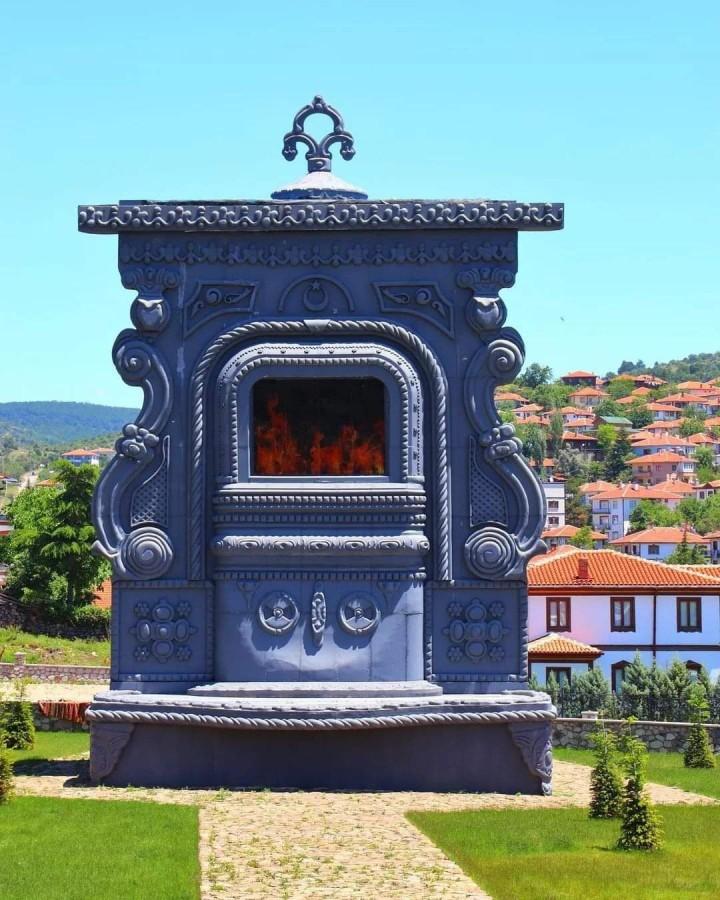
Soba Müzesi - Çamlıdere Belediyesi
Çamlıdere’s cuisine, rooted in Ottoman culinary traditions, features a wide variety of pastries, soups, meat dishes, and natural products. Basic local pastries include bazlama, gözleme, tava çöreği, kül kömmesi, mantı, erişte, kedibatmaz, höşmerim, and ekşili cimcik. Common soups are tarhana, toyga, ayranlıaş, and göce çorbası. Famous meat dishes include kuzu kapama, Ankara tava, oğlak kebabı, and Semerkant Çamlıdere köfte, made from the meat of animals that graze on thyme in the mountains.
Due to its organic beekeeping and honey-producing region status, Çamlıdere is among the leading centers in Anatolia for the production of flower, basket, black hive, and pine honey. Additionally, naturally occurring plants such as aluç, mountain cherry, thyme, stinging nettle, dog rose, salep, and daisy form a rich local flora.【18】
[1]
T.C. Çamlıdere Kaymakamlığı. "Tarihçe." Erişim tarihi: 17 Mart 2026. https://www.camlidere.gov.tr/tarihce.
[2]
T.C. Çamlıdere Kaymakamlığı. "Tarihçe." Erişim tarihi: 17 Mart 2026. https://www.camlidere.gov.tr/tarihce.
[3]
Çamlıdere Belediyesi. "Doğa Turizmi." Erişim tarihi: 17 Mart 2026. https://camlidere.bel.tr/camlidere/doga-turizmi.
[4]
Türkiye İstatistik Kurumu (TÜİK). "Adrese Dayalı Nüfus Kayıt Sistemi Sonuçları." Erişim tarihi: 25 Mart 2026. https://www.tuik.gov.tr/.
[5]
Çamlıdere Belediyesi. "Doğa Turizmi." Erişim tarihi: 17 Mart 2026. https://camlidere.bel.tr/camlidere/doga-turizmi.
[6]
Çamlıdere Belediyesi. "Fosil Ormanı." Erişim tarihi: 17 Mart 2026. https://camlidere.bel.tr/camlidere/fosil-ormani.
[7]
T.C. Çamlıdere Kaymakamlığı. "Tarihçe." Erişim tarihi: 17 Mart 2026. https://www.camlidere.gov.tr/tarihce.
[8]
Çamlıdere Belediyesi. "Kültür Turizmi." Erişim tarihi: 17 Mart 2026. https://camlidere.bel.tr/camlidere/kultur-turizmi.
[9]
Çamlıdere Belediyesi. "Şeyh Ali Semerkandi Müzesi ve Külliyesi." Erişim tarihi: 17 Mart 2026. https://camlidere.bel.tr/muzeler/seyh-ali-semerkandi-kulliyesi.
[10]
Çamlıdere Belediyesi. "Kutsal Emanetler Müzesi." Erişim tarihi: 17 Mart 2026. https://camlidere.bel.tr/muzeler/kutsal-emanetler-muzesi.
[11]
Çamlıdere Belediyesi. "Semerkandi Evi Müzesi." Erişim tarihi: 17 Mart 2026. https://camlidere.bel.tr/muzeler/semerkandi-evi-muzesi.
[12]
Çamlıdere Belediyesi. "Kültür Evi ve Etnografya Müzesi." Erişim tarihi: 17 Mart 2026. https://camlidere.bel.tr/muzeler/kultur-evi-ve-etnografya-muzesi.
[13]
Çamlıdere Belediyesi. "Terazi Müzesi." Erişim tarihi: 17 Mart 2026. https://camlidere.bel.tr/muzeler/terazi-muzesi.
[14]
Çamlıdere Belediyesi. "Soba Müzesi." Erişim tarihi: 17 Mart 2026. https://camlidere.bel.tr/muzeler/soba-muzesi.
[15]
Çamlıdere Belediyesi. "Oyun ve Oyuncak Müzesi." Erişim tarihi: 17 Mart 2026. https://camlidere.bel.tr/muzeler/oyun-ve-oyuncak-muzesi.
[16]
Çamlıdere Belediyesi. "Doğa ve Hayvan Müzesi." Erişim tarihi: 17 Mart 2026. https://camlidere.bel.tr/muzeler/doga-ve-hayvan-muzesi.
[17]
Çamlıdere Belediyesi. "Tarım Müzesi." Erişim tarihi: 17 Mart 2026. https://camlidere.bel.tr/muzeler/tarim-muzesi.
[18]
Çamlıdere Belediyesi. "Yöresel Lezzetler." Erişim tarihi: 17 Mart 2026. https://camlidere.bel.tr/camlidere/yoresel-lezzetler.

No Discussion Added Yet
Start discussion for "Çamlıdere (District)" article
History
Geography and Nature Tourism
Population
Wildlife and Fossil Forest
Culture and Faith Tourism
Şeyh Ali Semerkandi Külliyesi and Sacred Relics
City of Thematic Museums
Local Cuisine