



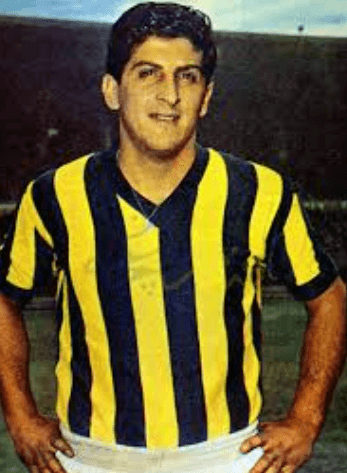
Can Bartu
Doğum tarihi | 1936-01-31 | ||||||||
|---|---|---|---|---|---|---|---|---|---|
Place of Death | Istanbul | ||||||||
Date of Death | 11 April 2019 | ||||||||
Place of Birth | Istanbul | ||||||||
Nickname(s) | Signor | ||||||||
Disciplines | Basketball Football | ||||||||
Positions Played | Basketball: Forward (youth team period) Football: Midfielder | ||||||||
Can Bartu was born on 31 January 1936 in the Yenimahalle district of Istanbul. His introduction to sports began in 1949 with the Fenerbahçe Junior Men’s Basketball Team. Demonstrating exceptional talent in basketball, Bartu quickly rose to prominence and joined the Fenerbahçe squad that won the Istanbul and Turkish championships in 1955. During this period, he wore the national basketball team jersey six times, including once with the junior team and five times with the senior national team.
His transition to football occurred in 1955 due to a shortage of players during a match between Edirnespor and Fenerbahçe. Bartu scored four goals in that game, three of which were disallowed, drawing significant attention. At the suggestion of Fikret Arıcan, he turned to football and signed a professional contract with Fenerbahçe, subsequently ending his basketball career.
Can Bartu played for the Fenerbahçe football team between 1955 and 1961, and again between 1967 and 1970. During this time, he made 326 appearances in the yellow and navy jersey and scored 162 goals. He won the league championship four times with Fenerbahçe. As team captain, Bartu distinguished himself through his technical and commanding style of play.

Can Bartu’s Fenerbahçe Career Statistics (Generated by artificial intelligence.)
Can Bartu earned 28 caps for the Türkiye national football team, 26 of them as a senior international, and scored six goals. He is the first and only athlete in Türkiye to have represented the country at the international level in both football and basketball. In one remarkable day, after scoring two goals in a football match against Beşiktaş, he went on to score 32 points in a basketball game against Galatasaray the same day.

Can Bartu’s National Team Career Statistics (Generated by artificial intelligence.)
On 2 November 1958, during a European Championship qualifying match against Romania, Bartu took over in goal in the final seven minutes after goalkeeper Turgay Şeren was injured. In that match, Bartu conceded a goal following a deflected shot by a teammate, making him the only footballer in Türkiye national team history to have both scored and conceded a goal in an official international match.
In 1961, Bartu transferred to Italy’s Fiorentina and played in Italy for six years. In his first season, he scored two goals in 14 appearances for Fiorentina. The following season, he moved to Venezia, where he played 30 matches and scored eight goals. In the 1963–1964 season, he returned to Fiorentina and played 10 matches. Between 1964 and 1967, he wore the Lazio jersey, making 46 appearances and scoring four goals. His successful performances in Italy earned him the nickname “Sinyor.”

Can Bartu’s Italy Career Statistics (Generated by artificial intelligence.)
In 1962, Can Bartu played in the European Cup Winners’ Cup final between Fiorentina and Atlético Madrid, becoming the first Turkish footballer to appear in a UEFA-organized cup final. He started the match as part of the starting eleven.
Can Bartu returned to Fenerbahçe in 1967 and retired from active football in 1970. In 1969, during a jubilee match for Metin Oktay between Galatasaray and Fenerbahçe, he briefly wore a Galatasaray jersey and exchanged shirts with Oktay.
After retiring from football, Bartu pursued a career in sports journalism and commentary. He wrote articles for various newspapers and provided analysis on television programs. Most recently, he connected with viewers through the program “Futbol Gündemi ile Can Bartu” on Fenerbahçe Television.
In the 2008–2009 season, UEFA selected Bartu as Türkiye’s ambassador for the UEFA Cup final hosted in Türkiye. On 25 July 2009, during a meeting of the Fenerbahçe Sports Club High Council, the Samandıra Facilities were officially named “Fenerbahçe Can Bartu Facilities.” Can Bartu was also a member of the Fenerbahçe Sports Club High Council.
Can Bartu passed away on 11 April 2019 at the age of 83. His memory is preserved by Fenerbahçe and Turkish sports fans alike, as he remains one of the few athletes in Turkish sporting history to have left a lasting mark in both football and basketball.
Fenerbahçe Spor Kulübü. “‘Sinyor’ Can Bartu’yu Saygıyla Anıyoruz…” fenerbahce.org. Accessed May 21, 2025. https://www.fenerbahce.org/haberler/kulup/2024/4/sinyor-can-bartu-yu-saygiyla-aniyoruz%E2%80%A6
Türkiye Futbol Federasyonu. “Can Bartu.” *tff.org*. Accessed May 21, 2025. https://www.tff.org/Default.aspx?pageId=30&kisiId=2104942
“Türk Sporunun Futbol ve Basketboldaki Tek Milli Oyuncusu: Can Bartu.” Anadolu Ajansı. Accessed May 21, 2025. https://www.aa.com.tr/tr/basketbol/turk-sporunun-futbol-ve-basketboldaki-tek-milli-oyuncusu-can-bartu/3188395

Can Bartu
Doğum tarihi | 1936-01-31 | ||||||||
|---|---|---|---|---|---|---|---|---|---|
Place of Death | Istanbul | ||||||||
Date of Death | 11 April 2019 | ||||||||
Place of Birth | Istanbul | ||||||||
Nickname(s) | Signor | ||||||||
Disciplines | Basketball Football | ||||||||
Positions Played | Basketball: Forward (youth team period) Football: Midfielder | ||||||||
Transition to Football
Fenerbahçe Career
National Team Career
Goalkeeper Experience and Records
Italy Career
European Cups and Firsts
Return and Jubilee
Life After Sports
Honors and Legacy
Death