


This article was automatically translated from the original Turkish version.
+3 More
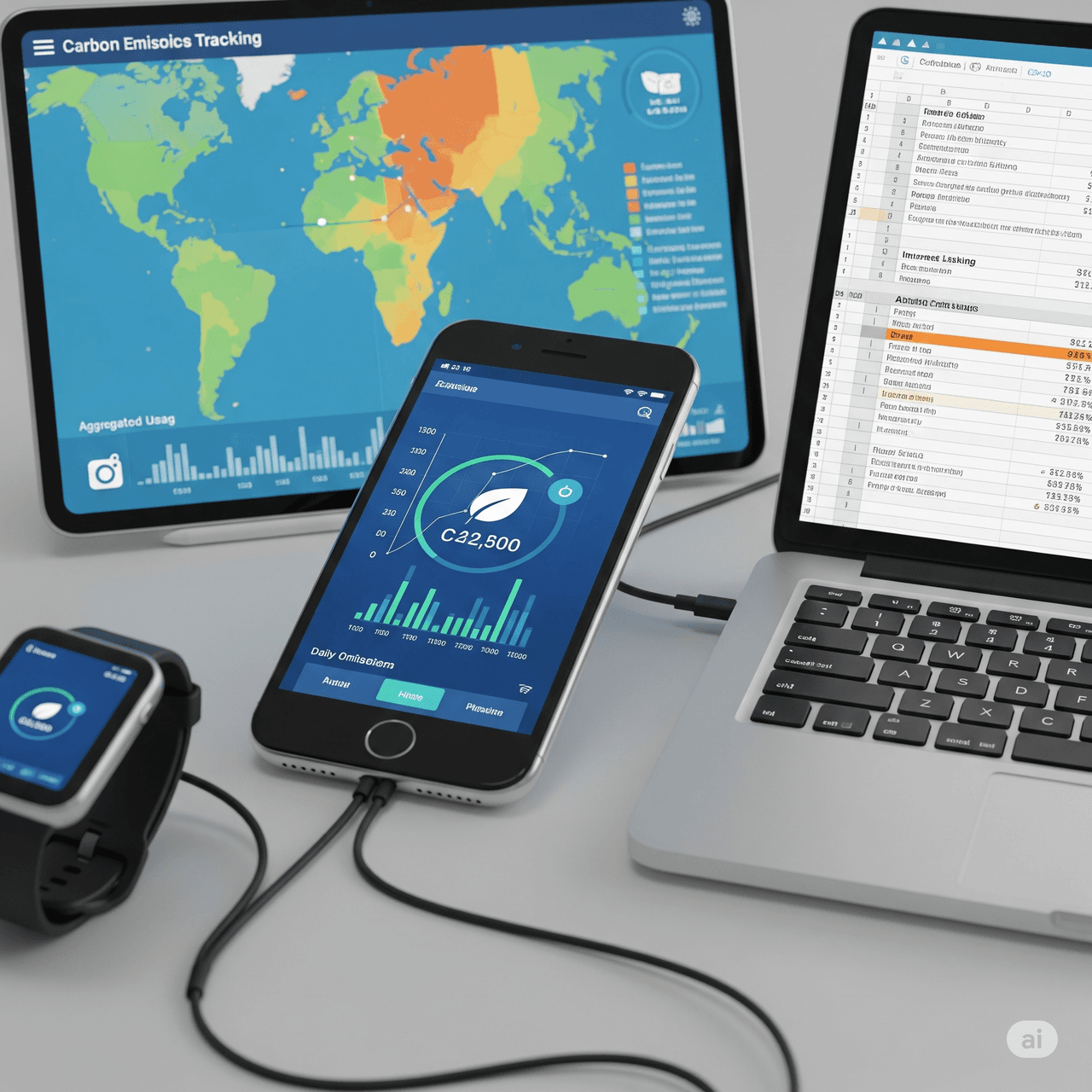
Tracking Carbon Footprint in Electronic Devices (Generated by Artificial Intelligence)
Definition(s) | The total amount of greenhouse gases emitted into the atmosphere throughout the production use and disposal processes of an electronic device | ||||||||
|---|---|---|---|---|---|---|---|---|---|
Main Standard | ISO 14067 (Product Carbon Footprint) | ||||||||
Calculation Method | Life Cycle Assessment (LCA) | ||||||||
Digital Footprint | Emissions from energy consumption during device use (internet and data centers) | ||||||||
Global Impact | Is responsible for approximately 4% of global greenhouse gas emissions | ||||||||
Key Stages | Raw material extraction, production, use (energy consumption), disposal | ||||||||
Carbon footprint tracking in electronic devices involves measuring, analyzing, and reporting all greenhouse gas emissions released throughout the entire life cycle of a product—from raw material extraction through production, distribution, use, and end-of-life disposal. This concept is critically important for understanding and reducing the environmental impacts of smartphones, computers, tablets, and other internet-connected devices. The carbon footprint of electronic devices consists of two main components: the physical footprint, which includes emissions from production and disposal processes, and the digital carbon footprint, which arises from device usage. The digital carbon footprint refers to emissions resulting from energy consumption during device operation, internet connectivity, data storage, and processing in data centers. This holistic approach plays a fundamental role in achieving sustainability goals within the technology industry.
The carbon footprint is a measure of the total greenhouse gas (GHG) emissions caused by an individual, organization, product, or country over a specific time period, expressed in carbon dioxide equivalents (CO₂e). The most common of these gases is carbon dioxide (CO₂), while other significant greenhouse gases include methane (CH₄), nitrous oxide (N₂O), and fluorinated gases. Because each gas has a different global warming potential, a common unit—CO₂e—is used for comparison. Carbon footprints are generally divided into two categories: primary (direct) and secondary (indirect) footprints. Primary footprint includes emissions from directly controlled activities such as fossil fuel combustion. Secondary footprint encompasses all indirect emissions generated throughout the entire life cycle of consumed products, from raw material sourcing to disposal.
When evaluating the carbon footprint of products, two main approaches are commonly used: cradle-to-gate and cradle-to-grave. The cradle-to-gate approach measures emissions from raw material extraction up to the point the product leaves the factory and is typically used for business-to-business (B2B) products. The cradle-to-grave approach considers the entire life cycle, starting from raw material acquisition through production, distribution, use, and finally end-of-life disposal or recycling. This comprehensive approach is more suitable for understanding the total environmental impact of consumer-facing (B2C) electronic devices.
The carbon footprint of an electronic device is the sum of emissions generated at every stage of its life cycle, beginning with raw material extraction and extending to the end of its useful life.
The highest greenhouse gas emissions in the life cycle of electronic devices typically occur during raw material extraction and production. Metals such as gold, cobalt, lithium, nickel, and rare earth elements required to manufacture complex devices like smartphones, laptops, and tablets are obtained through mining activities that demand intensive energy consumption. These processes include open-pit or underground mining, ore enrichment, and refining. Methods used in cobalt and lithium production, in particular, consume large amounts of electrical and thermal energy, most of which is derived from fossil fuels, thereby increasing carbon emissions. In addition, industrial processes carried out in manufacturing facilities—including component fabrication, assembly of electronic parts, printed circuit board production, and surface coating—generate substantial greenhouse gas emissions. Beyond energy use, chemical solvents and waste management practices in this stage also contribute to environmental impact.
The stage of transporting manufactured devices from factories to regional warehouses, then to retail outlets or directly to end users, requires a vast global logistics network. Different modes of transportation—including road (trucks, trains), air (cargo planes), and sea (container ships)—are employed in this process. Each transportation method generates varying levels of greenhouse gas emissions depending on the type of fuel used and the volume of cargo transported. Air transport, while offering fast delivery, is among the most carbon-intensive methods per unit distance. Sea transport can carry large volumes with lower carbon intensity per ton-kilometer but is limited by long transit times and low speed. This distribution process also involves intermediate storage, customs procedures, and local delivery networks, all of which contribute to energy consumption and indirect emissions. Improving logistics efficiency through route optimization and fuel efficiency is critical to reducing emissions at this stage.
One of the most significant contributors to the carbon emissions of electronic devices over their life cycle is the use phase. Emissions during this phase are referred to as the “digital carbon footprint” and include not only the direct energy consumption of the devices themselves but also the energy required to operate the infrastructure supporting internet and digital services. It is estimated that internet-connected devices globally consume hundreds of terawatt-hours of electricity annually. This energy is used for direct usage activities such as charging devices, powering screens, running processors, and operating wireless communication modules.
Indirect energy consumption arises from online activities. Digital actions such as sending emails, streaming videos, browsing social media platforms, playing online games, or using cloud-based storage services require continuous operation of data centers and global network infrastructure. Data centers are energy-intensive facilities due to their high-capacity processors, storage units, and cooling systems. For example, the carbon emissions from a single email can range from a few grams to dozens of grams depending on the length of its content, the size of attached files, and the transmission route. Research indicates that information and communication technologies are responsible for approximately four percent of global greenhouse gas emissions, a share that is rising annually. This underscores the critical need for measures such as energy efficiency improvements, adoption of renewable energy, and optimization of data management to reduce the environmental impact of digital technologies.
Electronic waste (e-waste) generated when electronic devices reach the end of their useful life poses significant environmental risks. If not properly recycled, these wastes can be dumped in landfills or directly released into the environment, leading to contamination of soil, water, and air with heavy metals, toxic chemicals, and plastic components. Additionally, emissions of greenhouse gases occur during the transportation, storage, and uncontrolled dismantling of waste.
Recycling practices recover valuable metals such as gold, silver, copper, cobalt, and lithium, reducing the need for new raw material extraction and processing, which in turn lowers both energy consumption and carbon emissions. An effective e-waste management system includes steps such as collection, disassembly, material recovery, and safe disposal of hazardous components. In particular, informal e-waste processing activities in developing countries pose serious health and environmental threats; therefore, ensuring that this process is conducted in accordance with international standards is of great importance.
The carbon footprint of electronic devices is calculated by multiplying the quantity of a specific activity (activity data) by the greenhouse gas emission factor per unit of that activity. To ensure consistency, transparency, and comparability in these calculations, international standards have been developed. Three main standards are globally recognized for Product Carbon Footprint (PCF): ISO 14067, the Greenhouse Gas (GHG) Protocol, and PAS 2050. All of these standards are based on the Life Cycle Assessment (LCA) methodology (ISO 14040 and ISO 14044) for evaluating environmental impacts of products.
This is the most widely adopted standard defining rules and requirements for calculating product carbon footprints. It treats climate change as a single impact category and encourages transparent reporting of results. The standard allows organizations to define their own boundaries for calculation throughout the product’s life cycle.
Developed by the World Resources Institute (WRI) and the World Business Council for Sustainable Development (WBCSD), this standard outlines requirements for quantifying and publicly reporting greenhouse gas inventories for products.
One of the first standards developed by the British Standards Institution (BSI), PAS 2050 provides an internationally consistent method for measuring the carbon balance of products and services.
At the corporate level, companies use ISO 14064-1 and the GHG Protocol’s Scope 1 (direct emissions), Scope 2 (indirect emissions from purchased energy), and Scope 3 (all other indirect emissions such as those from the supply chain) classifications to track emissions from all their activities.
Technology companies and other organizations are launching various initiatives to reduce the carbon footprint of electronic devices and digital services. The Device Use Decarbonization (DUCD) initiative, involving companies such as Samsung, Amazon, Microsoft, and Sky, has developed a methodology to more accurately measure and reduce greenhouse gas emissions from the use phase of devices like smartphones. Such efforts highlight the importance of focusing on the use phase, which constitutes one of the largest components of a product’s carbon footprint. 【1】
Institutions such as QNB Finansbank in the financial sector are also taking steps to make their digital platforms “climate-friendly.” The bank sources the electricity consumed in its data centers from renewable energy sources certified by the International Renewable Energy Certificate (IREC) to offset Scope 2 emissions and voluntarily invests in wind energy projects to offset Scope 3 emissions generated during electricity transmission. This represents a concrete example of efforts to reduce the environmental impact of the infrastructure underlying digital services. 【2】
Reducing the carbon footprint of electronic devices requires actions at both corporate and individual levels.
Corporate strategies to reduce digital carbon footprints encompass a broad range of activities from design and production to service delivery.
Individuals can adopt methods that reduce both direct energy consumption and indirect digital emissions.
Freitag, Charlotte, Mike Berners-Lee, Kelly Widdicks, Bran Knowles, Gordon Blair, and Adrian Friday. “The Climate Impact of ICT: A Review of Estimates, Trends and Regulations.” *arXiv*, 2021. Accessed August 15, 2025. https://arxiv.org/abs/2102.02622.
GSMA Intelligence. *Decarbonising Compute: From the Ground Up*. Authors: Tim Hatt and Shiv Prashant Putcha. February 2024. Accessed September 25, 2025. https://www.gsmaintelligence.com/research/research-file-download?id=79791142&file=260224-Decarbonising-Compute.pdf.
Graedel, Thomas E., and Braden R. Allenby. Industrial Ecology and Sustainable Engineering. Upper Saddle River: Prentice Hall, 2009.
Gupta, Udit, Young Geun Kim, Sylvia Lee, Jordan Tse, Hsien-Hsin S. Lee, Gu-Yeon Wei, David Brooks, and Carole-Jean Wu. “Chasing Carbon: The Elusive Environmental Footprint of Computing.” *arXiv*, 2020. Accessed August 15, 2025. https://arxiv.org/abs/2011.02839.
Hertwich, Edgar G., ed. Life Cycle Approaches to Sustainable Consumption. Dordrecht: Springer, 2006.
International Electrotechnical Commission (IEC). IEC TR 62635: Guidelines for End-of-Life Information Provided by Manufacturers and Recyclers and for Recyclability Rate Calculation of Electrical and Electronic Equipment.
Malmodin, Jens, Nina Lövehagen, Pernilla Bergmark, and Dag Lundén. “ICT Sector Electricity Consumption and Greenhouse Gas Emissions – 2020 Outcome.” *Telecommunications Policy* 48, no. 3 (2024): 102701. https://doi.org/10.1016/j.telpol.2023.102701.
Malmodin, Jens, and Dag Lundén. “The Energy and Carbon Footprint of the Global ICT and E&M Sectors 2010–2015.” *Sustainability* 10, no. 9 (2018): 3027. https://doi.org/10.3390/su10093027.
QNB Bank A.Ş. *2024TSRS Uyumlu Sustainability Report*. 2024. Accessed September 25, 2025. https://www.qnb.com.tr/medium/document-file-4339.vsf.
QSI Belgelendirme. "ISO 14064-1 Carbon Footprint Verification." Accessed August 15, 2025. https://www.qsi.com.tr/dogrulama/iso-14064-1-karbon-ayak-izi-dogrulama/.
QSI Belgelendirme. "ISO 14067 Product Carbon Footprint Verification." Accessed August 15, 2025. https://www.qsi.com.tr/dogrulama/urun-karbon-ayak-izi-dogrulama/.
Quinto, Shanti, Noah Law, Christopher Fletcher, Justin Le, Subin Antony Jose, and Pradeep L. Menezes. “Exploring the E-Waste Crisis: Strategies for Sustainable Recycling and Circular Economy Integration.” *Recycling* 10, no. 2 (2025): 72. https://doi.org/10.3390/recycling10020072.
Williams, Eric. The Digital Revolution and the Environment: How the Information Technology Sector Is Changing the World. Cambridge: MIT Press, 2011.
[1]
GSMA Intelligence. Decarbonising Compute: From the Ground Up. Yazarlar: Tim Hatt ve Shiv Prashant Putcha. Şubat 2024. Erişim Tarihi: 25 Eylül 2025. https://www.gsmaintelligence.com/research/research-file-download?id=79791142&file=260224-Decarbonising-Compute.pdf.
[2]
QNB Bank A.Ş. 2024 TSRS Uyumlu Sürdürülebilirlik Raporu. 2024. Erişim Tarihi: 25 Eylül 2025. https://www.qnb.com.tr/medium/document-file-4339.vsf.

Tracking Carbon Footprint in Electronic Devices (Generated by Artificial Intelligence)
Definition(s) | The total amount of greenhouse gases emitted into the atmosphere throughout the production use and disposal processes of an electronic device | ||||||||
|---|---|---|---|---|---|---|---|---|---|
Main Standard | ISO 14067 (Product Carbon Footprint) | ||||||||
Calculation Method | Life Cycle Assessment (LCA) | ||||||||
Digital Footprint | Emissions from energy consumption during device use (internet and data centers) | ||||||||
Global Impact | Is responsible for approximately 4% of global greenhouse gas emissions | ||||||||
Key Stages | Raw material extraction, production, use (energy consumption), disposal | ||||||||
No Discussion Added Yet
Start discussion for "Carbon Footprint Tracking in Electronic Devices" article
Concept and Scope of Carbon Footprint
Life Cycle of Electronic Devices and Carbon Footprint
Raw Material Extraction and Production
Distribution and Logistics
Use Phase (Digital Carbon Footprint)
Disposal and Recycling
Standards Related to Carbon Footprint
ISO 14067
GHG Protocol Product Standard
PAS 2050
Industry Applications and Initiatives
Methods to Reduce Carbon Footprint
Corporate-Level Measures
Individual-Level Measures