
badge icon

This article was automatically translated from the original Turkish version.

Article

Cengerli Kilim

Quote
Type of Geographical Indication
Signpost
Registration Number
1748
Registration Date
24.06.2025
Product Group
Rugs and kilims
Province
Erzincan
Applicant / Registrant
Erzincan Municipality

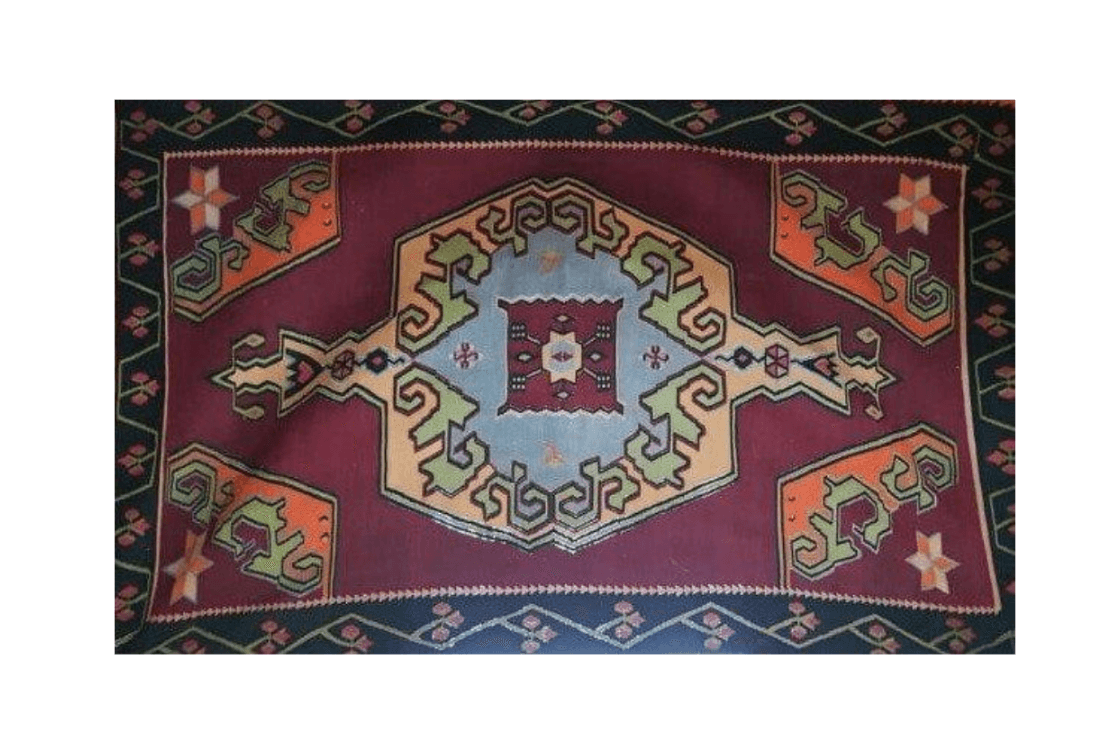
Cengerli Kilim is a traditional craft woven in the village of Cengerli, within the district of Refahiye in the province of Erzincan. It is regarded as part of the cultural heritage of the Oghuz tribes who migrated to Anatolia from Khorasan during the Seljuk period. These textiles serve as a “language without words,” reflecting the weaver’s emotions, joys and social memory.

Registration Details

The Cengerli Kilim was registered on 24 June 2025 by the Turkish Patent and Trademark Office under a certification mark, granting it geographical indication protection. The registration process was carried out by the Erzincan Municipality, and the geographical boundary of the product is defined as the village of Cengerli in the district of Refahiye, province of Erzincan.

Material Characteristics

One of the most distinctive features of Cengerli kilims is the use of two-ply yarn to achieve greater thickness and durability.

  • Yarn Type: In traditional weaving, goat hair or sheep wool is used for the warp (lengthwise threads), while wool yarn is used for the weft (crosswise threads). In recent times, cotton yarn has also become widely used for the warp.
  • Dyeing: The yarns are colored using natural plant-based sources such as walnut leaves, onion skins and roots. Before dyeing, a pre-treatment called “acılama” is applied to enhance the brightness of the fibers.
  • Color Palette: The central field typically features black, burgundy and red as ground colors, while motifs are rendered in vibrant hues such as blue, green, yellow, pink and orange.

Production Process

Cengerli kilims are woven on traditional looms known locally as “kemk” or “ıstar”.

  • Techniques: The primary weaving methods employed are the interlocked kilim technique and bezayağı (plain weave).
  • Fringe Structure: One of the most distinctive features is that only one short edge typically has a fringe. The fringes are made using techniques such as muska, makreme or flat-wide braiding. The non-fringed edge is secured using the sumak technique to prevent unraveling.
  • Composition: The designs are arranged in patterns such as medallion-shaped (rectangular/hexagonal), vertically aligned, or horizontal striped patterns known as “tahta”.

Motifs and Their Meanings

The motifs on the kilim symbolize the social status, aspirations and beliefs of Anatolian women.

  • Locally Named Motifs: In addition to motifs named after the weaver, such as “Gülbeyaz” and “Hacer”, there are also motifs named after objects or places, including “mihrap”, “hızar dişi”, “tarak” and “hükümet”.
  • Nazar (Muska): Represents protection against negative energy and the evil eye.
  • Ram’s Horn: Symbolizes strength, fertility and courage.
  • Black Color: The dominant use of black in the weaving typically signifies sorrow and mourning.
  • Nakış (Kanaviçe): Represents floral motifs arranged along branches as botanical ornamentation.

Author Information

Avatar
Authorsongül taşkıranJanuary 19, 2026 at 7:15 AM

Tags

Discussions

No Discussion Added Yet

Start discussion for "Cengerli Kilim" article

View Discussions

Contents

  • Registration Details

  • Material Characteristics

  • Production Process

  • Motifs and Their Meanings

Ask to Küre