
This article was automatically translated from the original Turkish version.
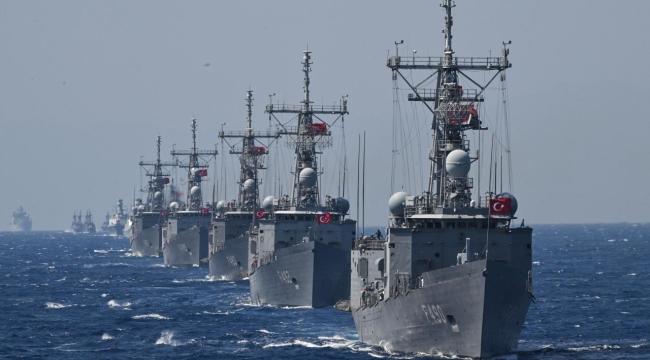
DENİZKURDU-II/2025 Exercise
Exercise Name | DENİZKURDU-II/2025 Exercise | ||||||||
|---|---|---|---|---|---|---|---|---|---|
Date(s) | 6–17 May 2025 | ||||||||
Location | Black Sea Eastern Mediterranean and Sea of Marmara Aegean Sea | ||||||||
Organizer | Command of the Turkish Naval Forces | ||||||||
Exercise Control Center | Command of the Naval Forces War Center (Gölcük) | ||||||||
Number of Participants | Approximately 22,700 Personnel | ||||||||
Participating Elements | 1 Helicopter 9 Boats Coast Guard: 1 Ship 1 CH-47 Chinook Land Forces: 4 General Purpose Helicopters 24 Air Force Attack Aircraft 1 SAT and 2 SAS Teams 2 Bayraktar TB3 UCAVs (ship-based) 1 TCG Anadolu (LHD) 52 Aircraft (Helicopters and Aircraft) 7 Unmanned Maritime Vehicles (UMV/USV) 6 Submarines 104 Surface Ships | ||||||||
DENİZKURDU-II/2025 Exercise is a comprehensive naval operation exercise conducted simultaneously in the Black Sea, Aegean Sea, Eastern Mediterranean, and Sea of Marmara by the Turkish Naval Forces Command from 6 to 17 May 2025.

DENİZKURDU-II/2025 Exercise (MSB)
The aim of the exercise is to evaluate the operational command and control capabilities of naval commands enhance analytical foresight and decision-making skills in a multi-threat environment and test interoperability procedures with other force commands. A total of 104 surface ships 6 submarines 7 unmanned surface vehicles 52 aircraft and 22700 personnel participated. The operational command level planned managed and assessed the exercise through the Exercise Control Center located under the Naval Forces War Center (Gölcük) comprising 93 personnel. During the exercise Bayraktar TB3 UCAVs successfully conducted their first-ever launch and recovery operations from TCG Anadolu and engaged targets using MAM-L munitions. Additionally the Atmaca cruise missile was successfully employed against maritime targets.
The command and control infrastructure of the exercise was executed through the Naval Forces War Center command chain. The 93-person Exercise Control Center managed all participating units and the progression of the scenario in real time. Central communication networks and scenario-based training objectives were conducted under a generic plan framework developed at this center. All participating ships aircraft and ground elements were connected via a unified wired/data network linked to the War Center enabling integrated tracking of mission orders and situational updates. Furthermore to ensure continuity of the exercise the Naval Forces General Secretariat conducted real media activities including journalist simulations while the Exercise Control Center simultaneously managed social media and media simulation activities. This model incorporated modern C2 Command & Control concepts.
A large number of air sea and land elements under the Turkish Naval Forces Command participated in the exercise. The exercise included 104 combat ships 6 submarines 7 unmanned surface vehicles USVs and 52 aircraft fixed-wing and helicopters totaling 120 ships and 85 aircraft. In addition four general-purpose helicopters and one Chinook transport helicopter from the Turkish Land Forces Command twenty-four attack aircraft one airborne warning and control aircraft one target towing aircraft and one transport aircraft from the Turkish Air Force Command one search and rescue team from the Gendarmerie General Command and one ship nine boats and one helicopter from the Coast Guard Command provided support. Special forces contributed one SAT and two SAS teams alongside Gendarmerie and Coast Guard units. The TCG Anadolu amphibious assault ship served as the fleet flagship and observation platform throughout the exercise.
Throughout the exercise the command and control functions were managed by the 93-person Exercise Control Center established under the Naval Forces War Center. This center was tasked with ensuring the scenario and evolving situations aligned with exercise objectives and overseeing communications data networks and simulation elements. Additionally an active public relations policy was implemented during the exercise with real journalistic activities conducted in parallel with media simulations managed by the Exercise Control Center digital and social media simulations.

DENİZKURDU-II/2025 Exercise (MSB)
The training content of the exercise was designed around major naval operational areas. Multifaceted scenarios were implemented including anti-submarine warfare intelligence and surveillance naval combat air and sea support amphibious operations and coastal unit training. For anti-submarine warfare torpedo training firings were conducted. For surface defense exercises depth charges and anti-submarine rockets were fired. Unlike SU-35/30 attack aircraft this exercise also tested scenarios against Turkish Land Forces and Air Force units. Land forces represented enemy units stationed on Anadolu while air defense scenarios created dynamic environments using air defense missile batteries and electronic warfare units. Lessons learned from anti-submarine warfare operations observed in the Georgian and Ukrainian maneuvers were integrated into the training under a multi-threat simulation environment.

Live Firing Training Activities (AA)
Live firing training activities are a critical component of this exercise. Surface ships conducted naval bombardments using their main guns against coastal targets surface defense firings using depth charges and anti-submarine rockets and aerial attacks using helicopters equipped with cannons rockets and guided munitions against real targets.

Aerial Attack Asset Helicopter (AA)
Turkish Naval Forces AH-1W Super Cobra attack helicopters conducted cannon and guided rocket firings using munitions such as MAM-T. According to the Ministry of National Defense’s social media post targets were successfully destroyed using helicopter cannons rockets and guided munitions. The Atmaca cruise missile inventory of the Turkish Naval Forces was used during early-stage submarine launch training exercises. On 10 May 2025 the Atmaca missile was launched against a maritime target in the Sinop firing range and successfully hit its target. For surface defense purposes a SM-1 surface-to-air missile was fired against high-speed unmanned aerial targets. Helicopter and unmanned system firings played a major role in the exercise. Helicopter launch and recovery drills from TCG Anadolu were conducted in coordination with live-fire training by coastal units in support of amphibious operations.
On 14 May 2025 the Selected Observer Day of the DENİZKURDU-II/2025 Exercise Bayraktar TB3s participated in a mission for the first time. Two Bayraktar TB3s PT-3 and PT-4 launched consecutively from the short runway of TCG Anadolu and engaged pre-planned land targets using MAM-L munitions. Each vehicle was configured to carry two MAM-L munitions resulting in a total of four munitions fired in salvos.
DENİZKURDU-II/2025 provided a platform for the collective deployment of the latest products of Türkiye’s domestic defense industry. First the Marlin and Albatros unmanned surface vehicles which participated in the 2024 exercise were again tested in 2025 for reconnaissance surveillance electronic warfare and swarm attack missions. The Atmaca missile integrated into the new Karadeniz-class submarines was used for the first time under active training conditions during the 2025 exercise.
#BayraktarTB3 | DENİZKURDU Exercise - TCG Anadolu (Selçuk BAYRAKTAR)
The exercise included 104 surface ships 6 submarines 7 unmanned surface vehicles 52 aircraft 1 submarine attack team 2 submarine defense teams and coastal units under the Turkish Naval Forces Command. Additionally four general-purpose helicopters and one Chinook helicopter from the Turkish Land Forces Command twenty-four attack aircraft one airborne warning and control aircraft one target towing aircraft and one transport aircraft from the Turkish Air Force Command and one ship nine boats and one helicopter from the Coast Guard Command participated.
Various unmanned systems participated in the exercise. The ASELSAN–Sefine jointly developed Marlin unmanned surface vehicle and STM-produced Albatros unmanned surface vehicles first participated in naval exercises during DENİZKURDU-II/2024. In the 2025 exercise these USVs continued their missions and unmanned aerial vehicles UAVs/UAAs were also heavily utilized.
The DENİZKURDU Exercise involving participation from the Turkish Naval Forces Command Turkish Land Forces Command Turkish Air Force Command and Coast Guard Command was officially announced by the Ministry of National Defense of the Republic of Türkiye as successfully completed on 7–16 January 2025 and presented to the public.
Activities were conducted as follows:
The exercise concluded as planned.
DENİZKURDU-II/2025 Exercise strengthened the Turkish Naval Forces’ power projection under the Blue Homeland strategy tested the integration of new weapons and systems and enhanced personnel operational capability. According to official statements more than 22700 military personnel participated in the exercise a more than 50 percent increase compared to the previous year.

DENİZKURDU-II/2025 Exercise Oruçreis Salute (MSB)
The Selected Observer Day of the exercise commenced with salvo fire from TCG Oruçreis with participation from units and aircraft designated by the Turkish Naval Forces Command.
DENİZKURDU-II/2025 has been reported as a critical exercise demonstrating the Turkish Naval Forces’ readiness for multidimensional warfare using both traditional and modern combat technologies.
Anadolu Ajansı. "Bayraktar TB3 SİHA'lar DENİZKURDU-2025 Tatbikatı'nda." Anadolu Ajansı, May 11, 2025. https://www.aa.com.tr/tr/savunma-sanayisi/bayraktar-tb3-sihalar-denizkurdu-2025-tatbikatinda/3563812.
Anadolu Ajansı. “Bayraktar TB3 SİHA'lardan MAM-L ile hedefe tam isabet.” Anadolu Ajansı, May 12, 2025. https://www.aa.com.tr/tr/savunma-sanayisi/bayraktar-tb3-sihalardan-mam-l-ile-hedefe-tam-isabet/3565473.
Anadolu Ajansı. “Denizkurdu-II 2025 Tatbikatının Seçkin Gözlemci Günü Faaliyetleri Tamamlandı.” Accessed May 31, 2025. https://www.aa.com.tr/tr/gundem/denizkurdu-ii-2025-tatbikatinin-seckin-gozlemci-gunu-faaliyetleri-tamamlandi/3567920.
Anadolu Ajansı. “Mavi Vatan 2025 Tatbikatı Tamamlandı.” Accessed May 31, 2025. https://www.aa.com.tr/tr/pg/foto-galeri/mavi-vatan-2025-tatbikati-tamamlandi.
Ministry of National Defense. "Press Statement." Accessed May 31, 2025. https://www.msb.gov.tr/Basin-ve-Yayin/Aciklamalar/d2586d628aee4976a2dca97d66a41da8.
Ministry of National Defense. "Slayt Haber." Accessed May 31, 2025. https://www.msb.gov.tr/SlaytHaber/fb89e8a19e0444cb845ebbf2a071cea6.
Naval News. Özberk, Tayfun. “Bayraktar TB3 Conducts First Shipborne Live-Firing at Denizkurdu 2025 Exercise.” May 15, 2025. https://www.navalnews.com/naval-news/2025/05/bayraktar-tb3-conducts-first-shipborne-live-firing-at-denizkurdu-2025-exercise/.
YouTube. "Bayraktar TB3 | MAM-L Atışı | DENİZKURDU-II/2025." Date Published May 14, 2025. https://www.youtube.com/watch?v=7NUUh3pZCqQ.
YouTube. "DENİZKURDU-II/2025 Tatbikatı Genel Görüntüler." Date Published May 15, 2025. https://www.youtube.com/watch?v=TVewHjwqMw0.
YouTube. “TCG Anadolu’dan TB3 Kalkışı ve İnişi | DENİZKURDU 2025.” Date Published May 14, 2025. https://www.youtube.com/watch?v=otc8ZJfJQvQ.
İhlas Haber Agency. “DENİZKURDU-II/2025 Exercise Completed: Historic First Salvo Launch fromTB3 SİHA to TCG ANADOLU.” İhlas News Agency, May 14, 2025. https://www.iha.com.tr/antalya-haberleri/denizkurdu-ii2025-tatbikati-tamamlandi-tb3-sihadan-tcg-anadoluya-tarihi-ilk-salvo-kalkis-237621130.
İhlas Haber Agency. “Deniz Kuvvetleri Komutanlığı'nın 'Denizkurdu-2025' tatbikatı hazırlık uçuşları başarıyla sürüyor.” İhlas News Agency, May 11, 2025. https://www.iha.com.tr/istanbul-haberleri/deniz-kuvvetleri-komutanliginin-denizkurdu-2025-tatbikati-hazirlik-ucuslari-basariyla-suruyor-235952235.
İhlas Haber Ajansı. “Bayraktar TB3'ten DENİZKURDU'nda tam isabet.” May 14, 2025. https://www.iha.com.tr/istanbul-haberleri/bayraktar-tb3ten-denizkurdunda-tam-isabet-237684553.
İhlas Haber Ajansı. “DENİZKURDU-II/2025 Tatbikatı başladı.” İhlas Haber Ajansı, May 14, 2025. https://www.iha.com.tr/antalya-haberleri/denizkurdu-ii2025-tatbikati-basladi-237466858.
İhlas Haber Ajansı. “DENİZKURDU-II/2025’te insansız sistemler sahadaydı, komutanlardan ‘yeni çağ’ vurgusu geldi.” İhlas Haber Ajansı, May 15, 2025. https://www.iha.com.tr/antalya-haberleri/denizkurdu-ii2025te-insansiz-sistemler-sahadaydi-komutanlardan-yeni-cag-vurgusu-geldi-237912505.

DENİZKURDU-II/2025 Exercise
Exercise Name | DENİZKURDU-II/2025 Exercise | ||||||||
|---|---|---|---|---|---|---|---|---|---|
Date(s) | 6–17 May 2025 | ||||||||
Location | Black Sea Eastern Mediterranean and Sea of Marmara Aegean Sea | ||||||||
Organizer | Command of the Turkish Naval Forces | ||||||||
Exercise Control Center | Command of the Naval Forces War Center (Gölcük) | ||||||||
Number of Participants | Approximately 22,700 Personnel | ||||||||
Participating Elements | 1 Helicopter 9 Boats Coast Guard: 1 Ship 1 CH-47 Chinook Land Forces: 4 General Purpose Helicopters 24 Air Force Attack Aircraft 1 SAT and 2 SAS Teams 2 Bayraktar TB3 UCAVs (ship-based) 1 TCG Anadolu (LHD) 52 Aircraft (Helicopters and Aircraft) 7 Unmanned Maritime Vehicles (UMV/USV) 6 Submarines 104 Surface Ships | ||||||||
No Discussion Added Yet
Start discussion for "DENİZKURDU-II/2025 Exercise" article
Objective
Command and Control Structure
Participants and Assets
Activities Conducted
Training Activities and Live Firings
Mission Profiles
Use of Unmanned and Advanced Systems
All Systems and Assets Used in DENİZKURDU-II/2025 Exercise:
Turkish Naval Forces Command Assets
Turkish Air Force Command Assets
Turkish Land Forces Command Assets
Coast Guard Command Assets
Unmanned Systems
Exercise Outcomes and Assessments
Strategic Significance