


This article was automatically translated from the original Turkish version.
+1 More
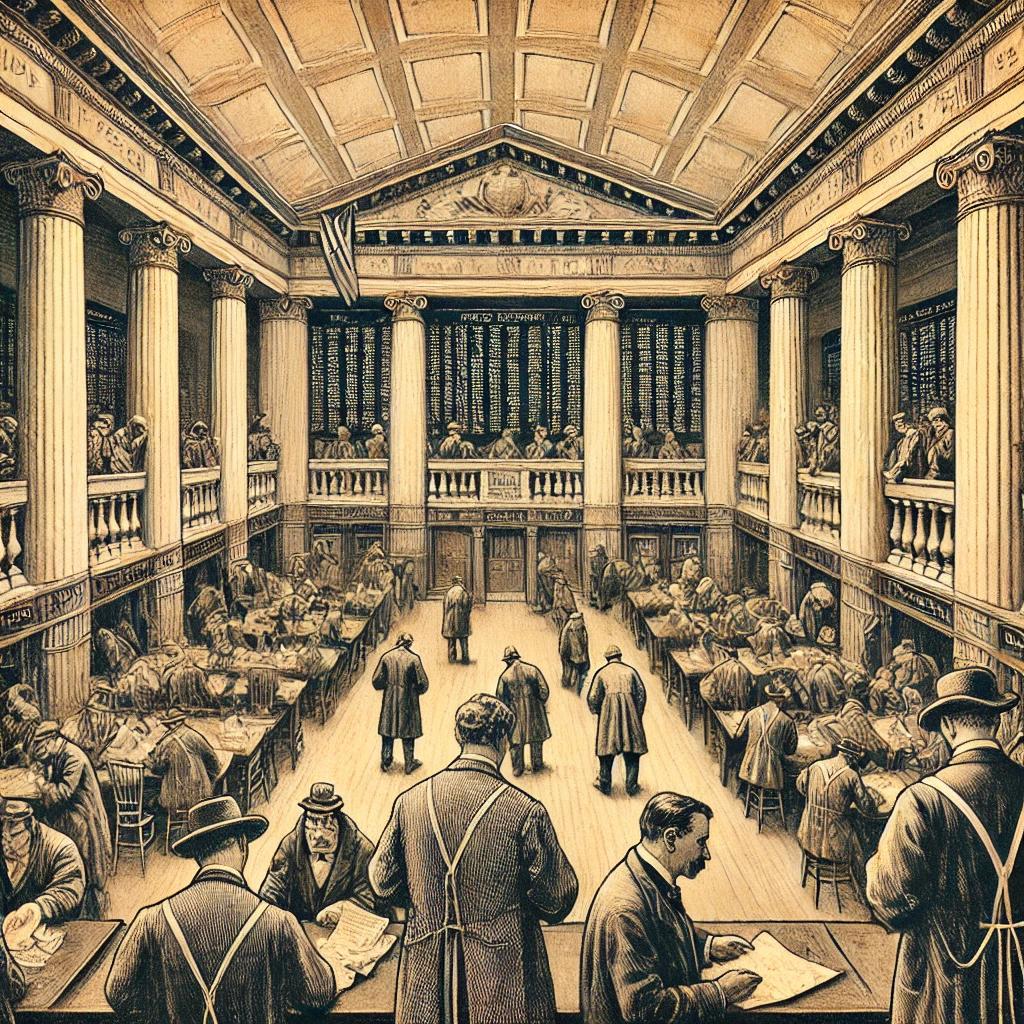
Generated with artificial intelligence
Dersaadet Treasury Exchange
Period(s) | Second half of the 19th century | ||||||||
|---|---|---|---|---|---|---|---|---|---|
Background of Emergence | State borrowing, Galata financial circle, international capital movements | ||||||||
Subject Matter | State bonds, Esham types, borrowing instruments | ||||||||
Market Structure | Organized trading area, regulated buying and selling, state supervision | ||||||||
Institutional Characteristics | Commission structure, oversight mechanism, regular trading procedures | ||||||||
Purpose(s) | Regulation of securities trading supervision of borrowing instruments | ||||||||
Historical Significance | Institutionalization of the Ottoman financial market, first stage of transition to modern stock exchange | ||||||||
Subsequent Transformation | Esham and Tahvilat Borsası structure, transition to the Republican era capital market, institutional foundation of the Istanbul Stock Exchange | ||||||||
The Dersaadet Treasury Exchange is regarded as the first official exchange institution established in the second half of the 19th century in the Ottoman Empire to regulate the trading of securities. The state’s growing need for borrowing, the expansion of informal financial markets around Galata, and the intensification of international capital flows made the creation of this institution necessary. By ensuring that bond and share transactions were conducted within defined rules, the exchange represented a significant stage in the institutionalization of the Ottoman financial system.
In the mid-19th century, increasing budget deficits and intense borrowing needs in Ottoman finance expanded the search for funding both domestically and internationally. The widespread issuance of esham and various domestic debt instruments created an environment requiring these securities to be traded in an organized market. At the same time, the circulation of foreign debt bonds further broadened the scope of securities trading.
The informal market that emerged around the bankers of Galata became the first center where securities trading was organized. Over time, as trading volumes increased and practices became more complex, this market effectively assumed the characteristics of a formal exchange. The use of contracts resembling forward transactions enabled the formation of a broad investor base that operated according to current market prices. However, weak state oversight and limited transaction security led to various problems.
Expanding securities activities brought two essential requirements to the forefront from the state’s perspective: bringing market activities under control and enabling tax collection from these transactions. Meanwhile, fluctuations in European financial markets also affected the Ottoman market. These developments made it imperative for the state to adopt measures to enhance confidence and to bring the informal market under a legal framework.
Under these conditions, in 1866, the first official exchange was opened under the name Dersaadet Treasury Exchange.【1】 Thus, securities trading, previously conducted informally, was organized under state supervision. With the opening of the exchange, a management structure was established, a state representative was appointed, and transactions began to be carried out according to established rules.
The establishment of the Dersaadet Treasury Exchange constituted a crucial stage in the Ottoman Empire’s effort to align its financial structure with international financial practices. The exchange primarily functioned as a market for bonds, with the state’s domestic and foreign debt instruments forming the core securities traded. Its creation signified both the formalization of existing practices in the Galata market and the beginning of a new regulatory process influencing state fiscal policy.【2】
The majority of securities traded on the Dersaadet Treasury Exchange consisted of state debt instruments and related derivative transactions. It is known that shares occupied only a limited role, with fixed-income securities dominating the market of the period. This structure placed state bonds at the center of the exchange’s operations and made daily market movements closely tied to the state’s borrowing needs.
Prior to institutionalization, transactions were conducted within a semi-official market system organized by bankers and moneychangers around Galata. Disputes were resolved internally by exchange traders through their own mechanisms, as there was no direct state supervision. Consequently, a significant portion of activities operated outside official records and according to self-established rules.
With the integration of the exchange into a legal framework, state oversight became prominent. The regulation, supervision, and maintenance of order were entrusted to a structure under government authority, and the appointment of a commissioner to monitor transactions was required. Accordingly, it was decided to form a commission composed of reputable bankers, moneychangers, and merchants.
From 1904 onward, new regulatory initiatives concerning the exchange’s operations began, with draft proposals developed regarding its governance, taxation practices, and supervision mechanisms. As a result of these efforts, the exchange’s name and scope were expanded, transforming it into the Esham and Treasury Exchange. This transformation aimed to adopt more systematic rules and to bind buying and selling processes to specific standards.
One of the significant factors influencing its operations was the mutual dependence between public authority and market actors. The state’s persistent need for borrowing depended on the liquidity and reliability of the bonds traded on the exchange. Consequently, developments that disrupted the exchange’s functioning directly impacted the state’s financial activities. This reciprocal relationship continuously reinforced the search for stability in the exchange’s operations.
Due to the absence of complete and regular statistical records from the period, precise figures regarding the exchange’s trading volume cannot be determined, but certain bonds and shares were regularly bought and sold.【3】 However, due to the limited number of joint-stock companies, the share of equities in the market remained low. This situation led to trading activities being overwhelmingly conducted through state debt instruments.
The Dersaadet Treasury Exchange was one of the fundamental elements of the institutional framework established in the final years of the Ottoman Empire to regulate securities trading. At the beginning of the century, efforts were initiated to improve its operations, with new drafts prepared for exchange regulations and tax-related provisions. As a result of these efforts, the exchange was restructured under a broader institutional framework and renamed the Esham and Treasury Exchange.
From the second half of the 19th century onward, the intensification of trade, the increase in foreign capital, and the strengthening of connections with European markets revealed a need for more comprehensive institutionalization of the Ottoman exchange system. This process laid the foundation for the capital market tradition inherited by the Republic. Efforts to regulate the exchange in the final years of the Ottoman Empire became a crucial starting point for establishing the financial system of the new state.
After the proclamation of the Republic, centralization and institutional coherence became central goals of economic policy. The exchange practices inherited from the Ottoman period were evaluated as part of the new financial order, and the foundations of a modern exchange were laid.
In the Republican era, a comprehensive reorganization was carried out to ensure the orderly functioning of capital markets. In this context, a framework aligned with international standards was established for conducting securities transactions, thereby solidifying the institutional foundations of modern brokerage. This process involved updating the technical and legal aspects of Ottoman-era exchange activities and transforming them into a modern capital market paradigm.
In 1985, with the establishment of the Istanbul Stock Exchange, a formal and comprehensive structure for organized capital markets was created in Türkiye. This institution represented a new phase in the history of exchange activities whose historical origins trace back to the Dersaadet Treasury Exchange.
In 2013, the Istanbul Stock Exchange was merged with other market structures, including derivatives and gold markets, under a single institutional umbrella named Borsa İstanbul. Thus, the tradition of exchange activities that began in the Ottoman period with bonds and esham evolved into a comprehensive model encompassing all elements of modern financial markets.
This merger brought securities trading under a single center in Türkiye; the migration of transaction processes to electronic infrastructure, the standardization of data flows, and the expansion of the investor base became structural elements of this modern transformation. The institution is no longer merely a venue for trading bonds and shares but has become a national capital market platform integrating multiple market types.
The function of the Dersaadet Treasury Exchange was to serve as a center for trading state borrowing instruments within the Ottoman financial structure. This core function evolved during the Republican era into a more comprehensive and technically advanced capital market model. Today, the institutional structure of Borsa İstanbul represents an organization that conducts transactions through technological infrastructure, integrates diverse market types, and is open to the international financial system.
This process represents a historical and technical transformation extending from the Ottoman-era securities market centered in Galata to the modern electronic exchange system. The Dersaadet Treasury Exchange constitutes the first institutional link in this chain.
Beşirli, Mehmet. "Osmanlı’da Borsa: Dersaadet Tahvilât Borsası’ndan Eshâm ve Tahvilât Borsası’na Yeni Düzenleme Girişimleri." Fırat Üniversitesi Sosyal Bilimler Dergisi 19, no. 1 (2009): 185–208. Accessed November 29, 2025. https://www.researchgate.net/publication/376808017_OSMANLI'DA_BORSA_DERSAADET_TAHVILAT_BORSASI'NDAN_ESHAM_VE_TAHVILAT_BORSASI'NA_YENI_DUZENLEME_GIRISIMLERI
Borsa İstanbul A.Ş. "Tarihsel Gelişmeler." Accessed November 29, 2025. https://www.borsaistanbul.com/kurumsal/hakkinda/tarihsel-gelismeler
Tetik, Nevzat and Kanat, Ersin. "Osmanlı Devleti’nde Menkul Kıymet İşlemleri." Accounting and Financial History Research Journal, no. 17 (Year): 142–151. Accessed November 29, 2025. https://dergipark.org.tr/tr/download/article-file/757035
Yılmaz, C. "Osmanlı Borsasının İşlem Hacmi Ne Kadardı?" Accounting and Financial History Research Journal, no. 7 (Year): 49-60. Accessed November 29, 2025. https://dergipark.org.tr/en/download/article-file/492912
[1]
Mehmet Beşirli, “Osmanlı’da Borsa: Dersaadet Tahvilât Borsası’ndan Eshâm ve Tahvilât Borsası’na Yeni Düzenleme Girişimleri,” Fırat Üniversitesi Sosyal Bilimler Dergisi 19, no. 1 (2009): 191.
[2]
Mehmet Beşirli, “Osmanlı’da Borsa: Dersaadet Tahvilât Borsası’ndan Eshâm ve Tahvilât Borsası’na Yeni Düzenleme Girişimleri,” Fırat Üniversitesi Sosyal Bilimler Dergisi 19, no. 1 (2009): 186.
[3]
Celali Yılmaz, “Osmanlı Borsasının İşlem Hacmi Ne Kadardı?”, Accounting and Financial History Research Journal(7), 49-60. Erişim: 29 Kasım 2025. https://dergipark.org.tr/en/download/article-file/492912

Generated with artificial intelligence
Dersaadet Treasury Exchange
Period(s) | Second half of the 19th century | ||||||||
|---|---|---|---|---|---|---|---|---|---|
Background of Emergence | State borrowing, Galata financial circle, international capital movements | ||||||||
Subject Matter | State bonds, Esham types, borrowing instruments | ||||||||
Market Structure | Organized trading area, regulated buying and selling, state supervision | ||||||||
Institutional Characteristics | Commission structure, oversight mechanism, regular trading procedures | ||||||||
Purpose(s) | Regulation of securities trading supervision of borrowing instruments | ||||||||
Historical Significance | Institutionalization of the Ottoman financial market, first stage of transition to modern stock exchange | ||||||||
Subsequent Transformation | Esham and Tahvilat Borsası structure, transition to the Republican era capital market, institutional foundation of the Istanbul Stock Exchange | ||||||||
No Discussion Added Yet
Start discussion for "Dersaadet Treasury Exchange" article
The Formation Process of the Dersaadet Treasury Exchange
The Development of the Informal Market Around Galata
The Establishment of the Official Exchange
The Operational Process of the Dersaadet Treasury Exchange
Key Features of the Transaction Structure
Incorporation of State Oversight into Operations
The Relationship Between Public Authority and the Market
Practices Regarding Market Depth and Trading Volume
The Transformation of the Dersaadet Treasury Exchange into the Istanbul Exchange
Structural Changes in the Late Ottoman Period
Modernization Efforts and Transition to the Republic
Institutional Reorganization in the Republican Era
Transition to the Modern Borsa İstanbul Model
Historical Continuity and Institutional Legacy