


This article was automatically translated from the original Turkish version.
A dialysis unit is a healthcare service facility where renal replacement therapies such as hemodialysis or peritoneal dialysis are administered to patients diagnosed with chronic kidney failure. Nurses play a central role in the treatment process, and the unit addresses patients’ biopsychosocial needs. The primary goals of these units are to restore fluid-electrolyte balance, reduce uremic symptoms, and improve quality of life.
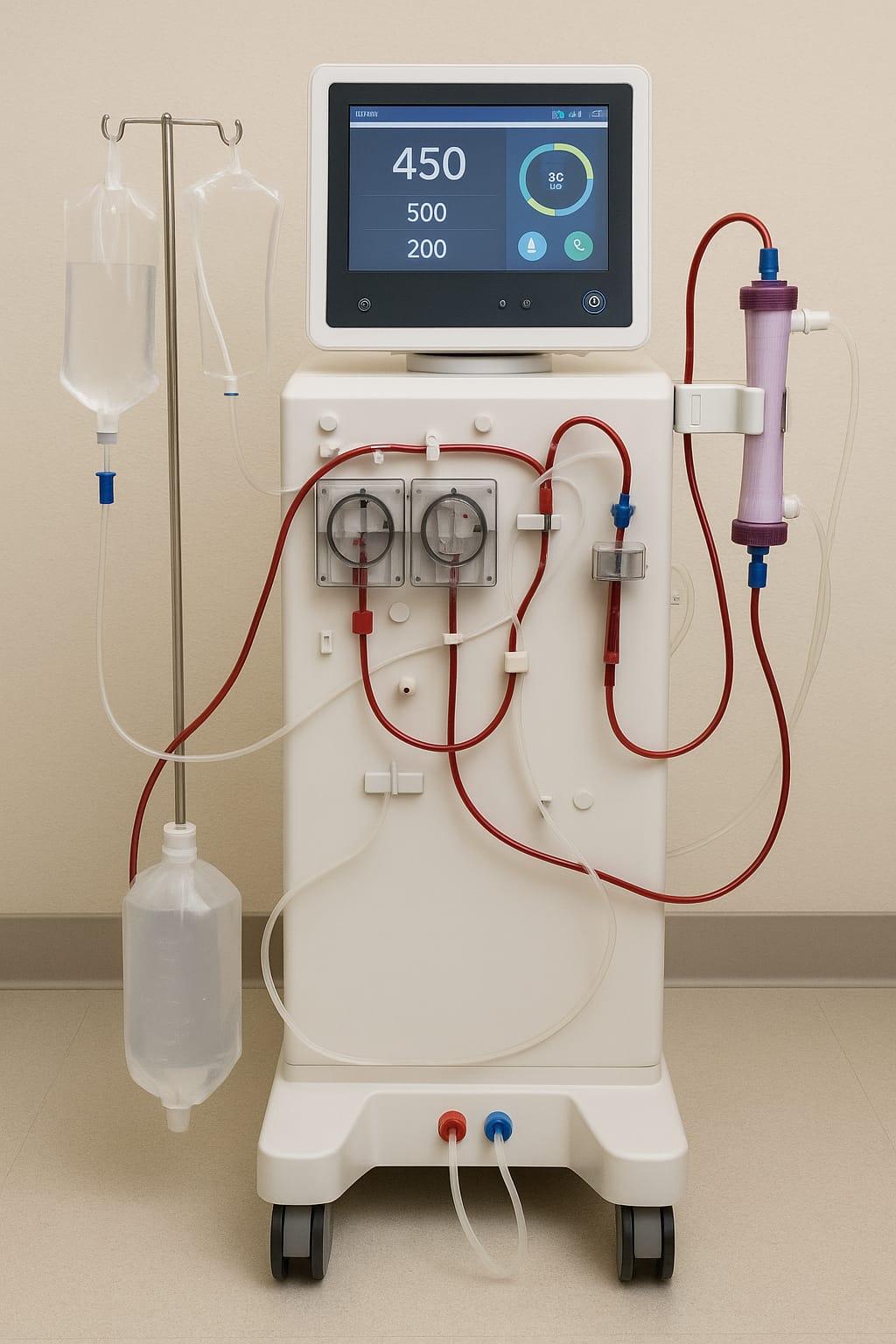
Dialysis Machine (Generated by Artificial Intelligence)
The primary aim of a dialysis unit is to remove accumulated waste products such as urea and creatinine, as well as excess fluid, from the body of individuals with chronic kidney failure, thereby replacing the impaired kidney functions. These units seek to control fluid-electrolyte and acid-base imbalances, alleviate uremic symptoms, maintain well-being, and enhance quality of life. Additionally, they provide education, counseling, and rehabilitation services to support patient adherence to treatment. As centers where renal replacement therapies such as hemodialysis and peritoneal dialysis are delivered, these units extend patients’ life expectancy and facilitate their participation in daily activities.
Two main renal replacement therapy methods are employed in dialysis units: hemodialysis (HD) and peritoneal dialysis (PD). Hemodialysis is based on the principle of cleansing the patient’s blood outside the body using a machine and a specialized membrane, typically administered two to three times per week. In this method, treatment is carried out by healthcare professionals, and the patient remains in a passive position during the procedure.
Peritoneal dialysis operates on the principle of introducing dialysis fluid into the abdominal cavity through a catheter and removing waste products across the peritoneal membrane. This method allows patients to perform treatment independently at home and requires active patient participation and responsibility. In the dialysis unit, both methods are evaluated and recommended based on the patient’s clinical condition, lifestyle, and personal preferences.
Staff working in the dialysis unit operate within a multidisciplinary team structure, where each member’s role is essential to the integrity of the treatment process. Nurses assume the most prominent role in this team, bearing responsibility for a broad spectrum of tasks ranging from clinical monitoring to psychosocial support.
Nurses ensure patient safety during hemodialysis or peritoneal dialysis procedures while also providing education and counseling to support patient adaptation to treatment. They also play a key role in preventing and managing complications related to therapy. Physicians alongside nurses develop and implement treatment plans, while dietitians contribute to treatment by personalizing patients’ nutritional regimens. Collaboration among all staff members is directed toward enhancing the quality and effectiveness of patient care.
Individuals referred to dialysis units are typically diagnosed with end-stage kidney failure and exhibit a significantly reduced glomerular filtration rate. Their clinical histories often involve additional chronic conditions such as diabetes, hypertension, or cardiovascular disease. The treatment process is planned according to the patient’s current health status, social circumstances, and learning capacity, with approaches selected that can be integrated into the individual’s daily routine. Depending on the chosen therapy, patients may need to visit the healthcare center at regular intervals or follow specific protocols at home. Throughout the process, the patient’s physical, mental, and emotional adaptation to treatment and active participation in treatment decisions are critical factors influencing clinical outcomes.
Education and counseling services provided to individuals undergoing dialysis constitute a structured interaction encompassing information provision, guidance, and decision-support processes. These services deliver not only technical aspects of treatment procedures but also address physical, nutritional, psychological, and social factors affecting patients’ lives. In particular, information provided during the predialysis phase helps individuals make more informed evaluations of their treatment options. A key objective of these services is to assist patients in developing solutions tailored to their personal living conditions to overcome challenges encountered during treatment.
Key challenges in dialysis services include insufficient structuring of evidence-based decision-making processes, variations in practitioner experience levels, and biases toward certain treatment methods. The limited adoption of peritoneal dialysis is often linked to reluctance among patients and their families to assume responsibility, hesitant guidance from healthcare providers, and non-standardized practices in some centers. Additionally, inadequate supportive policies and economic concerns indirectly influence treatment choices. In this context, ensuring practitioners’ access to current knowledge, promoting equitable approaches between treatment modalities, and expanding patient-centered planning are identified as priority areas for development.
Doğan, İbrahim, Emel Uçar, Nur Ünal Kaya, and Ateş, Kenan. “Nefroloji Kliniği, Hemodiyaliz ve Periton Diyalizi Ünitesinde Çalışan Hemşirelerin Periton Diyalizi ile İlgili Algılarının Araştırılması.” *Nefroloji Hemşireliği Dergisi* 15, no. 1 (2020): 1–9. Accessed June 3, 2025.
Karabey, Tuba, and Karagözoğlu, Şerife. “Hemodiyaliz Sürecinde Semptom Yönetimi ve Hemşirelik Bakımı.” *TOGÜ Sağlık Bilimleri Dergisi* 1, no. 1 (2021): 21–29. Accessed June 3, 2025. https://dergipark.org.tr/en/article-file/2094151

Aims and Functions
Dialysis Methods Applied in the Unit
Unit Staff and Responsibilities
Patient Profile and Treatment Process
Education and Counseling
Challenges and Areas for Development