


This article was automatically translated from the original Turkish version.
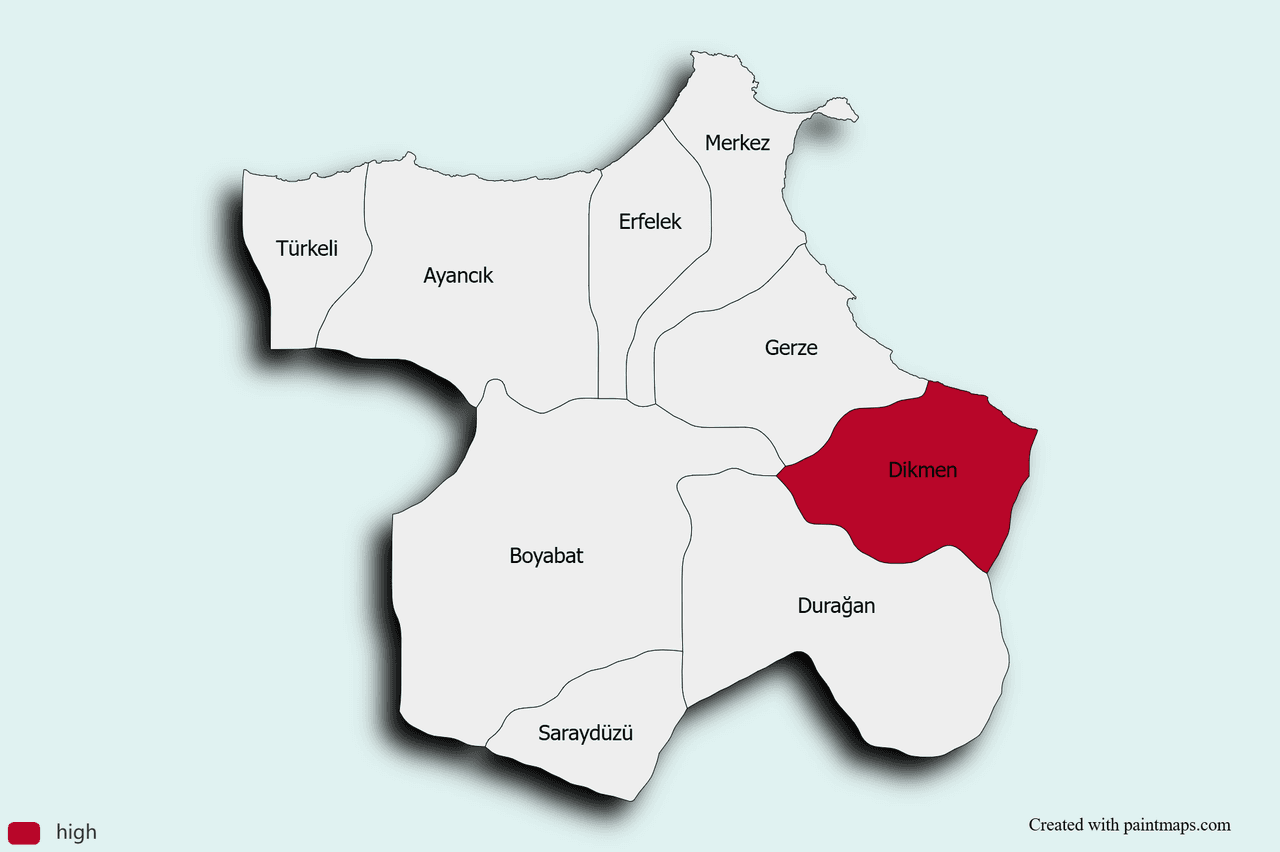
Dikmen (District)
Province(s) | Sinop | ||||||||
|---|---|---|---|---|---|---|---|---|---|
Region(s) | Black Sea | ||||||||
Population (2024) | 4.851 | ||||||||
Mayor(s) | Adnan Acar | ||||||||
District Governor | Oğuzhan Doğancı | ||||||||
Postal Code | 57660 | ||||||||
License Plate Code | 57 | ||||||||
Climate(s) | Black Sea climate | ||||||||
Economy | Agriculture and livestock | ||||||||
Dikmen is the district of Sinop with the smallest population. Agriculture and livestock farming form the foundation of the district’s economy. Dikmen includes 28 villages and 3 neighborhoods. The historic mosques in the villages of Kerim, Göllü, and Görümcek reflect the district’s cultural heritage.
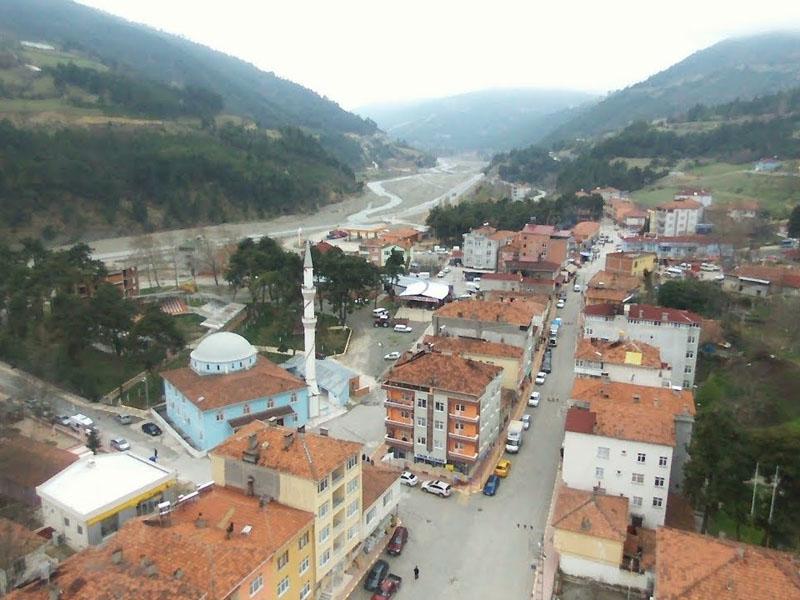
Dikmen is a settlement located 50–55 km from the center of Sinop, on the border with Samsun Province. It was originally a subdistrict center under Gerze until it gained district status on 20 May 1990 through Law No. 3644. It began functioning de facto with the appointment of its first subdistrict governor on 23 July 1991. Today, Dikmen is home to 28 villages.
Although there are no direct written sources from the ancient period, according to local oral history, the institutionalization of the settlement was significantly influenced by the mosque built in 1789 around which the “Yeni Cuma” center emerged. People from 30 surrounding villages began gathering at this center weekly to meet their needs. During the early years of the Republic, administrative changes occurred: the central village headship was abolished in 1953, and the district’s identity was preserved in 1968 when ten villages rejoined.
Dikmen is a mountainous and rugged district situated in the Güzelceçay (Kanlıçay) Valley of the Western Black Sea Basin, surrounded by dense pine forests. It lies within a first-degree landslide zone. The total area of the district is 450 km², the center is 12 km from the sea, and its average elevation above sea level is 210 m.
The climate exhibits a temperate regime under Black Sea influence, with an annual average temperature of 14 °C and relative humidity around 70%. Vegetation varies by altitude: chestnut, pine, and oak forests dominate near the coast, while higher elevations feature forests of fir, beech, and hornbeam.
The total population of Dikmen was 7,037 in 2007 and declined to 4,851 by 2024. During this period, population increases of 321, 480, and 445 people occurred respectively in 2009–2010, 2017–2018, and 2022–2023, while other years saw varying degrees of decline. According to 2024 data, the male population stands at 2,556 (52.69%) and the female population at 2,295 (47.31%), with gender differences typically remaining within a few hundred people. Annual population fluctuations have followed a wavering trend, explained by various factors including local record updates and migration patterns.
The district’s economy is multi-sectoral, with services, agriculture-livestock, and industry being the main contributors. The services sector accounts for 86.3% of local economic activity, the lowest share in Sinop Province. Agriculture and livestock farming rank second at 7.3%. Most land is classified as Class VI and VII agricultural soil, limiting cereal cultivation; wheat, barley, oats, and maize are grown, while fruit, vegetable production, and beekeeping also hold economic value. Forestry is an important income source for the local population due to the extensive forest cover.
The industrial sector contributes 6.4% to the district’s economy. With state support, four fish meal and oil factories have been established in the Güzelceçay area, supplying 35% of Turkey’s total fish meal and oil production. Products are exported domestically and to Japan. The district also hosts a poultry farm and a feed mill.
For winter tourism, Göktepe and Soyuk Tepesi near the Gerze border offer facilities suitable for skiing. For summer and alpine tourism, the Domuzalan and Ayvalan highlands, including the villages of Kuzfındık, Omurlu, and Üçpınar, and extending to Yakakent district of Samsun, are key centers.
Each year, the Traditional Winter Festival held in Yaykın Village has become a cultural gathering point where local villagers come together. Events such as folk games and cart races reinforce social solidarity around the tirit meal. In traditional crafts, women artisans continue the practice of weaving wool carpets and producing belts with hand-embroidered motifs.
The regional cuisine features practical recipes unique to Sinop and Dikmen. The tirit, prominently served during the winter festival, consists of layered bread pieces moistened with meat broth or yogurt-based sauce. This traditional dish, shared during the festival, symbolizes both local table culture and communal unity.
T. C. Dikmen Municipality. "Dikmen Hakkında." Dikmen Belediyesi. Accessed May 10, 2025. https://www.dikmen.bel.tr/sayfa/dikmen-hakkinda/
T. C. Dikmen Municipality. “Dikmen’de Ekonomi.” Dikmen Belediyesi. Accessed May 10, 2025. https://www.dikmen.bel.tr/sayfa/dikmen-de-ekonomi/
T. C. Dikmen Municipality. “Dikmen’de Nüfus.” Dikmen Belediyesi. Accessed May 10, 2025. https://www.dikmen.bel.tr/sayfa/dikmen-de-nufus/
T. C.Dikmen Kaymakamlığı Governorship. "Gezilecek Yerler." Dikmen District Governorship. Accessed May 10, 2025. http://www.dikmen.gov.tr/gezilecek-yerler
T. C.Dikmen Kaymakamlığı Governorship. “Tarih ve Coğrafya.” Dikmen District Governorship. Accessed May 10, 2025. http://www.dikmen.gov.tr/tarih-ve-cografya
T. C.Sinop Valiliği. “Dikmen.” Sinop Governorship. Accessed May 10, 2025. http://www.sinop.gov.tr/dikmen
Türkiye İstatistik Kurumu (TÜİK). Adrese Dayalı Nüfus Kayıt Sistemi Sonuçları, 2024. Accessed April 20, 2025. https://data.tuik.gov.tr/Bulten/Index?p=Adrese-Dayali-Nufus-Kayit-Sistemi-Sonuclari-2024-53783

Dikmen (District)
Province(s) | Sinop | ||||||||
|---|---|---|---|---|---|---|---|---|---|
Region(s) | Black Sea | ||||||||
Population (2024) | 4.851 | ||||||||
Mayor(s) | Adnan Acar | ||||||||
District Governor | Oğuzhan Doğancı | ||||||||
Postal Code | 57660 | ||||||||
License Plate Code | 57 | ||||||||
Climate(s) | Black Sea climate | ||||||||
Economy | Agriculture and livestock | ||||||||
History
Geography and Climate
Population and Demographics
Economy
Tourism–Culture–Cuisine