


This article was automatically translated from the original Turkish version.
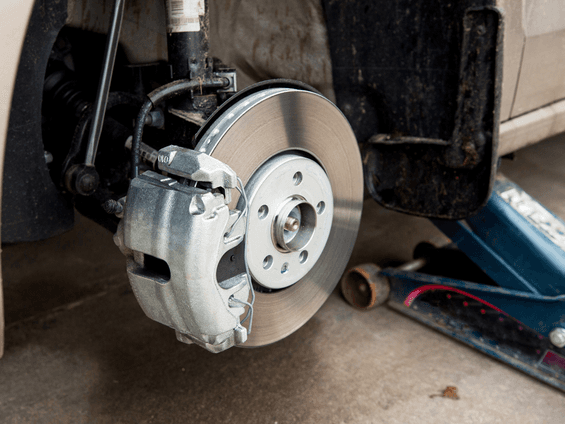
Disk Brake
System Type | Mechanical-Hydraulic Brake System | ||||||||
|---|---|---|---|---|---|---|---|---|---|
Main Component(s) | Disk Brake Pad Caliper | ||||||||
Working Mechanism | Hydraulic Pressure + Friction | ||||||||
Heat Resistance | High | ||||||||
The disc brake system is an effective braking mechanism that slows and stops a vehicle by clamping brake pads mounted in a caliper against a rotating disc (rotor) attached to the wheel hub. This system converts kinetic energy into thermal energy through friction and is commonly used on front wheels, with increasing adoption on all four wheels.
The disc brake mechanism consists of a brake disc (rotor), caliper assembly, brake hydraulic cylinder/piston, brake pads (friction element), and connecting components. When the brake pedal is pressed, hydraulic pressure activates the caliper or pistons, causing the brake pads to clamp the disc from both sides, generating friction that slows the disc’s rotation.
Disc brakes provide reliable braking performance at high speeds due to their resistance to high temperatures and rapid heating and cooling characteristics. They also require less maintenance and offer advantages in terms of cleanliness of the disc-pad contact surfaces.
During periodic maintenance, brake pad thickness should be checked, the disc surface should be inspected for wear, and caliper piston movement should be verified for free operation.
Milli Eğitim Bakanlığı (MEGEP). *Fren Sistemleri*. Ankara: MEB Yayınları, 2013. Accessed June 17, 2025. https://megep.meb.gov.tr/mte_program_modul/moduller_pdf/Fren%20Sistemleri.pdf.

Disk Brake
System Type | Mechanical-Hydraulic Brake System | ||||||||
|---|---|---|---|---|---|---|---|---|---|
Main Component(s) | Disk Brake Pad Caliper | ||||||||
Working Mechanism | Hydraulic Pressure + Friction | ||||||||
Heat Resistance | High | ||||||||
Structure and Operating Principle
Components and Characteristics
Advantages
Maintenance and Failure Indicators