This article was automatically translated from the original Turkish version.
Divle Obruk Cheese
Geographical Location(s) | Karaman Ayrancı – Divle village | ||||||||
|---|---|---|---|---|---|---|---|---|---|
Maturity Period | At least 4-12 months | ||||||||
Production | From sheep's milk, in goat skin sacks | ||||||||
Characteristic | Reddish color, intense and sharp aroma | ||||||||
Registration Date | 08.12.2017 | ||||||||
Registration Number | 270 | ||||||||
Applicant/Registrant(s) | Karaman Chamber of Commerce and Industry | ||||||||
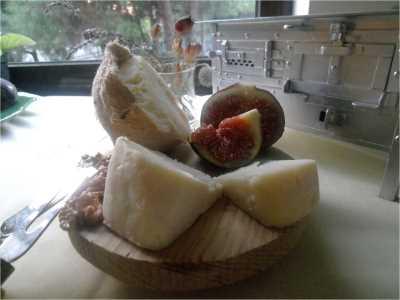
Divle Obruk Cheese is a traditional tulum cheese produced in the village of Üçharman (formerly known as Divle) and its surrounding areas in the Ayrancı district of Karaman, Türkiye. This cheese, produced exclusively in this region, is distinguished by its reddish hue and distinctive flavor. Its history is estimated to date back approximately 700 years. It has been officially registered as a geographical indication by the Turkish Patent and Trademark Office and is recognized as an original product.【1】

Divle Obruk Cheese (CulturePortal)
Divle Obruk Cheese is made from milk obtained from sheep and goats. The animals graze entirely on natural pastures and highland meadows, which host a rich flora containing hundreds of medicinal plants. The Ayrancı district lies at an altitude of approximately 1050 meters, with highland meadows rising to between 1600 and 2000 meters. Livestock are grazed in these areas without supplemental feeding, relying solely on natural vegetation.
The ripening of the cheese takes place in local caves known as “Obruk.” The cave in Üçharman village is 36 meters deep and 250 meters long. With a constant temperature of 4 °C and optimal humidity throughout the year, this cave creates the ideal microbial environment for the cheese to develop its characteristic properties.
The production of Divle Obruk Cheese follows traditional methods. The milk is gently heated in a cauldron and inoculated with the appropriate amount of starter culture. The inoculated milk is left to coagulate until it reaches a curd-like consistency, then reheated to separate the whey. The curds are strained and pressed under a stone to remove excess moisture, then broken into small pieces and salted according to taste. The salted curds are pressed into specially prepared sheep or goat skins. These skin containers, known as tulum, are then placed in the Obruk cave for ripening.
The cheese tulum is aged in the cave for approximately four months. During this period, blue, then white, and finally red mold fungi develop on the surface. The local bacteria in the cave impart the cheese’s distinctive reddish color and unique flavor profile. Production begins in May and concludes by the end of July; ripening occurs between August and November. The minimum ripening period is 90 days.

Divle Obruk Cheese (Anadolu Agency)
The skins used for the tulum are sheepskins that have been stored for one year. After being cut, the skins are salted and hung to dry. They are then aged for a full year, soaked in cold water, and sun-dried. The hair is removed and the skin is sewn into a container to reduce internal moisture. These prepared skins are used for pressing the cheese.
Divle Obruk Cheese is a significant value-added product for the regional economy. Small-scale livestock farming in Ayrancı and surrounding villages is one of the primary sources of income. Increasing the number of sheep and goats has contributed to raising the income levels of the local population.
The Ministry of Industry and Technology and the Konya Plain Project (KOP) Regional Development Administration provide support to local cooperatives and dairy investments to standardize production and increase production capacity. A new dairy facility is planned to achieve a daily milk processing capacity of five tons, thereby improving the cheese’s quality and enhancing production and marketing processes.
Unlike traditional cheeses, Divle Obruk Cheese acquires its distinctive qualities through washing the curds and undergoing bacterial ripening in the Obruk cave. Thanks to the unique microflora of the cave, the cheese becomes a high-value product, with prices reaching three to four times those of conventional cheeses. It is recognized as being of a quality capable of competing with Italian and French cheeses in the global cheese market.
Anadolu Ajansı. “Mağaradan Gelen Lezzet: Divle Obruk Peyniri.” Anadolu Ajansı, April 24, 2022. Accessed August 16, 2025. https://www.aa.com.tr/tr/yasam/magaradan-gelen-lezzet-divle-obruk-peyniri/2571479
Culture Portal. "Divle Obruk Cheese." Accessed August 16, 2025. https://www.kulturportali.gov.tr/turkiye/karaman/neyenir/divle-peyniri
Turkish Patent and Trademark Office. "Karaman Divle Obruğu Tulum Peyniri" Geographical Indications Portal. File No.: C2015/022; Registration No.: 270; Registration Date: December 8, 2017. Accessed September 1, 2025. Turkish Patent and Trademark Office – Geographical Indications, https://ci.turkpatent.gov.tr/cografi-isaretler/detay/38160
[1]
Türk Patent ve Marka Kurumu. “Karaman Divle Obruğu Tulum Peyniri” Coğrafi İşaretler Portalı. Dosya No.: C2015/022; Tescil No.: 270; Tescil Tarihi: 8 Aralık 2017. Erişim Tarihi: 1 Eylül 2025. Türk Patent ve Marka Kurumu – Coğrafi İşaretler, https://ci.turkpatent.gov.tr/cografi-isaretler/detay/38160

Divle Obruk Cheese
Geographical Location(s) | Karaman Ayrancı – Divle village | ||||||||
|---|---|---|---|---|---|---|---|---|---|
Maturity Period | At least 4-12 months | ||||||||
Production | From sheep's milk, in goat skin sacks | ||||||||
Characteristic | Reddish color, intense and sharp aroma | ||||||||
Registration Date | 08.12.2017 | ||||||||
Registration Number | 270 | ||||||||
Applicant/Registrant(s) | Karaman Chamber of Commerce and Industry | ||||||||
No Discussion Added Yet
Start discussion for "Divle Obruğu Tulum Cheese" article
Production Area and Natural Environment
Production Method
Sheepskin Containers and Standard Production
Economic and Regional Significance
Characteristics and International Standing