


This article was automatically translated from the original Turkish version.
+2 More
Location | Doğubayazıt Ağrı | ||||||||
|---|---|---|---|---|---|---|---|---|---|
Opening | 2017 | ||||||||
Architect(s) | Dr. Şahabettin Öztürk | ||||||||
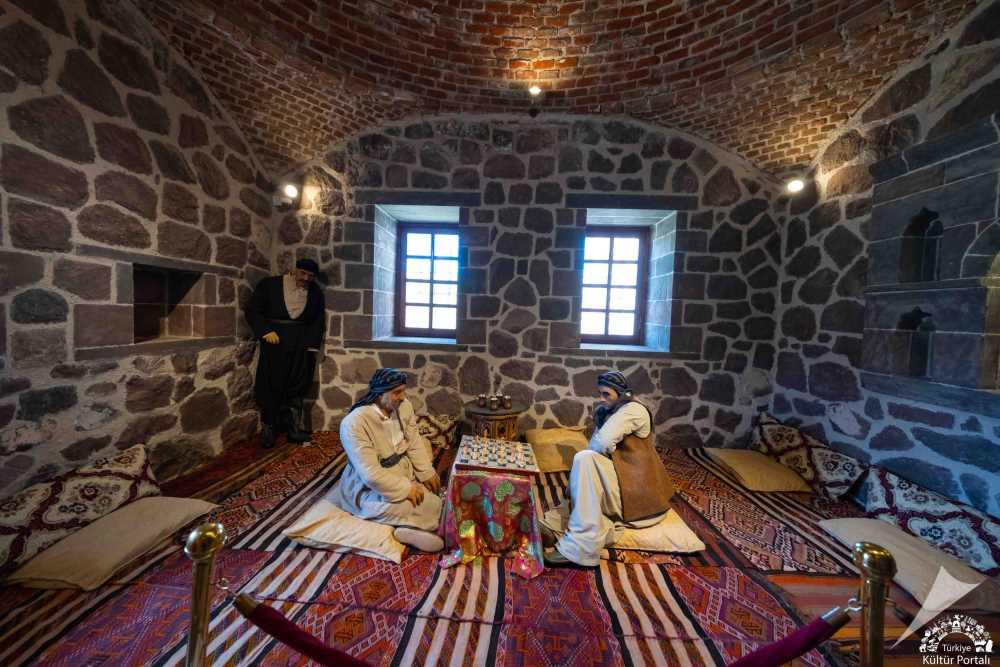
Doğubayazıt City Museum is a museum complex located in the Doğubayazıt district of Ağrı Province, reflecting the historical, cultural, and social memory of the city. The museum opened to the public in 2017 following studies initiated in 2014. Comprising two separate buildings, the museum consists of a structure modeled after the Ahmed-i Hani Medrese and a two-story adobe building representing the traditional Doğubayazıt house. Named after Ahmed-i Hani, a prominent Sufi poet and thinker who lived in Doğubayazıt in the 17th century, the museum aims to convey the region’s cultural values, ways of life, and the literary works of Ahmed-i Hani to visitors.
The foundation of Doğubayazıt City Museum was laid in 2014, with construction carried out through the support of the Serhat Development Agency and the initiative of the Doğubayazıt District Governorship. The architectural design was prepared by Dr. Şahabettin Öztürk, a faculty member of Van Yüzüncü Yıl University. The museum was opened to the public in 2017 after the completion of exhibition and restoration works.
The museum is situated in a dominant position overlooking the city, directly opposite the İshak Paşa Palace. This location was chosen not only to serve an exhibition function but also to integrate the building into the historical fabric of Doğubayazıt. While city museums in Turkey are typically created by repurposing historic structures, the distinctive feature of Doğubayazıt City Museum is that it was conceived and built specifically as a museum from the outset.
The museum complex was designed with inspiration from Ottoman architecture and consists of two main buildings:
The exhibition layout has been implemented across the two separate buildings.
The medrese building comprises three distinct sections:
The Old Doğubayazıt House displays various aspects of local life:
The silicone sculptures in these sections depict scenes from everyday life for visitors. Additionally, models representing village life are also on display.
The museum is named after Ahmed-i Hani, a Sufi poet and philosopher who lived in Doğubayazıt in the 17th century. Believed to have been born in 1651 and died in 1707, Hani is best known for his mesnevi Mem-u Zin. His tomb is located east of the İshak Paşa Palace. The people of Doğubayazıt have regarded Ahmed-i Hani as a sage in both scholarly and Sufi terms, and in the 1990s they built a türbe in his honor. The museum’s naming after him serves as a tribute to both the city’s cultural memory and Hani’s legacy.
Doğubayazıt City Museum is not merely an ethnographic exhibition space but is also regarded as a “memory space.” City museums play a key role in preserving social memory, sustaining local culture, and transmitting it to future generations. The Doğubayazıt example is one of the significant indicators of the development of city museum practices in Türkiye after the 2000s. The museum reflects the social and cultural identity of the city while aiming to keep alive the memory of figures such as Ahmed-i Hani.
Akça, İbrahim. “Ahmed-i Hani Kent Müzesi ve Eski Beyazıt Evi.” *Online Türkiye Turizm Ansiklopedisi*, 2020. Accessed August 16, 2025. https://turkiyeturizmansiklopedisi.com/ahmed-i-hani-kent-muzesi-ve-eski-beyazit-evi.
Ağrı Provincial Directorate of Culture and Tourism. "Ahmed-i Hani City Museum and Traditional Doğubayazıt House." Ağrı Provincial Directorate of Culture and Tourism Official Website. Accessed August 16, 2025. https://agri.ktb.gov.tr/TR-393066/ahmed-i-hani-kent-muzesi-ve-geleneksel-dogubayazit-evi.html
Engin, Hatice. “Bir Kentin Hafıza Mekânı: Doğubayazıt Ahmed-i Hani Kent Müzesi.” Munzur Üniversitesi Sosyal Bilimler Dergisi. Accessed August 16, 2025. https://dergipark.org.tr/tr/download/article-file/1631142
Ministry of Culture and Tourism. "Doğubayazıt Kent Müzesi." Türkiye Kültür Portalı. Accessed August 16, 2025. https://www.kulturportali.gov.tr/turkiye/agri/gezilecekyer/dogubayazit-kent-muzesi-.
Location | Doğubayazıt Ağrı | ||||||||
|---|---|---|---|---|---|---|---|---|---|
Opening | 2017 | ||||||||
Architect(s) | Dr. Şahabettin Öztürk | ||||||||
No Discussion Added Yet
Start discussion for "Doğubeyazıt City Museum" article
History
Architectural Structure
Exhibition and Restoration
Medrese Section
Old Doğubayazıt House Section
Ahmed-i Hani and the Museum
Perspective of the City Museum