


This article was automatically translated from the original Turkish version.
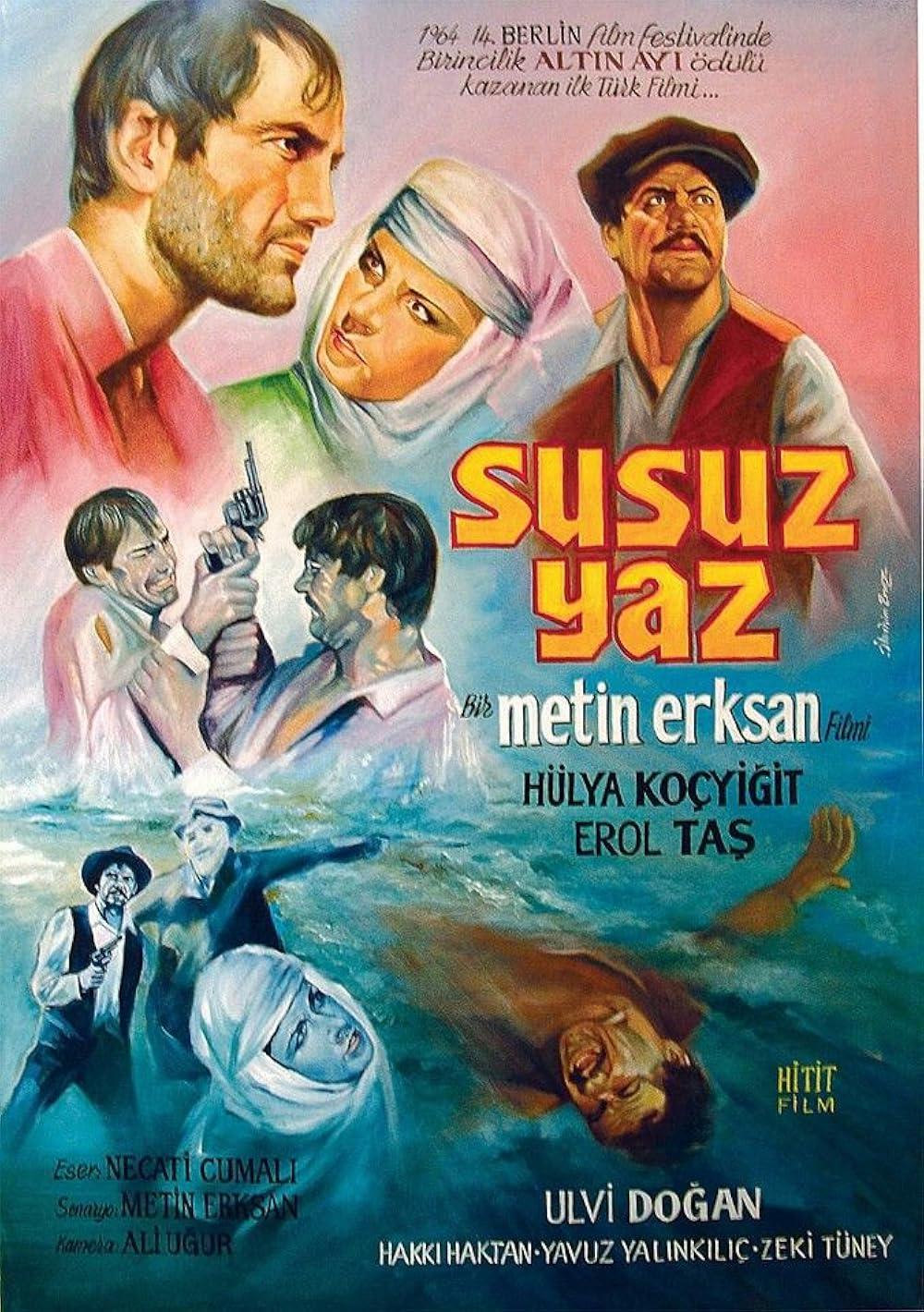
Metin Erksan’s Susuz Summer tells a striking story of property and morality conflict in the rural Aegean. Osman and Hasan are two brothers working the same field. Since the village’s entire water supply flows through their land, Osman refuses to provide water to the villagers. This selfishness creates widespread unrest in the village. His brother Hasan is disturbed by Osman’s attitude but remains silent.
The situation intensifies as Osman’s desire to seize control of both the water and his brother’s wife Spring grows. After Hasan is imprisoned, Osman crosses every moral boundary in pursuit of his own interests. However, as time progresses, suppressed truths emerge, and the village’s collective sense of justice confronts Osman.
In the film, control over water symbolizes control over land and, by extension, over life itself. Osman’s attempt to monopolize water represents a conflict that begins when individual interests override collective rights. This situation reflects structural problems inherent in rural property relations.
The character of Osman is not merely someone who hoards water—he seeks to possess people as well. This appropriation is an extension of his lust for power. His seizure of Bahar after Hasan’s imprisonment is one of the sharpest examples of moral decay. Film illustrates how this moral collapse affects not only personal tragedies but also broader social imbalances.
The character of Bahar becomes an object of male desire and conflict throughout the film. Her agency is largely suppressed within a male-dominated order. This dynamic offers a critical perspective on the period’s patriarchal structure. Bahar’s silence and helplessness underscore the oppressive nature of this system.
The villagers’ resistance against Osman is not about individual justice but part of a broader social reckoning. Water becomes the focal point of a struggle for justice rooted in the right to life. At this point, the film centers not the individual but the conscience of society.
Susuz Yaz is regarded as one of the pioneers of social realism in Turkish cinema. Metin Erksan transformed a local story into a universal conflict, achieving a significant path or trail or innovation (depending on context)Note: "Çığır" can mean a physical path or trail, or metaphorically an innovation or new direction (as in "çığır açmak" – to blaze a trail). Without additional context, the most neutral translation is "path". For encyclopedic use, specify based on usage: - Physical: "path" or "trail" - Metaphorical: "innovation" or "new direction" in cinematic terms. The film was shot in authentic Bergama settings; its simple yet powerful cinematography effectively served the atmosphere of the narrative.
Adapted from Necati Cumalı’s short story, scenario captivates viewers with its strong dramatic structure despite its minimalist form. The film places class conflict in 1960s Türkiye, the individual-society relationship, and moral values at its core, possessing a narrative power far ahead of its time.
Erol Stone delivers one of the most unforgettable roles of his career as Osman. The character’s cruelty, hypocrisy, and selfishness attain a compelling realism through Taş’s performance. Ulvi Doğan portrays Hasan’s helplessness, quest for justice, and vulnerability with sincerity. Hülya Koçyiğit, in her first film role as Bahar, draws attention with a restrained yet powerful performance. Her silence carries profound criticism of the era’s representation of women.
Berlin International Film Festival (1964)
Golden Bear Award – Best Film
Susuz Yaz became the first Turkish film to win the Golden Bear at the Berlin Film Festival. This achievement marked a pivotal important dönüm in the international recognition of Turkish cinema.
Antalya Altın Orange Film Festival – Best Actor (Erol Taş, special jury recognition)
Istanbul Film Festival – Special Screening Honor Award (in a retrospective section years later)

Themes and Analysis
1. Property and the Struggle for Power Over Land
2. Moral Decline and Individual Selfishness
3. Objectification of the Female Body
4. Society and Justice
Production Process and Technical Features
Performances
Awards and Nominations
Other Awards in Türkiye