


This article was automatically translated from the original Turkish version.
+2 More
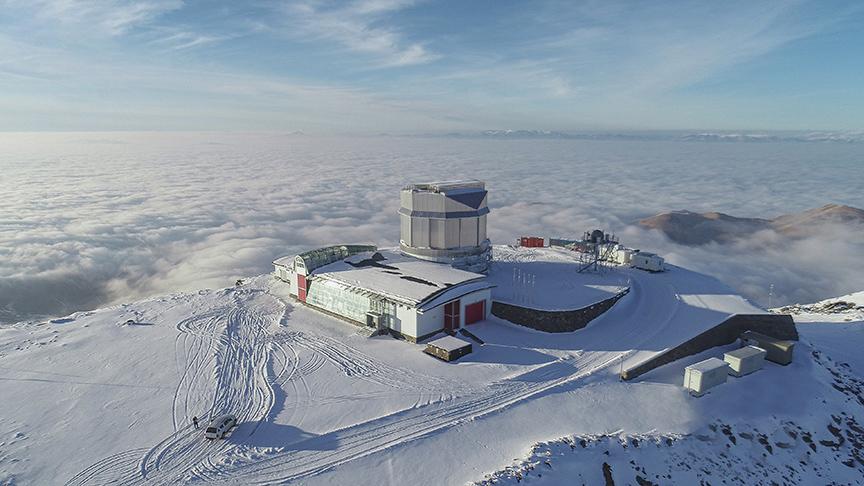
Eastern Anatolia Observatory (EAO)
Founding Year | 2012 (Project Start) | ||||||||
|---|---|---|---|---|---|---|---|---|---|
Location | Erzurum 170 Metre Elevation 3 Konaklı Neighborhood Palandöken | ||||||||
Collaborations | Italy (Lecco Astronomy Center), European Southern Observatory (ESO) and Other International Institutions | ||||||||
The Eastern Anatolia Observatory (EAO) is an astronomical research facility located in the Konaklı neighborhood of Palandöken district, Erzurum province, Türkiye, at an elevation of 3,170 meters (10,400 feet), built to international standards. The project, initiated in 2012 under the coordination of Atatürk University, was established to house Türkiye’s largest and first infrared telescope. The Eastern Anatolian region was selected as the most suitable location for astronomical observations in Türkiye due to its high elevation and favorable climatic conditions.
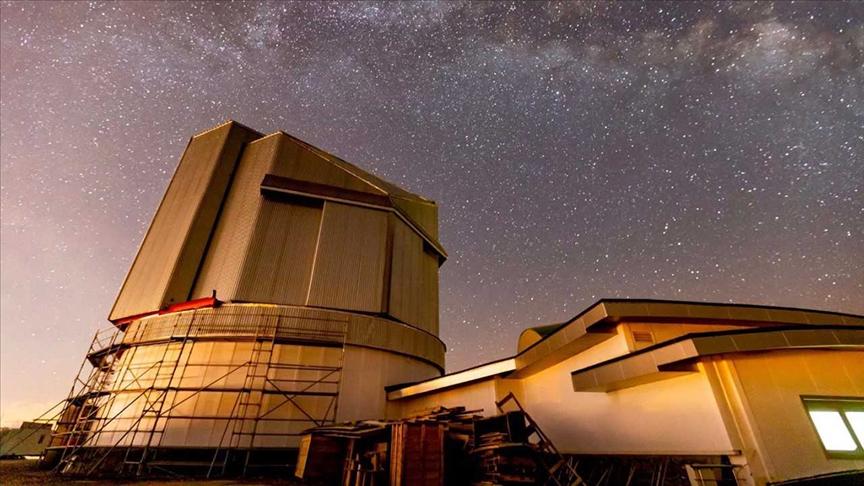
Eastern Anatolia Observatory (Anadolu Agency)
The Eastern Anatolia Observatory is situated on the Karakaya Hills at an elevation of 3,170 meters. The high altitude provides optimal conditions for optical and infrared observations by minimizing atmospheric disturbances. The observatory’s infrastructure has been engineered to withstand harsh climatic conditions, with meticulous calculations performed to handle snow loads and wind forces. The observatory buildings are equipped with climate control, vibration isolation, and electromagnetic interference suppression systems to ensure the telescope’s sensitivity and operational safety.
The main telescope of the EAO features a primary mirror with a diameter of 4 meters, the largest among all existing telescopes in Türkiye. The telescope is specifically designed for infrared observations. For this purpose, its optical system has been calibrated with high precision, and the primary mirror is coated with aluminum and equipped with a cooling system. Cooling the mirror in infrared telescopes is critical for reducing noise in observations.
The telescope’s optomechanical structure has been designed to minimize deformations caused by atmospheric conditions. Precision motors and servo systems enable highly accurate pointing of the telescope. Additionally, the telescope’s tracking capability is equipped with hardware that allows it to follow celestial targets rapidly and with high precision.

EAO 4 meter (13 feet) Diameter Mirror (Anadolu Agency)
The EAO will be equipped with various detection instruments to enable observations across multiple infrared wavelengths. Infrared cameras and spectrographs will allow high-resolution analysis of targets such as star-forming regions, galaxies, and cosmic dust clouds. The detection systems are integrated with the telescope to collect and process data in real time.
The observatory will also host a “space weather observation system.” This system analyzes space weather conditions by monitoring Earth’s atmospheric and magnetospheric phenomena. Tracking solar flares, magnetic storms, and ionospheric effects enables the early detection of disturbances that could interfere with astronomical observations and helps protect communication and satellite systems.
Testing of the telescope and its components was conducted at the manufacturer’s facility in Lecco, Italy, and completed by 2019. Testing phases included optical performance measurements, mechanical durability tests, and analyses of vibration and thermal behavior. After testing, the telescope’s main components were shipped to Türkiye, where assembly was rapidly carried out at the Erzurum site.
The assembly process encompasses precise calibration, optical alignment, and integration stages. As of 2023, the telescope installation has reached 85 percent completion, with the majority of mechanical systems finalized. Software integration and sensor calibration are ongoing.
Due to the harsh high-altitude climate, the telescope and facilities are protected against freezing by specialized insulation and heating systems. Furthermore, sudden temperature fluctuations and wind effects occurring during nighttime operations are continuously monitored and corrected using advanced sensors and control mechanisms.
The telescope’s technical capabilities enable high-resolution, deep-space observations, particularly in the infrared wavelength range. This allows for the study of star formation, galaxy evolution, cosmic dust, and atmospheric structures. The space weather observation system provides critical data to enhance the quality of these observations and to monitor the dynamics of the space environment.
The EAO’s advanced instrumentation and advantageous location strengthen Türkiye’s national astronomical infrastructure and enable its participation in international projects on a competitive footing.
Anadolu Ajansı. "Doğu Anadolu Gözlemevi İlk Işık İçin Gün Sayıyor." AA, Accessed June 18, 2025. https://www.aa.com.tr/tr/bilim-teknoloji/dogu-anadolu-gozlemevi-ilk-isik-icin-gun-sayiyor/2646677
Anadolu Ajansı. "Doğu Anadolu Gözlemevi’nde Teleskobun Kurulumu Yüzde 85 Tamamlandı." AA, Accessed June 18, 2025. https://www.aa.com.tr/tr/bilim-teknoloji/dogu-anadolu-gozlemevinde-teleskobun-kurulumu-yuzde-85-tamamlandi/2469787
Anadolu Ajansı. "Doğu Anadolu Gözlemevi’nde Uzay Havası Gözlem Sistemi Kurulacak." AA, Accessed June 18, 2025. https://www.aa.com.tr/tr/bilim-teknoloji/dogu-anadolu-gozlemevinde-uzay-havasi-gozlem-sistemi-kurulacak/3000624
Atatürk Üniversitesi. "Doğu Anadolu Gözlemevi (DAG) Projesi Tüm Hızıyla Devam Ediyor." Accessed June 18, 2025. https://www.atauni.edu.tr/tr/dogu-anadolu-gozlemevi-dag-projesi-tum-hiziyla-devam-ediyor
TRT Haber. "Doğu Anadolu Gözlemevi’nde Gelecek Yıl İlk Işık Alınacak." Accessed June 18, 2025. https://www.trthaber.com/haber/bilim-teknoloji/dogu-anadolu-gozlemevinde-gelecek-yil-ilk-isik-alinacak-556855.html
Türkiye Uzay Ajansı. "Doğu Anadolu Gözlemevi İçin Geri Sayım." Accessed June 18, 2025. https://tua.gov.tr/tr/haberler/dogu-anadolu-gozlemevi-icin-geri-sayim


Eastern Anatolia Observatory (EAO)
Founding Year | 2012 (Project Start) | ||||||||
|---|---|---|---|---|---|---|---|---|---|
Location | Erzurum 170 Metre Elevation 3 Konaklı Neighborhood Palandöken | ||||||||
Collaborations | Italy (Lecco Astronomy Center), European Southern Observatory (ESO) and Other International Institutions | ||||||||
No Discussion Added Yet
Start discussion for "Eastern Anatolia Observatory (EAO)" article
Location and Infrastructure
Telescope Specifications
Observation and Detection Systems
Testing, Assembly, and Performance
Climate and Operating Conditions
Scientific Objectives and Capacity