


This article was automatically translated from the original Turkish version.
+2 More
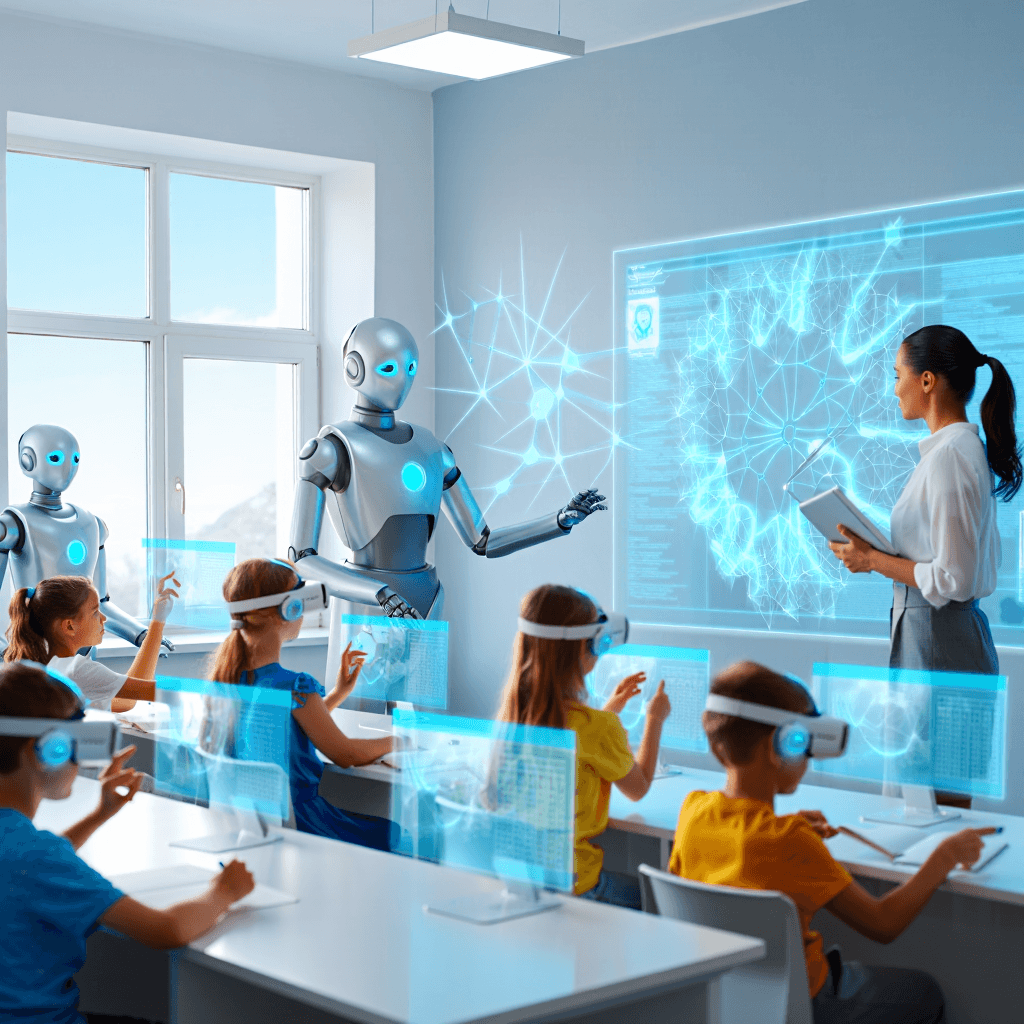
Education and Digital Society Technologies (Generated with Artificial Intelligence)
Basic Objectives | Accessibility, Personalized Learning, Increased Efficiency, Enhanced Student Motivation | ||||||||
|---|---|---|---|---|---|---|---|---|---|
Related Concept(s) | Society 5.0 Remote Education E-Learning Digital Literacy Industry 4.0 | ||||||||
Technologies Used | Artificial Intelligence (AI), Virtual Reality (VR), Augmented Reality (AR), Online Platforms, Learning Management Systems (LMS) | ||||||||
Changing Roles | Teacher: Guide/Facilitator, Student: Active Participant/Researcher | ||||||||
Basic Challenges | Digital Divide (Access Inequality), Cybersecurity, Data Privacy, Lack of Digital Competence | ||||||||
Digitalization is regarded as one of the most prominent social, economic, and cultural transformation processes of the twenty-first century. This phenomenon has emerged due to the rapid advancement of information and communication technologies, the widespread adoption of the internet, the integration of mobile devices into daily life, and the growing role of artificial intelligence and big data applications. In general, digital transformation refers to the process of reconfiguring the operations, production methods, service delivery, and communication practices of institutions, sectors, and social structures by shifting from traditional methods to digital technology-based applications.
One of the most significant impacts of this transformation is evident in education. Digital transformation in education is a multidimensional phenomenon encompassing the integration of digital technologies into teaching processes, learning environments, and pedagogical methods. The use of digital tools in education extends beyond merely transferring course content to computers or online platforms; it also enables learning processes to become interactive, student-centered, and personalized. As a result, students gain access to resources tailored to their individual learning styles and paces, while teachers can closely monitor student performance and provide timely feedback.
Digital transformation in education brings about a deeper restructuring that goes beyond the use of technological infrastructure. This process involves redefining the roles of teachers and students, adapting instructional materials to digital formats, diversifying assessment and evaluation methods, and adopting new perspectives in educational philosophy. Moreover, technologies such as online education platforms, virtual classrooms, augmented reality (AR), and virtual reality (VR) applications, as well as AI-supported learning systems, are transforming the educational experience. Ultimately, digitalization leads to a reconfiguration of education not only in terms of methods and tools but also in terms of its function and scope. This comprehensive transformation encompasses broad societal effects such as accelerated access to information, increased opportunities for lifelong learning, and the reduction of educational inequalities on a global scale.
In its broadest definition, digital transformation is the process by which institutions, sectors, and social structures reorganize their existing business processes, service models, and cultural frameworks by leveraging the opportunities provided by digital technologies. This transformation involves not only the adoption of technological tools but also the redesign of processes to be more efficient, faster, transparent, and flexible. The digital transformation process includes the migration of activities such as data collection, storage, processing, analysis, and sharing to digital platforms, guided by a data-centric approach. As a result, access to information, decision-making, and communication processes become more effective.
In the context of education, digital transformation denotes the conversion of traditional classroom environments and teaching methods through digital technologies. However, this transformation is not limited to the transfer of paper-based materials into digital formats; it necessitates a critical reexamination of the fundamental principles of teaching and learning and a restructuring of pedagogical approaches. Digital transformation in education entails the redefinition of teacher and student roles, the diversification of learning methods, and the enhancement of instructional materials with interactive, visual, and participatory features.
In this framework, schools and educational institutions incorporate tools such as Learning Management Systems (LMS), online learning platforms, interactive digital materials, augmented reality (AR), and virtual reality (VR) applications into their teaching processes. Through these tools, students can access personalized learning experiences, while teachers can monitor student performance and deliver content tailored to diverse learning styles.
One of the effects of digital transformation in education is the reduction of time and spatial dependency. Thanks to online learning opportunities, learning processes extend beyond the physical boundaries of the classroom, enabling individuals from different geographic regions to come together on the same platform. This flexibility supports a culture of lifelong learning and enhances inclusivity in education. Ultimately, digital transformation in education is viewed as a comprehensive phenomenon that involves not only the use of technological infrastructure but also the holistic redesign of learning processes. This process carries the long-term objective of modernizing teaching environments, diversifying access to information, and improving equity in education.
The primary objective of digital transformation in education is to evaluate technology not merely as an innovation but as a tool that enhances learning processes to make them more effective, accessible, and sustainable. This transformation represents a multidimensional process aimed at improving the quality of education, diversifying learning experiences, and better responding to individual student needs.
Digital technologies enable access for a broader student population by significantly reducing geographical, socioeconomic, and physical barriers. Through online courses, open-access digital resources, and distance learning programs, students living in rural areas or belonging to disadvantaged groups can gain opportunities comparable to those offered by traditional educational institutions. This is regarded as a significant step toward educational equity.
Tools such as virtual reality (VR), augmented reality (AR), simulation-based applications, and interactive digital materials help make abstract and complex concepts more understandable. Students not only acquire theoretical knowledge but also engage in applied and experiential learning through these technologies. Such applications enhance student engagement, increase motivation for learning, and strengthen knowledge retention.
Digital transformation enables each student to access content tailored to their individual learning pace, interests, and cognitive characteristics. Adaptive learning platforms analyze student performance data to deliver content that supports their strengths and targets their weaknesses. Thus, the learning process moves away from a standardized model toward a personalized structure.
Digital technologies provide teachers with opportunities to develop innovative pedagogical practices. Through online platforms, teachers can share immediate feedback with students, conduct group projects in digital environments, and enrich lesson materials with multimedia content. This shift helps teaching methods evolve from a transmission-oriented model to a more interactive, collaborative, and participatory structure.
Another important objective of digital transformation in education is to enable more detailed monitoring of learning processes and student performance. Data collected through online assessments, digital interactions, and learning management systems serve as a powerful resource for evaluating student progress and improving instructional programs. Educational administrators and teachers can use this data to develop more effective strategies, identify student needs at an early stage, and enhance program quality. Ultimately, the objectives of digital transformation in education are not limited to integrating technology into the educational environment. This process represents a holistic transformation aimed at expanding the scope of education to achieve greater accessibility, flexibility, and sensitivity to individual differences.

Representative Image of Data Analytics and Monitoring (Generated by artificial intelligence.)
The process of digitalization in education enables institutions at various levels to diversify their teaching methods and create more dynamic, interactive, and inclusive learning environments. The digital technologies and tools used in this context go beyond merely transferring instructional materials into electronic formats; they also contribute to the reshaping of pedagogical approaches.
Among the most widely used tools in educational institutions are Learning Management Systems (LMS). These systems provide integrated functions for preparing and sharing course content, tracking student progress, and managing assessment and evaluation processes. Online learning platforms enable both synchronous and asynchronous instruction, offering a learning experience independent of time and space. Interactive whiteboards facilitate the visualization of lessons and enhance teacher-student interaction, while e-books, digital quizzes, and assignments offer a more flexible and accessible alternative to printed materials.
More advanced technologies are creating transformation at different levels in education. Virtual Reality (VR) and Augmented Reality (AR) applications allow students to concretize abstract concepts and experience learning in multidimensional ways. For example, virtual laboratory applications enable students to conduct experiments safely and at low cost, while three-dimensional virtual tours of historical sites make history education more visual and experiential.
Artificial Intelligence (AI)-based applications are another crucial tool that strengthens personalized learning approaches in education. These systems analyze student performance data to recommend suitable learning pathways, identify knowledge gaps, and provide teachers with more effective guidance. Similarly, data analytics-supported learning software contributes to making teaching processes more efficient and student-centered.
In addition, robotics and coding tools aim to develop students’ algorithmic thinking, problem-solving, and innovative production skills. With the growing prominence of STEM (Science, Technology, Engineering, and Mathematics) education, these tools are increasingly being integrated into classroom activities and workshop settings.
Another significant tool in global education is Massive Open Online Courses (MOOCs). These platforms provide millions of students from around the world with free or low-cost access to university-level courses, contributing to the democratization of education. MOOCs stand out particularly due to their structure, which supports a culture of lifelong learning.
The digital technologies and tools used in education not only support learning processes but also enhance accessibility, diversify pedagogical approaches, and enable global access to information. The diversity and continuous evolution of these tools demonstrate that digitalization will continue to play a decisive role in the future of education.
The outcomes of the digitalization process in education produce significant effects at both individual and institutional levels. One of the most notable positive outcomes is increased student achievement. Interactive, visual, and personalized learning experiences enable students to comprehend subject matter not only superficially but also more deeply. Digital content tailored to diverse learning styles introduces variety into the learning process and contributes to improved academic performance. Moreover, the flexibility provided by digital tools allows students to progress at their own pace, making the learning process more sustainable.
From a motivational perspective, the gamification, interactive simulations, and virtual experiences offered by digital technologies increase students’ interest in learning. These tools encourage active participation and transform the learning process into a more engaging and participatory experience. Students cease to be passive recipients of information and become active agents in their own learning.
For teachers, digital transformation provides significant advantages in processes such as lesson preparation, content development, material sharing, and assessment. Through digital platforms, teachers can prepare lesson materials more quickly and systematically, share real-time feedback with students, and regularly monitor student progress. This improves teachers’ time management and opens up greater opportunities for pedagogical innovation. It also enables teachers to give more individual attention to students and adapt lessons to meet diverse needs.
At the societal level, one of the most important impacts of digital transformation is its potential to reduce inequalities in access to education. Online courses and open-access resources help individuals living in different geographic regions or socioeconomic conditions gain access to high-quality educational materials. Thus, educational equity is strengthened. In addition, digital transformation supports individuals in acquiring twenty-first-century skills such as digital literacy, problem-solving, critical thinking, and collaboration. These skills are essential not only in academic life but also in the workforce.
The impacts of digitalization in education are felt not only at the student and teacher levels but also at the societal and economic levels. This process, which provides more inclusive, flexible, and personalized learning opportunities, transforms the function of education by turning individuals into active participants in digital society and competent members of the future workforce.
Digital transformation fundamentally alters not only the tools used in the educational ecosystem but also the roles of its actors. In traditional educational models, the teacher is positioned as the primary source and authority of knowledge; however, under the influence of digitalization, this role is increasingly shifting. Today, teachers are seen less as transmitters of knowledge and more as guides, mentors, and facilitators who help students access information, evaluate it, and use it effectively. This new role demands not only pedagogical expertise from teachers but also strong competencies in digital technologies. Therefore, continuous professional development, enhanced digital literacy, and the ability to integrate technological innovations into pedagogical goals are essential for teachers.
From the students’ perspective, digital transformation transforms their position in the learning process from passive recipients of information into active agents of learning. Through digital tools, students can determine their own learning pace, encounter personalized content, and participate more actively in their learning processes. Skills such as research, questioning information, collaborative work, and critical thinking come to the forefront, and students are encouraged to take responsibility for their own learning. As a result, learning is no longer confined to classroom activities; it extends into a broader context through online platforms, digital libraries, and interactive learning communities.
One of the most important outcomes of this transformation is the strengthening of the student-centered approach to education. Teaching processes are being redesigned to take into account students’ interests, individual learning styles, and needs. When students take active responsibility in activities such as problem-solving, project development, and group work, they also develop lifelong learning skills.
With digital transformation, teachers become facilitators of the learning process rather than authoritative sources of knowledge, while students move from being passive recipients to active participants in their learning. This mutual shift lays the foundation for an educational system that is more flexible, participatory, and sustainable.
Digital transformation is not merely a technological advancement but is viewed as part of a broader transformation that reshapes social structures. In this context, the Society 5.0 concept introduced by Japan represents a continuation of the historical stages of societal evolution. Following hunter-gatherer society (Society 1.0), agricultural society (Society 2.0), industrial society (Society 3.0), and information society (Society 4.0), Society 5.0 treats technology not merely as a tool for economic growth but as an integral component of a human-centered way of life.
Society 5.0 aims to integrate technologies such as artificial intelligence (AI), the Internet of Things (IoT), big data, robotics, augmented reality (AR), and virtual reality (VR) into all layers of society to solve social problems and ensure sustainable well-being. In this model, technology is designed to enhance individuals’ quality of life and plays an active role in key areas such as healthcare, economy, environment, transportation, and especially education.
In terms of education, the significance of Society 5.0 lies in its vision of a flexible and inclusive system that equips individuals with the knowledge, skills, and competencies required in the digital age. Within this vision, education moves beyond being a traditional institution focused solely on knowledge transmission and transforms into a structure that develops individuals’ problem-solving, critical thinking, and collaboration skills. The acquisition of new competencies such as digital literacy and AI literacy, essential in rapidly changing technological environments, lies at the heart of Society 5.0’s educational philosophy.
Moreover, Society 5.0 embraces lifelong learning as a fundamental principle. The goal is for individuals to continuously update their knowledge and skills throughout their lives, not only during school years. Online platforms, open-access courses (MOOCs), adaptive learning systems, and AI-supported learning tools are among the applications supporting this vision.
The Society 5.0 concept views digital transformation in education not merely as technological modernization but as a paradigm shift that prioritizes the holistic development of individuals and society. In this model, education aims to use all the opportunities provided by technology within a human-centered framework to create an inclusive, equitable, and sustainable future.
Dermawan, H., and S. Sumarni. “Basic Education in the Era of Society 5.0: Opportunities and Challenges.” *International Journal of Educatio Elementaria and Psychologia* 1, no. 4 (2024): 183–192. Accessed September 12, 2025. https://doi.org/10.70177/ijeep.v1i4.1110.
Haleem, Abid, Mohd Javaid, Mohd Asim Qadri, and Rajiv Suman. “Understanding the Role of Digital Technologies in Education: A Review.” *Sustainable Operations and Computers* 3 (2022): 275–285. Accessed September 12, 2025. https://doi.org/10.1016/j.susoc.2022.05.004.
Hamedani, Sharareh Shahidi, Sarfraz Aslam, Bha Aldan Mundher Oraibi, Yap Bee Wah, and Shervin Shahidi Hamedani. “Transitioning towards Tomorrow’s Workforce: Education 5.0 in the Landscape of Society 5.0: A Systematic Literature Review.” *Education Sciences* 14, no. 10 (2024): 1041. Accessed September 12, 2025. https://doi.org/10.3390/educsci14101041.
McCarthy, Aidan Michael, Dorit Maor, Andrew McConney, and Cathy Cavanaugh. “Digital Transformation in Education: Critical Components for Leaders of System Change.” *Social Sciences & Humanities Open* 8, no. 1 (2023): 100479. Accessed September 12, 2025. https://doi.org/10.1016/j.ssaho.2023.100479.
Mhlanga, David. “Digital Transformation of Education, the Limitations and Prospects of Introducing the Fourth Industrial Revolution Asynchronous Online Learning in Emerging Markets.” *Discover Education* 3 (2024): 32. Accessed September 12, 2025. https://doi.org/10.1007/s44217-024-00115-9.
Timotheou, Stella, Ourania Miliou, Yannis Dimitriadis, Silvia V. Sobrino, Nikoleta Giannoutsou, Romina Cachia, Anna M. Monés, and Andri Ioannou. “Impacts of Digital Technologies on Education and Factors Influencing Schools’ Digital Capacity and Transformation: A Literature Review.” *Education and Information Technologies* 28, no. 6 (2023): 6695–6726. Accessed September 12, 2025. https://doi.org/10.1007/s10639-022-11431-8.
Wang, C., X. Chen, T. Yu, et al. “Education Reform and Change Driven by Digital Technology: A Bibliometric Study from a Global Perspective.” *Humanities and Social Sciences Communications* 11 (2024): 256. Accessed September 12, 2025. https://doi.org/10.1057/s41599-024-02717-y.

Education and Digital Society Technologies (Generated with Artificial Intelligence)
Basic Objectives | Accessibility, Personalized Learning, Increased Efficiency, Enhanced Student Motivation | ||||||||
|---|---|---|---|---|---|---|---|---|---|
Related Concept(s) | Society 5.0 Remote Education E-Learning Digital Literacy Industry 4.0 | ||||||||
Technologies Used | Artificial Intelligence (AI), Virtual Reality (VR), Augmented Reality (AR), Online Platforms, Learning Management Systems (LMS) | ||||||||
Changing Roles | Teacher: Guide/Facilitator, Student: Active Participant/Researcher | ||||||||
Basic Challenges | Digital Divide (Access Inequality), Cybersecurity, Data Privacy, Lack of Digital Competence | ||||||||
No Discussion Added Yet
Start discussion for "Education and Digital Society Technologies" article
Definition and Scope of Digital Transformation
Objectives of Digital Transformation in Education
Increasing Accessibility
Enriching Learning Experiences
Providing Personalized Learning
Improving Teaching Methods
Data Analytics and Monitoring
Digital Technologies and Tools Used in Education
Outcomes and Impacts of Digital Transformation
Changes in the Roles of Students and Teachers
Society 5.0 and Education