


This article was automatically translated from the original Turkish version.
EOKA
Full Name | Ethniki Organosis Kyprion Agoniston (National Organization of Cypriot Fighters) | ||||||||
|---|---|---|---|---|---|---|---|---|---|
Purpose of Establishment | To achieve the annexation of Cyprus to Greece (Enosis), to wage armed struggle against British colonial rule, and to gain international legitimacy through the right to self-determination | ||||||||
Establishment Process | Initial efforts: 1951, Transition to official action: 1 April 1955 | ||||||||
Founder(s) | Archbishop Makarios III Retired Colonel George Grivas (Dighenis) | ||||||||
Organizational Infrastructure | Youth wings: PEON (National Organization of Cypriot Union Youth), OHEN (Greek Orthodox Youth Union), Rural support: organization through the Farmers Union (PEK), Financial support: the Orthodox Church (particularly the Kikko Monastery), donors in Greece and abroad | ||||||||
The island of Cyprus emerged as a political issue during the post-World War II period, a time when anti-colonial struggles gained momentum. In this context, the demand for Enosis (the annexation of Cyprus to Greece) resurged among Greek Cypriots in the 1950s. After unsuccessful diplomatic efforts failed to achieve this goal, armed struggle was adopted as a method. In this environment, the EOKA (Ethniki Organosis Kyprion Agoniston) appeared on the historical stage as a paramilitary organization dedicated to realizing Enosis.
Accounts by people who suffered under EOKA oppression (TRT News)
The fundamental trigger for EOKA’s formation was the British government’s determination to maintain its sovereignty over Cyprus in opposition to the Enosis demands of the Greek Cypriot community. Britain sought to retain control of Cyprus in line with its strategic interests in the Middle East and therefore showed no enthusiasm for transferring the island to Greece.
On the other hand, the Turkish Cypriot community also adopted a clear stance against Enosis, and Turkey viewed this process as an extension of Greece’s expansionist policies.
Makarios’s election as Archbishop in 1950 granted religious legitimacy to the Enosis movement. Failing to achieve results through diplomatic channels, the Greek Cypriot clergy and leaders chose the path of armed struggle from 1951 onward. Under the leadership of Makarios and retired Colonel George Grivas, the foundations of EOKA were laid.
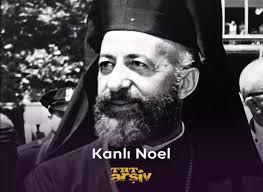
Documentary on EOKA's Bloody Christmas Attacks (TRT Archive)
The primary objective of EOKA was to secure the annexation of Cyprus to Greece and to undermine British colonial rule in pursuit of this goal. The organization was grounded in an ideology based on Hellenism, anti-communism, and irredentism. In this context, EOKA was not a movement for Cypriot independence but rather aimed directly at union with Greece.
The organization built a grassroots base through youth movements; in particular, the PEON and OHEN youth organizations played a crucial role in recruiting militants, conducting logistical operations, and carrying out violent actions. EOKA’s financial and logistical support was largely provided by the Greek Orthodox Church of Cyprus and its allied institutions.
EOKA carried out its first armed action on 1 April 1955. This marked the practical manifestation of the belief that Enosis could no longer be achieved through diplomatic means but only through the use of force. The organization pursued guerrilla warfare in rural areas and sabotage operations in cities, aiming to weaken British administration and draw international public attention to the Cyprus issue. Within this framework, Enosis was presented to global public opinion as a legitimate claim and a means to exercise the right to self-determination.
EOKA’s first direct action against Turkish Cypriots was the assassination of Turkish Cypriot community leader Ali Rıza in Baf on 11 April 1956, outside his home. This incident marked the beginning of the organization’s terrorist campaign against Turks. According to Stanley Mayes, Abdullah Ali Rıza was the first Turkish Cypriot deliberately killed by EOKA. Following this murder, rallies and protests erupted within the Turkish Cypriot community, and Greek-Turkish relations on the island rapidly deteriorated.
Activities of EOKA (Turkish Armed Forces)
From 1957 onward, EOKA began directly targeting Turkish villages. Raids, intimidation, and massacres created an atmosphere of intense terror in Turkish settlements. As a result of this climate of violence, over a hundred Turkish Cypriots lost their lives, 33 villages were abandoned, and more than 6,000 Turks were forced to flee their homes.
The 1959 film “The Plague of Red EOKA” provided a detailed depiction of EOKA’s terrorist acts against Turkish Cypriots. According to the film’s narrative, Turkish Cypriot families were forcibly expelled from their homes, their property seized, and those who resisted were killed. The film emphasizes that EOKA’s fundamental aim was to drive Turkish Cypriots off the island and seize Turkish-owned land. In this context, EOKA members carried out not only physical but also symbolic attacks—for example, trampling on history textbooks belonging to Turkish children.
In response to this wave of violence, Turkish Cypriots did not remain defenseless. They organized resistance movements through organizations such as TMT (Turkish Resistance Organization), Karacete, and the 9 April Front, established in 1957. This defensive response demonstrates that EOKA had become not merely an armed threat but also a psychological and sociocultural one.
The violent actions carried out by EOKA against Turkish Cypriots between 1955 and 1959 were not merely an ethnic cleansing strategy but also an attempt to alter the Greek-Turkish demographic balance on the island through force. During this period, many Turks lost their lives, villages were abandoned, and social fragmentation occurred. Mehmet Light’s research provides an academic documentation of EOKA’s violence against the Turkish community while also examining how this period was represented through cinema.
The establishment of EOKA expressed the shift toward armed resistance after the Enosis demand failed to gain diplomatic traction. The organization is regarded not merely as a struggle for independence but as an ideological structure explicitly pursuing annexation. Under the leadership of Makarios and Grivas, this organization played a decisive role in transforming the Cyprus issue into an international crisis and in shaping the dynamics that would determine the island’s future.
Işık, Mehmet. "Türk Sinemasının İlk Kıbrıs Filmi Kıbrıs’ın Belası Kızıl EOKA’da Terör ve Şiddet Olaylarının Temsili." Turcology Research 82 (2025): 149–165.
TRT Arşiv Youtube Kanalı. "Kanlı Noel - 21 Aralık 1963." Accessed March 27, 2025. https://www.youtube.com/watch?v=IXnWY2zBAvw
TRT Haber YouTube Channel. "Kanlı Noel'in tanıkları o günleri anlattı." Accessed March 27, 2025. https://www.youtube.com/watch?v=GRM-Z2Uqnyk
Turkish Armed Forces YouTube Channel. "21 Aralık 'Kanlı Noel'." Accessed March 27, 2025. https://www.youtube.com/watch?v=v7XmEWVf04A
Şahin, İsmail. "Düşünceden Eyleme EOKA." Yakın Dönem Türkiye Araştırmaları 37 (2020): 21–49.

EOKA
Full Name | Ethniki Organosis Kyprion Agoniston (National Organization of Cypriot Fighters) | ||||||||
|---|---|---|---|---|---|---|---|---|---|
Purpose of Establishment | To achieve the annexation of Cyprus to Greece (Enosis), to wage armed struggle against British colonial rule, and to gain international legitimacy through the right to self-determination | ||||||||
Establishment Process | Initial efforts: 1951, Transition to official action: 1 April 1955 | ||||||||
Founder(s) | Archbishop Makarios III Retired Colonel George Grivas (Dighenis) | ||||||||
Organizational Infrastructure | Youth wings: PEON (National Organization of Cypriot Union Youth), OHEN (Greek Orthodox Youth Union), Rural support: organization through the Farmers Union (PEK), Financial support: the Orthodox Church (particularly the Kikko Monastery), donors in Greece and abroad | ||||||||
Reasons for the Establishment of EOKA
Organizational Structure and Ideological Foundations
Beginning of Armed Struggle
EOKA’s First Attacks Against Turkish Cypriots
Attacks on Turkish Villages and Displacement
Representation and Documentation of Violence