

This article was automatically translated from the original Turkish version.
+1 More
Location | Erzincan | ||||||||
|---|---|---|---|---|---|---|---|---|---|
Featured Collections | 27 coins Plates Jugs Monochrome glazed bowls Sgraffito Bronze inscriptions Ivory Helmet Temple-palace complex | ||||||||
Chronological Scope | 11th century CE 8th century BCE (Urartu) | ||||||||
Related Excavation and Discovery Sites | Yerhan and surroundings Kavakyolu–Hamidiye Ceramic Heap Altıntepe Mound | ||||||||
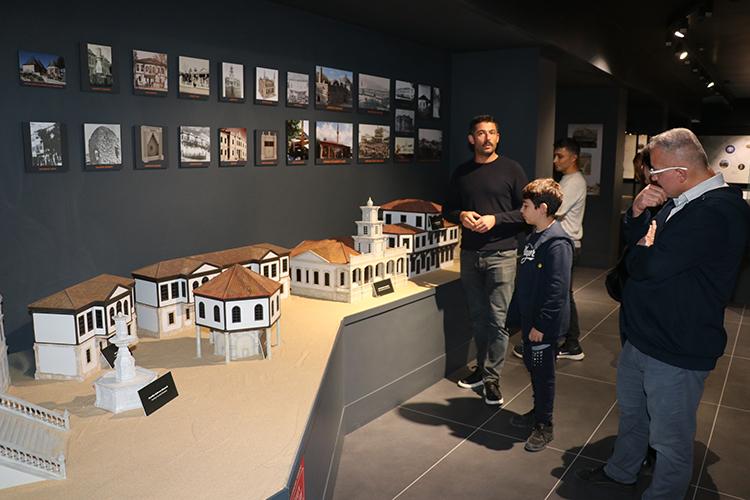
Erzincan Museum is located in the city center of Erzincan in the Eastern Anatolia Region. The museum was established to display archaeological and ethnographic artifacts that shed light on the region’s rich historical past. The museum’s collection includes numerous portable cultural assets recovered from excavations and surface surveys conducted in the area. Particularly notable are artifacts from the Urartian, Roman, Byzantine, Seljuk, and Ottoman periods.

Erzincan Museum (AA)
Among the museum’s important collections are artifacts excavated from the Altıntepe site, located approximately 15 km from the city center along the Erzincan-Erzurum highway. This site is one of the best-preserved urban centers of the Urartian civilization to have survived to the present day. Excavations initiated in 1959 uncovered architectural remains including a temple-palace complex protected by two concentric walls, an open-air sanctuary, a columned audience hall, tombs, and a storage building. In addition, ivory objects, metal artifacts, helmets and shields, cuneiform-inscribed bronze items, ceramics, and wall paintings were brought to light. The figurative representations of gods, humans, and animals among the Altıntepe finds reflect characteristic features of Urartian art.
In 2010, during a sewer excavation in the Hamidiye Neighborhood of Kavakyolu, a town under Erzincan’s administration, 28 medieval ceramics were discovered placed inside a large ceramic vessel. These artifacts have since been added to the inventory of Erzincan Museum and put on display. Of these ceramics, 24 are sgraffito-decorated and four are monochrome glazed examples. The forms include bowls, plates, and jugs.
The ceramics are made of red, fine-grained clay; their slips are generally cream-colored and covered with a transparent, colorless glaze. Decorative motifs include floral patterns, stars, buds, spirals, geometric designs, and figural ornamentation. Some of the sgraffito-decorated pieces show similarities to examples found in centers across Anatolia such as Tokat, Erzurum, Hasankeyf, Diyarbakır, and Ahlat. Furthermore, these ceramics share characteristics with pottery produced in 12th–13th century Iran and with the group known as Crusader Ceramics or the Port Symeon ware.
The fact that these ceramics were stacked inside a single vessel provides insight into medieval practices concerning the transport and storage of ceramics. Although no structural remains were found at the site, the vessel is believed to have belonged to a building such as a house, caravanserai, or inn. The proximity of the find location to historic caravan routes further suggests that these ceramics may have been transported for commercial purposes.

Medieval Ceramics (AA)
The Erzincan Museum’s collection includes 27 coins from the Byzantine period. These coins were acquired by the museum between 2009 and 2014 through court rulings, purchases, and seizures. The earliest example dates to the reign of Justin I (518–527), while the latest belongs to Constantine X (1059–1067). The majority of the coins in the museum’s inventory are made of copper, with one being struck in gold (solidus). The mints represented include Constantinople, Antioch, and Nicomedia.
On the Byzantine coins in the museum, emperors are typically depicted frontally, wearing helmets or crowns, and holding symbols such as the mappa, globus cruciger, scepter, or Gospel. Many feature an image of Christ, portrayed wearing a tunic and himation, in a blessing gesture, with a halo, and holding the Gospel in his left hand. The reverse sides of the coins display cross motifs, invocations to Christ, and contemporary imperial titles. The Byzantine coins from Erzincan Museum have been evaluated comparatively with examples from museums in Erzurum, Malatya, Refahiye, Mardin, and Giresun to better understand coin circulation in northeastern Anatolia.
Erzincan Museum houses significant archaeological evidence spanning a broad historical spectrum from Urartu through Byzantium to medieval Anatolia. The Altıntepe excavations, the medieval ceramics, and the Byzantine coin collection constitute the museum’s most prominent sections. These artifacts possess scientific value not only in terms of art and aesthetics but also in relation to trade, cultural interaction, and local history.
Anadolu Ajansı. “Deprem Köşesi de Bulunan Erzincan Müzesi’ni 6 Ayda 16 Bin Kişi Gezdi.” AA, January 8, 2024. Accessed July 15, 2025. https://www.aa.com.tr/tr/kultur/deprem-kosesi-de-bulunan-erzincan-muzesini-6-ayda-16-bin-kisi-gezdi/3036675.
Erzincan İl Directorate of Culture and Tourism. "Müzeler ve Örenyerleri." T.C. Kültür veTurizm Bakanlığı, Accessed July 15, 2025. http://erzincan.ktb.gov.tr/TR-57403/muzeler-ve-orenyerleri.html.
Polat, Turgay. “Erzincan Müzesi’nde Sergilenen Sgrafitto ve Tek Renk Sırlı Ortaçağ Seramiklerinin Buluntu Yeri ve Köken Problemi Üzerine Bir Değerlendirme.” *Akdeniz Sanat Dergisi* 13, special issue 23 (2019): 817–824. Accessed July 15, 2025. https://dergipark.org.tr/tr/download/article-file/809900.
Özkan, Muhammed Haluk, and Muhammed Lütfi Kındığılı. “Erzincan Müzesi Bizans Sikkeleri (2009–2014).” *OANNES – Uluslararası Eskiçağ Tarihi Araştırmaları Dergisi* 6, no. 1 (March 2024): 21–45. Accessed July 15, 2025. https://dergipark.org.tr/en/download/article-file/3295351.

Location | Erzincan | ||||||||
|---|---|---|---|---|---|---|---|---|---|
Featured Collections | 27 coins Plates Jugs Monochrome glazed bowls Sgraffito Bronze inscriptions Ivory Helmet Temple-palace complex | ||||||||
Chronological Scope | 11th century CE 8th century BCE (Urartu) | ||||||||
Related Excavation and Discovery Sites | Yerhan and surroundings Kavakyolu–Hamidiye Ceramic Heap Altıntepe Mound | ||||||||
Altıntepe Excavation Finds
Medieval Ceramics
Byzantine Coin Collection