


This article was automatically translated from the original Turkish version.
+2 More
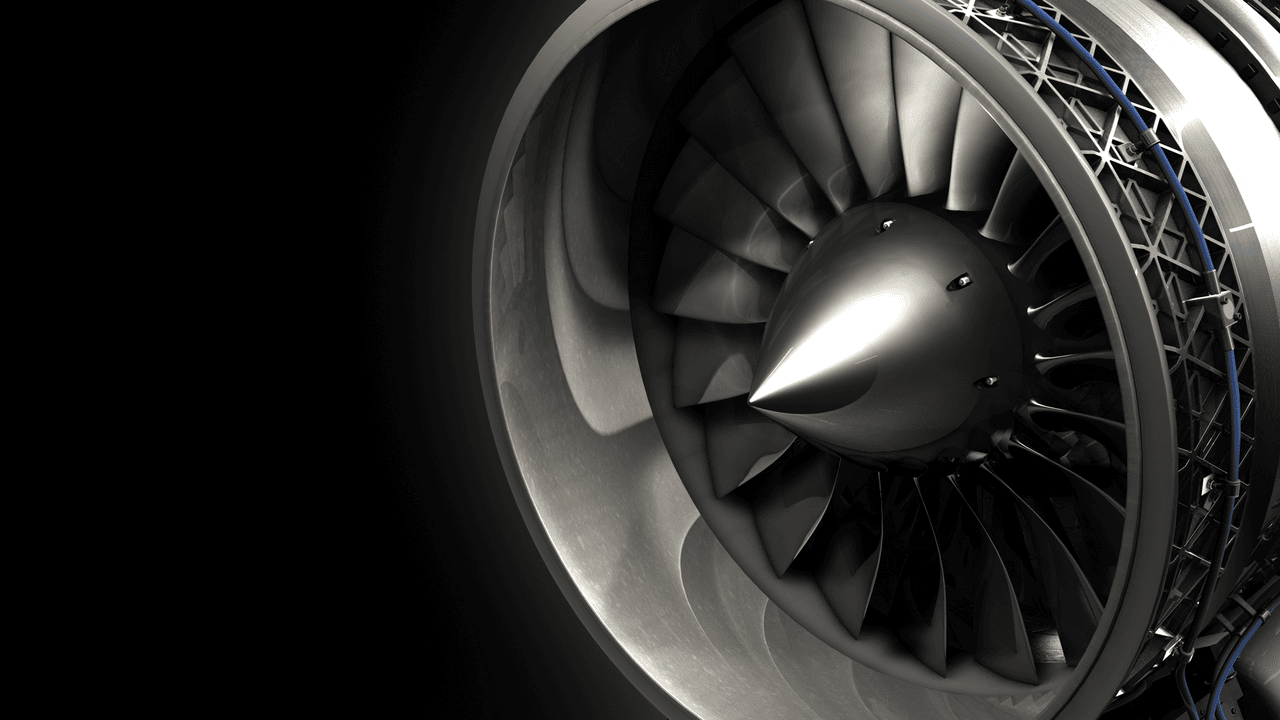
Eurojet EJ200
Type(s) | Military Turbofan Engine | ||||||||
|---|---|---|---|---|---|---|---|---|---|
Manufacturer(s) | EuroJet Turbo GmbH | ||||||||
First Run | 1991 | ||||||||
Thrust (Without Afterburner) | Approximately 60 kN | ||||||||
Thrust (With Afterburner) | Approximately 90 kN | ||||||||
Bypass Ratio | Low Bypass (approximately 0.4:1) | ||||||||
Length(s) | 4 m (approximately) | ||||||||
The Eurojet EJ200 is a twin-spool, afterburning turbofan engine with a low bypass ratio. It was developed for the Eurofighter Typhoon, a joint combat aircraft project of Germany, the United Kingdom, Italy and Spain. The design, production and integration of the engine are managed by EUROJET Turbo GmbH, a consortium of the four countries’ engine manufacturers (Rolls-Royce, MTU Aero Engines, Avio Aero and ITP Aero).

Eurojet EJ200 Turbofan Engine (Julian Herzog)
The origins of the EJ200 engine trace back to the European Staff Requirement (ESR) document published in 1985, which set objectives for a new generation of European combat aircraft including high thrust, low radar signature, low maintenance costs and high mission flexibility. A development contract was signed in 1990 and the engine’s first flight test was conducted in 1995.
During the development phase, approximately 3,000 hours of ground testing were completed and the engine rapidly achieved its full thrust capabilities. As of 2024, the EJ200 has surpassed 1.5 million total flight hours with over 1,400 units delivered. The first export customers were Austria and Saudi Arabia.
These parameters enable the EJ200 to deliver high performance during supersonic missions while maintaining fuel efficiency.
The EJ200’s low pressure compressor is a three-stage wide-chord blisk (integrated blade disk) design. It achieves a fan pressure ratio of 4.2:1 without the use of an inlet guide vane. Constructed from titanium alloys, this design provides resistance to impact damage while ensuring structural integrity and light weight.
The five-stage high pressure compressor delivers a compression ratio of approximately 6.2:1 and incorporates a single row of variable inlet guide vanes (VIGV). The compressor balances high efficiency with a reduced component count, enhancing maintainability.
The engine’s annular combustor employs airblast fuel injectors, film cooling and thermal barrier coatings. It is designed to achieve low emissions and near-zero smoke production. Key design priorities include low fuel consumption, long service life and environmental compatibility.
Both the high pressure turbine (HPT) and low pressure turbine (LPT) of the EJ200 are single-stage. Each turbine features single-crystal nickel alloy blades. Film cooling and thermal barrier coatings ensure long life under high-temperature conditions. The HPT is equipped with optical pyrometers for temperature monitoring.
The afterburner system features three independent fuel lines that balance hot and cold airflow to deliver stable thrust augmentation with low smoke output. The system is designed for rapid response during mission transitions.
The variable-geometry convergent-divergent nozzle is optimized according to flight altitude and speed. This design maintains low specific fuel consumption at supersonic speeds.
The EJ200 is equipped with a full-authority digital engine control unit (FADEC). The FADEC operates in direct integration with flight control systems without requiring any mechanical linkages. The system controls all engine subcomponents and maximizes efficiency.
The Digital Engine Control and Monitoring Unit (DECMU) provides high reliability through a dual-redundant architecture. It is also equipped with an advanced engine health monitoring system that tracks temperature, vibration and particle levels to provide pre-failure warnings and enables condition-based maintenance approaches.
Engine production is carried out simultaneously on assembly lines in each participating country. The production share is allocated according to each nation’s aircraft order volume. Assembly lines are located in Germany, the United Kingdom, Italy and Spain. The first export customers were Saudi Arabia and Austria; as of 2024, total deliveries have exceeded 1,400 units.
EUROJET continues to develop the EJ200 engine. Key areas of focus include:
These efforts aim to extend the EJ200’s service life on the Eurofighter Typhoon and enhance its adaptability to potential new platforms.
Eurojet Turbo GmbH. "Innovation." Accessed April 24, 2025.
Eurojet Turbo GmbH. *EUROJET Brochure 2019*. Hallbergmoos, Germany: Eurojet Turbo GmbH, 2019. Accessed Adresi.
Herr, M., and P. Butcher. “The European Fighter Aircraft EF2000 Flight Test Programme Overview.” In *AGARD Conference Proceedings CP-593: Advances in Flight Testing*. NATO AGARD, 1996. Accessed Adresi. [PDF: 34chap32.pdf].
Herzog, Julian. *Eurojet EJ200*. Photograph. Accessed April 29, 2025. Accessed Adresi.
Lane, R. J., and J. Behenna. “EJ200—The Engine for the New European Fighter Aircraft.” *Proceedings of the ASME Gas Turbine and Aeroengine Congress and Exposition*, Brussels, Belgium, June 11–14, 1990. New York: ASME, 1990. Accessed Adresi.

Eurojet EJ200
Type(s) | Military Turbofan Engine | ||||||||
|---|---|---|---|---|---|---|---|---|---|
Manufacturer(s) | EuroJet Turbo GmbH | ||||||||
First Run | 1991 | ||||||||
Thrust (Without Afterburner) | Approximately 60 kN | ||||||||
Thrust (With Afterburner) | Approximately 90 kN | ||||||||
Bypass Ratio | Low Bypass (approximately 0.4:1) | ||||||||
Length(s) | 4 m (approximately) | ||||||||
History
Technical Specifications
Structural and Aerodynamic Design
Low Pressure Compressor (LPC)
High Pressure Compressor (HPC)
Combustor
Turbines
Afterburner
Exhaust Nozzle
Digital Control and Monitoring
Production and Export
Development and Future Outlook