

 Recently Added:
This article was automatically translated from the original Turkish version.
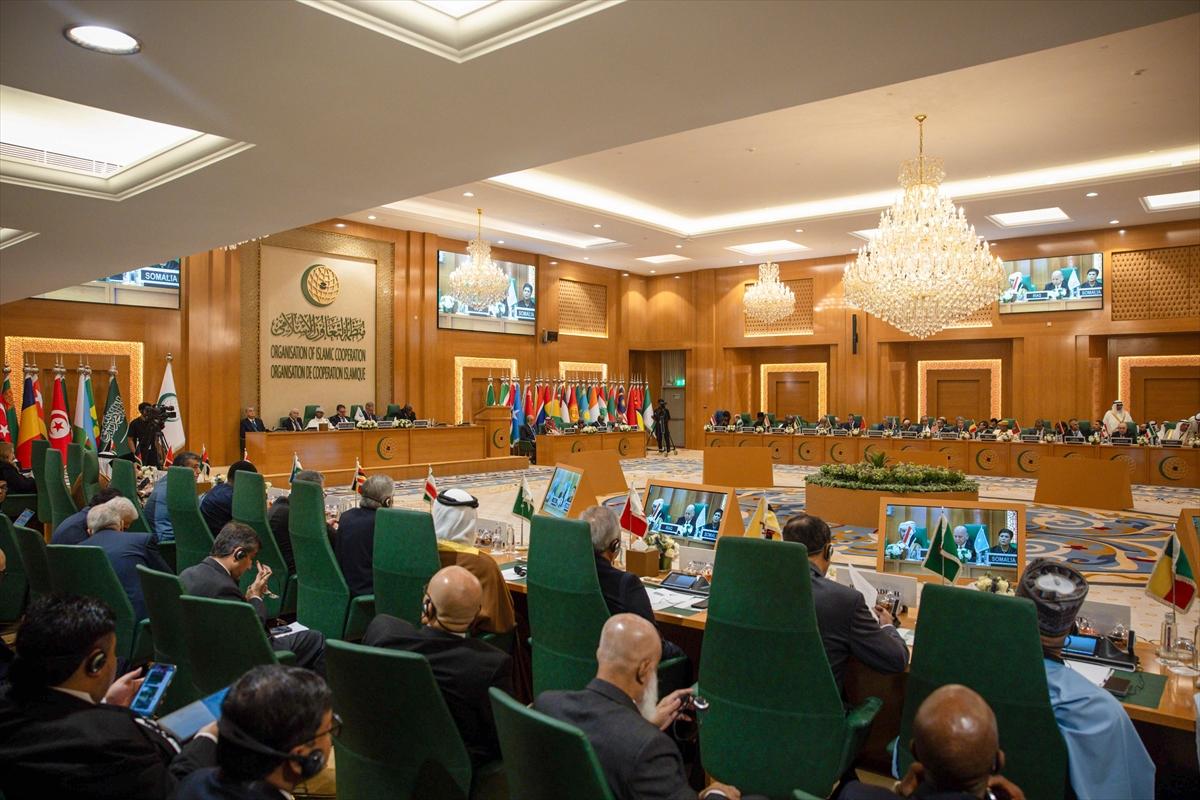
The 21st Extraordinary Council of Foreign Ministers of the Organization of Islamic Cooperation (OIC) is an international diplomatic summit held on 25 August 2025 in Jeddah, Saudi Arabia, under the presidency of Türkiye and chaired by Foreign Minister Hakan Fidan. The meeting addressed issues including Israel’s military operations in Gaza, the humanitarian crisis affecting the Palestinian people, threats to the historical status of Jerusalem, and the process of Palestine’s full membership in the United Nations.

21st Extraordinary Council of Foreign Ministers of the OIC under Türkiye’s Presidency (Jeddah, 25 August 2025) – (Anadolu Agency)
The 21st Extraordinary Council of Foreign Ministers of the Organization of Islamic Cooperation (OIC) was held on 25 August 2025 in Jeddah, Saudi Arabia. Convened at Türkiye’s invitation, the meeting was chaired by Foreign Minister Hakan Fidan on behalf of Türkiye in his capacity as President of the OIC Council of Foreign Ministers. The main agenda item was Israel’s military operations in Gaza and the ongoing attacks against the Palestinian people.
At the opening of the 21st Extraordinary Council of Foreign Ministers of the Organization of Islamic Cooperation (OIC), Turkish Foreign Minister Hakan Fidan made statements on multiple aspects of the Palestinian issue.
Beginning his speech by addressing the dire situation faced by the Palestinian people, Fidan said, “What the Palestinian people need is for us, collectively as the OIC, to act.” Fidan emphasized that the strong participation of OIC member states and the high-level attendance at this extraordinary summit constituted a “powerful expression of unity.”
Minister Fidan particularly highlighted the urgency of a lasting ceasefire and humanitarian aid. “Our immediate priority is securing a lasting ceasefire and delivering large-scale humanitarian assistance to Gaza. Hamas has already accepted this ceasefire and plan, which was developed by our Egyptian and Qatari brothers with their support. We will continue to support the peace efforts of Qatar, Egypt, and the United States. We are close to an agreement, but the aggressor must also endorse it.”
Regarding the humanitarian catastrophe in Gaza, Fidan stated, “Israel’s genocide is ongoing. The people of Gaza are struggling against hunger; more than half a million are facing starvation. The United Nations (UN) has now declared a famine in Gaza.” He underscored that this was not a natural disaster but the result of Israel’s deliberate obstruction of aid.
Fidan also addressed the historical status of Jerusalem and the sanctity of Al-Aqsa Mosque, saying, “Jerusalem is facing provocations by extremists. These provocations, including those by Israeli ministers, threaten the sacred status of Al-Aqsa Mosque. We must urgently stop this.” Emphasizing the resilience of the Palestinian people, he added, “I wish to salute the resistance of the Palestinian people. We support their just cause for freedom, peace, stability, and statehood.”
Fidan stated that the recognition of the State of Palestine had entered an irreversible phase but noted that this alone was insufficient. “We need strong, coordinated pressure to keep Israel under pressure for a lasting solution,” he said, highlighting the importance of the upcoming UN General Assembly sessions. Fidan stressed the need to strengthen the institutional capacity of the State of Palestine, emphasizing that financial, technical, and institutional support is essential for its sustainable viability.
Fidan noted that Israel’s attacks were not confined to Gaza alone, stating, “We believe that Netanyahu’s regime’s strikes against Syria, Lebanon, and Iran reflect a broader and more insidious agenda that will plunge our entire region into instability.”
Fidan warned that unless Israel is halted, it will bring about massive problems across the Middle East and beyond, saying, “In this regard, we must be resolute. The Palestinian people, God willing, will attain freedom, peace, and justice in the shortest possible time.”
Following the meeting, Foreign Minister Hakan Fidan held a press conference to assess its outcomes and key messages. Fidan explained the extraordinary nature of the gathering as a response to “unbearable levels of hunger in Gaza,” emphasizing the record-level participation of OIC foreign ministers. He noted that the closed-session discussions and bilateral meetings had advanced the solidarity and unified stance of Islamic countries on the Palestinian issue.
Fidan underscored that the timing of the meeting—just before the UN General Assembly sessions scheduled for September—was a deliberate step, highlighting the importance of Islamic countries speaking with one voice, one position, and one fist on the Palestinian cause. He stated that new proposals would be presented to the international community during this process and that the Palestinian issue would remain on the global agenda under the leadership of Islamic countries.
Fidan, emphasizing that the decision reached at the summit had “high substance and significant impact,” noted that Türkiye’s perspective had gained broad acceptance. He highlighted the intensive efforts of ministry staff at this juncture.
In his remarks at the press conference, Fidan summarized the current situation as follows:
“In summary, we have reached a point where words have run their course. In the matter of Palestine and Gaza, humanity has lost the test entirely. All foreign ministers are aware of this; we have now exhausted the tools of diplomacy in reaching our future destination. From now on, different actions and measures must be taken, and the international community must respond more forcefully. The system has completely collapsed here, whether the issue is Palestine or Gaza. Undoubtedly, the most direct way to halt the suffering in Gaza is to achieve a concrete outcome from the ongoing negotiation processes.”
Fidan further stated that Israel’s current policies are “entirely based on a strategy of buying time and advancing its military agenda,” and therefore new approaches must be developed in international diplomacy. He asserted that the most effective way to restrain Israel is to establish pressure mechanisms through countries that directly support it, emphasizing that the economic, political, and security relations of IIT members with the West and the United States must be utilized for this purpose.
In his statements to the press, Fidan noted that while the international community has recognized Palestine’s statehood process, it simultaneously creates a stark contradiction by attempting to depopulate Gaza. He drew attention to this contradiction with the statement: “On one hand, you recognize Palestine as a state; on the other, you turn a blind eye to the elimination of the human element—the very essence of that state.”
The joint statement issued at the end of the meeting strongly condemned Israel’s attacks and its rejection of peace initiatives. The statement assessed Israel’s military operations in Gaza, its rejection of proposals for the release of hostages, and its refusal to accept a ceasefire as serious violations of international law.
The statement included the following passage:
“All crimes committed by the occupying power Israel—aggression, genocide, ethnic cleansing, destruction, the illegal blockade of the Gaza Strip, the use of starvation as a weapon of war, other colonial settlement policies and settler-terrorism acts, activities of extremist settlers, land seizures, home demolitions, repeated attacks on Muslim and Christian holy sites, and attempts to annex Palestinian territories in the West Bank including East Jerusalem—are war crimes, genocide, and crimes against humanity under international criminal law.”
The statement also condemned Israeli Prime Minister Benjamin Netanyahu’s statements within the framework of his “Greater Israel” vision as incitement that violates international law and threatens regional peace and security. Unlawful settlement activities aimed at altering the status of Jerusalem, particularly projects approved in the E1 area, were assessed as efforts to undermine the two-state solution.
The statement further called for the lifting of Israel’s blockade on Gaza, the unhindered delivery of humanitarian aid, the convening of a special session of the UN Security Council, and the questioning or, if necessary, suspension of Israel’s UN membership. It emphasized that Israel’s policies of starvation and blockade must be referred to the International Criminal Court, and urged the international community to act urgently in response to the famine and humanitarian catastrophe in Gaza.
Another key emphasis at the meeting was the call for the full membership of the State of Palestine in the United Nations. Fidan stated that Islamic countries must initiate an initiative to secure Palestine’s UN membership and suspend Israel’s activities in the UN General Assembly. Fidan underscored that the Palestinian cause is the very reason for the existence of the IIT and stressed the importance of Islamic countries acting in unity during this process.
On the margins of the meeting, Foreign Minister Hakan Fidan met with Egyptian Foreign Minister Badr Abdelatty. The discussions focused on the humanitarian situation in Gaza and bilateral cooperation regarding the Palestinian issue.
Fidan recalled that the conference held in New York in July 2025, co-chaired by Saudi Arabia and France, had secured global support for the two-state solution and that many countries would recognize Palestine. He noted that this process is significant for strengthening Palestine’s statehood status.
Anadolu Ajansı. “Bakan Fidan, İİT Dışişleri Bakanları Toplantısı: Filistin Halkının İhtiyaç Duyduğu Kolektif Olarak Devreye Girmemiz...” Accessed August 25, 2025. https://www.aa.com.tr/tr/gundem/bakan-fidan-iit-disisleri-bakanlari-toplantisi-filistin-halkinin-ihtiyac-duydugu-kolektif-olarak-devreye-girmemiz/3668264
Anadolu Ajansı. “Cidde’deki İİT Olağanüstü Dışişleri Bakanları Konseyi Toplantısı Ortak Bildirisi Açıklandı.” Accessed August 26, 2025. https://www.aa.com.tr/tr/dunya/ciddedeki-iit-olaganustu-disisleri-bakanlari-konseyi-toplantisi-ortak-bildirisi-aciklandi/3668645
Anadolu Ajansı. “Dışişleri Bakanı Fidan, İİT Olağanüstü Dışişleri Bakanları Konseyi Toplantısına Katılacak.” Accessed August 25, 2025. https://www.aa.com.tr/tr/gundem/disisleri-bakani-fidan-iit-olaganustu-disisleri-bakanlari-konseyi-toplantisina-katilacak/3667596
Anadolu Ajansı. “Dışişleri Bakanı Fidan, İİT Toplantısı Kapsamında Mısırlı Mevkidaşı Abdülati ile Görüştü.” Accessed August 25, 2025. https://www.aa.com.tr/tr/gundem/disisleri-bakani-fidan-iit-toplantisi-kapsaminda-misirli-mevkidasi-abdulati-ile-gorustu/3668158
Anadolu Ajansı. “Dışişleri Bakanı Fidan: Gazze Meselesindeki Acıyı Durdurmanın En Kestirme Yolu Müzakere Süreçlerinde Bir Netice Çıkması.” Accessed August 26, 2025. https://www.aa.com.tr/tr/gundem/disisleri-bakani-fidan-gazze-meselesindeki-aciyi-durdurmanin-en-kestirme-yolu-muzakere-sureclerinde-bir-netice-cikmasi/3668938
TRT Haber. "Bakan Fidan: Filistin Davasına Sahip Çıkmalıyız." Accessed August 25, 2025. https://www.trthaber.com/haber/gundem/bakan-fidan-filistin-davasina-sahip-cikmaliyiz-917836.html
TRT Haber. “Bakan Fidan, Mısırlı Mevkidaşı ile Görüştü.” Accessed August 25, 2025. https://www.trthaber.com/haber/gundem/bakan-fidan-misirli-mevkidasi-ile-gorustu-917814.html
Yeni Şafak. "Bakan Fidan’dan Dünyaya Filistin Çağrısı: BM’ye Üye Yapılmalı." Accessed August 25, 2025. https://www.yenisafak.com/gundem/bakan-fidandan-dunyaya-filistin-cagrisi-bmye-uye-yapilmali-4742685

The 21st Extraordinary Council of Foreign Ministers meeting of the Islamic Cooperation Organization, held in Jeddah on 25 August 2025, convened to address the ongoing Israeli attacks in Gaza and the humanitarian crisis facing the Palestinian people. Foreign Minister Hakan Fidan emphasized that merely supporting Palestine is insufficient and that Islamic countries must collectively intervene. Key agenda items included a permanent ceasefire, humanitarian aid to Gaza, and full membership for Palestine in the United Nations. Additionally, bilateral consultations between Türkiye and Egypt were conducted on the issue of Palestine.
No Discussion Added Yet
Start discussion for "Extraordinary Council of Foreign Ministers Meeting of the Organization of Islamic Cooperation (2025)" article
August 25, 2025
Organization of the Meeting
August 25, 2025
Hakan Fidan’s Speeches
August 25, 2025
Joint Statement
August 25, 2025
Palestine’s UN Membership Initiative
August 25, 2025
Türkiye-Egypt Consultations
August 25, 2025
International Repercussions