


 Recently Added:
This article was automatically translated from the original Turkish version.
A minority government formed under the leadership of French Prime Minister François Bayrou failed to secure sufficient support in a vote of confidence held in the National Assembly on 8 September 2025 and was constitutionally dismissed. This development has been recorded as the fifth government crisis during President Emmanuel Macron’s second term.
François Bayrou was appointed Prime Minister by President Emmanuel Macron on 3 July 2025. As leader of the center-right MoDem (Democratic Movement) party, Bayrou took on the task of forming a minority government following the political crises that engulfed France in the summer of 2025. The government was established on a fragile foundation after Macron’s party Renaissance and its supporting groups lost their absolute majority in parliament.
The minority government aimed to survive with limited external support from both center-right and center-left factions in addition to centrist parties. However, the balance of power in the National Assembly, dominated by the strong positions of the radical left New Popular Front (Nouveau Front Populaire) and the far-right National Rally (Rassemblement National), rendered the government’s future uncertain.
In accordance with the constitutional calendar, François Bayrou’s government requested a vote of confidence in the National Assembly on 8 September 2025. The vote took place amid sharp criticisms from opposition parties regarding the government’s policies on the economy migration and social affairs.
In the 577-seat National Assembly, the number of votes in favor of the government fell short of the absolute majority required for confidence. Both the left and right opposition blocs voted against the government. The government’s defeat was met with applause and reciprocal chants in the assembly.
Following the loss of the confidence vote, Prime Minister Bayrou submitted his resignation to President Macron. An official statement from the Élysée Palace announced that consultations would begin in accordance with the constitutional timeline to appoint a new prime minister. Macron is assessed to have three constitutional options:
With the resignation of Prime Minister François Bayrou, the executive branch continues to perform its duties on a temporary basis. President Macron is required under constitutional authority to announce a new prime ministerial candidate no later than a few weeks from now.
Political analyses indicate that the confidence vote crisis has dealt a significant blow to Macron’s political agenda, particularly raising the likelihood that planned reforms on retirement and migration policies will be delayed. In French public opinion, the government crisis has reopened debate over Macron’s leadership style the sustainability of centrist politics and the future of parliamentary balance.
ABC News. "France's Prime Minister Loses Confidence Vote, Toppling His Government." Accessed September 9, 2025. https://abcnews.go.com/International/wireStory/france-faces-political-upheaval-prime-ministers-fate-hangs-125353173
Anadolu Ajansı. “Fransa’da Güvenoyu Alamayan Başbakan François Bayrou’nun Azınlık Hükümeti Düştü.” Accessed September 9, 2025. https://www.aa.com.tr/tr/dunya/fransada-guvenoyu-alamayan-basbakan-francois-bayrounun-azinlik-hukumeti-dustu/3681762
BBC Türkçe. “Fransa Başbakanı Bayrou Güvenoyu Alamadı, Şimdi Ne Olacak?” Accessed September 9, 2025. https://www.bbc.com/turkce/articles/ced58805d5yo
Euronews. "Bayrou Lost the Vote of Confidence: Government Fell in France." Accessed September 9, 2025. https://tr.euronews.com/2025/09/08/bayrou-guven-oylamasini-kaybetti-fransada-hukumet-dustu
Independent. "France Plunged into Chaos as Prime Minister Loses Confidence Vote." Accessed September 9, 2025. https://www.independent.co.uk/news/world/europe/france-confidence-vote-results-prime-minister-b2822367.html
NTV. "Macron’s Fifth Nightmare: Government Fell in France, Now What?" NTV. Accessed September 9, 2025. https://www.ntv.com.tr/dunya/macronunbesincikabusu-fransada-hukumet-dustu-simdi-ne-olacak,pEs8QYGZr0GhJLgNMTpMmw
Reuters. "French PM Bayrou Loses Confidence Vote, Will Resign on Tuesday - as It Happened." Reuters. Accessed September 9, 2025. https://www.reuters.com/world/live-french-government-brink-collapse-pm-bayrou-faces-confidence-vote-2025-09-08/
Reuters. “France’s Macron Seeks New Prime Minister after Government’s Collapse.” Accessed September 9, 2025. https://www.reuters.com/world/europe/frances-macron-seeks-new-prime-minister-after-governments-collapse-2025-09-09/
TRT World. "‘He Has To Go’: France Opposition Submits Motion to Impeach Macron." TRT World. Accessed September 9, 2025. https://www.trtworld.com/world/article/a14597d54c9a
TRT World. “French Parliament Ousts PM Bayrou, Escalating Political Crisis.” TRT World. Accessed September 9, 2025. https://www.trtworld.com/world/article/d1cb6dfaa85f
Following the collapse of François Bayrou’s government in a vote of confidence, French President Emmanuel Macron appointed Sébastien Lecornu, who was serving as Minister of Defense, as Prime Minister on 10 September. The Élysée Palace stated that Macron had tasked Lecornu with consulting all political forces represented in parliament to secure adoption of a new budget for the country and to build the necessary agreements for decisions to be made in the coming period.
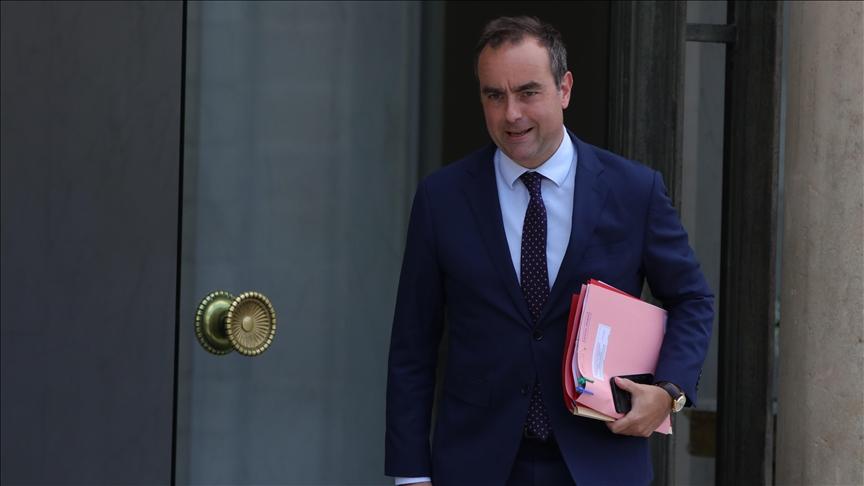
French President Macron appoints Sébastien Lecornu as new Prime Minister — (Anadolu Agency)
Lecornu, born in 1986 in the Val-d’Oise region, began his political career at the age of 19 as an assistant to a member of parliament. At 27, he was elected mayor of Vernon and has held various positions in Macron’s governments since 2017. In 2017 he became Secretary of State, in 2018 Minister for Territorial Cohesion, in 2020 Minister for Overseas Territories, and in 2022 Minister of Defense. Lecornu is the seventh person appointed as Prime Minister during Macron’s presidency.
According to the presidential statement, Lecornu’s actions will be carried out within the framework of principles including the defense of independence and national strength, service to the French people, and the guarantee of political and institutional stability for the unity of the country.
The Élysée Palace further stated that the new Prime Minister’s primary priority is to consult with political forces in parliament to secure approval of the 2026 budget.
As of 2025, France’s public debt has reached 3.3 trillion euros, equivalent to 114 percent of the country’s GDP. The Bayrou government proposed budget cuts to reduce this burden, but the plan failed. Lecornu’s key responsibility is to develop a solution to the growing debt crisis and to pass the new budget through parliament.
The Socialist Party criticized Macron’s appointment of Lecornu, arguing that this choice would deepen the crisis and instability. Marine Tondelier, leader of the Greens Party, labeled the appointment a “provocation.” Jean-Luc Mélenchon, leader of France Unbowed, described the move as “more of the same” and called for early elections. Jordan Bardella, leader of the National Rally, stated that Macron would not deviate from his own course and indicated that his party would evaluate Lecornu’s actions according to its own political lines.
Anadolu Ajansı. "Fransa Cumhurbaşkanı Macron, Sebastien Lecornu'yu yeni başbakan olarak atadı." Accessed September 10, 2025. https://www.aa.com.tr/tr/dunya/fransa-cumhurbaskani-macron-sebastien-lecornuyu-yeni-basbakan-olarak-atadi/3683022
BBC. "Macron names ally Sébastien Lecornu as new French PM." Accessed September 10, 2025. https://www.bbc.com/news/articles/crmenp1k0mjo
CNN. "French President Emmanuel Macron Appoints Outgoing Defense Minister Sébastien Lecornu As Prime Minister." Accessed September 10, 2025. https://edition.cnn.com/2025/09/09/europe/sebastien-lecornu-france-prime-minister-latam-intl

In France, the minority government led by Prime Minister François Bayrou fell after losing a vote of confidence in the National Assembly on 8 September 2025. The government, which failed to secure the required majority in the vote, became the fifth executive crisis during President Emmanuel Macron’s second term. Following Bayrou’s resignation, Macron is expected to appoint a new prime minister or call for early elections.
No Discussion Added Yet
Start discussion for "Fall of the Minority Government of Prime Minister François Bayrou, Who Failed to Gain a Vote of Confidence in France (2025)" article
September 9, 2025
Formation of the Government
September 9, 2025
Conduct of the Confidence Vote
September 9, 2025
Political Implications and Constitutional Process
September 9, 2025
Current Situation and Scenarios
September 10, 2025
Emmanuel Macron’s Appointment of Sébastien Lecornu as Prime Minister
September 10, 2025
Implementation of the Appointment
September 10, 2025
Sébastien Lecornu’s Political Career
September 10, 2025
Responsibilities and Mandate
September 10, 2025
Economic and Financial Situation
September 10, 2025
Opposition Reactions