


This article was automatically translated from the original Turkish version.
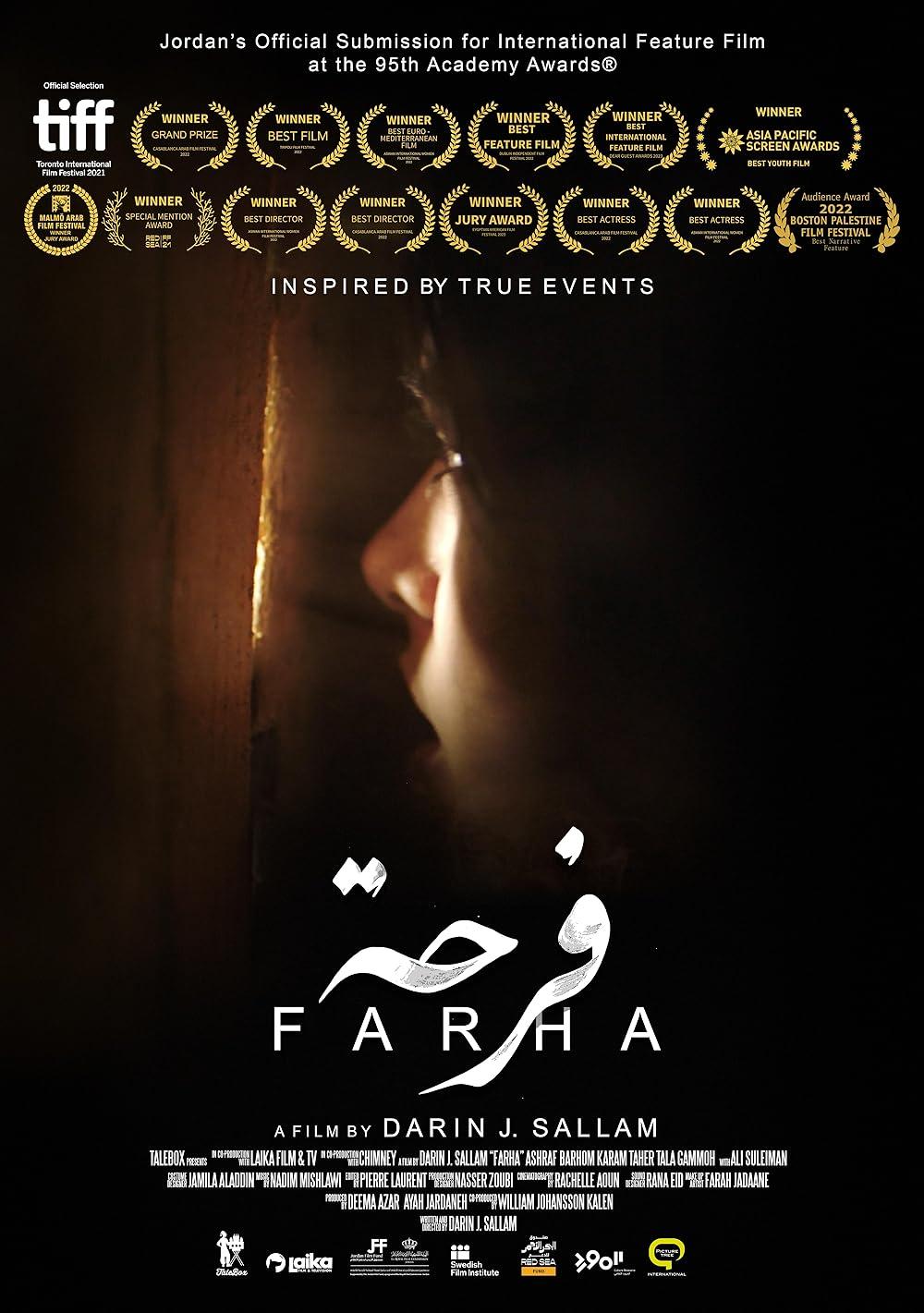
Farha (Film)
Director(s) | Darin J. Sallam | ||||||||
|---|---|---|---|---|---|---|---|---|---|
Screenplay(s) | Darin J. Sallam | ||||||||
Production Year | 2021 | ||||||||
Premiere | Toronto Film Festival, 2021 | ||||||||
Country | Jordan | ||||||||
Language(s) | Arabic | ||||||||
Genre | Historical Drama | ||||||||
Political Impact | Censorship and threats from Israel sparked international debate | ||||||||
Premiering at the Toronto Film Festival in 2021 and later released on Netflix in 2022, Farha became the center of international debate. It is the first feature film by director Darin Sallam. This Jordanian production, based on a true story, portrays the mass displacement experienced by Palestinians in 1948—known as the Nakba, meaning “catastrophe” in Arabic—through the eyes of a young girl. The film does not merely depict a historical drama; it also offers a narrative about memory, testimony, and resistance.
Trailer of the Film Farha (TIFF Trailers)
The protagonist of the film, Farha, is a 14-year-old girl living in a small Palestinian village. Although her father initially opposes her desire to leave the village for education, he eventually consents. However, immediately after this decision, the village is caught in the violence accompanying the establishment of Israel. On 14 May 1948, the day Israel declared its independence and Zionist paramilitary forces attacked Palestinian villages, Farha is locked inside a storage shed by her father for her safety. She remains trapped there for days, witnessing the tragedies unfolding outside through a small opening. During this time, she observes the murder of a Palestinian family by Israeli soldiers. The film recounts Farha’s traumatic experience and her struggle for survival.
Once Farha is confined in the shed, the film develops within a claustrophobic atmosphere. This spatial confinement symbolizes both physical entrapment and the historical siege endured by Palestinians. In this sense, the film also alludes to Gaza’s description as an “open-air prison.”
Director Sallam avoids directly depicting the brutality of war. Instead, she aligns the viewer with Farha’s sensory experience. Particularly, the scene in which a Palestinian family seeks refuge in Farha’s home and is subsequently massacred is conveyed primarily through sound rather than visuals. The sounds of gunfire, a baby’s cries, and the ensuing silence of death activate the viewer’s imagination and deepen the sense of testimony. Through this approach, the film reflects reality without aestheticizing violence.
Farha is not merely a story of 1948; it is also a transmission of memory spanning from the past to the present. As revealed at the end of the film, the narrative is based on the experiences of a girl named Radiyyeh, passed down to Sallam through her mother. This transmission reveals how personal memory transforms into collective memory.
In interviews about the film, Sallam defines cinema as a form of resistance. The threats and censorship efforts from the Israeli state have reinforced the film’s role as a political “document of testimony.” While the character of Farha symbolizes the resistance of all Palestinian women, the film as a whole becomes a cinematic expression of the systemic oppression endured by the Palestinian people.
In the film’s final scene, Farha emerges from the shed, drinks brine from a jar of pickles because no water is available, and then drinks greedily from a fountain. This moment alludes to the water crisis in Palestine. She then looks up at the sky, sees birds, but upon looking down, encounters the body of a dead baby. The birds, traditionally symbols of hope and freedom, lose their conventional meaning in this context. The final shot, in which Farha walks toward the sun, signifies that despite all the trauma endured, resistance and hope persist.
Netflix’s release of the film Farha disturbed the Israeli government. Finance Minister Avigdor Lieberman, in a post on X (Twitter), stated, “It is madness that Netflix has released a film inciting hatred against Israeli soldiers.” Lieberman asserted that Israel would not allow damage to the reputation of its soldiers and claimed the film was provocative and filled with lies about Israeli forces.
Regarding the decision to screen the film at the Saraya Theatre in Jaffa, Lieberman remarked, “Israel is a place where international and Israeli artistic works are exhibited, but it is certainly not a place where the reputation of Israeli soldiers and security forces, who work day and night to ensure the safety of citizens, is undermined.” He subsequently ordered the withdrawal of funding allocated to the Saraya Theatre.
Darin Sallam, director of Farha, participated in various events in Türkiye, including the Great Offensive 3rd International Short Film Festival and the Diyarbakır Cultural Route Festival. Speaking with cinema audiences under the theme “Palestinian Resistance Cinema,” Sallam explained that Israel had repeatedly threatened her:
“Even before filming began, while the project was still in development, Israel began issuing threats. When Farha was submitted to the Oscars on behalf of Jordan, Israel intensified its pressure and launched serious attacks. A large group stood by me in opposition to Israel. They embraced me. We became a collective. The oppression in Palestine remains so vivid. Resistance continues. It is extremely difficult to turn ongoing deaths and injustices into fictional narratives. The most accurate thing we can do now is to document what is happening, show it, and make documentaries.”【1】

Darrin Salam at the 3rd International Short Film Festival (AA)
Akgün, Aişe Hümeyra. "Yönetmen Darin Sallam'ın 'Farha' filmi Afyonkarahisar'da izleyiciyle buluştu."Anadolu AJansı. Accessed May 13, 2025. https://www.aa.com.tr/tr/kultur/yonetmen-darin-sallamin-farha-filmi-afyonkarahisarda-izleyiciyle-bulustu/3357221
Aksoy, Ümit. "Filistinli yönetmen Darin Sallam, Diyarbakır Kültür Yolu Festivali'ne konuk olacak."Anadolu AJansı. Accessed May 13, 2025. https://www.aa.com.tr/tr/kultur/filistinli-yonetmen-darin-sallam-diyarbakir-kultur-yolu-festivaline-konuk-olacak/3356896
IMDb. "Farha." Accessed May 13, 2025. https://www.imdb.com/title/tt11555492/
Sağır, Elif. "Farha: Sinemanın Nekbe’ye Şahitliği." İlke Vakfı Platformu. Accessed May 13, 2025. https://platform.ilke.org.tr/analiz/farha-sinemanin-nekbe-ye-sahitligi
TIFF Trailers. "Farha." TIFF Trailers YouTube Channel. Accessed May 13, 2025. https://www.youtube.com/watch?v=2UT6Zw4-Yg0
[1]
Aişe Hümeyra Akgün, "Yönetmen Darin Sallam'ın "Farha" filmi Afyonkarahisar'da izleyiciyle buluştu." Anadolu Ajansı. Erişim Tarihi: 13 Mayıs 2025. https://www.aa.com.tr/tr/kultur/yonetmen-darin-sallamin-farha-filmi-afyonkarahisarda-izleyiciyle-bulustu/3357221

Farha (Film)
Director(s) | Darin J. Sallam | ||||||||
|---|---|---|---|---|---|---|---|---|---|
Screenplay(s) | Darin J. Sallam | ||||||||
Production Year | 2021 | ||||||||
Premiere | Toronto Film Festival, 2021 | ||||||||
Country | Jordan | ||||||||
Language(s) | Arabic | ||||||||
Genre | Historical Drama | ||||||||
Political Impact | Censorship and threats from Israel sparked international debate | ||||||||
Summary and Structural Features
Testimony and the Language of Silence
Historicity, Memory, and Political Resistance
Symbols and the Conclusion of the Narrative
Reaction from the Israeli Government to Netflix
Threats Against Director Darin Sallam from Israel