

Babası | Talat Terim | ||||||||
|---|---|---|---|---|---|---|---|---|---|
Eş | Fulya Terim | ||||||||
Annesi | Nuriye Terim | ||||||||
Yaş | 71 | ||||||||
Doğum tarihi | 1953-09-04 | ||||||||
Çocuk | Buse Terim Bahçekapılı Merve Terim Çetin | ||||||||
Place of Birth | Adana, Türkiye | ||||||||
Nationality | Türkiye | ||||||||
Marital Status | Married | ||||||||
Playing Position | Libero / Defender | ||||||||
Profession(s) | Former football player coach | ||||||||
Football Career | Ceyhanspor (youth), Adana Demirspor (1969–1974), Galatasaray (1974–1985) | ||||||||
National Team Career | Türkiye (1975–1984), 51 matches | ||||||||
Managerial Career | Ankaragücü, Göztepe, Türkiye U21, Türkiye A National Team, Galatasaray, Fiorentina, Milan, Panathinaikos, Al-Shabab | ||||||||
UEFA Achievements | 1 UEFA Cup (1999–2000) | ||||||||
League Achievements | 8 Süper Lig, 3 Türkiye Kupası, 5 Süper Kupa | ||||||||
National Team Achievements | UEFA EURO 2008 Semi-Final | ||||||||
Documentary | Terim (Netflix, 2022) | ||||||||
Honors | Türkiye Cumhuriyeti Devlet Üstün Hizmet Madalyası (2000), Golden Foot Legend Award (2022), Commendatore Order (Italy) | ||||||||
Nickname(s) | Emperor | ||||||||
Languages | Turkish (native), Italian (advanced), English (intermediate) | ||||||||
Education | Ege University School of Physical Education and Sports | ||||||||
Fatih Terim (Adana, 4 September 1953 – ) is a sports figure who has operated at the highest professional level in Türkiye both as a player and as a head coach. The achievements he attained during his career at club and national team levels have constituted some of the structural and historical turning points in Turkish football history. In particular, the playing systems he developed during his coaching tenures played a significant role in the evolution of the national understanding of football.
Terim was born on 4 September 1953 in the Ceyhan district of Adana and turned to sports at a young age, an interest that later evolved into a systematic career plan. He began his playing career in the youth academy of Ceyhanspor, a local sports club, where he acquired fundamental technical and tactical skills. In 1969, he transferred to Adana Demirspor and officially launched his professional football career.
During his time at Adana Demirspor, Terim played in a defensive position and rose to prominence through his positional awareness, ability to read the game, and leadership qualities. Thanks to his consistent performances at the club level, he rapidly ascended the team hierarchy and assumed the captaincy. This period earned him recognition not only for his on-field performances but also for his contributions to the team’s internal management dynamics.
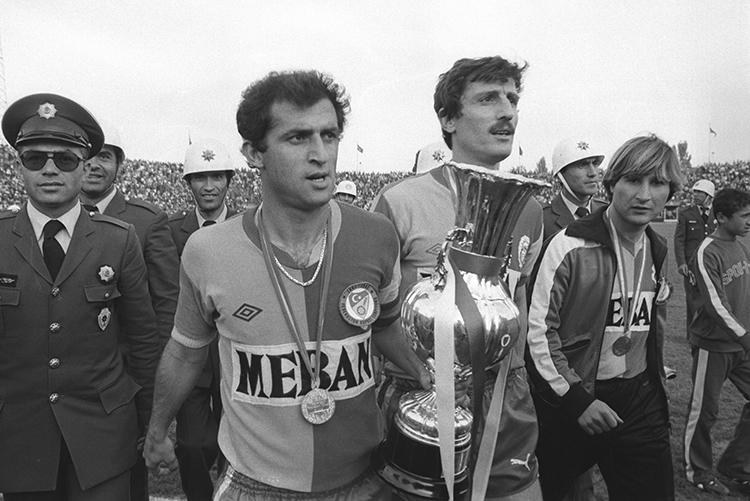
Fatih Terim in His Youth (AA)
In 1974, Fatih Terim transferred to Galatasaray Spor Kulübü, one of Türkiye’s most historic sports clubs, marking a new phase in his career. This transfer was regarded as a significant move both sportingly and structurally within the football market of the time; the experience Terim gained at this major club laid the foundation for the technical responsibilities he would later assume.
Over eleven seasons wearing the Galatasaray jersey, Terim consistently played in a defensive position and became one of the players identified with the “reliable player profile” in the club’s history. His spatial awareness on the pitch, commitment to discipline, and guiding influence on teammates quickly led to his appointment as team captain. This role expanded his responsibilities both technically and in terms of leadership, transforming football from a purely individual performance into an organizational endeavor.
Terim’s prolonged playing period at Galatasaray coincided with a time when the club was being restructured and its institutional identity strengthened. In this context, Terim was seen not merely as a player but as one of the figures representing the club’s cultural continuity. His retirement from playing in 1985 marked the end of this first chapter at the club; however, his institutional ties with Galatasaray continued in various roles in the years that followed.
Following his consistent performances at the club level, Fatih Terim attracted the attention of the Türkiye National Football Team’s technical staff and earned his first cap for the senior national team in 1975. His international career coincided with a period when Turkish football sought greater visibility on the global stage; in this context, Terim assumed important roles within the national team structure of the time.
Terim earned 51 caps for the national team, during which he distinguished himself not only through his defensive duties but also through his on-field leadership. His discipline in international matches and his contributions to team cohesion led technical directors to regard him as a symbol of stability. His role as captain further reinforced not only his individual performance but also his representational stature.
During this period, the Türkiye National Team struggled to qualify for major tournaments despite participating in European Championship and World Cup qualifiers. Nevertheless, Terim’s presence in the national team made notable contributions to the development of on-field communication among players and the establishment of a team spirit culture.
Fatih Terim concluded his international career in 1984, and the international experience and football knowledge he gained during this time would later enable him to bring a new perspective to Turkish football as a head coach.
After concluding his professional playing career, Fatih Terim turned to coaching. He gained his first coaching experience in 1987 with MKE Ankaragücü, followed by a stint at Göztepe in 1989. These roles allowed Terim to develop his technical and tactical abilities. In 1990, he took charge of the Türkiye U21 National Team, contributing to the development of young players and establishing a vital foundation for the future of the national team.
In 1993, Terim was appointed head coach of the Türkiye A National Football Team, becoming the first Turkish coach to lead the team to the finals of the 1996 European Football Championship—a historic first in Turkish football history. This achievement strengthened Türkiye’s position in international football.
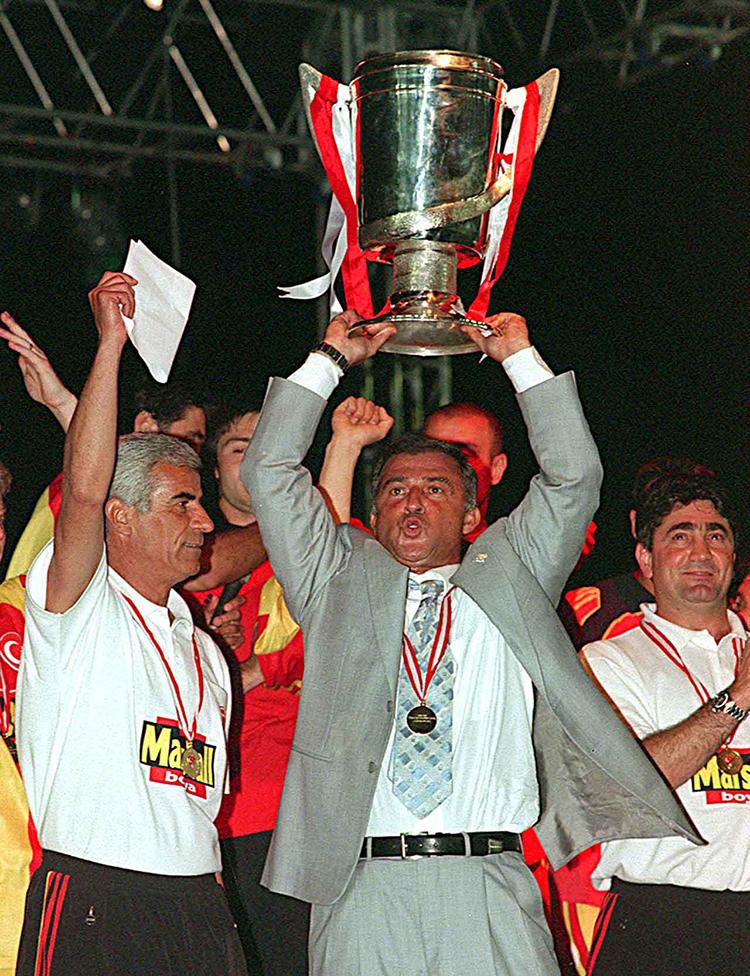
Appointed head coach of Galatasaray Spor Kulübü in 1996, Terim presided over one of the most successful periods in the club’s history. Under his leadership, Galatasaray won four consecutive Süper Lig titles and, in the 1999–2000 season, became the first Turkish team to win a European trophy by lifting the UEFA Cup after defeating Arsenal in a penalty shootout. This victory remains the first major European success in Turkish football history.
In 2000, Terim was appointed head coach of Fiorentina, a Serie A club in Italy, where he served briefly. In 2001, he took charge of AC Milan, though his tenure there was also short. These experiences contributed to Terim’s development of international coaching expertise.
Terim returned to Galatasaray for a second time as head coach in 2002, leading the club through a period of restructuring. He left the position in 2004.
In 2005, Terim was appointed head coach of the Türkiye A National Football Team for the second time. He led the team to the semifinals of the 2008 European Football Championship, achieving a major success that elevated Türkiye’s standing in international football.
Terim returned to Galatasaray for a third time as head coach in 2011, guiding the club back into championship contention. In the 2011–12 season, he won the Süper Lig title and also led the team to the quarterfinals of the UEFA Champions League.
In 2013, Terim was appointed head coach of the Türkiye A National Football Team for the third time. He secured qualification for the 2016 European Football Championship, though the team was eliminated in the group stage. During this period, he led the national team through a process of generational renewal.
In 2017, Terim returned to Galatasaray for a fourth time as head coach, winning two Süper Lig titles during this tenure. He left the club in 2022.
On 26 December 2023, Terim was appointed head coach of Panathinaikos, a club in the Greek Super League. He left the position on 17 May 2024, during which the team experienced fluctuations in performance.
On 27 December 2024, Terim signed with Al-Shabab, a club in the Saudi Pro League. In March 2025, he was named “Coach of the Month.” This role marked his first coaching experience in the Middle East.
Fatih Terim’s coaching philosophy is grounded in a holistic approach that adapts to the dynamics of modern football while emphasizing player psychology and on-field organization. Key focal points in his coaching practice include a high-tempo playing style, offensive-oriented tactical setups, physical resilience, and the maintenance of team cohesion. The strategies he implemented have been decisive in competitions at both club and national levels.
Terim’s preferred football philosophy is based primarily on offensive midfield-heavy formations such as 4-2-3-1 and 4-1-4-1. His approach demands that players maintain possession, execute rapid transitions, and apply pressure in the opponent’s half, positioning him among “attack-oriented” head coaches. His openness to in-game adjustments further enhances his tactical leadership by ensuring structural flexibility during matches.
On the international stage, Terim’s name has become synonymous with charisma, authority, and strategic flexibility. Particularly the 2000 UEFA Cup triumph and the 2008 European Championship semifinal run demonstrate that his tactical understanding has been recognized and respected on the European stage.
Fatih Terim stands out as one of the most prominent figures in Turkish sports history not only for his technical abilities on the pitch but also for his demeanor before the public, his communication style, and his social influence. Widely referred to in public opinion as “The Emperor,” this nickname reflects the charismatic leadership image attributed to him by both the media and fans. This title is linked not only to his consistent coaching successes but also to his authoritarian management style and strong influence over public perception.
When evaluated within the context of sports sociology, Terim’s personality traits reveal a leadership profile based on charisma, authority, spontaneous intervention, and high self-confidence. His open, and at times controversial, statements in press conferences and media interviews illustrate his two-way interactive communication style with the public. In this regard, Terim has transcended the traditional image of a head coach and transformed into a media figure.
Terim’s social impact extends beyond the football community, creating a powerful representational effect among broad public audiences. His success at major metropolitan clubs as a figure of Anatolian origin has contributed to the construction of an identity that transcends class and regional divisions in Türkiye. The image of “one of us” embraced by fans has enabled him to build a wide and enduring support base.
Moreover, Terim’s resilience and confrontational attitude during crisis management have transformed his public image from that of a mere technical manager into a symbol of struggle. In this context, he carries symbolic significance not only in terms of individual performance but also regarding institutional continuity and the collective memory of Turkish football.
Fatih Terim’s personality possesses a multifaceted structure that can be examined in academic literature through the frameworks of “charismatic leadership” (in Weberian context) and “authoritarian technical management.” His physical presence on the sidelines, gestures, mannerisms, and responses to social events have played an active role in shaping Turkish sports culture.
Fatih Terim’s playing and coaching career was comprehensively covered in the four-part documentary titled “Terim,” released on Netflix on 15 September 2022. The documentary presents, through Terim’s own narration, the pivotal moments of his career, the challenges he faced, and the successes he achieved.
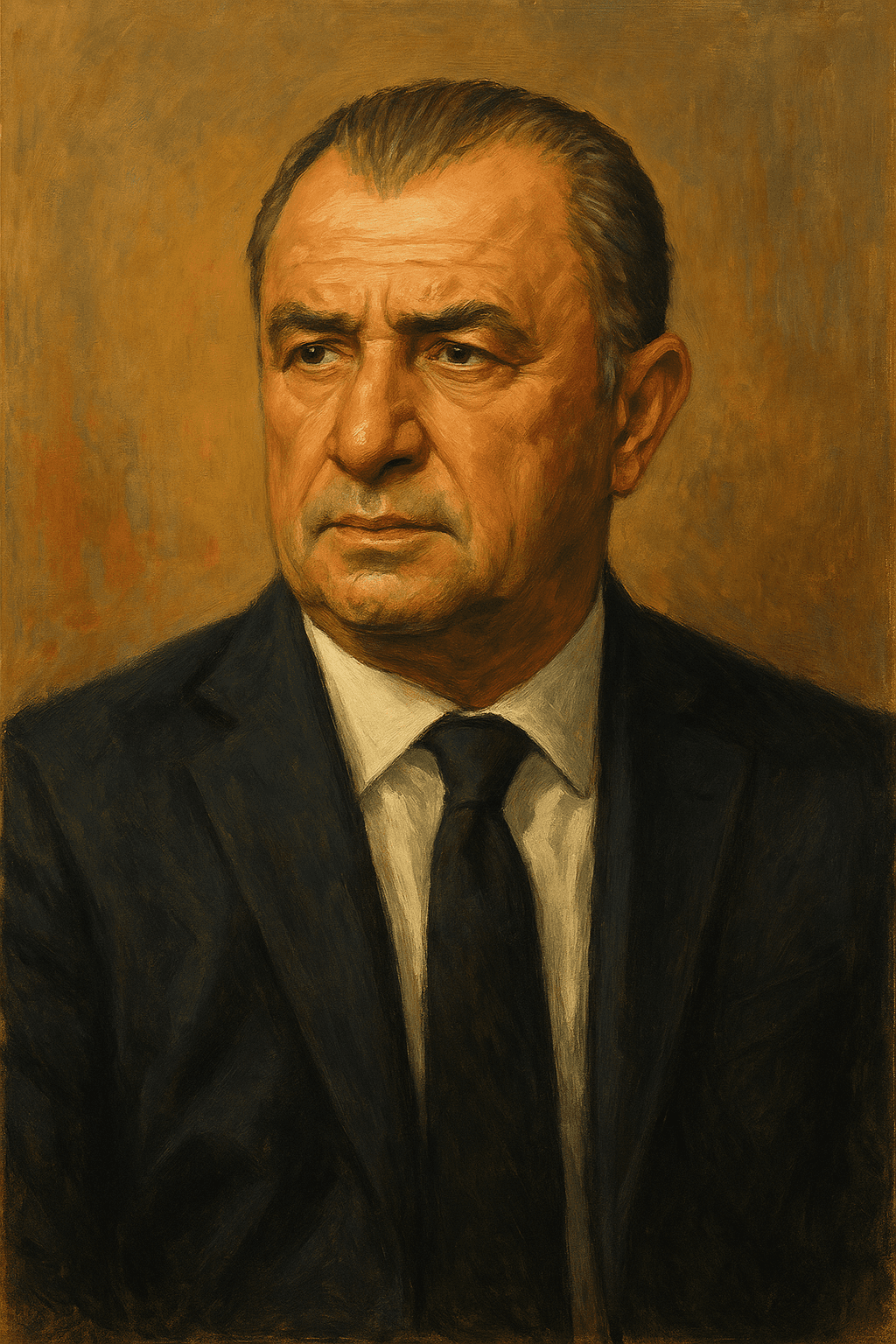
Fatih Terim (Generated by Artificial Intelligence)
As Head Coach of Galatasaray S.K.:
AS Gazetesi. "Fatih Terim, Al-Shabab’la 5 Ayda 1.6 Milyon Kazanacak." *AS Futbol*, December 27, 2024. Accessed May 9, 2025.
Anadolu Ajansı. "Fatih Terim’in Galatasaray’a İlk İmzasının Üzerinden Yarım Asır Geçti." Anadolu Ajansı, June 13, 2021. Accessed May 9, 2025. https://www.aa.com.tr/tr/futbol/imparator-fatih-terimin-galatasaraya-ilk-imzasinin-uzerinden-yarim-asir-gecti/3269110
Fotospor. "TSYD’den Fatih Terim’e Ödül." Fotospor, January 8, 2012. Accessed May 9, 2025. https://www.fotospor.com/futbol/futbol-tsydden-fatih-terime-odul-61148
Netflix Türkiye. *Terim* (Documentary). Dir. Burak Aksoy. İstanbul: Netflix, 2022.
TRT Haber. "Fatih Terim Golden Foot Ödülüne Layık Görüldü." TRT Haber, October 27, 2022. Accessed May 9, 2025.
Transfermarkt Türkiye. "Fatih Terim – Başarılar." Transfermarkt. Accessed May 9, 2025. https://www.transfermarkt.com.tr/fatih-terim/erfolge/trainer/253
Türkiye Football Federation. "Fatih Terim." *TFF Resmî Web Sitesi*. Accessed May 9, 2025. https://www.tff.org/default.aspx?pageID=3&1506pg=190
UEFA. "Galatasaray Win UEFA Cup 2000 Final." UEFA.com, May 17, 2000. Accessed May 9, 2025. https://www.uefa.com/uefaeuropaleague/news/016e-0e6a3091ff2c-b6d02ad6a643-1000--1999-2000-galatasaray-the-pride-of-turkey/

Babası | Talat Terim | ||||||||
|---|---|---|---|---|---|---|---|---|---|
Eş | Fulya Terim | ||||||||
Annesi | Nuriye Terim | ||||||||
Yaş | 71 | ||||||||
Doğum tarihi | 1953-09-04 | ||||||||
Çocuk | Buse Terim Bahçekapılı Merve Terim Çetin | ||||||||
Place of Birth | Adana, Türkiye | ||||||||
Nationality | Türkiye | ||||||||
Marital Status | Married | ||||||||
Playing Position | Libero / Defender | ||||||||
Profession(s) | Former football player coach | ||||||||
Football Career | Ceyhanspor (youth), Adana Demirspor (1969–1974), Galatasaray (1974–1985) | ||||||||
National Team Career | Türkiye (1975–1984), 51 matches | ||||||||
Managerial Career | Ankaragücü, Göztepe, Türkiye U21, Türkiye A National Team, Galatasaray, Fiorentina, Milan, Panathinaikos, Al-Shabab | ||||||||
UEFA Achievements | 1 UEFA Cup (1999–2000) | ||||||||
League Achievements | 8 Süper Lig, 3 Türkiye Kupası, 5 Süper Kupa | ||||||||
National Team Achievements | UEFA EURO 2008 Semi-Final | ||||||||
Documentary | Terim (Netflix, 2022) | ||||||||
Honors | Türkiye Cumhuriyeti Devlet Üstün Hizmet Madalyası (2000), Golden Foot Legend Award (2022), Commendatore Order (Italy) | ||||||||
Nickname(s) | Emperor | ||||||||
Languages | Turkish (native), Italian (advanced), English (intermediate) | ||||||||
Education | Ege University School of Physical Education and Sports | ||||||||
Early Career
Galatasaray S.K. Career (1974–1985)
Türkiye National Football Team Career (1975–1984)
Coaching Career
Ankaragücü, Göztepe and Türkiye U21 (1987–1993)
Türkiye A National Team (1993–1996)
Galatasaray S.K. (1996–2000)
Italy Period: Fiorentina and Milan (2000–2001)
Galatasaray S.K. (2002–2004)
Türkiye A National Team (2005–2009)
Galatasaray S.K. (2011–2013)
Türkiye A National Team (2013–2017)
Galatasaray S.K. (2017–2022)
Panathinaikos (2023–2024)
Al-Shabab (2024– )
Tactical Style and Impact
Personality and Public Standing
Documentary: “Terim” (2022)
Awards and Honors
Club Achievements
National Team Achievements
Individual Awards and Honors