

This article was automatically translated from the original Turkish version.
+1 More
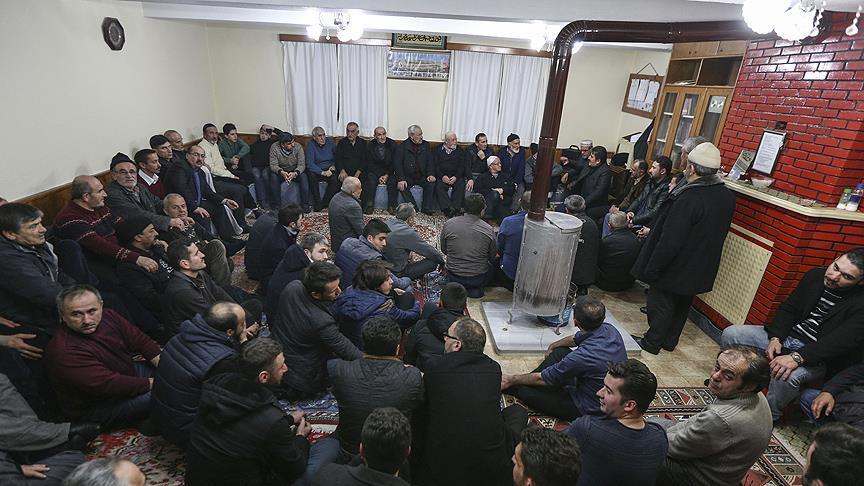
Ferfene is a traditional communal gathering held during winter months in various regions of Anatolia, with roots extending back to Central Asian Turkic culture, aimed at fostering social solidarity, entertainment, and cultural transmission. Etymologically, the term carries meanings of "everyone coming together" or "collective contribution". This tradition is based on participants gathering to share a common table, perform regional music, and present village theatrical games. These activities, which strengthen social bonds especially in rural areas, are recognized under the UNESCO Representative List of the Intangible Cultural Heritage of Humanity as "Traditional Conversation Gatherings".
The historical origins of the ferfene tradition lie in the social rituals practiced by ancient Turks during winter months. In Türkiye, it is particularly prevalent in the Central Anatolia and Western Black Sea regions. It is described as a centuries-old custom in Konya, and in districts such as Mudurnu and Dörtdivan in Bolu, it is said to have a history of approximately 300 years. Despite modernization processes, the tradition continues to be preserved in certain areas while maintaining its original structure.
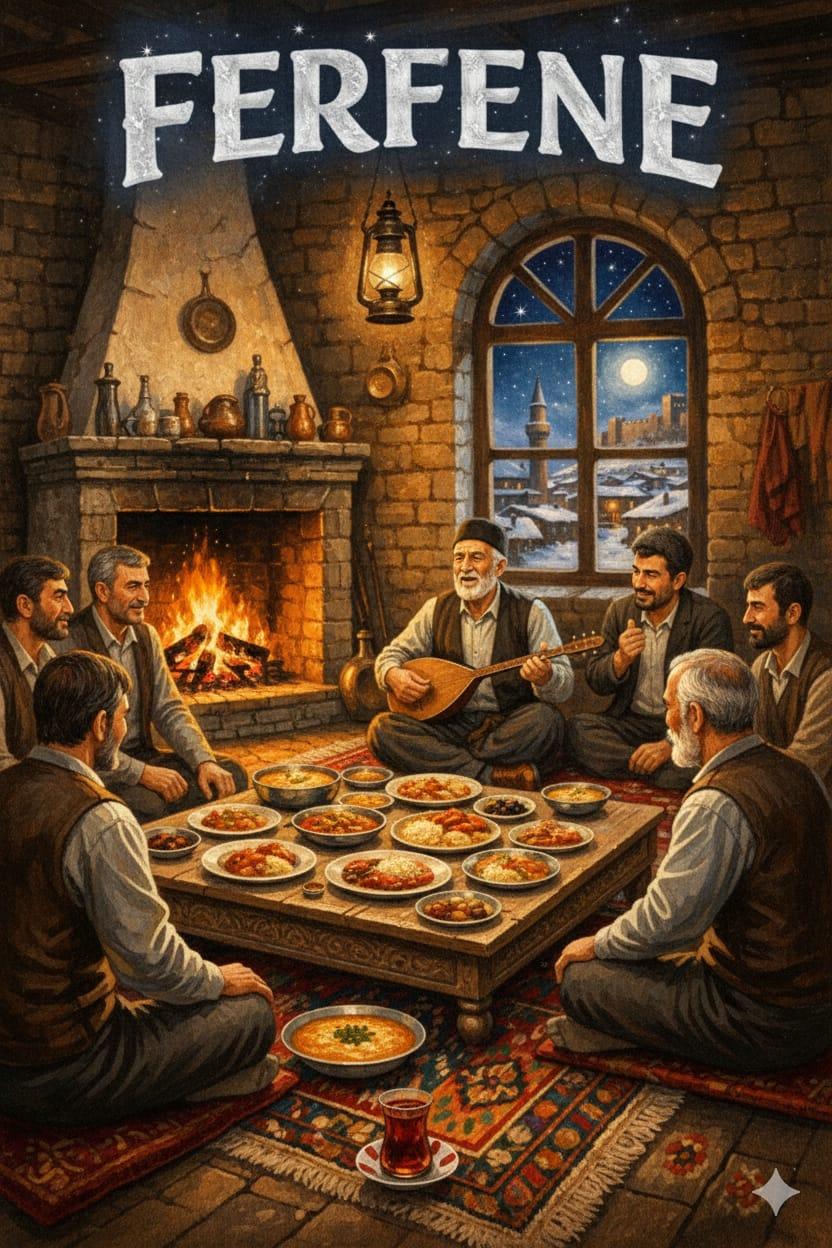
Generated with AI Assistance
The organization of ferfene evenings follows a specific discipline and hierarchy. Gatherings are typically held in village community rooms or the spacious homes of participants.
The most fundamental feature of the tradition is the sharing of expenses and provisions among participants. This practice, known as "azık karıştırma" or "food mixing", involves each participant contributing ingredients from their home or a specified monetary amount to a communal pool. This custom symbolizes social equality and solidarity. In some regions, where unmarried young people organize these gatherings, the collected provisions are cooked together in a single kitchen to form shared meals.
Events are usually led by experienced and respected figures known as "delikanlı başı" or "oda başı". These individuals oversee the flow of the evening, ensure adherence to rules, and are responsible for the education of younger participants. Social hierarchy is secondary to norms of respect and decorum; the words of elders are listened to, and traditional values are passed on to the youth.
Ferfene evenings are not merely meal gatherings but comprehensive cultural performances. The evening typically unfolds in the following segments:
Today, the ferfene tradition has acquired an institutional identity through the efforts of local administrations and civil society organizations. National and international awareness of the tradition is being raised through events organized by the UNESCO National Commission of Türkiye. In provinces such as Ankara, Konya, and Bolu, municipalities and museums organize authentic ferfene evenings to safeguard this intangible cultural heritage.
Anadolu Ajansı. "Bolu'da 3 Asırlık Ferfene Geleneği Yaşatılıyor." Accessed December 30, 2025. https://www.aa.com.tr/tr/kultur-sanat/boluda-3-asirlik-ferfene-gelenegi-yasatiliyor/734474.
Arkeolojik Haber. "Ferfene (Ferfene Gecesi)." Accessed December 30, 2025. https://www.arkeolojikhaber.com/haber-ferfene-ferfene-gecesi-19536/.
Dörtdivan Dünyası. "Ferfene." Accessed December 30, 2025. https://dortdivandunyasi.com/yazarlar/yazi/ferfene-361.html.
Konya’nın Sesi. "Konya'nın Asırlık Geleneği: Ferfene Geceleri." Accessed December 30, 2025. https://www.konyaninsesi.com.tr/konyanin-asirlik-gelenegi-ferfene-geceleri/10209/.
Mete, Filiz, Candeğer, Ümmügülsüm, and Koca, Tuğba. "Somut Olmayan Kültürel Miras: Ferfene (Ankara Örneği)" *Millî Folklor*, 2017, Yıl 29, no. 114 https://www.researchgate.net/profile/Uemmueguelsuem-Candeger/publication/318405385_SOMUT_OLMAYAN_KULTUREL_MIRAS_FERFENE_ANKARA_ORNEGI_Intangible_Cultural_Heritage_Ferfene_Ankara_Sample/links/5967e8f60f7e9b8091859011/SOMUT-OLMAYAN-KUeLTUeREL-MIRAS-FERFENE-ANKARA-OeRNEGI-Intangible-Cultural-Heritage-Ferfene-Ankara-Sample.pdf
UNESCO Türkiye Millî Komisyonu. "Ferfene Gecesi Etkinliği." Accessed December 30, 2025. https://www.unesco.org.tr/Pages/1786/90/%E2%80%9CFerfene%20Gecesi%E2%80%9D%20Etkinli%C4%9Fi.


Historical Origins and Regional Spread
Implementation and Organizational Structure
Participation and "Food Mixing"
Officials and Hierarchy
Event Content: Conversation, Games, and Music
Institutional Representation and Preservation Efforts