

This article was automatically translated from the original Turkish version.
+1 More
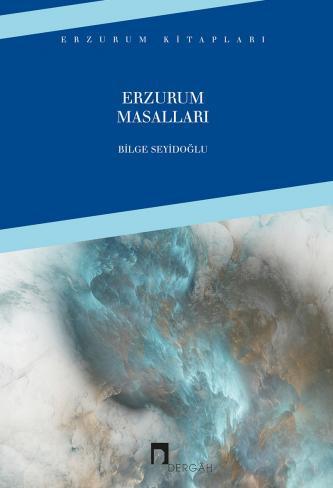
“Erzurum Tales” is a work compiled and analyzed by Professor Dr. Bilge Seyidoğlu (b. 1937), who has conducted research in the fields of Turkish folklore and fairy tale studies. It was published as part of Dergâh Publications’ “Erzurum Library” series. The book brings together fairy tales from the Erzurum region, which contain both universal motifs and local cultural elements. The first edition was published in November 1999, consisting of 384 pages, and by July 2016 it had reached its fourth edition.
The work “Erzurum Tales” begins by noting that the origins of fairy tales extend back to the dark ages of history, and that their exact place and manner of emergence remain unknown. It emphasizes that fairy tales emerged as the collective property of the people, surviving through oral tradition and passed down from generation to generation until the present day. The book states that, alongside events found in real life, fairy tales predominantly feature extraordinary events and extraordinary heroes. It also notes that fairy tales contain secrets related to humanity’s past while reflecting the traditions and customs of the societies in which they were collected.
The central focus of the work is that Erzurum fairy tales contain shared motifs with world tales while also revealing the richness and lifestyle specific to Erzurum. By gathering these tales, Bilge Seyidoğlu presents to the reader the cultural memory, values, beliefs, and social life of the Erzurum region through the medium of folklore. The tales included in the book illuminate the region’s unique folk narrative tradition, its language, sense of humor, and character types.
The book examines each tale’s narrative features, motifs, characters, and social messages using a scientific approach. In this way, it demonstrates that fairy tales are not merely simple stories intended for children, but rather profound cultural products that reflect a society’s collective unconscious, value system, and worldview. The interweaving of universal elements with local identity constitutes the core achievement of the work.
In Bilge Seyidoğlu’s work “Erzurum Tales,” the tales are transmitted faithfully to their original narrative characteristics, while the analytical sections are written in a descriptive and explanatory academic style. The tales are presented in accordance with the expression patterns of their original sources, and in the analytical and evaluative sections, the structural and thematic features of folk narratives are systematically examined. The work employs a language grounded in scientific methodology rather than one of promotion or glorification.
Seyidoğlu, Bilge. *Erzurum Masalları*. İstanbul: Dergah Yayınları, 1999. Accessed July 16, 2025. https://www.dergah.com.tr/kitaplar/erzurum-masallari.

No Discussion Added Yet
Start discussion for "Folktales of Erzurum (Book)" article
Content and Thematic Structure
Language and Style