 Recently Added:
This article was automatically translated from the original Turkish version.
On 24 February 2022 the Russian Federation officially launched a large-scale military operation against Ukraine. In the first hours of the war, multiple Ukrainian cities were targeted by missile strikes and ground forces advanced into Ukrainian territory from the northern eastern and southern fronts. A state of alert was declared in numerous strategic centers including the capital Kyiv and the Ukrainian government initiated a national mobilization process from the very first days of the conflict.
During the initial months of the war Russian forces achieved rapid advances; however the Ukrainian military’s resistance and military support provided by Western countries led to the stabilization of the front lines in certain regions. In 2022 Russian units around Kyiv were particularly withdrawn and fighting became concentrated in the eastern and southern regions. In the following years the war took on a character defined less by large-scale maneuver operations and more by artillery duels positional warfare and attrition strategies.
In 2023 and 2024 both sides conducted limited counteroffensives during specific periods. However these operations did not produce results that fundamentally altered the overall course of the war. By 2025 the conflict had transformed into a prolonged and high-cost engagement characterized by largely static front lines and heavy reliance on firepower. As of 24 February 2026 the war had lasted 1461 days.
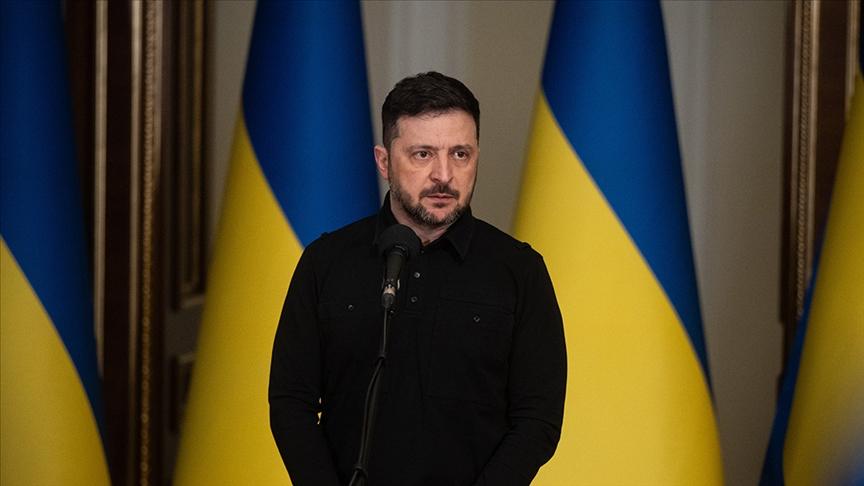
On the fourth anniversary of the war Ukrainian President Volodymyr Zelensky reminded the public of the events of the first hours of the conflict. Zelensky stated that on the morning of 24 February 2022 coordinated attacks were launched across the country state institutions quickly transitioned into crisis mode and the Ukrainian government refused to abandon the nation. These statements emphasized Ukraine’s maintenance of state continuity and its defense of sovereignty throughout the war.
On the same day a summit was held in Kyiv attended by leaders of the European Union. EU representatives announced their continued political economic and military support for Ukraine. EU leaders affirmed that Ukraine’s integration process with Europe remains ongoing and that solidarity persists even in the war’s fourth year.
International statements also highlighted the war’s impact on the global security order. Western leaders stated that Ukraine’s fate is intrinsically linked to European security and signaled their commitment to maintaining sanctions against Russia and continuing aid packages to Ukraine.
By the fourth year the war has largely progressed along frozen front lines. Particularly in eastern and southern Ukraine the contact line has remained relatively stable with both sides employing defensive and limited offensive strategies based on positional warfare. Artillery systems long-range rockets and unmanned aerial vehicles have become the primary elements of combat.
The intensive use of unmanned aerial vehicles has been one of the defining technical features of the war. Systems employed for both reconnaissance and attack purposes have enabled continuous surveillance and targeting along the front lines. Electronic warfare elements and air defense systems have also played a significant role during this period. Long-range missile strikes have effectively targeted energy infrastructure and military facilities.
Logistical capacity and ammunition supply have become decisive factors in sustaining the war effort. Ukraine has strengthened its defensive capabilities through military aid packages provided by Western countries. Russia has continued its strategy of applying pressure on the front by expanding its manpower and firepower capacity. Technically the war has reached a state of balance based on intense firepower and fortified defensive positions.
As the war entered its fourth year diplomatic initiatives continued but no lasting ceasefire was achieved. A clear division has emerged between countries supporting Ukraine and those maintaining relations with Russia. European Union and NATO member states have reaffirmed their determination to sustain military and economic assistance to Ukraine.
Sanction regimes have aimed to exert pressure on the Russian economy. The impact of sanctions covering energy finance and defense sectors has been felt in international economic balances. In response Russia has continued its economic activities through alternative trade channels and regional cooperation frameworks.
Anniversary events held in Kyiv demonstrated that the war is not only a military struggle but also a political contest of resilience. The Ukrainian government has assessed the continuation of international support as a decisive factor in shaping the war’s trajectory. European leaders have emphasized Ukraine’s strategic importance within Europe’s security architecture.
As of February 2026 the war continues without major changes to the front lines. Fighting remains intense in the Donbas region and southern fronts. Although both sides have occasionally achieved limited advances no fundamental shift has occurred along the overall front line.
Attacks on energy infrastructure and military targets continue. Long-range missile and unmanned aerial vehicle strikes have increased the war’s impact on both military and civilian spheres. Infrastructure damage and humanitarian consequences persist behind the front lines.
Ukraine has reaffirmed its determination to preserve its independence and territorial integrity. Russia has reiterated its resolve to achieve its operational objectives. While diplomatic channels remain open no lasting ceasefire or comprehensive peace agreement has yet been reached. On its fourth anniversary the war continues in a militarily and politically stable but unresolved equilibrium.
Al Jazeera. "Devastation and Frozen Frontlines: Ukraine Marks Four Years of Russia’s War." Accessed February 24, 2026. https://www.aljazeera.com/news/2026/2/24/devastation-and-frozen-frontlines-ukraine-marks-four-years-of-russias-war.
Anadolu Ajansı. "Ukrayna Devlet Başkanı Zelenskiy, 4 Yıl Önce Bugün Başlayan Savaşın İlk Saatlerini Anlattı." Accessed February 24, 2026. https://www.aa.com.tr/tr/dunya/ukrayna-devlet-baskani-zelenskiy-4-yil-once-bugun-baslayan-savasin-ilk-saatlerini-anlatti/3838341.
Deutsche Welle. "Ukrayna İşgalinin Yıl Dönümü: AB'nin Zirvesi Kiev'de." Accessed February 24, 2026. https://www.dw.com/tr/ukrayna-i%C5%9Fgalinin-y%C4%B1l-d%C3%B6n%C3%BCm%C3%BC-abnin-zirvesi-kievde/a-76100890.
Euronews Türkiye. "Ukrayna Savaşında Dördüncü Yıl: ‘Bağımsızlığımızı Koruduk’." Accessed February 24, 2026. https://tr.euronews.com/2026/02/24/ukrayna-savasinda-dorduncu-yil-bagimsizligimizi-koruduk.
Hürriyet. "Ukrayna Savaşında 4 Yıl Geride Kaldı: Ateş Altında 1461 Gün." Accessed February 24, 2026. https://www.hurriyet.com.tr/dunya/ukrayna-savasinda-4-yil-geride-kaldi-ates-altinda-1461-gun-43115006.

As Russia’s invasion of Ukraine, which began on 24 February 2022, entered its fourth year, the front lines remained largely unchanged. During commemorative events held in Kyiv the Ukrainian leadership emphasized independence while European Union leaders offered messages of support; on the ground fighting continued in the eastern and southern fronts.
No Discussion Added Yet
Start discussion for "Fourth Anniversary of the Russia-Ukraine War" article
February 24, 2026
24 February 2026: Official Statements on the Fourth Anniversary
February 24, 2026
Technical Dimension: Front Lines Military Capacity and Warfare Technologies
February 24, 2026
Political Dimension: Diplomacy Support and International Equilibriums
February 24, 2026
Current Status of the War (February 2026)