


This article was automatically translated from the original Turkish version.
+1 More
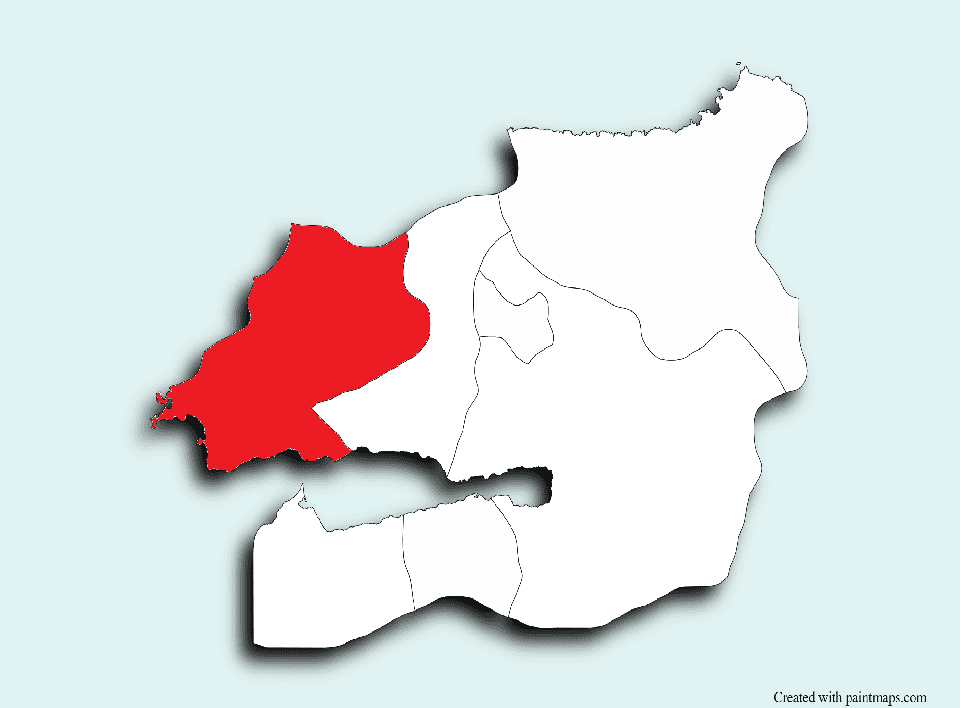
Gebze (District)
Gebze
Location | Kocaeli Türkiye Marmara Region | ||||||||
|---|---|---|---|---|---|---|---|---|---|
Geographic Coordinates | 40°48′N 29°26′E | ||||||||
Area(s) | Approximately 418 km² | ||||||||
Population (2023) | Approximately 400,000 | ||||||||
Tourist Attractions | Hünkar Çayırı Ballıkayalar Tabiat Parkı Hannibal Anıtı Çoban Mustafa Paşa Camii Eskihisar Kalesi | ||||||||
Mayor(s) | Zinnur Büyükgöz | ||||||||
District Governor | Mehmet Ali Özyiğit | ||||||||
Gebze is a district of Kocaeli Province in Türkiye. Strategically located in the Marmara Region near Istanbul, it serves as a vital center for industry, trade, and logistics. Gebze attracts attention through its history, geographical structure, economic activities, and cultural fabric, and is among Türkiye’s fastest-developing regions.
Gebze is situated on the northeastern coast of the Sea of Marmara, in the western part of Kocaeli Province. To its east lies İzmit, to its west the Istanbul districts of Tuzla and Pendik, to its north the Sea of Marmara, and to its south the districts of Dilovası and Çayırova. The district covers an area of approximately 418 km². Gebze features flatlands alongside gently undulating terrain and borders the İzmit Gulf. The strategic position of the gulf has made Gebze an important hub for port and logistics activities.
Gebze has a climate typical of the Marmara Region. It experiences mild winters that are rainy and warm, humid summers. The annual average temperature ranges between 14 and 16°C.
Gebze’s history extends back to antiquity. The region has hosted numerous civilizations throughout history, including Bithynia, Rome, Byzantium, the Seljuks, and the Ottomans. In antiquity, the settlement known as “Dakibyza” or “Libyssa” was an important center due to its strategic location. One of the most significant historical figures associated with Gebze is the Carthaginian general Hannibal. It is traditionally believed that Hannibal committed suicide in Libyssa in 183 BCE, an event that remains a notable anecdote in the region’s history.
During the Byzantine period, Gebze served as a defensive and commercial outpost due to its proximity to Constantinople (Istanbul). Under the Ottomans, the region retained its importance as a transit point to Anatolia. In the late Ottoman period and the early years of the Republic, Gebze functioned primarily as an agricultural and commercial center, but underwent major transformation during the second half of the 20th century through industrialization.
In 1987, following Kocaeli’s elevation to provincial status, Gebze became a district under Kocaeli. Today, Gebze plays a pivotal role in Türkiye’s economic development through its industrial and technological investments.
As of 2023, Gebze’s population is approximately 400,000. The district’s population continues to grow due to employment opportunities provided by its industrial facilities. Gebze is a district that receives migration from various regions of Türkiye, resulting in demographic diversity. The majority of the population consists of young individuals of working age.
Gebze is one of Türkiye’s most important industrial centers. The district hosts numerous organized industrial zones (OIZ). Notable among these are the Gebze Organized Industrial Zone (GOSB), TOSB Automotive Ancillary Industries Specialized OIZ, Gebze Plastics Organized Industrial Zone, and Kocaeli-Gebze V (Chemical) Organized Industrial Zone. These zones accommodate hundreds of companies operating in sectors such as automotive, chemical, plastic, metal, textile, and electronics.
Gebze is also critically positioned in terms of logistics. The ports located along the İzmit Gulf have made the district a key node in international trade. Furthermore, Gebze’s proximity to Istanbul and its connectivity to major transportation arteries such as the TEM Motorway and D-100 Highway support its logistics activities. Gebze also hosts important technology and innovation centers such as the TÜBİTAK Marmara Research Center and the Information Technology Valley, playing a significant role in Türkiye’s R&D and technological development efforts.
Agriculture once played a larger role in Gebze’s economy, but industrialization has led to a decline in agricultural activities. Nevertheless, olive, grape, and vegetable and fruit production still continue in the district.
Throughout history, Gebze has been a meeting point of diverse cultures. This diversity is reflected in the district’s cultural fabric. Turkish, Laz, Circassian, Kurdish, Georgian, and Roma communities coexist in Gebze. This cultural richness manifests in local festivals, culinary traditions, and social events.
Cultural events held in Gebze include the Gebze Hünkar Çayırı Festival and various art exhibitions. Historical structures such as the Çoban Mustafa Paşa Camii exemplify Ottoman architecture. The Eskihisar Castle and the Hannibal Monument are also among the district’s historical and tourist sites.
In terms of education, Gebze has numerous primary, middle, and high schools. Moreover, Gebze Technical University is the district’s most important higher education institution, offering education and research in engineering, technology, and science.
Gebze has one of Türkiye’s most developed transportation networks. Road, rail, and maritime transport are highly active in the district. The TEM Motorway and D-100 Highway connect Gebze to Istanbul, Ankara, and other major cities. The Marmaray line provides a fast and modern rail link integrating Gebze with the European side of Istanbul. Additionally, the High-Speed Train (YHT) line passes through Gebze, offering rapid connectivity between Ankara and Istanbul.
The ports located in the İzmit Gulf are vital for international maritime transport. The nearest airport to Gebze is Sabiha Gökçen International Airport in Istanbul, and access to the airport from the district is very convenient.
Gebze offers visitors a variety of tourist sites through its historical and natural attractions. Major tourist sites include:
Gebze is a district municipality under the Kocaeli Metropolitan Municipality. The district municipality is responsible for delivering local services. Gebze’s administrative structure consists of neighborhoods, with more than 40 neighborhoods within the district.
Anadolu Ajansı. "Gebze'de olası afetlerde "Kara Kutu"yla kesintisiz belediye ve haberleşme hizmeti sunulacak." Accessed April 19, 2025. https://www.aa.com.tr/tr/bilim-teknoloji/gebzede-olasi-afetlerde-kara-kutuyla-kesintisiz-belediye-ve-haberlesme-hizmeti-sunulacak/3049434
Gebze Belediyesi. "Gebze Tarihi Yerler." Accessed April 19, 2025. https://www.gebze.bel.tr/gebze-tarihi-yerler.html.
Gebze Belediyesi. "Gebze Tarihçe." Accessed April 19, 2025. https://www.gebze.bel.tr/gebze-tarihce.html.
Gebze Kaymakamlığı Governorship. "Nüfus ve İdari Yapısı." Accessed April 19, 2025. http://www.gebze.gov.tr/nufus-ve-idari-yapisi.
Gebze Ticaret of Commerce. "About Gebze." Accessed April 19, 2025. https://www.gebzeto.org.tr/about-gebze/.
Gebze Ticaret of Commerce. "Organize Sanayi Bölgeleri." Accessed April 19, 2025. https://www.gebzeto.org.tr/organize-sanayi-bolgeleri/.
Gebze Ticaret of Commerce. "Türkiye’nin 500 Sanayi Kuruluşunda 59 Firma Gebze’den." Accessed April 19, 2025. https://www.gebzeto.org.tr/turkiyenin-500-sanayi-kurulusunda-59-firma-gebzeden/.
Kocaeli Büyükşehir Municipality. "Büyüleyici Güzellikler." Accessed April 19, 2025. https://www.kocaeli.bel.tr/buyuleyici-guzellikler.html.
Kocaeli Valiliği. "Gebze." Accessed April 19, 2025. http://www.kocaeli.gov.tr/gebze.
Ministry of Culture and Tourism of the Republic of Turkey. “Çoban Mustafa Paşa Külliyesi - Gebze.” *Kültür Portalı*. Accessed April 19, 2025. https://kulturportali.gov.tr/turkiye/kocaeli/gezilecekyer/coban-mustafa-pasa-kulluyesi-gebze.
Ministry of Culture and Tourism of the Republic of Türkiye. "Hannibal Anıt Mezarı - Gebze." *Kültür Portalı*. Accessed April 19, 2025. https://www.kulturportali.gov.tr/turkiye/kocaeli/gezilecekyer/hannibal-anit-mezari-gebze.
Ministry of Industry and Technology of the Republic of Turkey. *Kocaeli İl Industry and Technology Strategy Document 2019*. Accessed April 19, 2025. https://www.sanayi.gov.tr/assets/pdf/plan-program/41_KOCAELI_ISDR_2019.pdf.
T.C. Ministry of Culture and Tourism. "Ballıkayalar Vadisi - Gebze." *Kültür Portalı*. Accessed April 19, 2025. https://www.kulturportali.gov.tr/turkiye/kocaeli/gezilecekyer/ballikayalar-vadisi---gebze.
T.C. Ministry of Culture and Tourism. "Gebze." Accessed April 19, 2025. https://kocaeli.ktb.gov.tr/TR-174620/gebze.html.

Gebze (District)
Gebze
Location | Kocaeli Türkiye Marmara Region | ||||||||
|---|---|---|---|---|---|---|---|---|---|
Geographic Coordinates | 40°48′N 29°26′E | ||||||||
Area(s) | Approximately 418 km² | ||||||||
Population (2023) | Approximately 400,000 | ||||||||
Tourist Attractions | Hünkar Çayırı Ballıkayalar Tabiat Parkı Hannibal Anıtı Çoban Mustafa Paşa Camii Eskihisar Kalesi | ||||||||
Mayor(s) | Zinnur Büyükgöz | ||||||||
District Governor | Mehmet Ali Özyiğit | ||||||||
Geography
History
Population and Demographics
Economy
Culture and Society
Transportation
Tourist Attractions
Administration