


+2 More

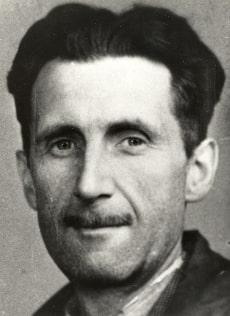
George Orwell, born as Eric Arthur Blair (1903–1950), is one of the leading writers of 20th century English literature and political thought. Roman, essays, article and journalism are the genres in which he produced his works. Orwell gained prominence through his critiques of totalitarian regimes, especially with the novels Animal Farm (1945) and 1984 (1949), which established a broad influence. His works explore themes of authority, propaganda, censorship, class inequality and individual freedom like. Orwell’s life and literary career are closely tied to the political developments of his time, making his creative output a historical that must be understood within its historical context.
George Orwell was born on 25 June 1903 in Motihari, a town in the Bihar province of India. His father, Richard Walmesley Blair, worked as a official in the Afyon Department of the British colonial administration. His mother, Ida Mabel Blair, was of French descent. When Orwell was one year old, his mother took him and his sister to England, where the family maintained a modest life. Orwell spent his childhood near Oxfordshire, in an environment with limited financial means but rich cultural stimulation. This early period laid the foundation for his sensitivity to class differences and injustice.
Orwell embraced a simple, nature-oriented lifestyle. He married Eileen O’Shaughnessy in 1936, but she died in 1945. While living in the countryside, he engaged in farming, raised goats, fished and went long walks. Described by the NEH (National Endowment for the Humanities) as an “outdoorsman,” this characterization reveals Orwell not merely as an intellectual but as someone deeply connected to nature, an observer and a man of simplicity. Generally frail in health, Orwell struggled with tuberculosis during the final years of his life.
Orwell began his education at the age of small in the south of England, and later won scholarships to attend prestigious boarding schools. He first attended St Cyprian’s, a preparatory school, where he encountered a disciplined and authoritarian educational system. This experience marked the earliest steps in developing his critical stance toward authority. From 1917 to 1921, he studied at Eton College. Although not academically outstanding at Eton, he experienced significant intellectual growth. His interest in literature deepened during this period, and he wrote articles for the school newspaper. His decision not to attend university and instead join the public service can be explained by both his family’s financial situation and his desire to experience the world firsthand.
Throughout his literary career, Orwell addressed themes such as social injustice, the corrupting influence of power and individual freedom:
In 1922, Orwell joined the India Imperial Police and was posted to Burma. He served there for five years. This period played a decisive role in Orwell’s personal and political transformation. The repressive structure of colonial rule, his interactions with the local population and the injustices he witnessed provoked profound moral questioning. The sense of guilt he developed from his experiences in Burma is clearly evident in later works such as “Shooting a Elephant.” In 1927, citing health reasons, he returned to England, resigned from his official post and dedicated himself entirely to writing.
After returning to England, Orwell worked various jobs to earn a living while pursuing writing. Between 1928 and 1931, he lived in poverty in France and England, experiences he documented in his first book, "Down and Out in Paris and London" (1933). It was with this book that he began using the pen name “George Orwell” instead of his real name. Orwell quickly attracted attention through his simple language, powerful imagery and direct narrative style. Subsequent novels such as "Burmese Days" (1934) and "A Clergyman’s Daughter" (1935) criticized the hypocrisy of English society and the contradictions of colonialism.
Orwell’s political stance crystallized with his participation in the Spain Civil War in 1936. He traveled to Spain to fight against fascism and joined the ranks of POUM (the Marxist Union Party). However, witnessing the Stalinist suppression of POUM during the war eroded his trust in the Soviet Union. He detailed this experience extensively in his book "Homage to Catalonia" (1938). Orwell maintained equal distance from totalitarianism whether it arose from the right or the left. During this period, he frequently emphasized values such as honesty, individual morality and freedom of expression in his political writings.
Orwell described himself as a “democratic socialist.” However, this label does not imply a complete alignment with any specific leftist ideology. Intellectually, Orwell placed individual freedom, freedom of speech and moral responsibility above all forms of ideological allegiance. He became one of the most vocal critics of Soviet-style authoritarianism, embodying this stance in "Animal Farm" and "1984." He believed that power, even when justified by ideological reasoning, could eliminate individual freedom if left unchecked.
Orwell died in London on 21 January 1950 at the age of 46 from tuberculosis. His novel "1984" was published shortly before his death and generated widespread echo. His works have left a profound impact both in academia and popular culture since his passing. Today, Orwell’s name is invoked alongside the term “Orwellian,” used to describe oppressive systems.
George Orwell’s works transcend their literary value through their political foresight. "Animal Farm" and "1984" are among the foundational texts studied and analyzed at both high school and university levels across the today world. Orwellian thought continues to inspire contemporary theories that question individual rights against state power, the political manipulation of language and the effects of surveillance control. Orwell’s influence remains evident in current debates centered around concepts such as Media, propaganda, surveillance society and freedom of expression.
BBC History. "George Orwell (1903–1950)." Accessed March 25, 2025. Link.
Biography. "George Orwell." Accessed March 25, 2025. Link.
Can Yayınları. "George Orwell." Accessed March 25, 2025. Görsel Link.
Doğan Kitap. "George Orwell." Accessed March 25, 2025. Link.
Internet Encyclopedia of Philosophy. "George Orwell." Accessed March 25, 2025. Görsel Link.
İş Bankası Kültür Yayınları. "George Orwell." Accessed March 25, 2025. Link.

Early Life and Family
Personal Life
Educational Background
Main Works and Themes
Colonial Period and Burma Police Service (1922–1927)
Beginning of Literary Career
Political Awareness and Activism
Political Views and Intellectual Worldview
Death and Legacy
Legacy and Cultural Impact