This article was automatically translated from the original Turkish version.
+1 More
Province İt Belongs to | Isparta | ||||||||
|---|---|---|---|---|---|---|---|---|---|
Population | 6.877 | ||||||||
Area(s) | 372 km² | ||||||||
Elevation(s) | 1.020 metre | ||||||||
District Governor | Mehmet YILDIZ | ||||||||
Mayor(s) | Osman KESMEN | ||||||||
Number of Neighborhoods | 10 | ||||||||
Number of Villages | 5 | ||||||||
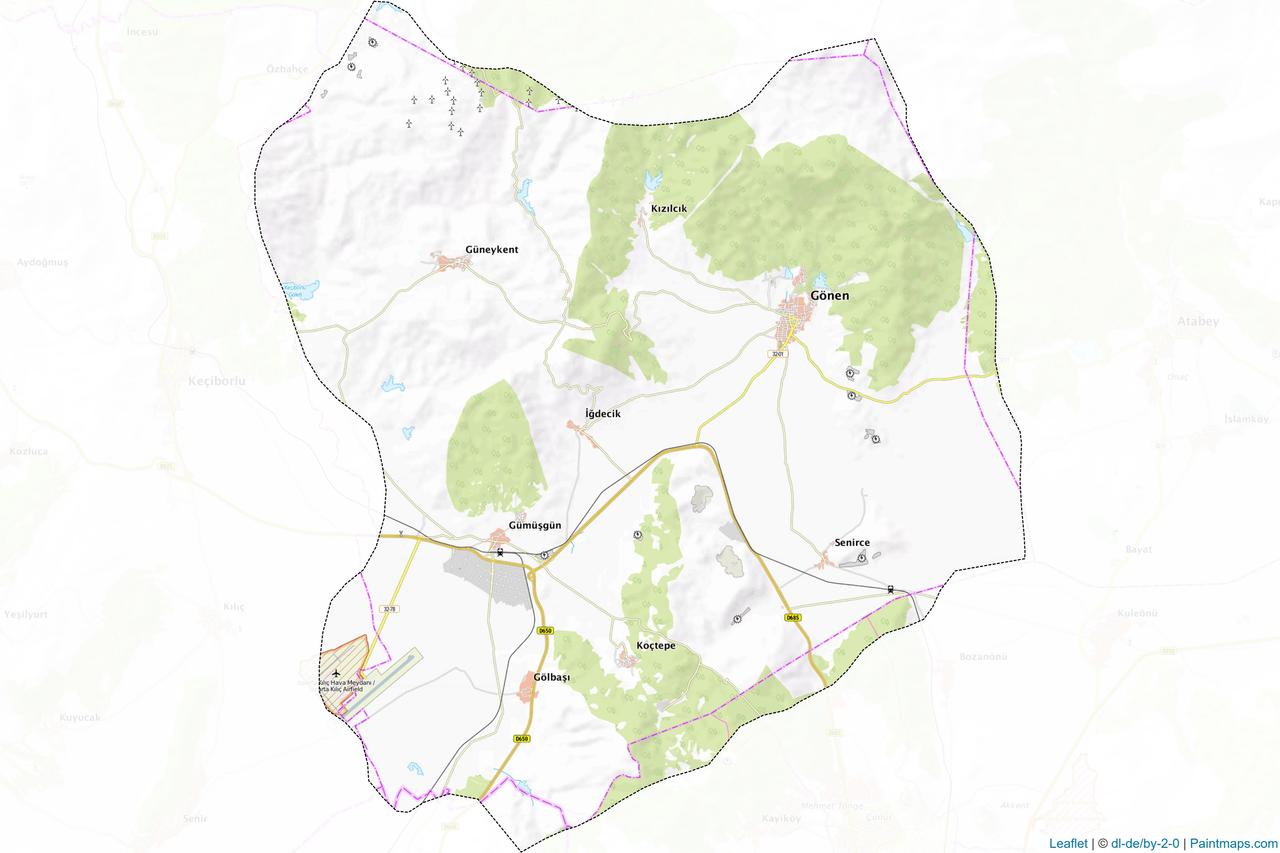
Gönen is a district located in the northern part of Isparta province, bordered by Atabey to the east, Uluborlu to the north, Keçiborlu to the west, and Burdur province to the southwest. The district center is situated at an elevation of approximately 1,020 meters above sea level at the Kırıkçayır locality, connected to the Isparta–Burdur highway by a 5-kilometer asphalt road. It has an area of 372 km² and a population of 6,877 according to 2024 TÜİK data. The district experiences a Mediterranean climate but has no permanent river flowing throughout the year in either summer or winter months.
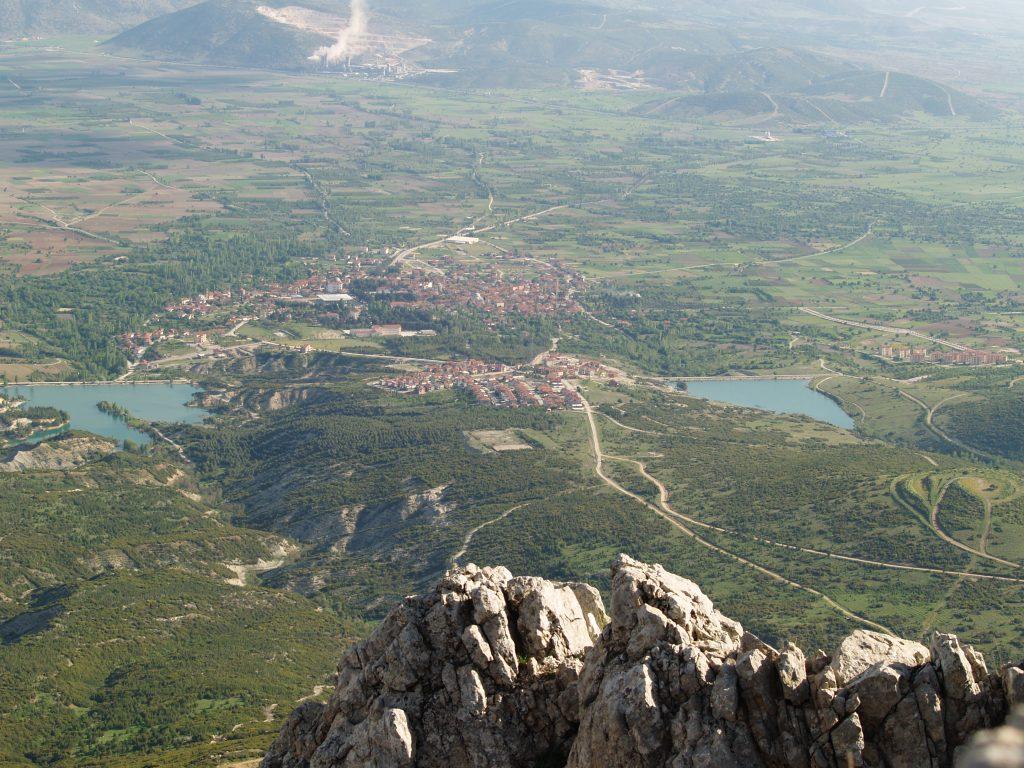
Gönen District (Gönen Municipality)
The district is spread across a broad plain surrounded by Tınaz Mountain (approximately 1,850 m) and its highland to the north, and Kale Mountain to the north, and Söbü Mountain to the south. The only significant natural forest area within the district boundaries is the Manastır Forest Reserve; since 1989, pine and cedar saplings have been planted in the surrounding areas under the “Green Belt” project.
Settlement traces found at Gönen Höyük and Senirce Höyük, dated to the Chalcolithic Age (3000–1200 BCE), indicate that the region has been inhabited since antiquity. During the Roman period, the city was known as Comama or Conana and was one of the four cities established by Emperor Augustus in the region of Pisidia. Coin minting occurred from the 1st century BCE until the reign of Gallienus (260–268 CE). Although surface remains of the ancient city are limited, architectural fragments and funerary stelae recovered from the site have been transferred to the Isparta Museum. Archaeological surface surveys were initiated in 2009 with support from Süleyman Demirel University.
The region came under Seljuk rule in 1182, then passed to the Hamitoğulları Beylik in 1301, and finally to Ottoman control in 1380. The area became a settled administrative center when the Hamitoğulları sold some of their lands to Murad I and continued to govern the remainder from Gönen. Ottoman records refer to the settlement as “Comana-i Süsleyanat” or “Gönen in Hamit Province.” A municipal administration was established in Gönen in 1948, and it gained district status on 20 May 1990 under Law No. 3844. Upon its establishment, the town of Güneykent and the villages of Senirce, Koçtepe, Gölbaşı, İğdecik, Gümüşgün, and Kızılcık were attached to the district; some settlements were transferred to Isparta and Keçiborlu districts in 1992.
The word “Gönen” in Turkish means “to be loved, to be happy, to attain abundance.” The site, known in antiquity by names such as Comama, Conana, and Conan, gradually adopted the form Gönen over time.
Agriculture and animal husbandry are the main sources of livelihood. The town of Güneykent is one of the region’s most important rose production centers. Oils and rose-based products extracted from the harvested roses are traded locally. Additionally, handwoven goods, needle lacework, and regional figurines have tourist value. In recent years, small-scale industrial enterprises have also begun to develop.
A tomb located in the Manastır locality to the east of the district is believed to contain the graves of Yunus Emre and his teacher Taptuk Emre, as well as those of Buharalı Sinan Efendi and Şeyh Sadettin Efendi. Every year in June, the “Yunus Emre Commemoration and Aşure Festival” is held.
Located in Gümüşgün village, this structure has an octagonal plan, a plywood ceiling, and is covered with Marseille-type tiles. It features pointed arched entrance portals on the exterior and windows of varying sizes.
The building in Camii Mahallesi contains square-plan cold, warm, and hot rooms. The large square space in front suggests later additions.
A 19th-century example of civil architecture located in İğdecik village, it is a single-story structure with a semi-basement.
The ancient city, identified in 1879 to the east of the district center, reflects the Roman-period settlement of the region through its archaeological remains and coins.
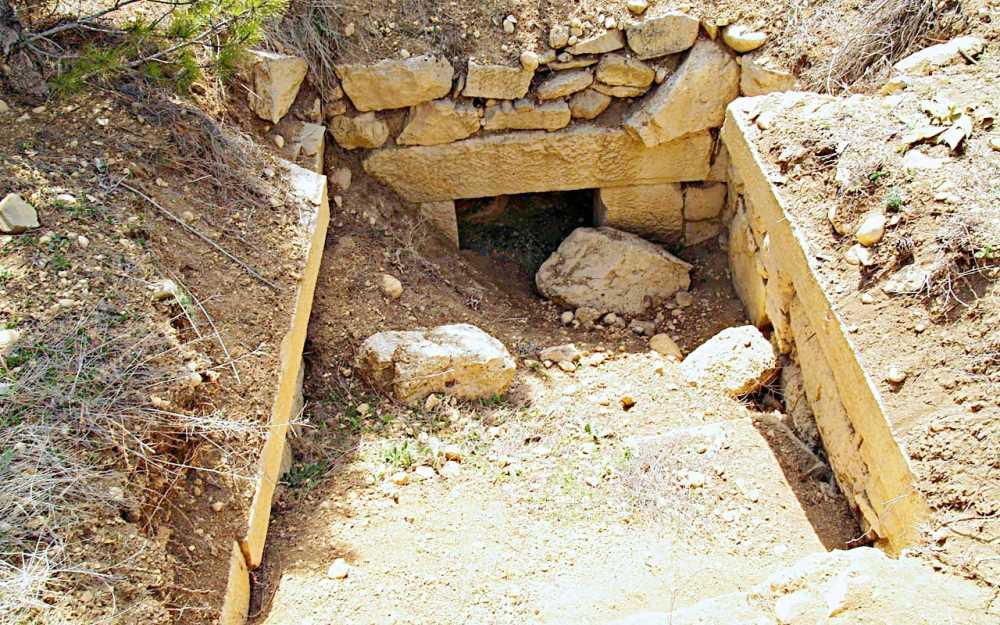
Conana Ancient City (Culture Portal)
Gönen Belediyesi. "Culture & Recreation." Accessed August 16, 2025. https://gonen.bel.tr/culture-recreation/.
Isparta Provincial Directorate of Culture and Tourism. "Gönen." Ministry of Culture and Tourism of the Republic of Turkey. Accessed August 16, 2025. https://isparta.ktb.gov.tr/TR-165535/gonen.html.
Ministry of Culture and Tourism. "Conana Harabeleri." Accessed August 16, 2025. https://www.kulturportali.gov.tr/turkiye/isparta/gezilecekyer/conana-harabesi.
PaintMaps. "Şehir Haritası Grafiği." Accessed August 16, 2025. https://paintmaps.com/tr/harita-grafikleri/sehir-haritasi-grafigi.
T.C. Gönen District Governorship. "Mahalli İdareler." T.C. Gönen District Governorship. Accessed August 16, 2025. http://www.ispartagonen.gov.tr/mahalli-idareler.
T.C. Gönen District Governorship. "İlçemizin Tarihi." Accessed August 16, 2025. http://www.ispartagonen.gov.tr/ilcemizin-tarihi.
T.C. Isparta Valiliği. "Gönen." T.C. Isparta Valiliği. Accessed August 16, 2025. http://www.isparta.gov.tr/gonen.
Türkiye İstatistik Kurumu (TÜİK). "Adrese Dayalı Nüfus Kayıt Sistemi Sonuçları, 2024." Publication No: 53783. Accessed August 16, 2025 https://data.tuik.gov.tr/Bulten/Index?p=Adrese-Dayali-Nufus-Kayit-Sistemi-Sonuclari-2024-53783

Province İt Belongs to | Isparta | ||||||||
|---|---|---|---|---|---|---|---|---|---|
Population | 6.877 | ||||||||
Area(s) | 372 km² | ||||||||
Elevation(s) | 1.020 metre | ||||||||
District Governor | Mehmet YILDIZ | ||||||||
Mayor(s) | Osman KESMEN | ||||||||
Number of Neighborhoods | 10 | ||||||||
Number of Villages | 5 | ||||||||
No Discussion Added Yet
Start discussion for "Gönen (Isparta District)" article
Geography
History
Origin of the Name
Economy
Culture and Tourism
Yunus Emre Türbesi
Sinan Dede Türbesi
Eski Hamam
Demirci Mehmet Efe Konağı
Conana Ancient City