This article was automatically translated from the original Turkish version.
Location | Gönen / Isparta Güneykent | ||||||||
|---|---|---|---|---|---|---|---|---|---|
Tourism | Rose Harvest, Trekking, Rose Museum | ||||||||
Harvest Time | Mid-May – End of June | ||||||||
Main Product | Rosa Damascena (Isparta Rose) | ||||||||
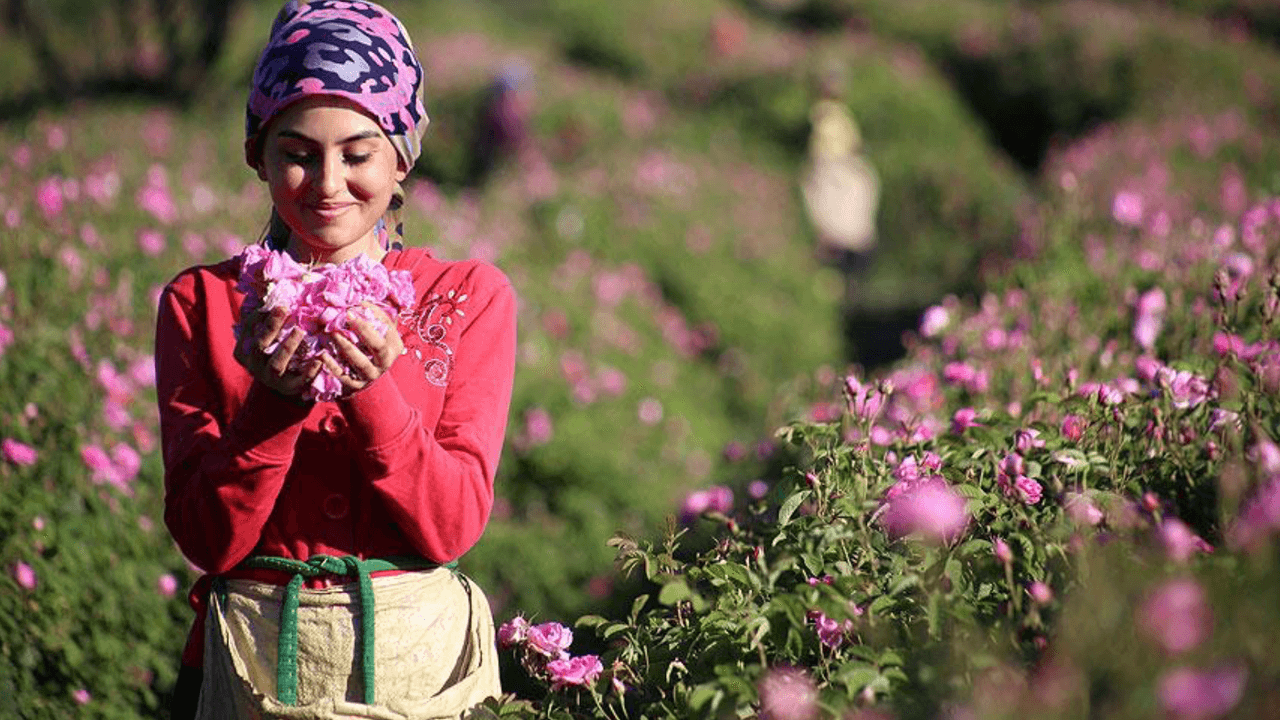
Güneykent is a strategic settlement in the Gönen district of Isparta province, Türkiye, which supplies a significant portion of the country’s rose oil production capacity and has focused its agricultural activities on the Rosa Damascena (Isparta Rose). The town is located in one of the most favorable basins for rose cultivation due to its geographical position, climatic conditions, and soil structure. More than half of the approximately 3745 decares of rose fields cultivated by around a thousand producers across the Gönen district are situated within Güneykent alone, covering 2060 decares of land. The rose plant’s ability to thrive even in less fertile soils has enabled a large portion of the town’s land to be allocated to this production. This sector, which constitutes 80 percent of Güneykent’s total income, has acquired a social dimension as 95 percent of the local population directly owns rose gardens.
The rose flowers cultivated in Güneykent possess high levels of volatile oils, both morphologically and chemically. Regional data and operational records confirm that the industrial yield of Güneykent’s products is higher than in other regions. While an average of 3.5 tons of rose flowers are required to produce one kilogram of rose oil in other areas, this amount in Güneykent drops to as low as 3 tons. The harvesting period typically begins in mid-May and continues until the end of June, depending on air temperatures and seasonal conditions. To prevent the loss of volatile oils due to daytime heat, harvesting is carried out early in the morning before the sun’s intensity increases.
The harvested flowers are immediately delivered to buyers and transported to processing plants to preserve their volatile components. In addition to two modern rose oil factories designed according to contemporary technology, four boutique enterprises continue operations using traditional methods. The rose residue remaining after production is utilized as organic fertilizer in agricultural activities, integrating it into an environmentally sustainable recycling cycle.
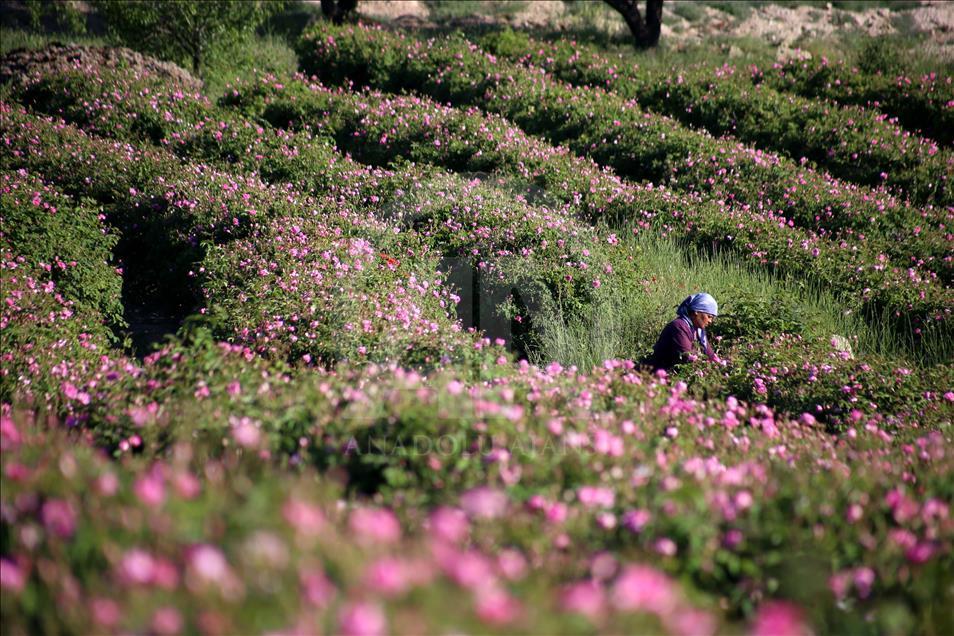
From the sapling hidden in Bastona to the journey to the world’s rose garden (Anadolu Ajansı)
The foundations of the modern rose industry in Güneykent were laid in the 1950s. The Güneykent Rose Oil Factory, established in 1950, played a pivotal role in expanding commercial activity in the region and establishing the Isparta rose as a recognized brand. Since its incorporation into Gülbirlik in 1977, the facility has been regarded not only as a production center but also as an industrial heritage site. The coal-fired steam boiler within the factory, dating back nearly a century and originally belonging to a Russian ship, holds technical significance. Under a museum project jointly carried out by the Gönen Sub-Governorship, Güneykent Municipality, and Gülbirlik, this structure aims to convey to visitors the journey of roses transforming into oil.
Rose gardens, beyond their agricultural function, form the foundation of nature and cultural tourism in the region. Particularly during the harvest season, Güneykent experiences a surge in visitors. What began in 2011 with modest numbers has now grown into an international scale, welcoming thousands of domestic and East Asian tourists (from Japan, Korea, and others). Visitors can enjoy nature walks along the “Güneykent Walking Trail,” which winds through the rose gardens, and also visit traditional rose oil production workshops and the Rose Museum.
In terms of cultural richness, the town hosts a mausoleum attributed to Yunus Emre, one of the pioneers of Anatolian Sufism. The life, poetry, and teachings of Yunus Emre centered on human love have left deep imprints on the town’s social identity. This cultural heritage is preserved through GÜNDER (Güneykent Yunus Emre Social Assistance, Solidarity, Culture and Education Association) and passed on to future generations via the Yunus Emre Culture Park and various events. Güneykent embodies a comprehensive center where agriculture and tourism are integrated, featuring historic factories, religious tourism sites, trekking opportunities, and extensive rose plantations.
Anadolu Ajansı. "Bastona Gizlenen Fidandan 'Dünyanın Gül Bahçesi'ne Uzanan Serüven." Accessed February 15, 2026. https://www.aa.com.tr/tr/ekonomi/bastona-gizlenen-fidandan-dunyanin-gul-bahcesine-uzanan-seruven/850134
T.C. Isparta Valiliği. "Gül Turizminin Önemli Merkezlerinden Biri Olan Güneykent Kasabası Yeni Sezon Hazırlıklarını Sürdürüyor." Accessed February 15, 2026.
Türkiye Kültür Portalı. "Doğa Yürüyüşü (Trekking) - Güneykent Yürüyüş Parkuru - Isparta." Accessed February 15, 2026. https://www.kulturportali.gov.tr/turkiye/isparta/TurizmAktiviteleri/guneykent-yuruyus-parkuru

Location | Gönen / Isparta Güneykent | ||||||||
|---|---|---|---|---|---|---|---|---|---|
Tourism | Rose Harvest, Trekking, Rose Museum | ||||||||
Harvest Time | Mid-May – End of June | ||||||||
Main Product | Rosa Damascena (Isparta Rose) | ||||||||
No Discussion Added Yet
Start discussion for "Güneykent Rose Gardens" article
Agricultural Productivity and Production Technology
Historical Development and the Rose Industry Heritage
Potential for Nature, Culture, and Religious Tourism